
The Internet of Things (IoT) has revolutionized the way devices interact with each other and with users. From smart homes and wearable devices to industrial automation and connected medical tools, IoT has opened a world of possibilities. However, developing a successful IoT product is far more complex than connecting a sensor to the cloud. Without proper planning, even the most promising ideas can become costly, delayed, or fail altogether.
Before you start your IoT project, it is essential to understand the full scope of IoT product development. This includes everything from initial design and system architecture to prototyping, embedded systems, mobile applications, cloud integration, testing, compliance, and mass production. Gaining clarity on these areas early not only saves time and money but also ensures your product meets technical, regulatory, and market expectations.
Conceptualizing Your IoT Product
The first step in any IoT project is developing a clear concept. At this stage, it is crucial to define the problem your product aims to solve, identify the target audience, and outline the core functionalities that will make your device unique.
Many founders underestimate the importance of concept validation. A product without a clearly defined purpose often suffers from scope creep, resulting in unnecessary features that complicate hardware design, firmware development, and connectivity. Engaging in proof-of-concept development at this stage allows you to test your idea’s feasibility, identify risks, and gain early feedback from potential users or stakeholders.
Real-World Example: Consider a wearable health tracker. Before designing the device, it is essential to understand which metrics users value most—heart rate, sleep tracking, or activity levels. Early validation can prevent the inclusion of unnecessary sensors that increase cost and complexity.
Planning the System Architecture
IoT devices are not standalone products—they are part of complex systems that include hardware, embedded firmware, mobile applications, and cloud infrastructure. Planning the system architecture is critical to ensure smooth operation and scalability.

Key considerations include:
Poor system architecture often results in devices that are unreliable or unable to scale. Collaboration between hardware, firmware, and cloud teams at this stage is essential to avoid bottlenecks.
Additionally, security and data privacy must be considered from the beginning. Implementing encryption, secure authentication, and regular updates helps protect user data and prevents unauthorized access, ensuring long-term reliability and user trust in the system.
Poor system architecture often results in devices that are unreliable or unable to scale. Collaboration between hardware, firmware, and cloud teams at this stage is essential to avoid bottlenecks.
Example: A smart home lighting system must handle multiple devices, mobile app control, scheduling, and real-time alerts. Careful planning ensures the system remains responsive even as more devices are added.
Mechanical and Industrial Design Considerations
Mechanical design is as important as electronic design in IoT devices. Users interact with the physical product first, and poor design can lead to usability issues or market rejection. Key considerations include:
- Ergonomics: Devices should be intuitive and comfortable to use.
- Material Selection: Plastics, metals, or composites affect durability, weight, and cost.
- Enclosure Design: Protect electronics from environmental factors such as dust, moisture, and heat.
- Thermal Management: Components generate heat; proper ventilation or heat sinks may be required.
Modern tools like 3D printing and rapid prototyping allow teams to visualize and iterate designs quickly. Functional prototypes help identify issues such as awkward form factors, weak structural points, or cooling challenges before entering mass production.
Electronic Hardware Design and PCB Layout
Hardware design forms the backbone of your IoT product. It requires careful component selection, PCB design, and layout optimization.

Key aspects include:
- Schematic Design: Identifying suitable microcontrollers, sensors, and peripheral components. Popular choices like ESP32 or nRF52 balance cost, connectivity, and power efficiency.
- PCB Design & Layout: Proper layout ensures signal integrity, reduces noise, and optimizes component placement. Multi-layer PCBs can support more complex circuits while minimizing space.
- BOM Optimization: Strategic selection of components reduces cost without compromising performance.
- Design for Manufacturing (DFM) & Assembly (DFA): Ensures the design is manufacturable and easy to assemble at scale.
Collaboration between hardware and firmware engineers at this stage is essential. Incorrect assumptions about firmware requirements can lead to redesigns or functionality limitations.
Example: In wearable devices, optimizing PCB layout and battery placement can significantly improve comfort and battery life.
Prototyping and Functional Testing

Prototyping is critical to bridge the gap between design and production. It allows teams to test both form and function before committing to large-scale manufacturing.
Stages of prototyping include:
- Rapid Prototyping: Quick, inexpensive models for initial design validation.
- Functional Prototypes: Testing sensors, connectivity, embedded systems, and power consumption under realistic conditions.
- PCB Assembly (PCBA): Ensures accurate component placement and soldering quality.
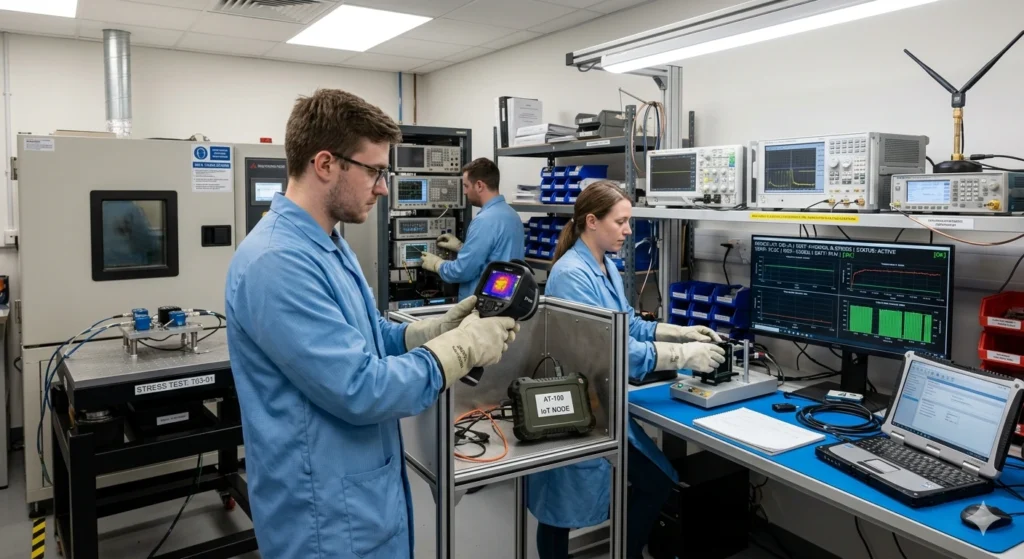
- Testing & Validation: Electrical, mechanical, thermal, and environmental testing reveal potential issues early.
Investing time in prototyping reduces risks and prevents expensive rework later. Many successful IoT products go through multiple iterations before finalizing the design.
Embedded Systems and Firmware Development
Firmware development is the heart of IoT functionality. It manages sensors, actuators, communication protocols, and power efficiency.
Key Firmware Considerations
Poor firmware design can result in intermittent connectivity, short battery life, and security vulnerabilities. A well-developed embedded system ensures your product is reliable, safe, and user-friendly.
Tip: Conduct early integration testing between hardware and firmware to catch potential conflicts before scaling.
Mobile Application and Cloud Integration
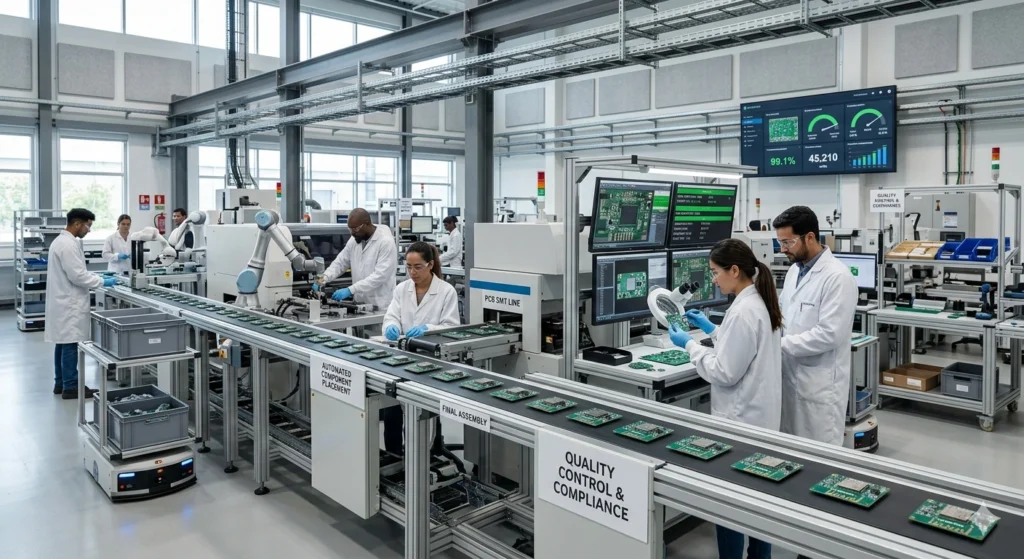
Most IoT devices rely on mobile apps and cloud platforms for control, monitoring, and analytics.
Considerations include:
- Mobile App Development: Android and iOS applications with intuitive user interfaces.
- Cloud Integration: Secure data storage, real-time analytics, and automated alerts.
- APIs and Backend Services: Enable third-party integrations, notifications, and dashboards.
- User Experience: Simplicity and reliability in the app drive user adoption.
Real-time monitoring, over-the-air updates, and analytics dashboards improve usability and customer satisfaction.
Example: A smart health device that tracks vitals must provide users with accurate, easy-to-understand feedback through both mobile apps and cloud dashboards.
Testing, Validation, and Compliance

Comprehensive testing ensures devices perform reliably and meet regulatory standards.
- Functional Testing: Validates every feature operates correctly.
- Reliability Testing: Simulates real-world conditions, including temperature, humidity, and vibration.
- EMC/EMI Testing: Prevents devices from interfering with other electronics.
- Regulatory Compliance: Certifications such as CE, FCC, and RoHS are required for global markets.
- Safety Testing: Protects users from electrical or mechanical hazards.
Skipping or rushing testing can lead to costly recalls, reputational damage, and compliance issues. Thorough validation builds trust with end users and regulatory bodies.
Manufacturing and Production Planning
Moving from prototype to mass production requires careful planning.

- Manufacturer Sourcing: Selecting reliable partners with relevant certifications.
- Pilot Production: Testing manufacturing processes on a small scale.
- Production Engineering: Optimizing assembly lines to reduce defects and costs.
- Mass Production Support: Ensuring consistent quality and on-time delivery.
- BOM Optimization: Balances quality, cost, and supply chain reliability.
Early collaboration with manufacturers can identify DFM issues and streamline scaling, preventing delays and ensuring smooth production.
Product Launch, Branding, and Support
Launching an IoT product is about more than production; it’s about delivering a complete solution to the market.
- Branding and Packaging: Differentiate your product in a competitive market.
- Technical Documentation: Manuals, service guides, and compliance records.
- Quality Assurance and Inspection: Ensures each batch meets performance standards.
- Customer Support: Builds trust and loyalty through responsive assistance.
A well-planned launch strategy ensures that your product reaches customers successfully and establishes credibility.
Common Pitfalls in IoT Development
IoT projects often fail due to overlooked issues:
- Inadequate system architecture planning leads to connectivity and scalability problems.
- Poor power management results in short battery life.
- Skipping prototyping increases the risk of design flaws.
- Weak security measures expose devices to hacking and data breaches.
- Neglecting compliance and testing can prevent global market entry.
Addressing these challenges early is essential to reduce risk, cost, and time-to-market.
Cost Estimation, ROI, and Timelines
Understanding the financial and time investment in IoT development is crucial. Costs include design, prototyping, embedded systems, firmware, mobile app and cloud development, testing, compliance, and manufacturing.
ROI considerations:
- Optimize BOM and production costs to increase margins.
- Reduce iteration cycles through effective prototyping and testing.
- Ensure your product meets user expectations to maximize adoption.
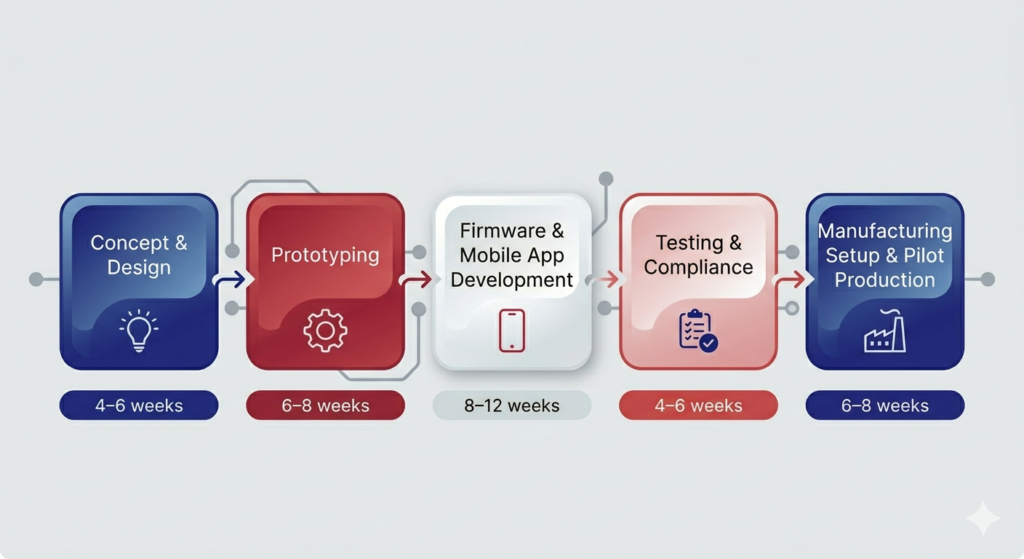
Timeline planning:
- Concept and design: 4–6 weeks
- Prototyping: 6–8 weeks
- Firmware and mobile app development: 8–12 weeks
- Testing and compliance: 4–6 weeks
- Manufacturing setup and pilot production: 6–8 weeks
Realistic timelines and budgeting help set expectations with stakeholders and reduce surprises.
Conclusion
Before starting an IoT project, it is vital to understand the full spectrum of development—from concept design to mass production, including hardware, firmware, mobile apps, cloud integration, testing, and compliance. IoT projects are multidisciplinary and require careful planning, collaboration, and execution at every stage.
A successful IoT product is not just a functional device; it is a well-designed, manufacturable, secure, and user-friendly solution. By considering these steps early, you can reduce risks, save costs, and ensure your product delivers real value to users, creating long-term success in the market.