

Building IoT products for clients across different countries has provided deep insights into how technology interacts with real-world environments, users, and business needs. One of the most important lessons is that successful IoT solutions are never just about connecting devices—they are about solving meaningful problems. Every project brings unique challenges, from varying infrastructure and network reliability to different user expectations and industry requirements. Understanding these factors before development begins is critical. Without a clear focus on real-world use cases, even technically advanced systems can fail to deliver value. Over time, it becomes clear that user-centric design, scalability, and adaptability are the true foundations of a successful IoT ecosystem.
Another major takeaway from global IoT development is the importance of building systems that can evolve over time. IoT products are not static; they require continuous updates, monitoring, and optimization to remain effective. Working with international clients highlights the need for flexible architectures that can handle growth, integrate with cloud platforms, and maintain performance under changing conditions. Security, data management, and interoperability must be built into the system from the start. Additionally, differences in regulations, connectivity, and operational environments demand tailored solutions rather than a one-size-fits-all approach. These real-world experiences show that long-term success in IoT comes from combining strong technical design with practical, scalable, and future-ready thinking.
1. Understanding real-world problems before building IoT solutions
The Internet of Things (IoT) has transformed how modern businesses operate by connecting devices, systems, and data into one intelligent ecosystem. Over the years of building IoT products for global clients, one major lesson stands out: success is not just about hardware or software, but about solving real human and business problems. Many projects fail when teams focus too much on technology rather than actual use cases. A strong IoT solution always begins with understanding the environment, user behavior, and scalability needs. Without this foundation, even the most advanced system becomes inefficient and costly to maintain in real-world deployment scenarios.
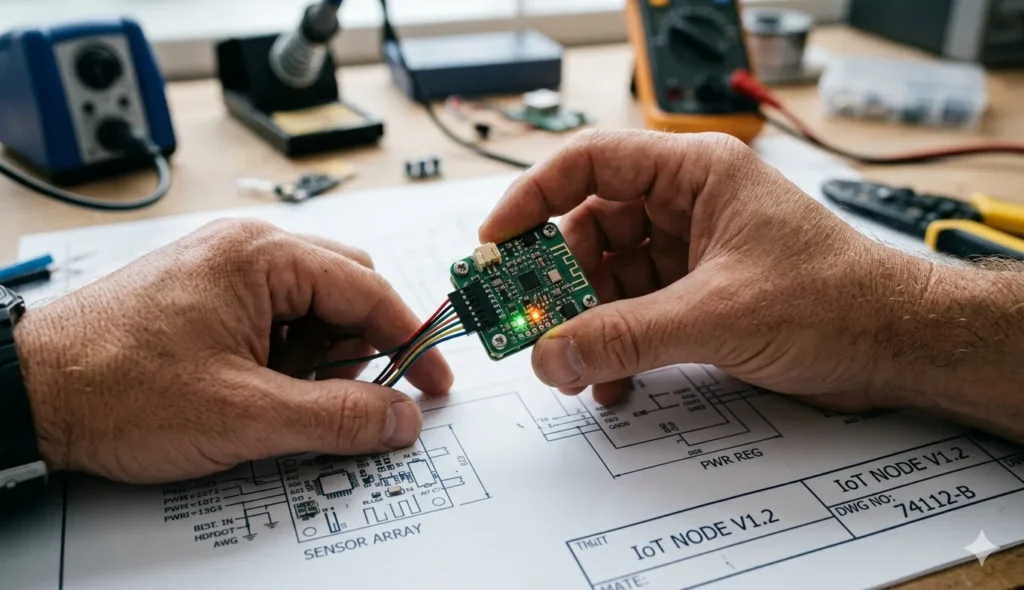
Another key lesson from global IoT development is the importance of adaptability and continuous improvement. IoT products are never truly “finished” because devices, networks, and user expectations constantly evolve. Working with international clients has shown that flexibility in architecture and cloud integration is critical for long-term success. Security, latency, and interoperability must be designed from day one. In addition, cross-border deployments require understanding different regulatory environments and infrastructure limitations. The real value of IoT lies in building systems that not only work today but can also grow, adapt, and remain reliable for years in changing conditions.
2. Building scalable IoT architecture for global deployments

Building IoT products at a global scale requires a deep understanding of system architecture, connectivity, and user-centric design. One of the most important realizations from years of experience is that IoT is not just about connecting devices but about creating meaningful data flows that support decision-making. Every sensor, gateway, and cloud service must serve a purpose in the larger ecosystem. Poor planning often leads to data overload without actionable insights. Successful IoT systems focus on filtering, processing, and visualizing data in ways that help businesses optimize operations, reduce costs, and improve user experience in real time.
Another critical aspect is reliability under real-world conditions. Unlike controlled environments, IoT systems operate in unpredictable scenarios such as weak network coverage, hardware failures, and power interruptions. Designing for resilience is essential. This includes edge computing strategies, offline capabilities, and redundant communication protocols. Security is another pillar that cannot be ignored. Every connected device is a potential entry point for cyber threats. Therefore, encryption, authentication, and secure firmware updates are mandatory.
Core Pillars of High-Performance IoT Systems
These foundational principles ensure IoT systems are scalable, secure, and capable of delivering real business value in real-world environments.
- User-Centric Design: Focuses on solving real business problems by aligning technology with user needs, ensuring better adoption, usability, and long-term value.
- Scalable Architecture: Built to handle growth from hundreds to millions of devices without compromising performance, reliability, or system stability.
- Edge Computing Efficiency: Processes data closer to the source, reducing latency and enabling faster real-time decision-making in critical applications.
- Advanced Security Framework: Implements strong encryption, authentication, and protection mechanisms to safeguard devices, networks, and sensitive data.
- Intelligent Data Filtering: Transforms raw sensor data into meaningful insights by filtering noise and delivering only actionable information for smarter decisions.
IoT development also teaches the importance of collaboration between hardware engineers, software developers, and data analysts. Without coordination, systems become fragmented and inefficient.
Another insight is that client expectations vary significantly across industries, requiring tailored solutions for each business model.
3. Ensuring scalability, interoperability, and system growth
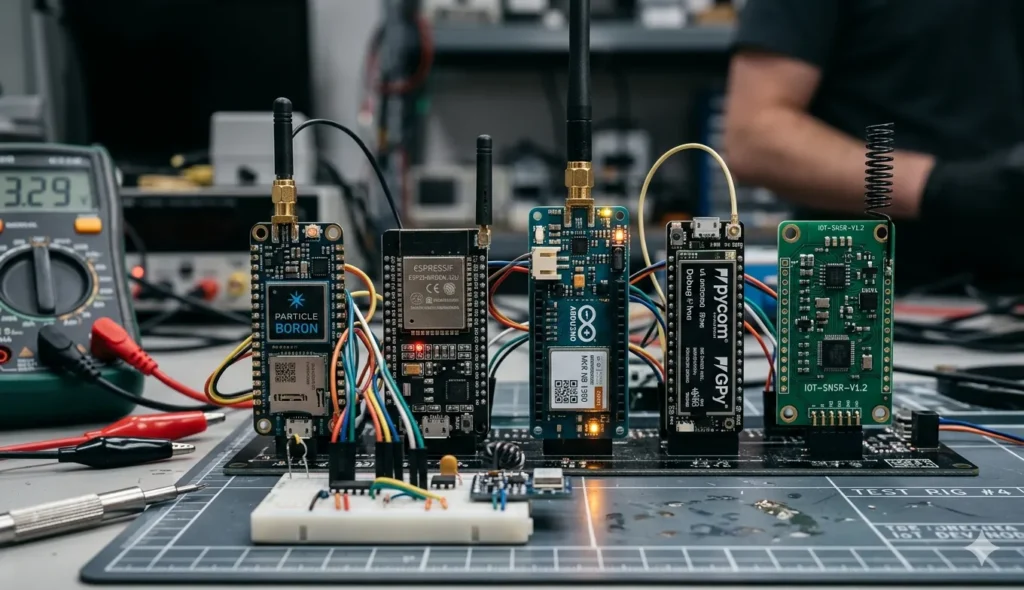
Scalability is one of the most challenging aspects of building IoT systems for global clients. When thousands or even millions of devices are connected, even small inefficiencies can lead to major performance issues. A well-designed architecture must support horizontal scaling, cloud integration, and real-time data processing. In many projects, initial prototypes work well but fail under production loads. This highlights the importance of stress testing and simulation before full deployment.
Another lesson is the importance of standardization and interoperability. IoT ecosystems often include devices from multiple manufacturers, each using different protocols and data formats. Without proper standardization, integration becomes complex and error-prone. Using common communication protocols like MQTT or HTTP helps unify the system.
Core Principles of Scalable IoT Architecture
Horizontal scalability for growing device networks
Ensures seamless expansion by adding more devices without affecting system performance.
Stress testing before production launch
Validates system stability under heavy load to ensure reliability before deployment.
Standard protocols like MQTT/HTTP
Uses industry-standard communication protocols for fast, secure, and reliable data exchange.
Interoperability between multiple devices
Allows different devices and platforms to work together smoothly within one ecosystem.
Future-proof system architecture
Builds adaptable systems that can support new technologies without major redesign.
Consistent data formatting for analytics
Maintains structured data formats for accurate analysis and better decision-making.
IoT systems also require continuous monitoring after deployment. Predictive maintenance reduces downtime and improves efficiency.
Network reliability differences across regions must always be considered during system design.
4. IoT security, lifecycle management, and long-term stability
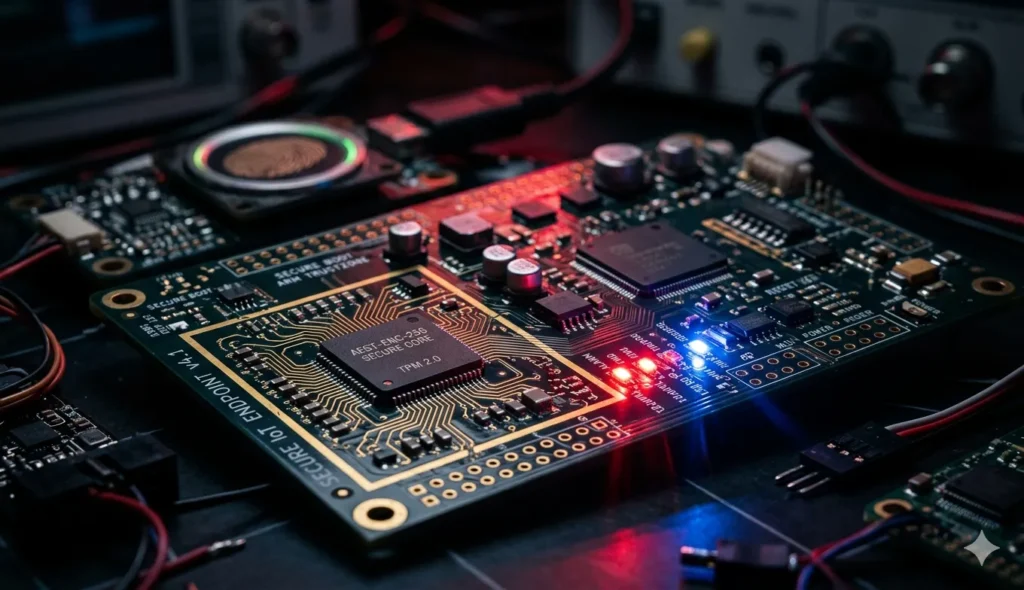
Security and data protection are among the most critical challenges in IoT product development. With billions of connected devices worldwide, the attack surface is constantly expanding. Encryption, secure authentication, and regular firmware updates are essential components of a strong IoT ecosystem. Developers must assume that every device is a potential target and design accordingly.
Lifecycle management is equally important. IoT devices often operate for many years without physical access. Over-the-air (OTA) updates allow remote fixes and improvements without replacing hardware. Proper provisioning and decommissioning ensure system integrity over time.
IoT Security & Lifecycle Management Focus Areas
IoT systems must also comply with global data protection regulations. Proactive monitoring ensures issues are detected before they escalate.
5. Importance of user experience in IoT systems

One of the most overlooked aspects of IoT development is user experience. Even highly advanced systems fail if users find them complex or difficult to operate. Simple, clean, and responsive interfaces are essential for better adoption, usability, and long-term engagement. IoT dashboards should transform complex data into clear, actionable insights.
Real-world testing is equally critical. Lab environments cannot fully replicate real deployment conditions such as network instability, environmental changes, or hardware stress. Field testing helps identify connectivity issues, device failures, and performance limitations under real operating conditions.
Additionally, user training and clear documentation play a vital role in successful adoption. They reduce operational errors, improve system understanding, and ensure smoother day-to-day usage of IoT systems.
Strong encryption and access control protect IoT devices and sensitive data from cyber threats.
Design systems to scale easily so new devices and users can be added without performance issues.
Optimized energy usage extends device lifespan and reduces maintenance costs significantly.
Reliable cloud connectivity enables seamless data storage, processing, and remote access.
Ensures all devices work together smoothly, preventing integration failures and system issues.
In addition, continuous monitoring and iterative improvement are essential in IoT ecosystems. Systems should be regularly updated to fix bugs, enhance performance, and adapt to changing user requirements. By leveraging analytics and feedback loops, developers can refine functionality, improve reliability, and ensure long-term system efficiency across diverse operational environments and use cases for sustained industrial performance and growth over time.
6. Turning IoT data into business intelligence

Data analytics is the heart of modern IoT systems. Raw sensor data is meaningless without processing and interpretation. Filtering noise, identifying patterns, and building predictive models transform IoT systems into business intelligence tools.
Cloud integration plays a major role in scalability. Hybrid models combining edge and cloud computing provide the best balance between speed and processing power.
Data Insights Table:
Real-Time Analytics
Instant sensor data processing for live monitoring and immediate decision-making.
Predictive Insights
Forecasts system failures and trends using intelligent data analysis models.
Historical Data
Stores long-term data for performance tracking, reporting, and optimization.
Edge Processing
Processes data locally on devices to reduce latency and improve real-time response.
Analytics must always align with business goals, not just technical output.
7. Collaboration, infrastructure challenges, and global IoT delivery

Global IoT development requires strong cross-team collaboration. Miscommunication between engineers, designers, and analysts can lead to system inefficiencies or failures. Agile workflows and clear documentation ensure smooth coordination and successful execution.
Infrastructure differences across regions also play a major role in system design. While some areas have strong and stable connectivity, others rely on weak or intermittent networks. IoT systems must be flexible enough to perform reliably in both environments.
Cost optimization is another critical factor. Efficient hardware selection, optimized cloud usage, and smart resource management help reduce overall expenses while maintaining high performance and scalability.
| Area | Optimization Strategy |
|---|---|
| Strong cross-team collaboration | Ensures smooth coordination between hardware, software, and operations teams for efficient project execution. |
| Agile and structured workflows | Uses flexible yet organized development processes to improve speed, quality, and continuous improvement. |
| Adaptation to regional networks | Optimizes IoT systems to perform efficiently across different geographic and network environments. |
| Cost-efficient architecture design | Builds scalable systems that reduce infrastructure and operational costs without compromising performance. |
| Clear documentation practices | Maintains accurate and structured documentation to improve understanding, maintenance, and collaboration. |
| Global deployment consistency | Ensures uniform system performance and behavior across all global deployments and environments. |
In addition, cultural and business differences across countries influence system requirements, deployment strategies, and user expectations, making global adaptability essential for IoT success.s while maintaining performance.
Cultural and business differences also influence system requirements across countries.
8. Continuous improvement and the future of IoT

IoT development is never a one-time process. Systems must evolve through updates, monitoring, and feedback loops. Continuous improvement ensures long-term success and relevance.
Predictive maintenance, automation, and AI integration are shaping the future of IoT. Systems are becoming smarter, more autonomous, and more efficient over time.
Ultimately, IoT is not just about connecting devices—it is about creating meaningful impact through intelligent systems that improve industries, businesses, and everyday life.