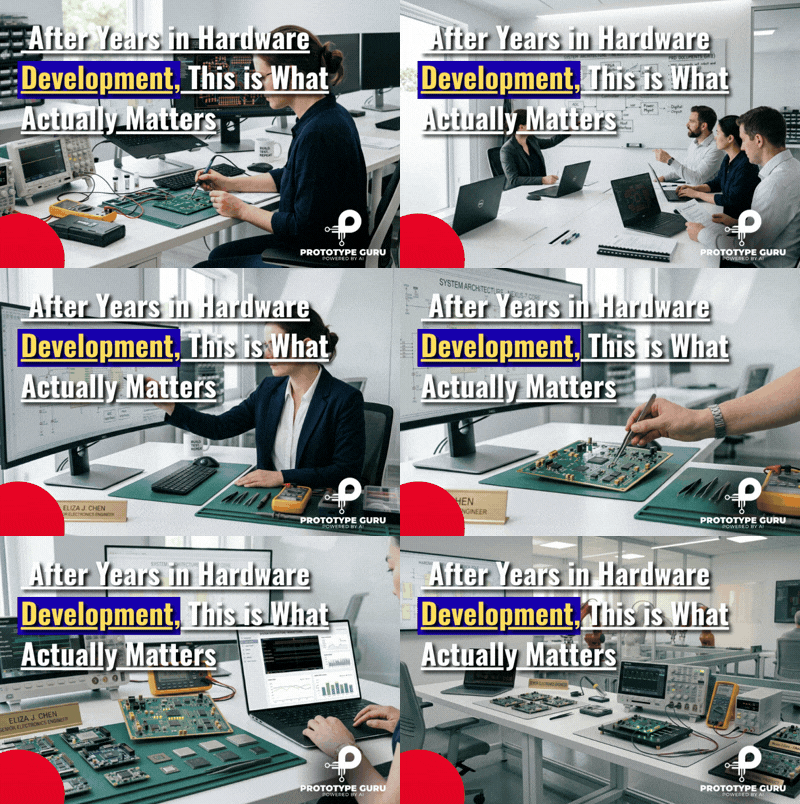







Introduction
Hardware development failures often begin long before the first prototype is ever powered on. Numerous hardware startups and embedded product teams incur significant losses—often exceeding $10,000 per board re‑spin—because they dive into PCB layout without a solid plan. Development costs escalate rapidly due to inadequate planning, poor schematic design, incorrect PCB configurations, firmware integration issues, electromagnetic interference (EMI) problems, and manufacturing oversights.
A disciplined hardware development process eliminates these expensive redesigns. This systematic approach decreases the likelihood of prototype failures, improves manufacturing preparedness, and compresses time‑to‑market. Whether you are working on an IoT sensor, industrial controller, wearable device, AI edge platform, or embedded Linux gateway, a professional engineering method significantly enhances product dependability and minimizes risk.
This guide thoroughly outlines the complete hardware development workflow that embedded engineering teams use—from defining requirements and designing preparations to PCB design and fabrication, firmware integration, bring‑up, validation, production, and deployment. Every stage must be executed meticulously to ensure success within budget and on schedule.
1. Reasons for Hardware Development Failures
Numerous embedded devices do not succeed in the market because teams rush into PCB design without assessing system requirements, architectural constraints, component availability, or production capabilities. The urgency to deliver a tangible prototype often leads engineers to overlook crucial reviews, resulting in costly re‑spins later on.
The most common causes of failures in hardware development include:
- Insufficient documentation regarding product specifications
- Poor component selections (using outdated parts, risks associated with sole suppliers)
- Improper planning of the PCB stack‑up layout
- Issues with power integrity leading to random resets
- Signal integrity challenges on high‑speed data paths
- Thermal runaway situations and localized overheating
- EMI/EMC failures during compliance evaluations
- Variations in the collaboration between firmware and hardware
- Non‑optimized bill of materials escalating production expenses
- Insufficient testing and launch techniques
- Manufacturing discrepancies (violations of DFM/DFA)
By employing a structured hardware engineering process, all these issues can be circumvented. Allocating time for planning, analyzing schematics, simulating, and assessing designs prior to production can save $10,000 to $50,000 or more by preventing unnecessary prototype iterations.
2. Understanding the Hardware Development Lifecycle
The development of contemporary electronic devices follows a methodical engineering lifecycle where each phase is dependent on the precision and excellence of the preceding one. Skipping steps or condensing phases will invariably introduce mistakes that compound further down the line.
Typically, a complete hardware development lifecycle includes:
- Outlining product specifications
- Organizing the hardware framework
- Designing embedded solutions
- Initial design concepts
- Creating PCB layouts
- Fabricating and assembling prototypes
- Initial testing and validation
- Debugging and integrating firmware
- Compliance and testing for verification
- Readiness for manufacturing and pilot production
- Launching production and scaling
- Ongoing support and maintenance
Following this order, with formal checkpoints at each stage, minimizes redesign efforts and avoids costly surprises in later stages. This hardware development lifecycle also provides clear documentation that aids in certification, financing, and future product advancement.
3. Product Development & Engineering Exploration

Every successful hardware product begins with a thoroughly detailed engineering investigation. In electronic product development, hurrying through this phase is financially imprudent; unclear requirements are the primary cause of costly mid‑project alterations.
Exploration allows you to define:
Product Goals & Value Proposition
↑Performance & Processing Requirements
↓Environmental Operating Conditions
↓Connectivity & Communication Interfaces
↓Battery Life & Power Consumption
↓Mechanical Design Constraints
↓Budget & Manufacturing Cost Targets
↓Compliance & Regulatory Standards
↓Production Volume Expectations
↓This stage results in a comprehensive Product Requirements Document (PRD) and a Scope of Work (SoW). The SoW delineates project deliverables, phases of development, anticipated timelines, engineering responsibilities, scope of manufacturing, and testing parameters. Once both documents receive approval from all parties involved, the project can proceed with transparency and minimal uncertainty—the foundation of any successful hardware development service.
4. Hardware Architecture Approach
Every embedded development initiative relies on a robust hardware architecture plan. This plan establishes overall product scalability, support for peripherals, memory bandwidth, and processing capabilities. One of the most expensive mistakes in custom hardware development is modifying the core design mid‑project.
Key architectural decisions involve:
- Selecting a processor (MCU vs. SoC vs. FPGA, core count, speed)
- Memory configuration (type of DDR, capacity, speed, NAND/NOR flash)
- Communication interfaces (Ethernet, USB, PCIe, CAN, SPI, I²C, UART)
- Sequencing and power domain requisites
- Integration of sensors and design of the analog front‑end
- Mapping of peripherals and allocation of pins
- Storage options such as eMMC, SD card, SSD, and integrated flash
- Security measures (trusted platform module, TrustZone, secure boot)
- Opportunities for future variations and expansions
Many contemporary embedded systems utilize platforms provided by leading semiconductor companies. Evaluating these options early on guarantees a reliable supply chain and access to established reference designs:
- NXP i.MX series for automotive and industrial applications
- STM32 product families from STMicroelectronics for low‑power microcontrollers
- nRF series from Nordic Semiconductor for Bluetooth low energy and Thread
- Texas Instruments Sitara and MSP430 lines
- Qualcomm platforms for high‑performance multimedia and AI
- Microchip PIC and AVR microcontrollers for cost‑sensitive uses
Opting for a well‑established platform with reference hardware and mature software development kits can significantly reduce firmware development time—a crucial advantage in embedded hardware development.
5. Selecting Electronic Components

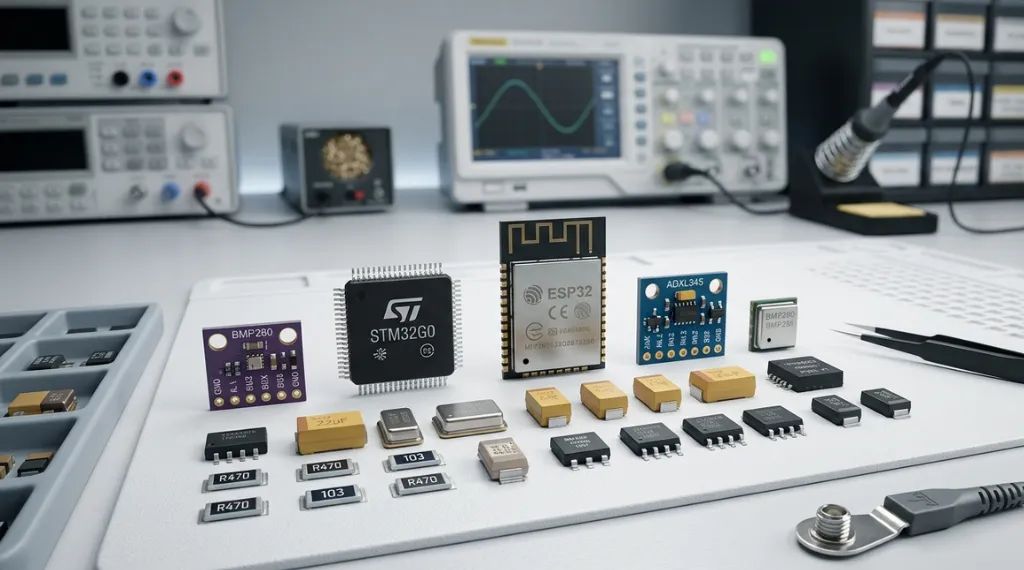
The selection of components has a direct impact on product reliability, material cost, and long‑term manufacturing stability. In any hardware development process, a thorough evaluation goes far beyond basic parametric analysis.
Teams must assess each component based on:
- Lifecycle status and remaining years until end‑of‑life (EOL)
- Multi‑source availability and alternative supplier options
- Supply chain stability and lead time trends
- Energy efficiency (active and standby currents)
- Derating guidelines and temperature operation ranges
- Certification requirements (AEC‑Q100, industrial grade)
- Performance standards (accuracy, tolerance, speed)
- Standardized footprints to avoid dependency on a single source
- Comprehensive costs encompassing sourcing, assembly, and testing
Particular focus should be given to critical components such as:
- Microcontrollers and processors
- Voltage regulators and power management ICs (PMICs)
- Memory types (DRAM, flash, EEPROM)
- Wireless communication modules (pre‑certified modules can reduce compliance costs)
- Analog front‑ends and various sensors
- Connectors (considering mechanical fatigue and mating cycles)
- Oscillators and crystals (ppm tolerance)
- ESD protection and TVS diodes
Selecting components without lifecycle analysis or second‑source planning often forces an expensive board redesign—a pitfall that a professional hardware development service actively avoids.
6. Development Process of Embedded Systems
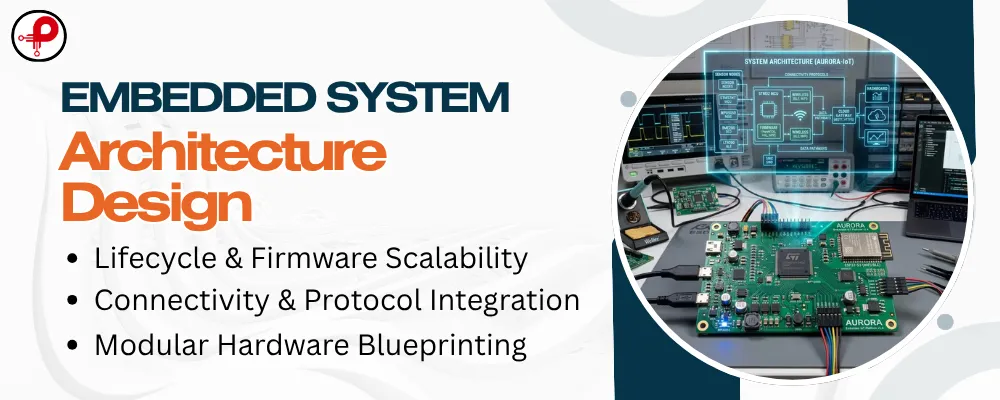
Creating embedded hardware entails manufacturing, power management, firmware development, and electronics design. This embedded system design process must balance multiple competing constraints while maintaining reliability and scalability.
Expert design of embedded systems emphasizes:
- Dependability in challenging conditions
- Flexibility across different product versions
- Power optimization for battery‑operated or thermally constrained designs
- Assurance of real‑time performance
- Safeguards against both cyber and physical threats
- Implementing thermal management from the beginning
- Early planning to assist in minimizing electromagnetic interference (EMI)
- Incorporating manufacturing readiness into the design phase
Typically, embedded designs exist in multiple formats, each with distinct design rules:
| Category | Application Areas | Design Considerations |
|---|---|---|
| High-Speed Digital Design | Industrial gateways, embedded Linux platforms, AI edge devices, and advanced computing systems. | Requires controlled impedance routing, signal integrity optimization, DDR length matching, return path management, and high-speed interface support for USB 3.0, PCIe, and MIPI. |
| Wireless & RF Design | IoT devices, smart sensors, asset tracking systems, wireless automation, and connected products. | Includes antenna tuning, RF impedance calibration, transmission line layout, and wireless integration for Wi-Fi, Bluetooth, LTE-M, NB-IoT, NFC, and GPS/GNSS modules. |
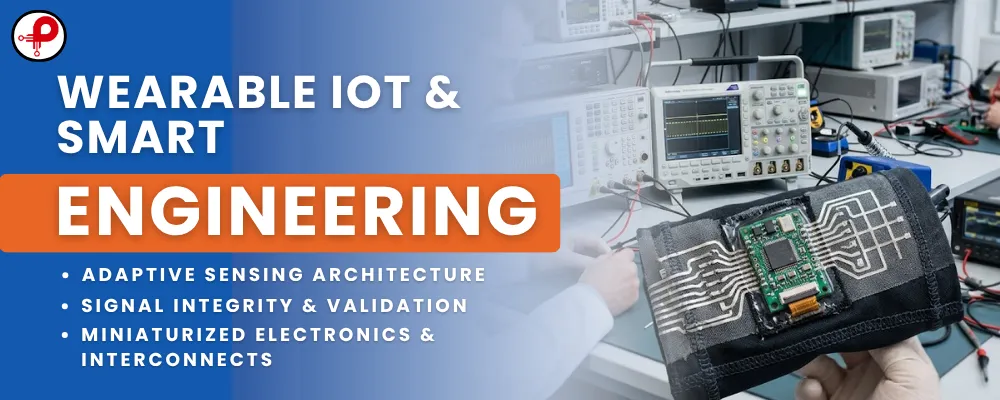
| Power-Optimized Hardware Design | Wearables, portable medical devices, battery-powered electronics, and remote monitoring systems. | Focuses on ultra-low-power MCU selection, dynamic voltage scaling, power gating techniques, and battery life optimization for extended runtime performance. |
| MCU-Centric Design | Home automation systems, motor control applications, consumer electronics, and embedded control products. | Emphasizes compact PCB layout, cost-efficient architecture, reliable peripheral integration, and strong I/O protection for stable operation. |
7. Circuit Engineering and Schematic Design
Schematic design translates the architecture and PRD into a comprehensive electronic circuit. In the hardware engineering process, this stage warrants the most scrutiny because fixing mistakes here is far cheaper than after PCB layout.
Professional schematic engineering includes:
- GPIO mapping with alternate function verification
- Power rail design, including decoupling and sequencing
- Clock distribution and jitter budgeting
- Signal routing preparation (differential pairs, controlled impedance)
- Sensor and analog front‑end conditioning
- ESD safeguards, overvoltage, and overcurrent circuits
- Communication bus termination and pull‑up/down planning
A power budget assessment is essential. Engineers calculate peak and average current for each rail, project battery longevity, validate regulator thermal limits, and define power‑up/down sequencing requirements.
GPIO planning ensures no two peripherals conflict on shared pins, that firmware can initialize interfaces simultaneously, and that layout can escape high‑pin‑count packages without crossing split planes.
Circuit validation employs simulation (SPICE, IBIS) and manual calculations to verify signal compatibility, voltage tolerances, timing margins, and interface stability across temperature and voltage corners. A formal schematic review, complete with a checklist and independent evaluators, typically catches about 80% of potential PCB issues before layout work begins.
8. Optimization of the Bill of Materials
The Bill of Materials (BOM) influences both manufacturing expenses and supply chain resilience. In any hardware development project, BOM optimization is not a one‑time activity—it should be revisited before every prototype build and again before production release.
Effective BOM optimization focuses on:
- Reducing total component expenses while maintaining reliability
- Improving multi‑source availability for every line item
- Minimizing lead‑time risk by avoiding long‑lead or single‑source parts
- Simplifying assembly by reducing unique part numbers
- Ensuring footprint compatibility across second‑source alternatives
- Standardizing connectors, passives, and protection devices across product lines
Key strategies include using multi‑source jellybean components, avoiding obsolete or NRND parts, consolidating resistor/capacitor values, and pre‑validating pin‑compatible alternates for power ICs and memory. BOM management tools automate lifecycle monitoring, alerting you when a component nears discontinuation.
Efficient BOM management can lower production cost by 10–25% without any change in functionality—making it one of the highest‑leverage activities in the hardware development lifecycle.
9. PCB Footprint & Library Development
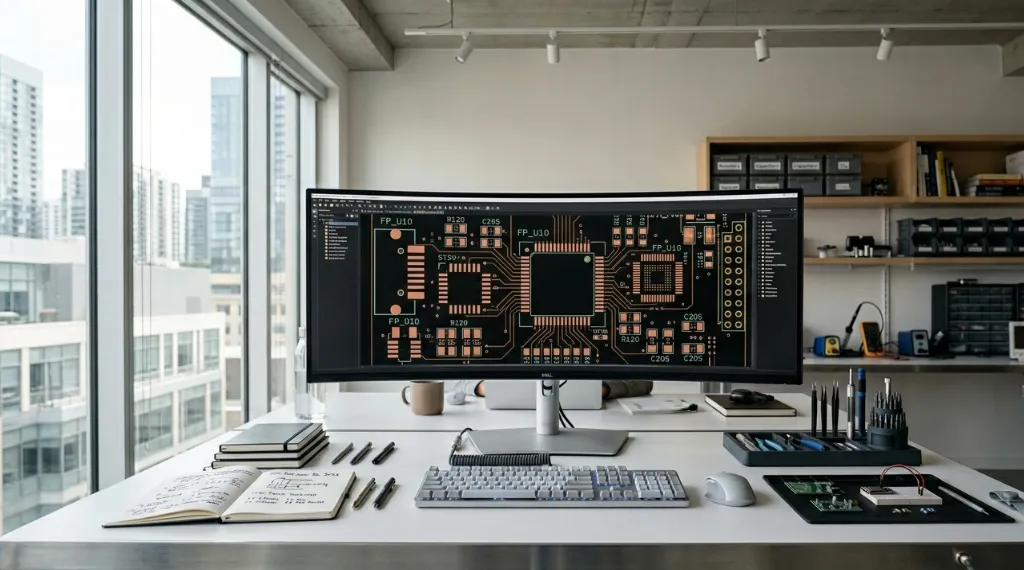
Accuracy in the PCB library is one of the most overlooked yet critical aspects of PCB design. A single incorrect footprint can render an entire prototype unassemblable or cause intermittent solder joint failures.
Common footprint‑related failures include:
- Assembly machines rejecting parts due to wrong pad dimensions
- Tombstoning or bridging during reflow
- Mechanical conflict between component body and enclosure
- Manufacturing delays while libraries are corrected
Professional PCB libraries must include:
- IPC‑compliant land patterns (IPC‑7351)
- Accurate 3D models for mechanical collision checking
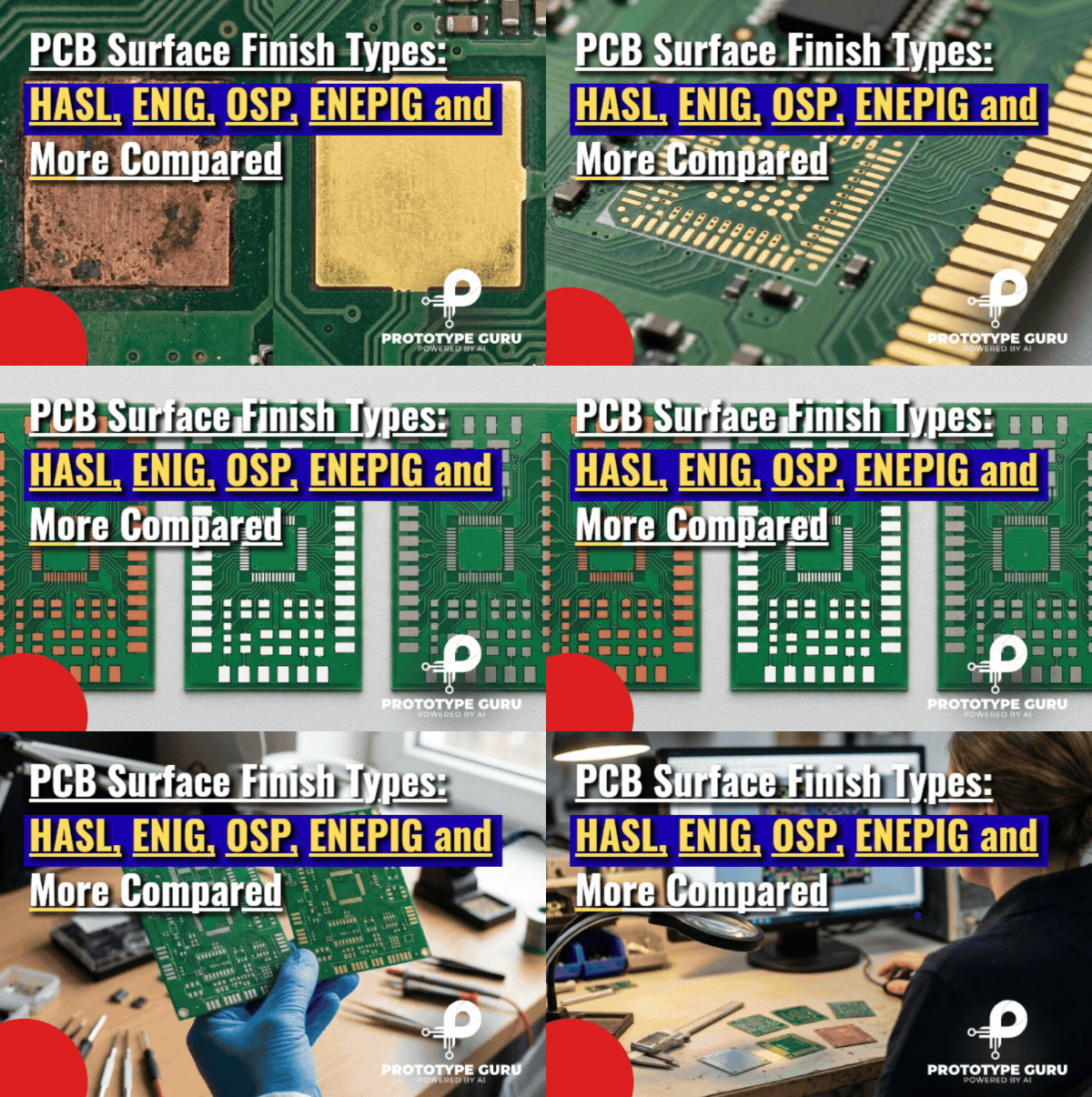
- Verified pad sizes and solder mask openings
- Courtyard definitions that account for rework clearances
- Proper silkscreen polarity and pin 1 indicators
A centralized, version‑controlled library with a rigorous review process is a hallmark of mature hardware teams. It eliminates repeat mistakes and ensures every design starts with verified building blocks.
10. PCB Design & Signal Quality Engineering
PCB layout directly affects electrical performance, thermal stability, EMI behavior, and manufacturability. Even a perfectly functional schematic can result in a failing board if layout guidelines are ignored during the hardware development process.
Professional PCB Layout Design
Controlled Impedance Routing
High-speed signal traces are routed with controlled impedance to maintain signal integrity and reduce reflection issues.
Differential Pair Tuning
USB, HDMI, LVDS, and Ethernet differential pairs are length matched and tuned for stable high-speed communication.
Ground Plane Optimization
Continuous ground planes are designed to provide low-inductance return paths and minimize EMI issues.
Power Plane Segmentation
Separate power domains are isolated carefully to reduce switching noise and improve power integrity.
Return Current Path Analysis
Return current paths are analyzed to avoid slot antenna effects, signal discontinuities, and unwanted radiation.
Crosstalk Reduction Techniques
Proper spacing, guard traces, and routing strategies are implemented to minimize electromagnetic interference between signals.
Layer Stack-Up Planning
PCB layer stack-up is optimized for signal integrity, manufacturability, EMI control, and overall production cost efficiency.
PCB Stack‑Up Design is the foundation. A well‑designed stack‑up provides controlled impedance layers, shields high‑speed signals between planes, and balances copper to prevent warpage. Exact material specifications (FR‑4, high‑Tg) and dielectric thicknesses are mandatory.
Component Placement drives routing complexity. Placing sensitive analog circuits away from digital noise sources, grouping connectors on the board edge, and considering thermal flow during placement avoids many late‑stage layout problems.
Signal Integrity Analysis is mandatory for DDR memory, USB 3.0, PCIe, HDMI, and Ethernet. Pre‑layout and post‑layout simulations verify eye diagrams, timing margins, and impedance continuity. Without it, high‑speed designs often suffer from intermittent bit errors that are extremely difficult to debug.
11. High‑Speed Interface Design Challenges
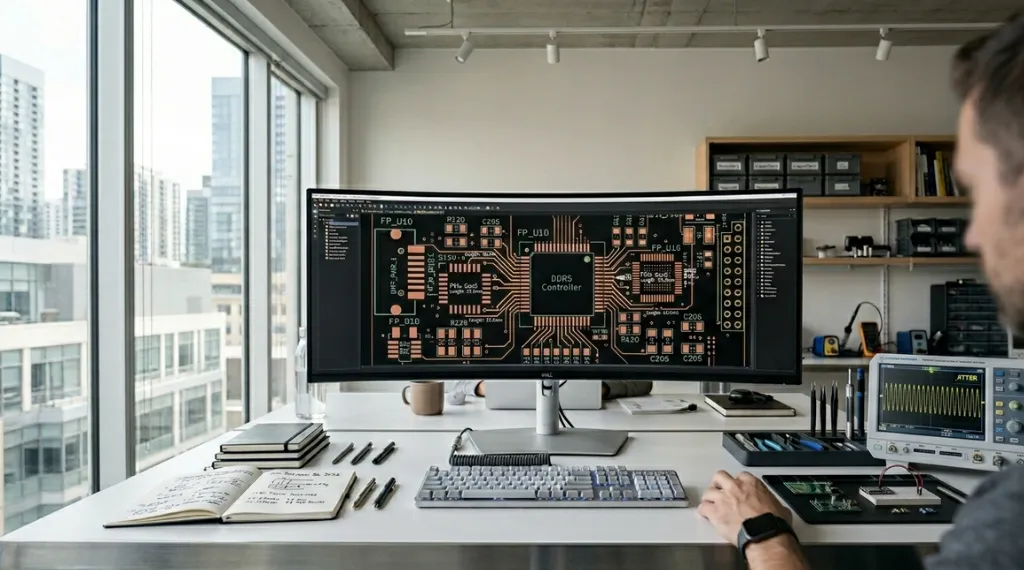
Modern embedded products depend on reliable high‑speed communication interfaces. In custom hardware development, a single poorly routed differential pair can cause USB enumeration failures or corrupted video output.
Common high‑speed interfaces and their design requirements:
- MIPI CSI/DSI – strict length matching, controlled impedance, low skew
- LVDS – 100‑ohm differential impedance, minimal via transitions
- PCI Express – AC coupling capacitors, lane matching, reference plane integrity
- USB 3.x – SuperSpeed pairs with strict loss and crosstalk budgets
- Ethernet – magnetic isolation, Bob‑Smith termination, 100‑ohm impedance
- HDMI – equal length matching, ESD protection at connector
- DDR Memory – fly‑by topology, VTT termination, length matching to within a few mils
Each interface requires proper impedance control, length matching, noise management, power filtering, and sometimes timing deskew. Many SoCs provide detailed layout guidelines that, when followed exactly, prevent the majority of signal integrity issues.
12. Thermal Management and Power Integrity
Power integrity problems are among the most insidious causes of hardware instability. The board may work at room temperature but fail intermittently under load or at voltage extremes.
Engineering teams analyze:
Core and I/O rail voltage ripple is minimized, targeting less than 1–2% of nominal voltage for stable system performance.
Sudden load transients are analyzed to ensure decoupling capacitors can handle peak current demands without voltage collapse.
High-current switching paths are optimized to reduce ground bounce and maintain signal reference stability.
DC-DC converter noise is isolated from sensitive analog and digital rails using filtering and proper layout techniques.
Power regulators are selected and optimized for efficiency to reduce heat dissipation and improve system reliability.
Power Distribution Network impedance profiles are simulated to ensure stable voltage delivery across all load conditions.
Thermal Management is inseparable from power design. Proper thermal engineering includes:
- Copper balancing across layers to avoid hotspots
- Heat dissipation analysis (junction‑to‑ambient thermal resistance)
- Thermal vias under high‑power components
- Heat sink or thermal pad integration where necessary
- Airflow and enclosure venting considerations
A board that runs hot will have reduced reliability and a shorter lifespan. Addressing thermal issues during layout, rather than with post‑prototype patches, maintains product integrity and reduces cost.
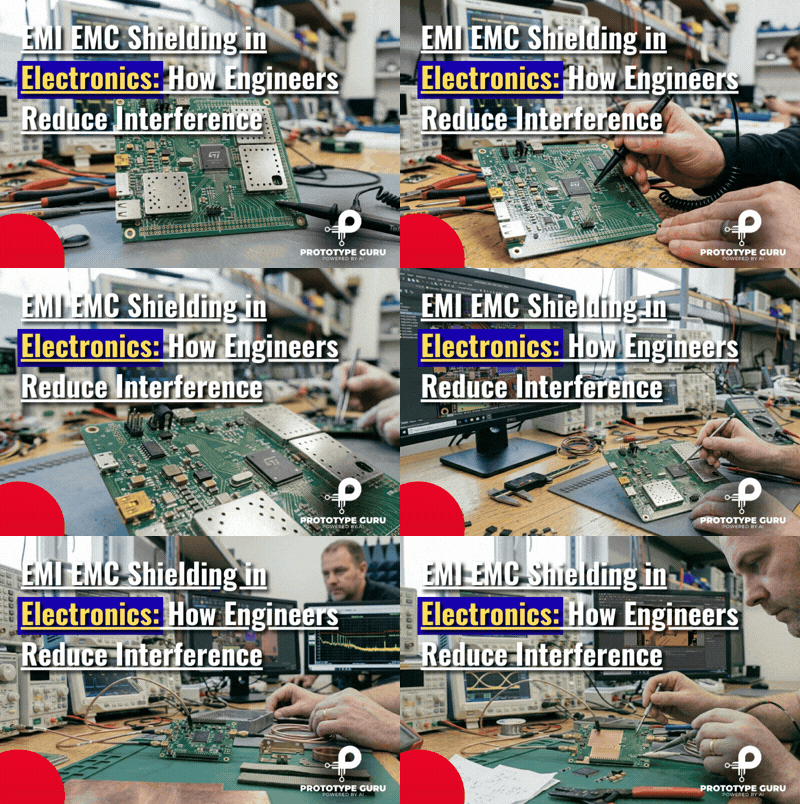
13. EMI/EMC Engineering for Embedded Devices
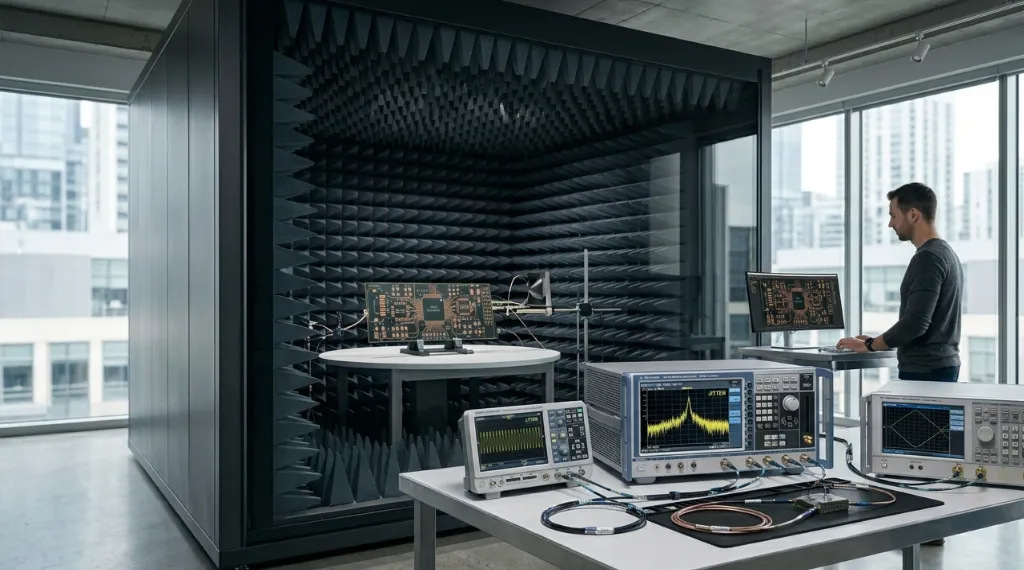
Electromagnetic interference (EMI) can prevent a product from passing FCC, CE, or other regulatory certifications. Remediating EMI after a design is complete is far more expensive than designing for compliance from the start of the hardware development lifecycle.
EMI problems typically manifest as:
- Certification failures in radiated or conducted emissions
- Communication dropouts on wireless interfaces
- Sensor noise and false readings
- Increased bit error rates on memory buses
- Microcontroller resets due to transient noise
Proven EMI Reduction Strategies:
- Uninterrupted ground planes provide a low‑impedance return path
- Proper decoupling and filtering at every power pin
- Critical signals routed between reference planes
- Analog and digital sections isolated with guard rings or moats
- Controlled switching edge rates (series resistors on clock lines)
- Ferrite beads and common‑mode chokes on I/O lines
- Shield cans over sensitive RF or high‑speed sections
Early EMI pre‑compliance scanning during prototype validation helps catch issues long before formal certification testing, saving both time and money in the hardware testing and validation phase.
14. Design for Manufacturing (DFM)
Design for Manufacturing ensures that your PCB can be produced consistently and cost‑effectively. Even a brilliant electrical design can be ruined by a board that cannot be fabricated reliably—a key reason why DFM is a cornerstone of professional hardware development.
DFM analysis checks:
- Minimum trace width and spacing vs. PCB fab capabilities
- Drill hole tolerances and aspect ratios
- Copper‑to‑edge clearances
- Solder mask slivers and registration tolerances
- Copper balancing to prevent warpage during reflow
- Panelization requirements (V‑score vs. tab routing)
- Silk screen legibility and polarity markings
Most PCB manufacturers provide DFM guidelines specific to their processes. Running a DFM check using software (like Valor or built‑in EDA tools) before releasing Gerber files prevents back‑and‑forth delays and reduces prototype build failures.
15. Design for Assembly (DFA)
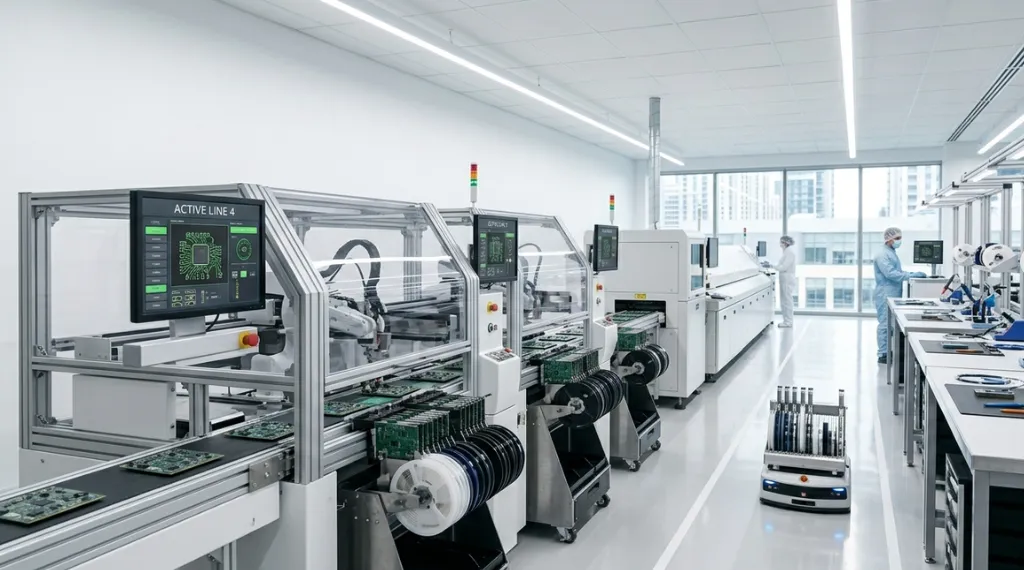
Design for Assembly focuses on making the SMT assembly process as efficient and error‑free as possible. Poor DFA design leads to tombstoned components, misaligned connectors, and low first‑pass yield.
DFA considerations include:
- Consistent component orientation (pin 1 in the same direction)
- Adequate spacing for pick‑and‑place nozzles
- Reflow‑compatible footprints with proper thermal relief
- Avoidance of components on both sides of the board when cost‑sensitive
- Clear polarity markings and outline shapes
- Tooling holes for assembly fixtures
- Wave‑soldering considerations for through‑hole parts
Small adjustments to component placement and orientation can increase assembly throughput by 20% or more and significantly reduce rework costs during production—a direct benefit to your custom hardware solutions.
16. Design for Testing (DFT)
Testing accessibility is critical for both prototype debugging and production pass/fail testing. A board that cannot be probed easily will cost hours of engineering time.
DFT engineering includes:
Test Points on Critical Nets
Access points are added on power rails and communication buses to enable easy probing, debugging, and validation during development and production testing.
Dedicated Debug Headers
JTAG, SWD, and UART headers are clearly labeled and placed for efficient firmware debugging and hardware bring-up.
Boundary Scan (JTAG) Support
JTAG-based boundary scan enables testing of interconnects on complex digital boards without physical probing of every net.
In-Circuit Test (ICT) Access
ICT pads are provided to support automated test fixtures for fast electrical validation of assembled PCBs.
Functional Test Access
Dedicated test points allow end-of-line functional verification to ensure full system performance before shipment.
Built-In Self-Test (BIST)
Firmware-driven self-test routines validate internal hardware functionality without requiring external test equipment.
Without proper DFT, production testing becomes a bottleneck, and field returns are harder to diagnose. Adding test points costs almost nothing during PCB layout but saves thousands in manufacturing debugging time.
17. Prototype Development and PCB Assembly
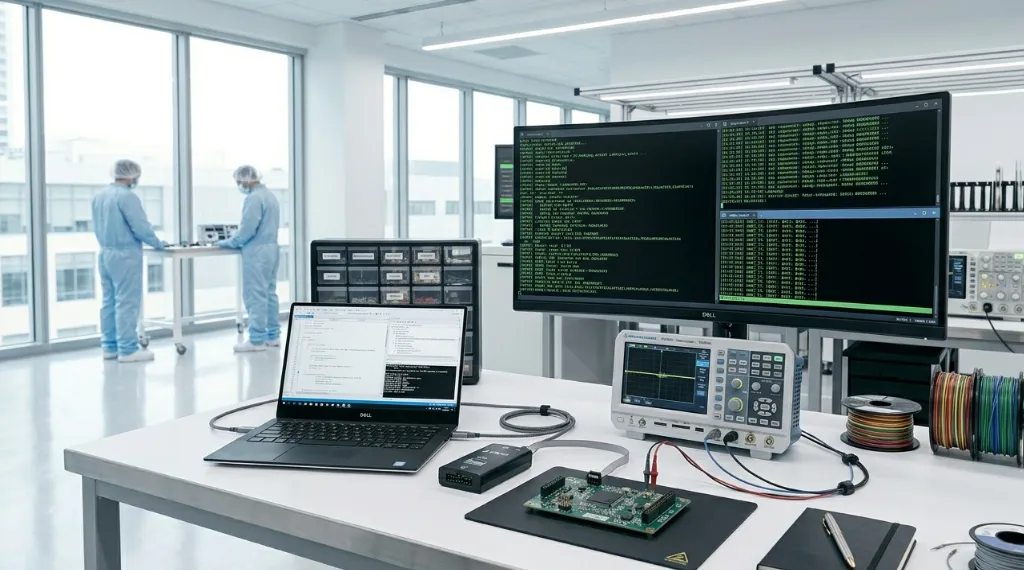
After final design review and Gerber file release, prototype fabrication and assembly begin. The goal of the first prototype is not a finished product but a validation vehicle that confirms the core architecture.
Prototype development stages:
- Gerber, NC drill, and pick‑and‑place file generation
- Fabrication review with the PCB vendor
- Bare board manufacturing and electrical test
- SMT assembly (often with manual or automated process)
- Visual inspection (AOI or manual)
- Rework of any assembly defects
- Initial continuity and short‑circuit testing
Prototype Validation Goals
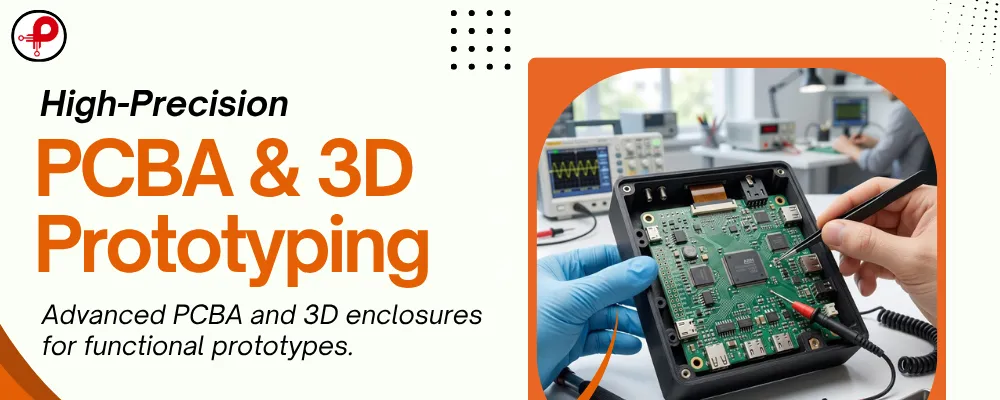
The first articles should validate hardware functionality, power sequencing, signal integrity margins, thermal performance under load, and basic firmware compatibility. A rapid‑prototyping approach—where small batches are built quickly and iterated—yields far better results than trying to perfect the design in one massive spin. This is the essence of a well‑managed prototype development cycle.
18. Hardware Bring‑Up Methodology
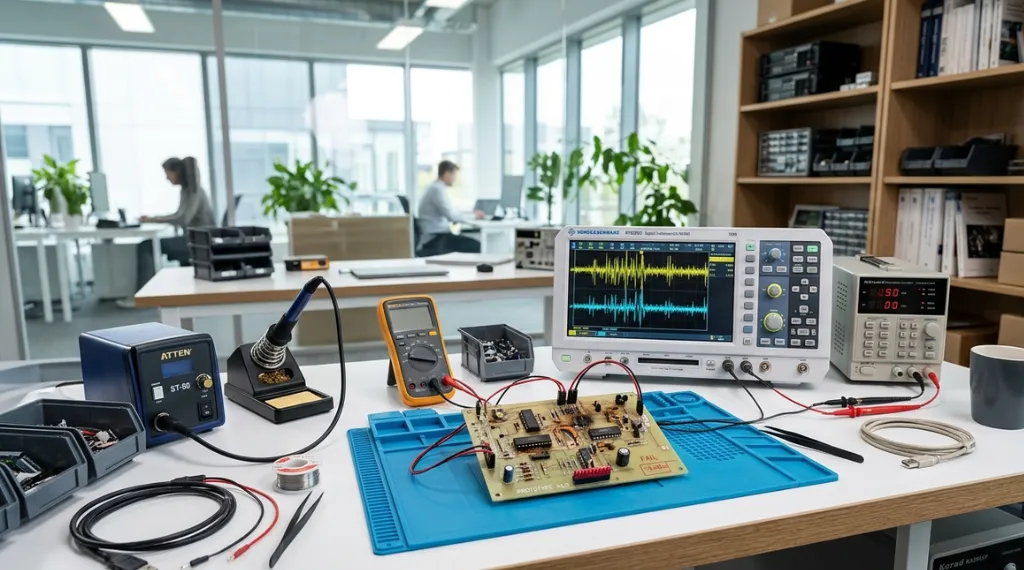
Board bring‑up is the first power‑on and verification phase. A methodical bring‑up procedure prevents damage to expensive components and quickly isolates faults.
A typical bring‑up workflow:
- Visual inspection for solder bridges, rotated components, and mechanical damage
- Resistance check between power rails and ground (short‑circuit detection)
- Power‑up with a current‑limited supply while monitoring inrush current
- Verify all voltage rails (level, ripple, sequencing) with an oscilloscope
- Check oscillators and clocks for frequency and amplitude
- Attempt processor boot (JTAG connectivity, boot ROM behavior)
- Initialize memory and run memory tests
- Bring up communication interfaces one by one
- Flash firmware and run built‑in self‑tests
- Document every step and any anomalies
Professional bring‑up procedures reduce the time from first power‑on to a running prototype from weeks to just a few days. They also generate invaluable documentation for the subsequent hardware testing and validation stages.
19. Firmware Integration and Validation
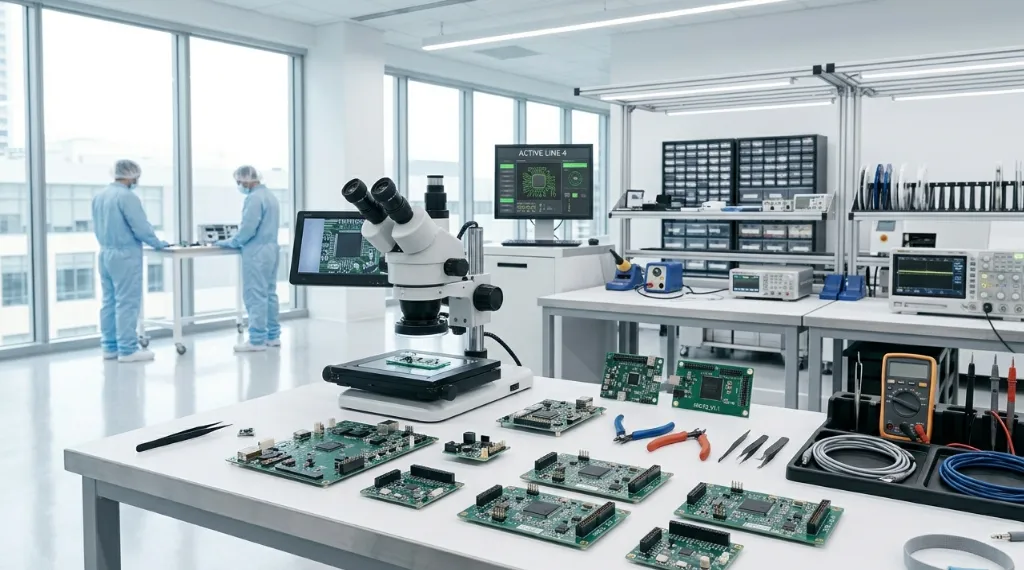
Hardware and firmware must operate together seamlessly. Integration issues are often misdiagnosed as hardware faults, leading to unnecessary PCB re‑spins.
| Category | Tasks / Activities | Challenges / Risks |
|---|---|---|
| Boot & System Security | Bootloader customization and secure boot implementation for protected firmware execution. | Secure boot misconfiguration can block device startup or expose system vulnerabilities. |
| Peripheral Driver Development | Low-level driver development for SPI, I²C, UART, and GPIO interfaces. | GPIO conflicts due to incorrect pin mux settings or misconfigured device tree mappings. |
| Communication Protocol Stacks | Implementation of BLE, TCP/IP, CAN, and other embedded communication protocols. | Driver incompatibility or stack instability across different silicon revisions. |
| Sensor & Data Handling | Sensor calibration, signal conditioning, and real-time data acquisition routines. | Timing instability caused by uncalibrated oscillators or PLL drift affecting accuracy. |
| HAL Verification | Hardware Abstraction Layer (HAL) validation to ensure consistent hardware interaction. | Firmware-hardware mismatch leading to unpredictable peripheral behavior. |
| Real-Time Debugging | Debugging using logic analyzers, SWD/JTAG interfaces, and real-time trace tools. | Memory corruption from DMA conflicts, cache coherency issues, or improper access handling. |
| Power Management Control | Firmware-level control of power sequencing, sleep modes, and regulator enable signals. | Power-sequencing violations caused by incorrect firmware initialization order. |
Starting firmware development on an evaluation kit in parallel with hardware design, then integrating onto the real prototype during bring‑up, is a proven strategy to shorten the overall development timeline in embedded hardware development.
20. Quality Assurance and Control Testing Processes
Quality assurance validates product reliability before production release. Comprehensive testing at this stage is far cheaper than handling field failures and recalls.
Professional QA workflows include:
- Functional testing against the PRD
- Stress testing (maximum load, maximum temperature)
- Thermal cycling (−40°C to +85°C for industrial products)
- Burn‑in testing to weed out infant mortality
- Communication loopback and throughput testing
- Environmental testing (humidity, vibration, drop)
- ESD susceptibility testing
- Power consumption profiling across all operating modes
A detailed test plan that maps every requirement to a specific test case ensures nothing is overlooked. Results should be documented in a validation report that serves as evidence for design maturity and certification bodies—a key deliverable in any product development service.
21. Manufacturing Readiness & Production Scaling

Transitioning from a working prototype to volume production requires more than just functional hardware. It demands documented processes, validated fixtures, and stable supply chains.
Manufacturing readiness activities include:
- Finalizing the BOM with approved manufacturers and second sources
- Creating assembly drawings and work instructions
- Designing production test fixtures and automating test sequences
- Programming and calibration procedures
- Production tooling (stencils, press‑fit fixtures, programming jigs)
- Packaging design and labeling requirements
- Pilot build (50–200 units) to validate yield and throughput
A successful pilot build reveals DFM/DFA gaps, test coverage holes, and supply chain weaknesses that can be corrected before mass production ramp‑up. Skipping the pilot build often leads to line‑down situations that are exponentially more expensive—a risk that a manufacturing readiness process is designed to eliminate.
22. Supply Chain & Component Risk Management
Supply chain disruptions can delay product launches by months or kill a product entirely. Hardware developers must proactively manage component risk from day one.
Maintaining an Approved Vendor List (AVL) with preferred suppliers
Qualifying alternate components for all critical BOM lines
Monitoring lifecycle status and end-of-life notices
Holding safety stock of long-lead or single-source parts
Forecasting demand and securing allocation early
Engaging with distributors for lead-time visibility
Designing in pin-compatible drop-in replacements where possible
Component shortages, as experienced globally in recent years, emphasize the importance of supply chain resilience. A design that relies on a single hard‑to‑get component is a business risk that must be mitigated before production release.
23. Mechanical & Enclosure Development
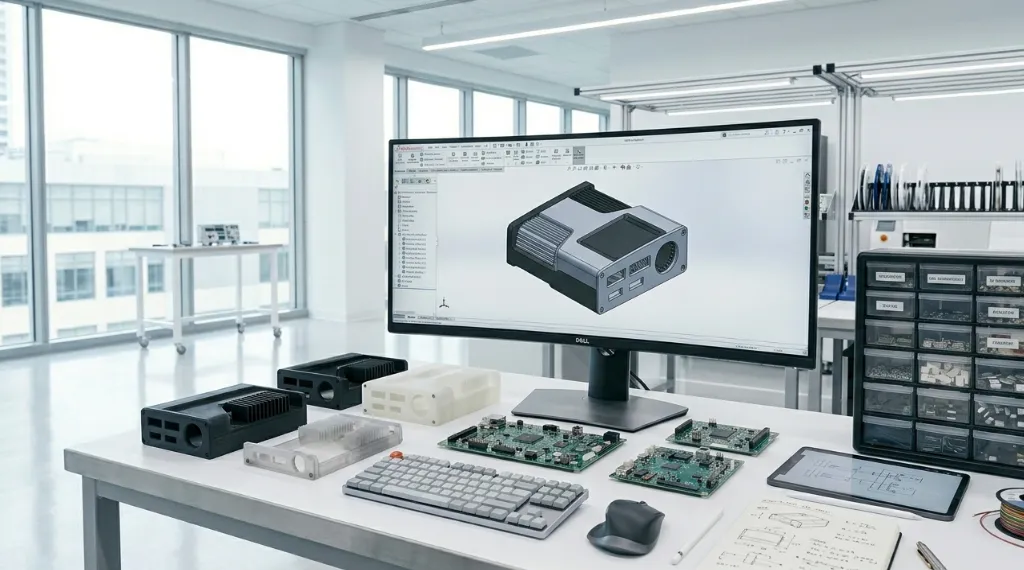
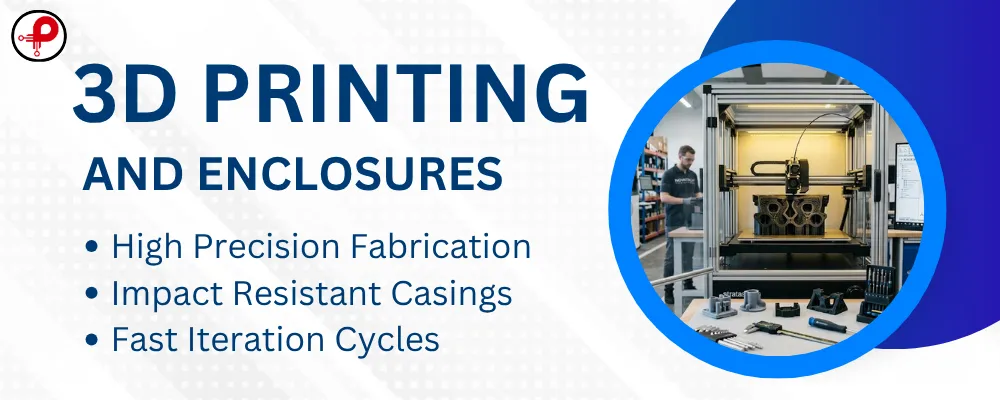
Hardware products live inside mechanical enclosures that influence board shape, connector placement, thermal behavior, and user experience. Mechanical constraints must be considered early in the PCB layout, not after the fact.
Key mechanical engineering considerations:
- Enclosure material and IP rating (plastic, aluminum, sealed)
- Connector accessibility and strain relief
- Thermal airflow paths and vent placement
- Mounting points and structural rigidity
- Button, display, and LED light pipe integration
- Drop and vibration resilience
- Assembly and serviceability
Close collaboration between electrical and mechanical engineers during the architecture phase avoids layout‑induced mechanical issues such as connectors that don’t align with enclosure cutouts or hot components placed where users touch.
24. Industrial Applications of Hardware Development
Professional hardware development supports diverse industries, each with its own design constraints and standards.
IoT Devices
Smart home sensors, industrial monitoring nodes, and wireless automation modules require low‑power RF design, battery optimization, and secure over‑the‑air update capability. This is a prime example of IoT hardware design where power efficiency and connectivity are paramount.
Industrial Automation
PLC systems, motor drives, and robotics demand robust protection (surge, ESD, over‑temperature), real‑time deterministic communication (EtherCAT, CAN), and functional safety compliance (IEC 61508).
Consumer Electronics
Wearables, smart displays, and portable audio products emphasize miniaturization, high‑density interconnect (HDI) PCBs, and cost‑optimized BOMs for high‑volume production.
Medical Electronics
Patient monitors, diagnostic devices, and implantable systems require stringent safety isolation, ultra‑low leakage currents, and compliance with ISO 13485 and IEC 60601. Reliability and failure analysis are paramount.
25. Frequent Mistakes in Hardware Development
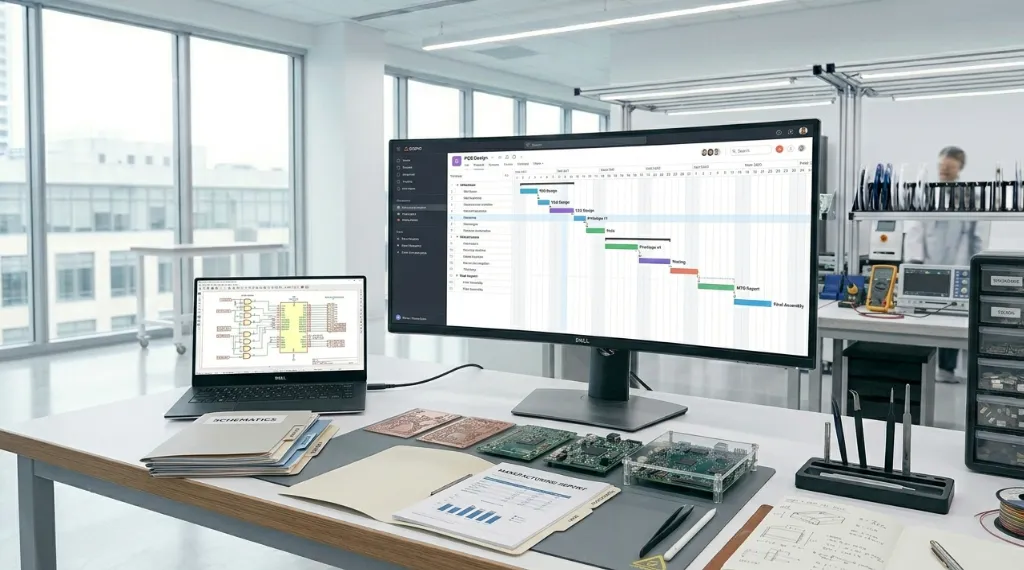
Many projects burn through budget because of avoidable engineering mistakes. Recognizing these patterns is the first step toward avoiding them.
The most common and costly mistakes include:
| Common Mistake | Impact / Issue | Why It Matters |
|---|---|---|
| Starting layout before schematic review | Design errors propagate into PCB layout causing costly rework | Ensures circuit correctness before physical design begins |
| Ignoring power integrity | Voltage instability and unexpected system resets | Proper decoupling is essential for stable operation |
| Weak or split ground plane | Increased EMI and signal integrity issues | Solid ground reference is critical for noise control |
| Skipping thermal analysis | Overheating and component failure in real-world use | Thermal design ensures long-term reliability |
| Missing DFM checks | Manufacturing defects and production delays | DFM ensures design is production-ready |
| Unverified footprints | Component misalignment and soldering failures | Accurate footprints prevent assembly issues |
| Incomplete bring-up procedure | System may fail during initial power-on testing | Structured bring-up ensures safe validation |
| No firmware collaboration early | Hardware/software mismatch and redesign cycles | Co-design avoids integration issues |
| Treating prototype as production-ready | Field failures and scalability issues | Prototypes must be validated before mass production |
Engineering discipline—checklists, design reviews, and simulation—consistently reduces the frequency and impact of these mistakes.
26. Techniques for Reducing Hardware Development Expenses
Reducing hardware development cost is not about cutting corners; it’s about making smarter engineering decisions that prevent rework and optimize every dollar.
27. Hardware Development Process Checklist
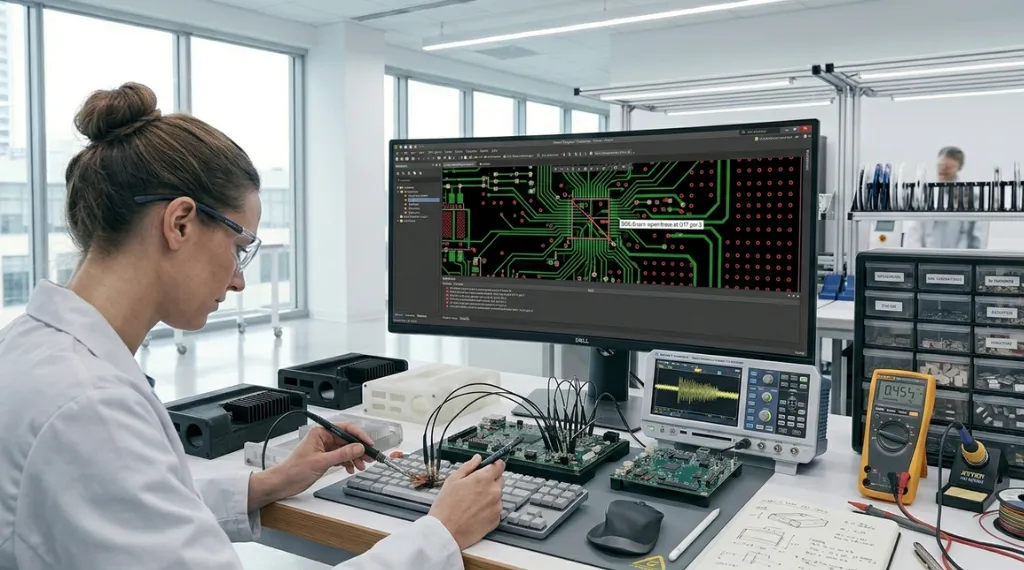
Use this checklist to track progress through each phase of a hardware development project.
Product Discovery
- Requirement definition documented and signed off
- Scope of Work finalized with timeline and deliverables
- Architecture block diagram approved
- Major components selected with lifecycle analysis
Circuit Engineering
- Schematic created with complete pin‑out
- GPIO mapping confirmed with firmware team
- Power budget and sequencing validated
- BOM optimized and alternate parts identified
PCB Development
- All footprints verified against IPC standards
- Layer stack‑up defined and impedance calculated
- Layout completed and passed DRC/ERC
- DFM/DFA analysis performed and issues resolved
Validation
- Visual and short‑circuit inspection completed
- All voltage rails verified under load
- Firmware boots and runs memory tests
- Communication interfaces loop‑back tested
- QA test plan executed and results documented
Manufacturing
- Final production BOM released
- Supply chain secured with lead times confirmed
- Assembly and test instructions created
- Pilot build completed and yield acceptable
- Deployment and packaging plan in place
28. Frequently Asked Questions (FAQs)
What does hardware development refer to?
↑Why is PCB design so critical in hardware development?
↓What is embedded hardware development?
↓How long does a typical hardware product development take?
↓What causes expensive PCB redesigns?
↓29. Conclusion
Modern hardware development is far more complex than simply drawing a schematic and routing a PCB. Successful electronic product engineering demands a disciplined workflow that integrates architecture planning, circuit design, signal and power integrity analysis, firmware co‑development, manufacturing optimization, and exhaustive validation.
Teams that adopt a structured hardware development process consistently reduce prototype failures, accelerate time‑to‑market, lower BOM and manufacturing costs, and deliver products that pass certification on the first attempt. The investment in process discipline—checklists, design reviews, and early simulation—returns multiples of its cost by eliminating the $10,000+ prototype re‑spins that plague so many hardware startups.
Whether you are creating an IoT sensor, an AI edge device, an industrial controller, or a consumer wearable, the principles outlined in this guide will help you mitigate risks, manage expenses, and build hardware that works reliably in practical applications. An organized hardware engineering process isn’t merely a recommended practice; it is among the most valuable competitive advantages a hardware company can own.