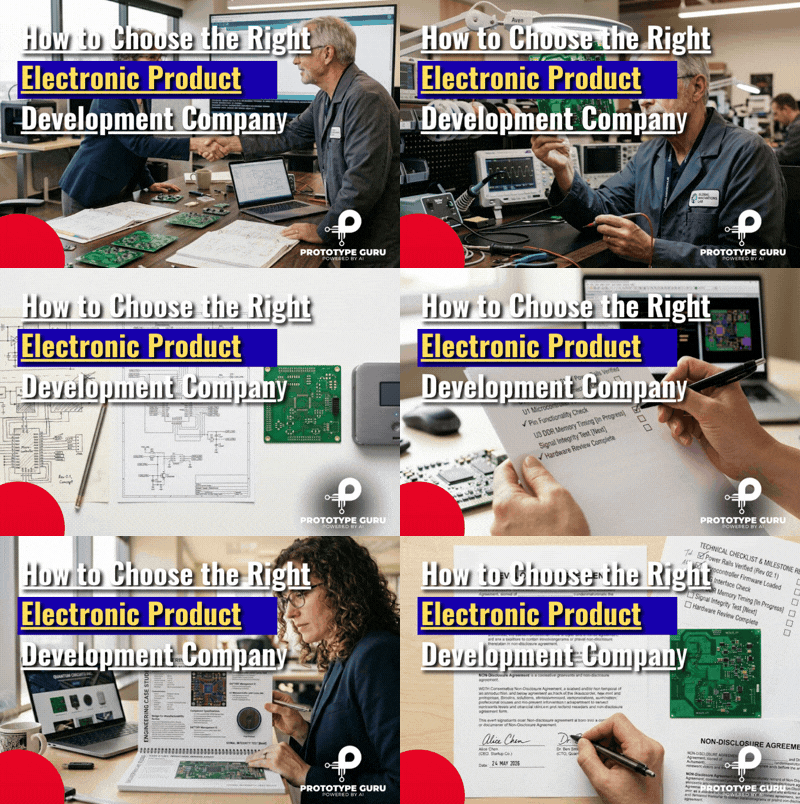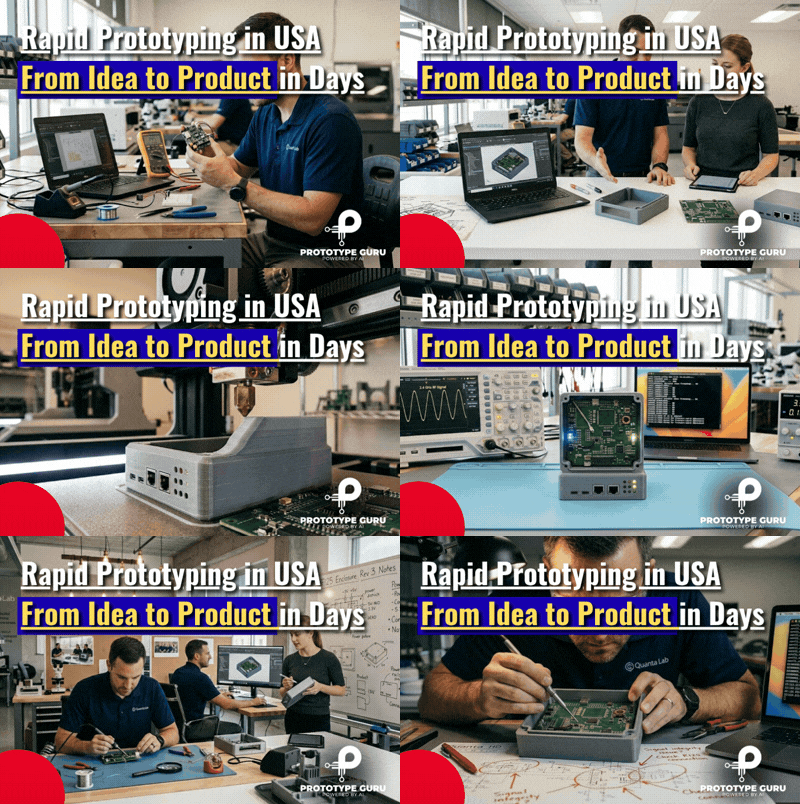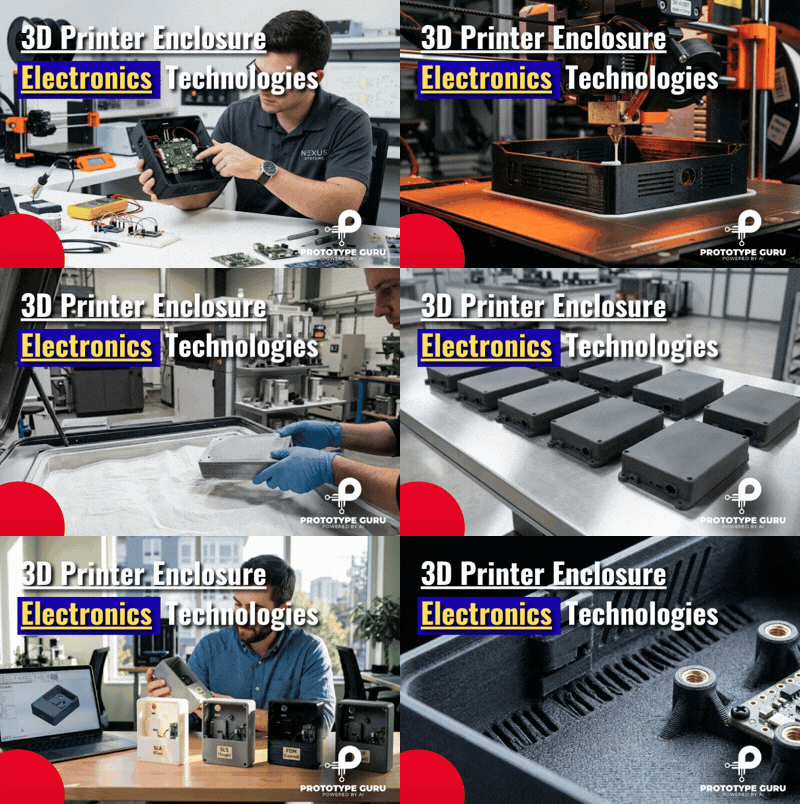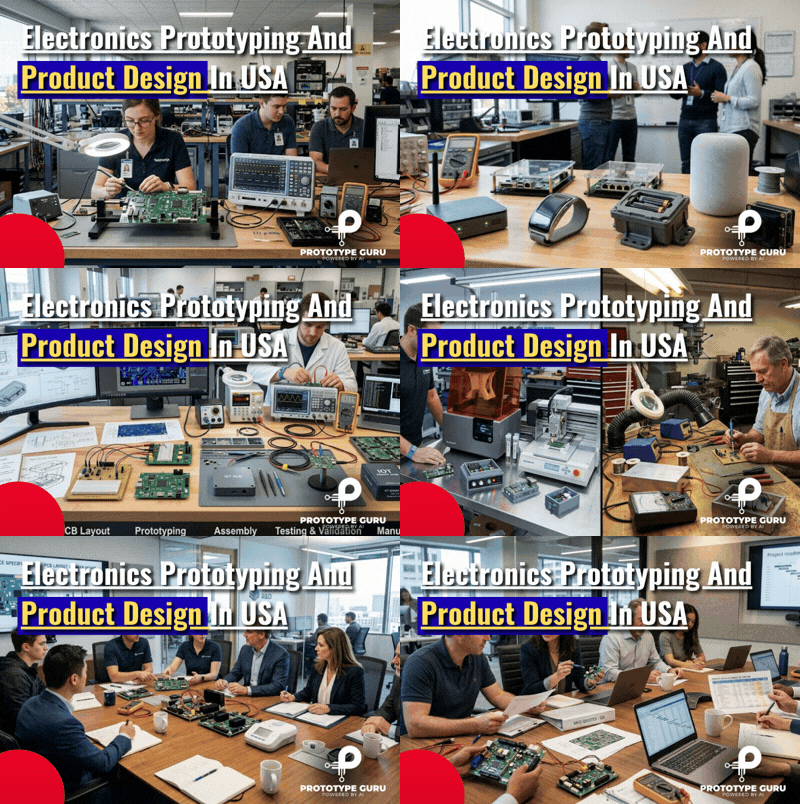
Introduction to PCB Manufacturing Process
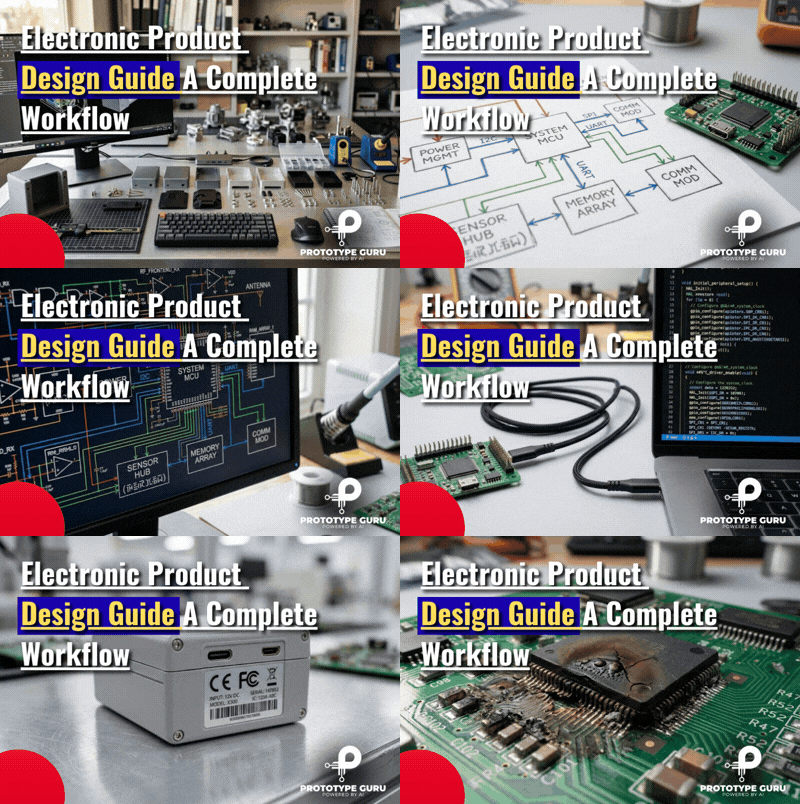
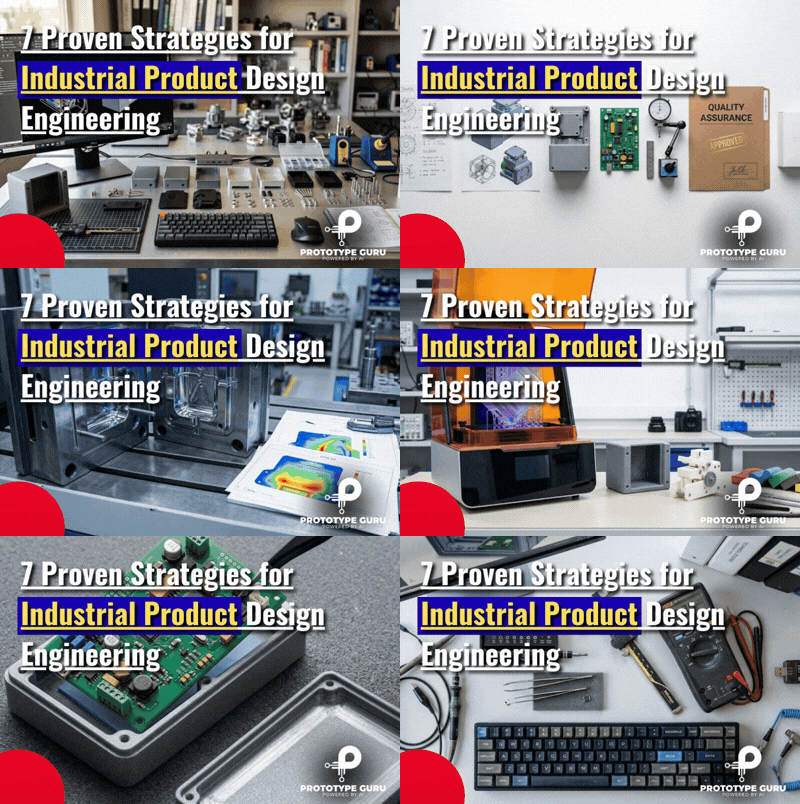
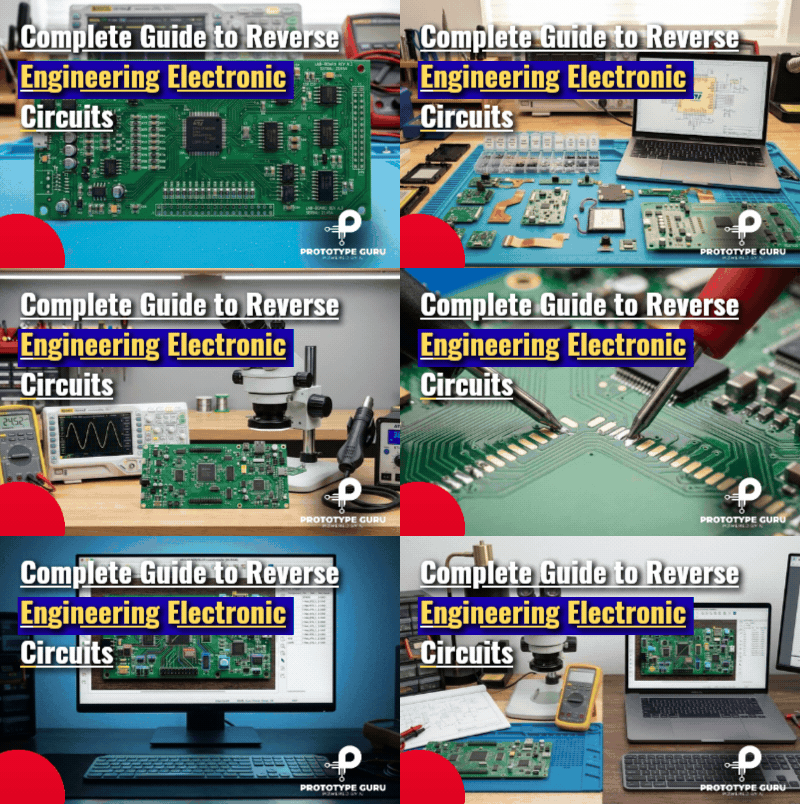
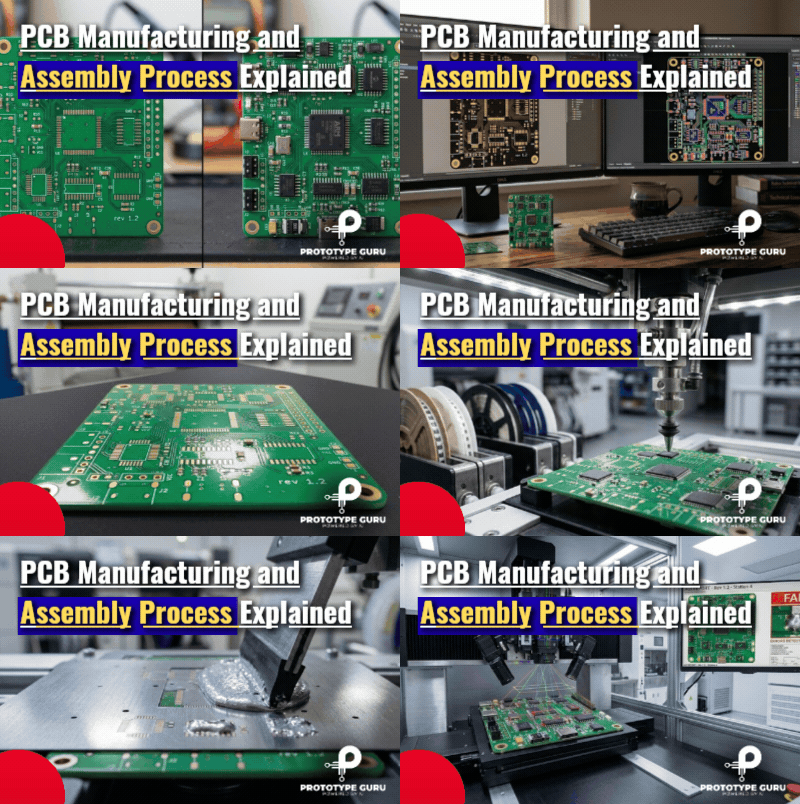
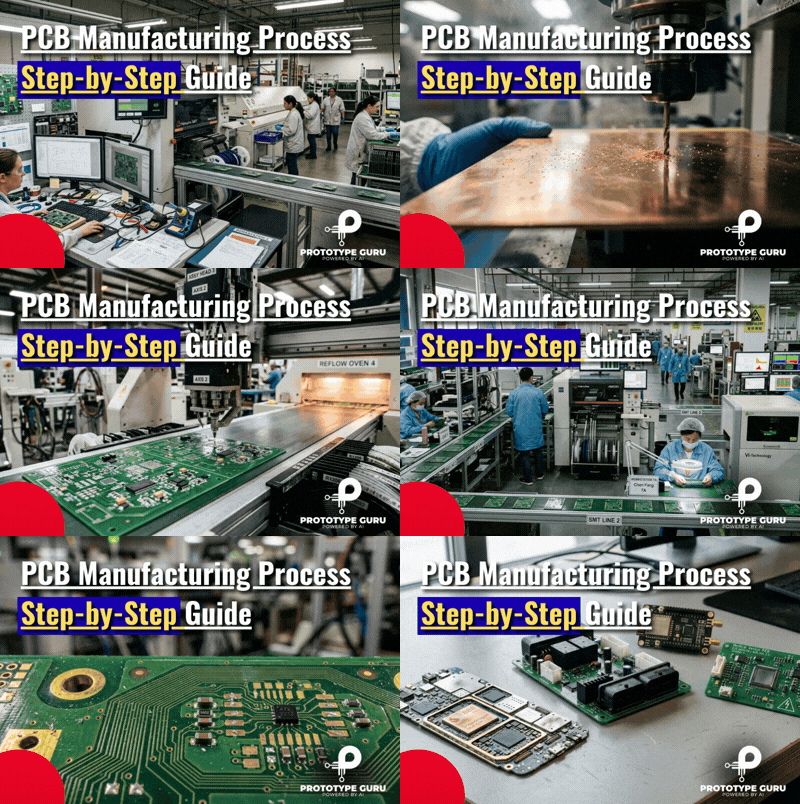
The printed circuit board (PCB) manufacturing process is the foundation of all modern electronic systems. Every electronic device such as smartphones, laptops, medical equipment, automotive systems, and IoT devices depends on a precisely designed PCB. It acts as the central platform where all electronic components are connected and controlled. Without a properly manufactured PCB, even the most advanced electronic design cannot function in real-world applications.
The PCB manufacturing process consists of multiple stages, including design validation, fabrication, assembly, testing, and final inspection. Each stage requires high precision, controlled environments, and advanced manufacturing technologies. A small error in any step can lead to circuit failure or performance issues, which makes PCB manufacturing a highly critical part of electronics engineering.
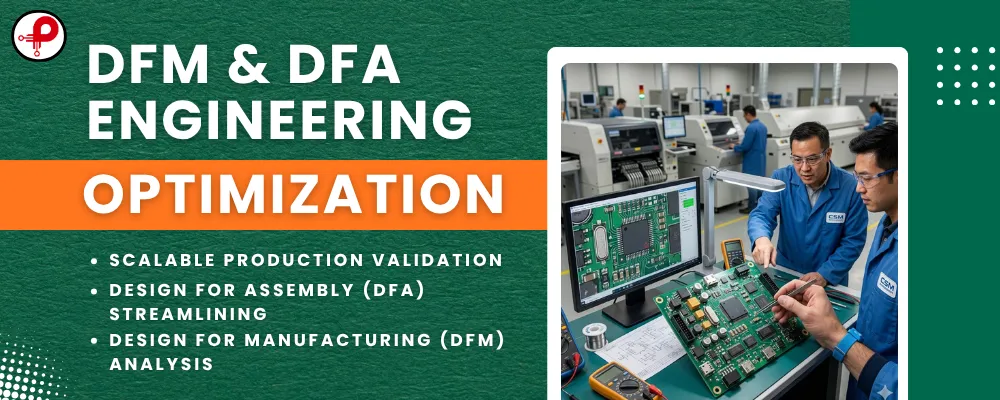
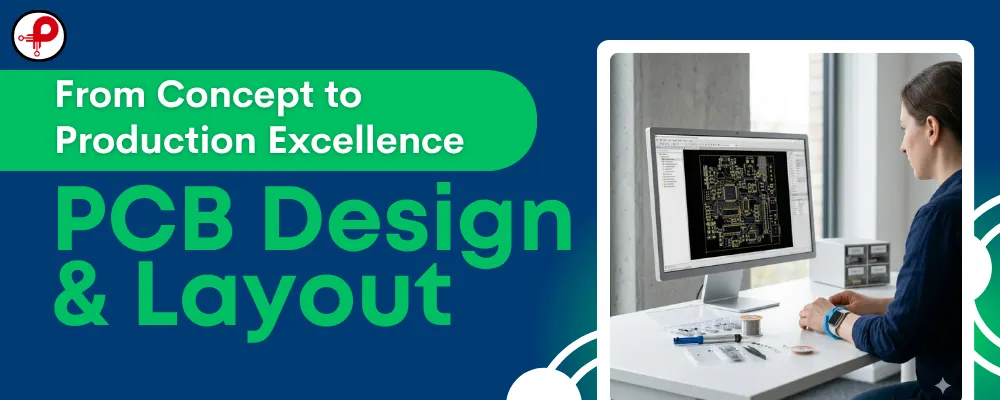
Today, PCB manufacturing is highly automated and technology-driven. Manufacturers use CAD tools, CNC machines, SMT assembly lines, and advanced inspection systems to ensure accuracy and reliability. The process begins with Gerber file generation during PCB design and ends with fully tested and assembled boards ready for use.
At Prototype Guru, we help engineers and startups transform their ideas into real electronic products by providing reliable PCB manufacturing support from design to production.
Overview of PCB Manufacturing Process
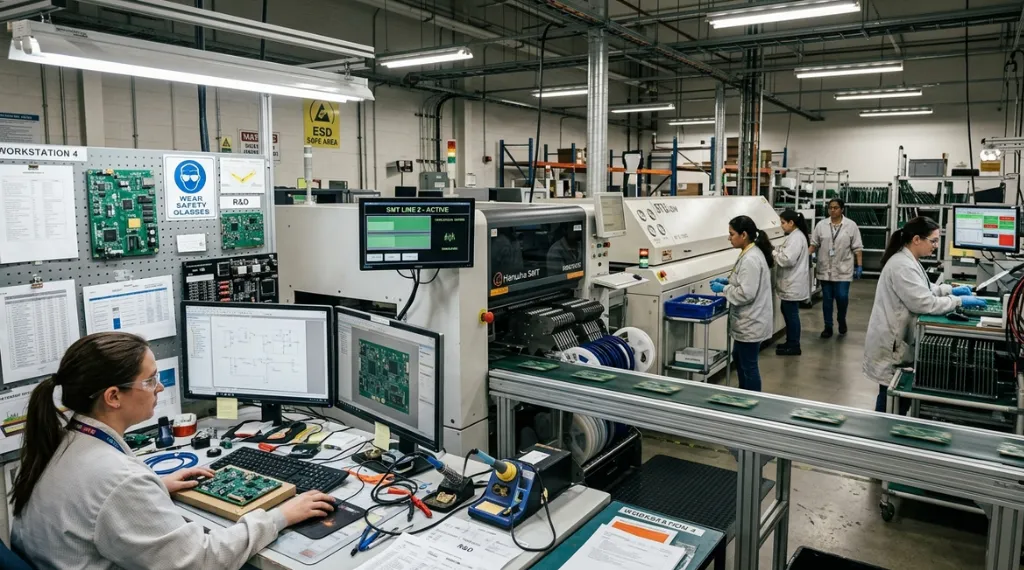
The PCB manufacturing process refers to the complete workflow of converting a PCB design into a physical circuit board. It includes PCB fabrication, PCB assembly, and final testing to ensure performance and quality standards.
The process begins with PCB design and ends with PCB production, where fully functional boards are prepared for real-world applications. Manufacturers follow strict guidelines to ensure precision, especially for multilayer PCB designs and complex circuit layouts.
PCB Fabrication
↑PCB Assembly (SMT & Through-Hole)
↓PCB Testing & Quality Assurance
↓Industry Applications
↓Prototype Guru supports clients through every stage of PCB design to manufacturing, ensuring smooth transition from concept to production.
PCB Fabrication Process Explained
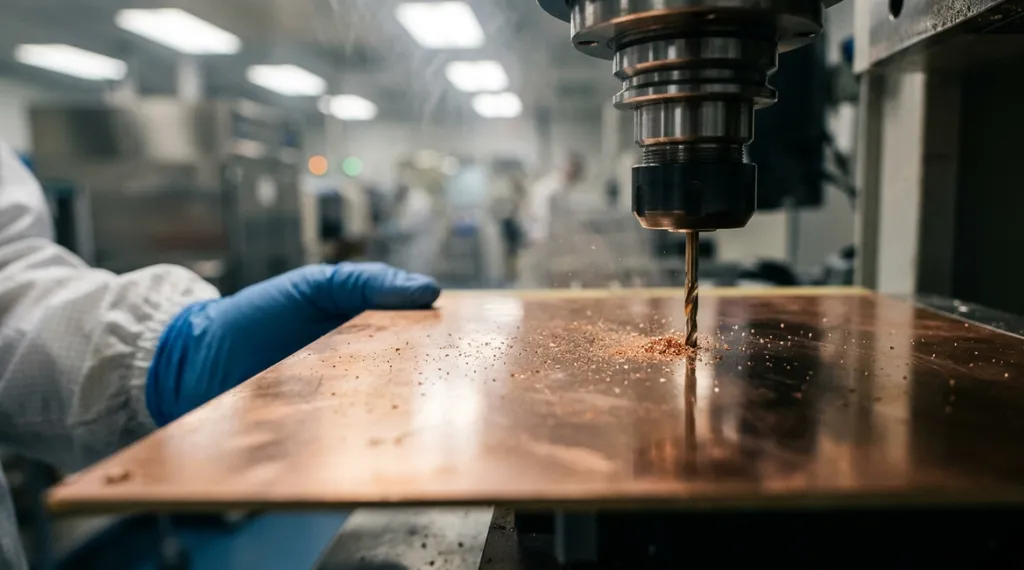
The PCB fabrication process is the stage where the physical circuit board is created. It starts with copper-clad laminate and involves chemical and mechanical processes such as etching, drilling, lamination, and plating.
For multilayer PCB designs, the process begins with layer stacking and routing. PCB etching removes unwanted copper to form precise circuit paths. PCB drilling creates holes for components and vias to ensure electrical connections between layers.
Copper-clad laminate is used as the base material for PCB fabrication. PCB lamination binds multiple layers together in multilayer boards. PCB silk screen printing adds labels and component markings, while PCB plating improves conductivity inside drilled holes.
PCB surface finish techniques such as ENIG improve durability and solderability. After fabrication, each board goes through strict inspection to detect defects or alignment issues.
Modern industrial PCB manufacturing uses automated systems to ensure high precision and consistency. PCB stackup design also plays an important role in maintaining signal integrity.
PCB Assembly Process
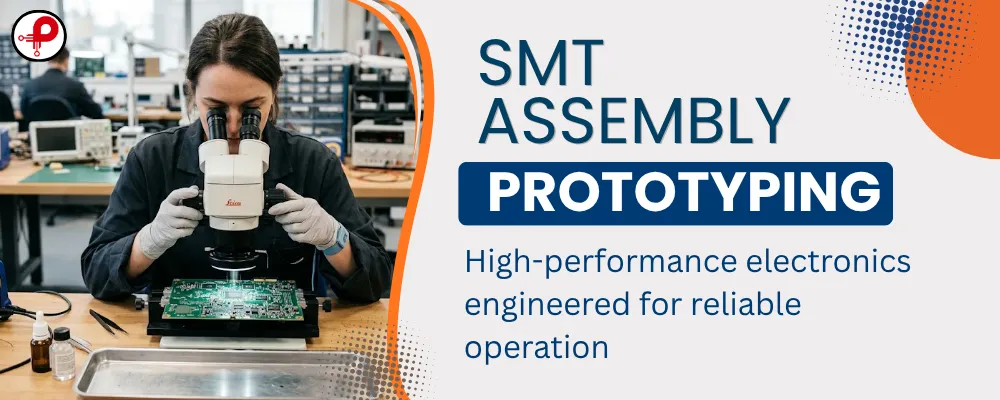
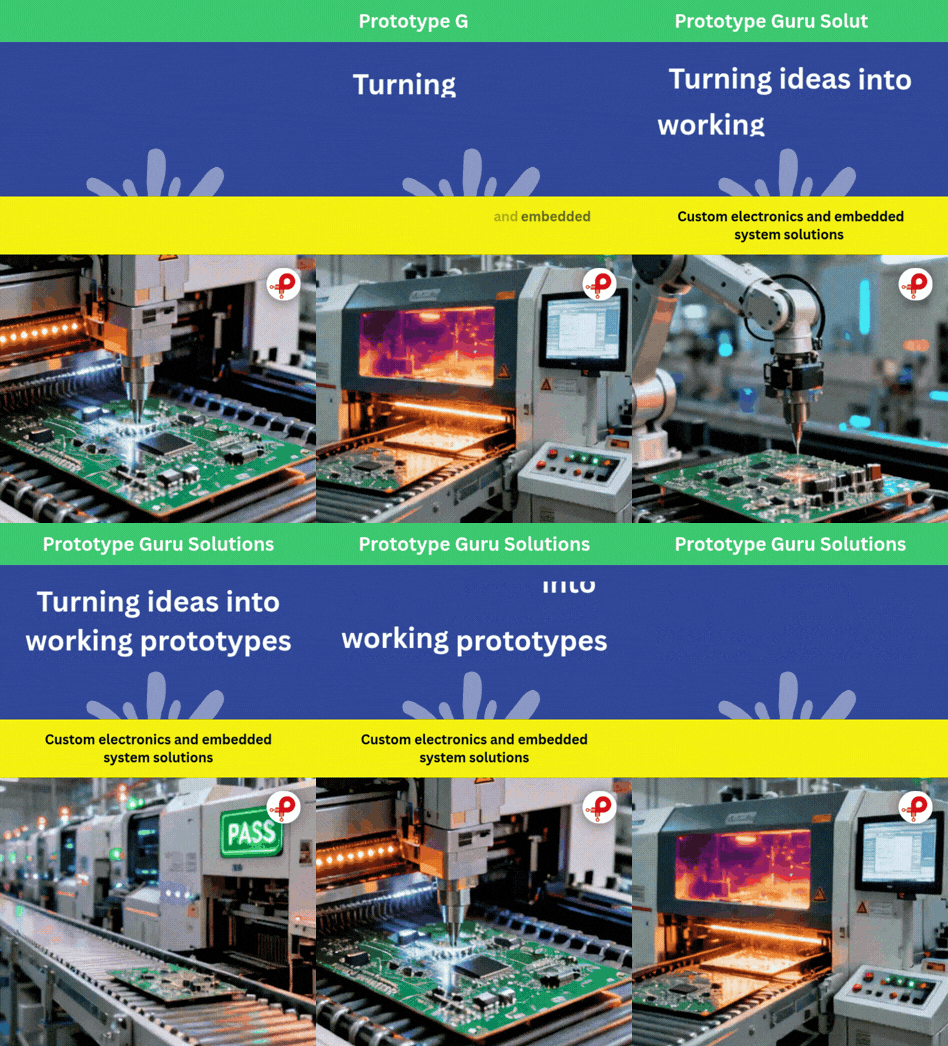
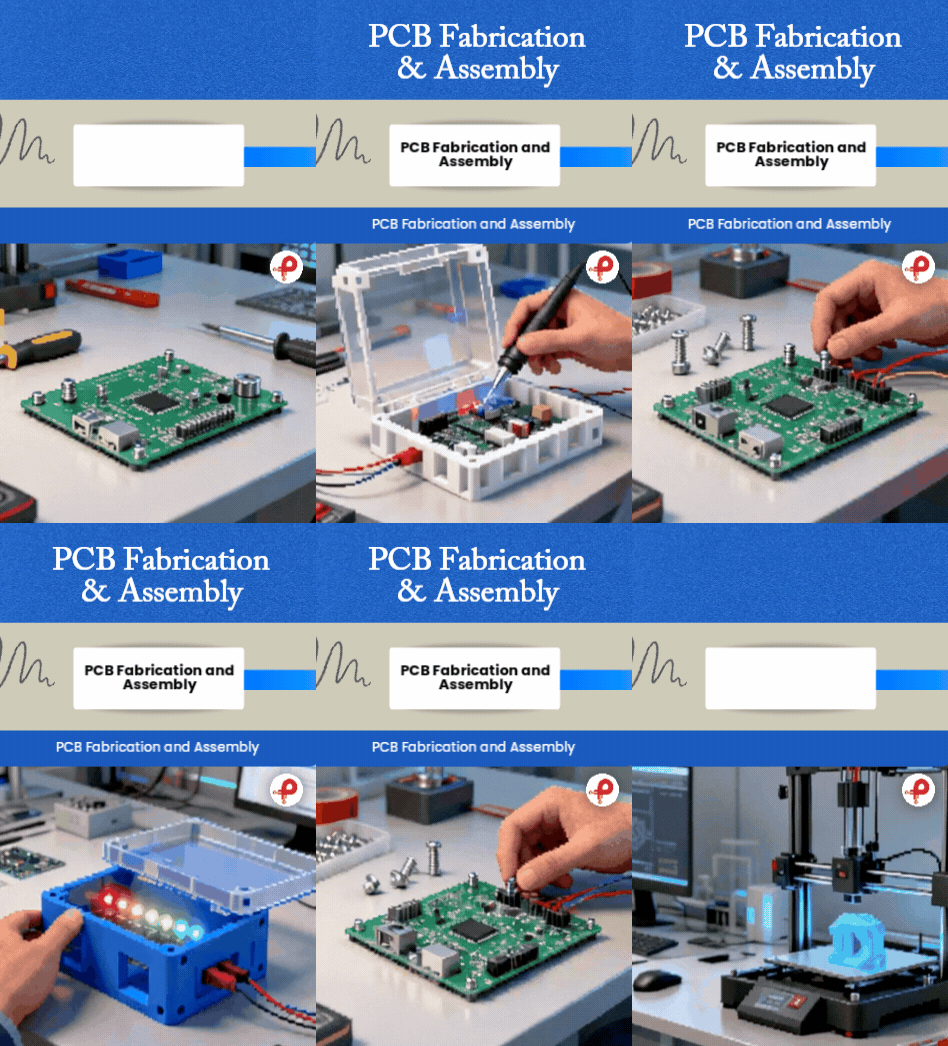
PCB assembly is the stage where electronic components are mounted onto a fabricated circuit board using SMT or through-hole methods. Components are placed by automated machines or manually depending on complexity. The process includes solder paste printing, placement, and reflow soldering, followed by inspection and testing to ensure proper electrical performance and reliability of the final product.
| Step | Process Stage | Description |
|---|---|---|
| 1 | Solder Paste Application | Solder paste is applied on PCB pads using a stencil for SMT component mounting. |
| 2 | Component Placement | Automated pick-and-place machines or manual assembly methods position components accurately. |
| 3 | Reflow Soldering | The PCB passes through a reflow oven where solder paste melts and forms permanent joints. |
| 4 | Through-Hole Soldering | Component leads are inserted into drilled holes and soldered using wave or manual soldering. |
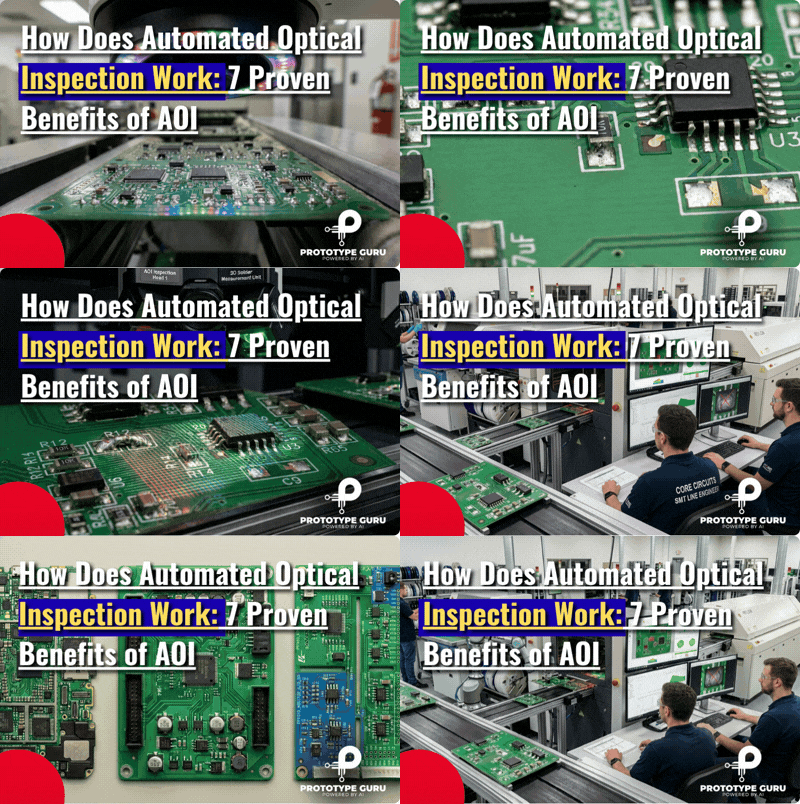
| 5 | Inspection (AOI) | Automated Optical Inspection detects misalignment, missing components, and solder defects. |
| 6 | PCB Testing | Electrical testing verifies continuity, signal integrity, and overall circuit functionality. |
PCB Production Workflow
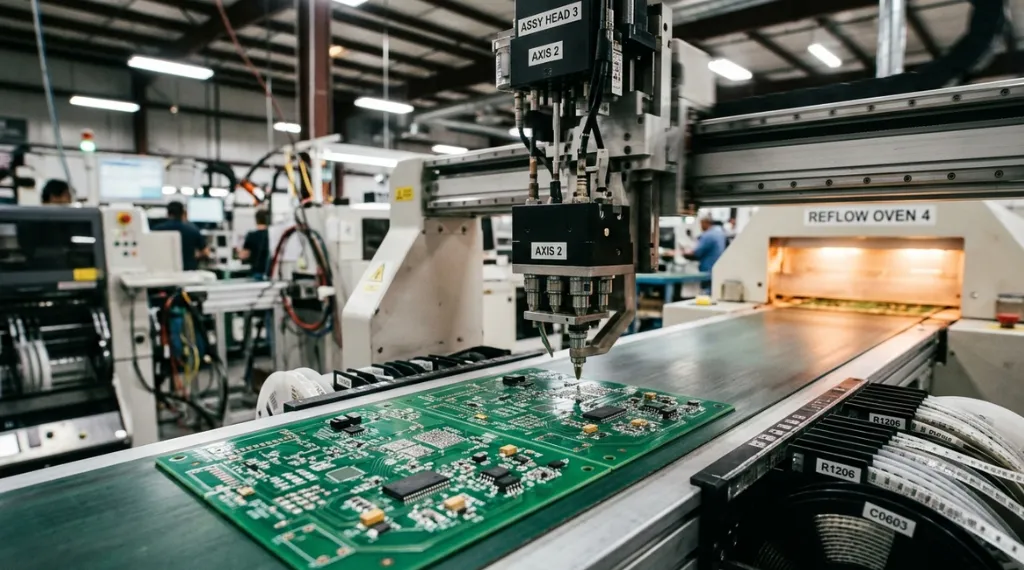
The PCB production process integrates both fabrication and assembly to transform design files into fully functional electronic boards. It begins with Gerber file verification and continues through fabrication, component assembly, testing, and final packaging. Modern PCB manufacturing is highly automated, ensuring precision, speed, and consistency. This structured workflow enables efficient mass production while maintaining high quality standards and reducing errors across all stages of production.
PCB Production Workflow
Design Validation
PCB design files (Gerber) are reviewed to ensure accuracy and manufacturability before production begins.
PCB Fabrication
The bare PCB is manufactured using FR4 material, copper layering, etching, and precision drilling processes.
Component Assembly
Electronic components are mounted using SMT and through-hole techniques depending on design requirements.
Soldering Process
Reflow or wave soldering is used to create strong and reliable electrical connections on the PCB.
Testing & Inspection
AOI and functional testing ensure quality, accuracy, and defect-free PCB performance.
Packaging & Delivery
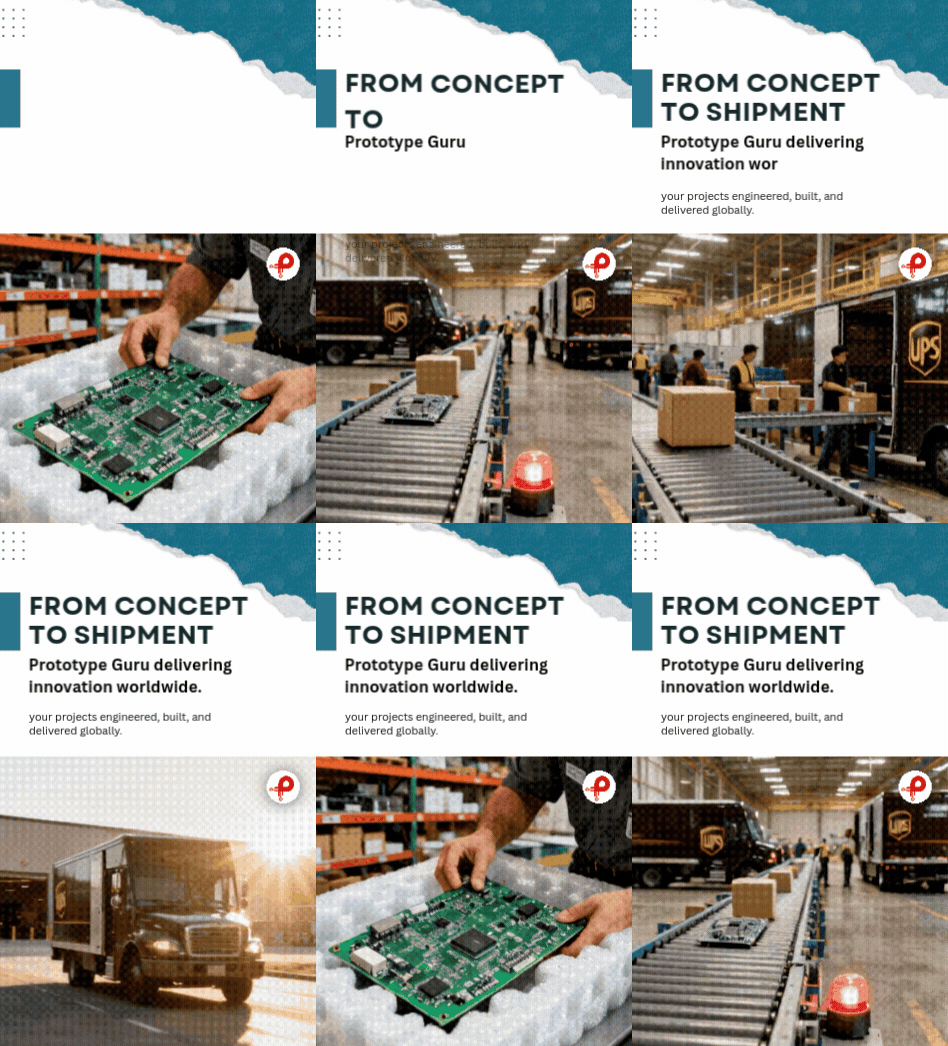
Final PCBs are cleaned, packed securely, and shipped to customers or production facilities.
PCB Design to Manufacturing Process
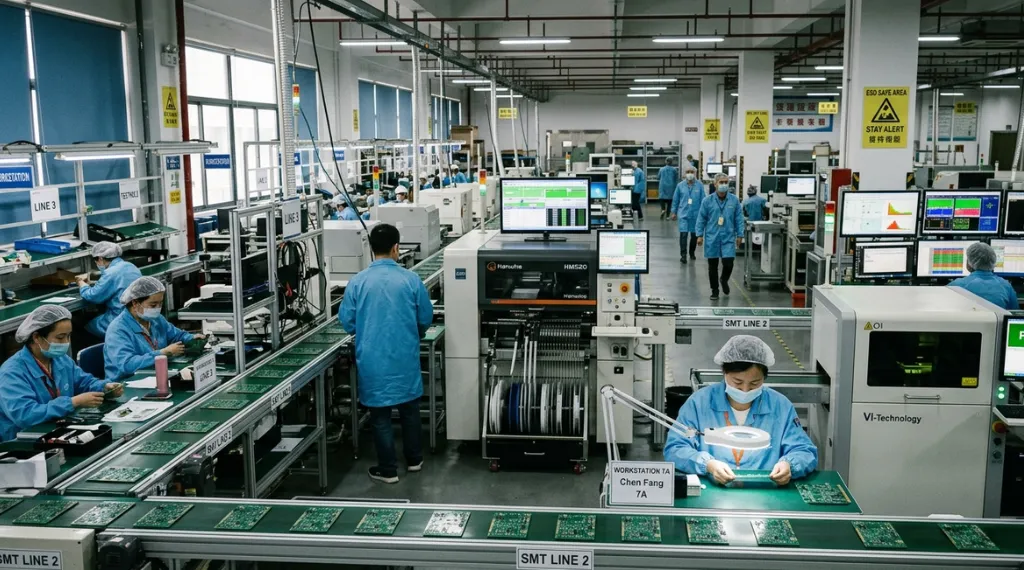
PCB design to manufacturing is the transformation of a digital circuit design into a physical PCB.
Engineers use CAD tools to design layouts and generate Gerber files, which act as instructions for manufacturing.
The process includes PCB design, Gerber file generation, fabrication, assembly, and testing. Each stage ensures that the final product meets functional and quality requirements.
PCB manufacturing companies play an important role in ensuring smooth execution of the entire process. Many startups use PCB manufacturing services to reduce development time and cost.
After fabrication and assembly, PCB inspection and testing ensure quality, reliability, and performance.
Materials and Technology Used in PCB Manufacturing
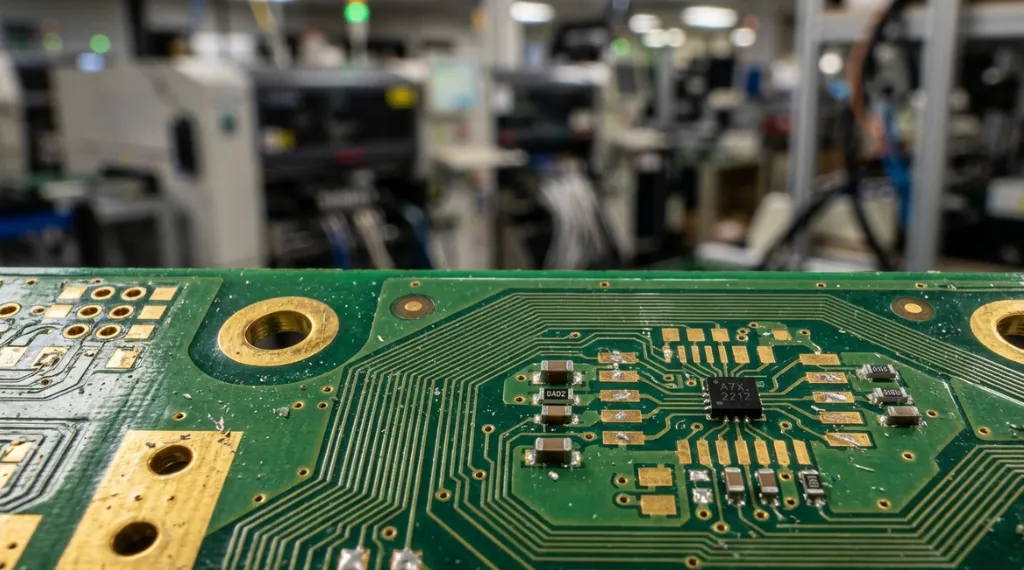
Modern PCB manufacturing relies on advanced materials and automation to achieve high efficiency and reliability. FR4 is commonly used because of its strength and heat resistance, while multilayer technology enables compact yet complex circuit designs. Key processes like stackup design, routing, lamination, and plating ensure electrical performance and durability. Automated SMT systems, ENIG finishing, and panelization further enhance speed, quality, and mass production efficiency.
FR4 is widely used as a PCB base material due to its strength, thermal resistance, and electrical insulation properties.
Multiple copper layers are stacked to enable compact, high-density circuit designs for advanced electronic systems.
Stackup planning ensures signal integrity, while routing defines precise electrical pathways for optimal performance.
PCB layers are bonded together and plated to enhance conductivity, durability, and long-term reliability.
Automated SMT assembly combined with ENIG surface finish improves solderability and corrosion resistance.
Multiple PCB designs are combined into a single panel to increase manufacturing efficiency and reduce production cost.
Quality Control and PCB Testing
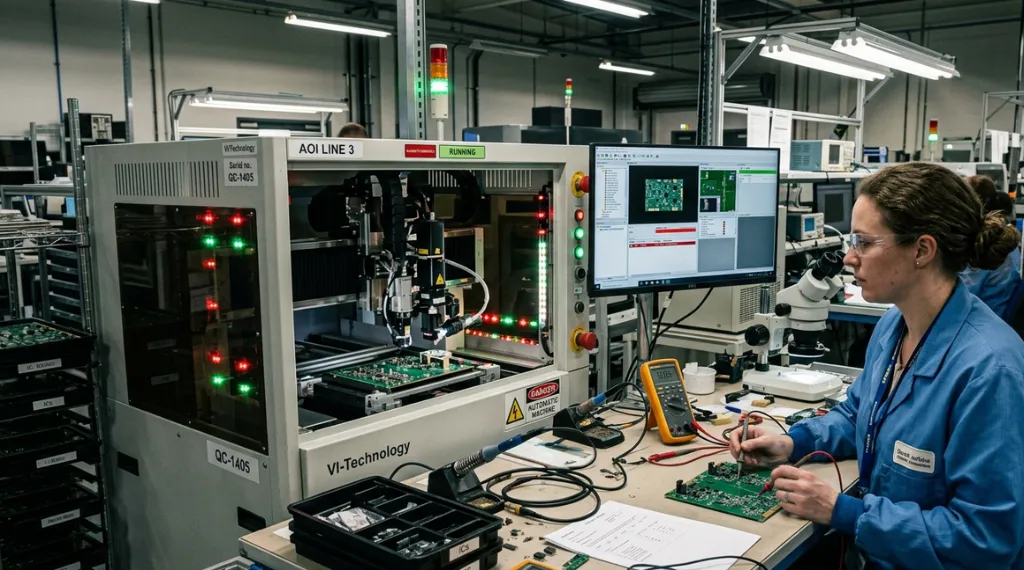
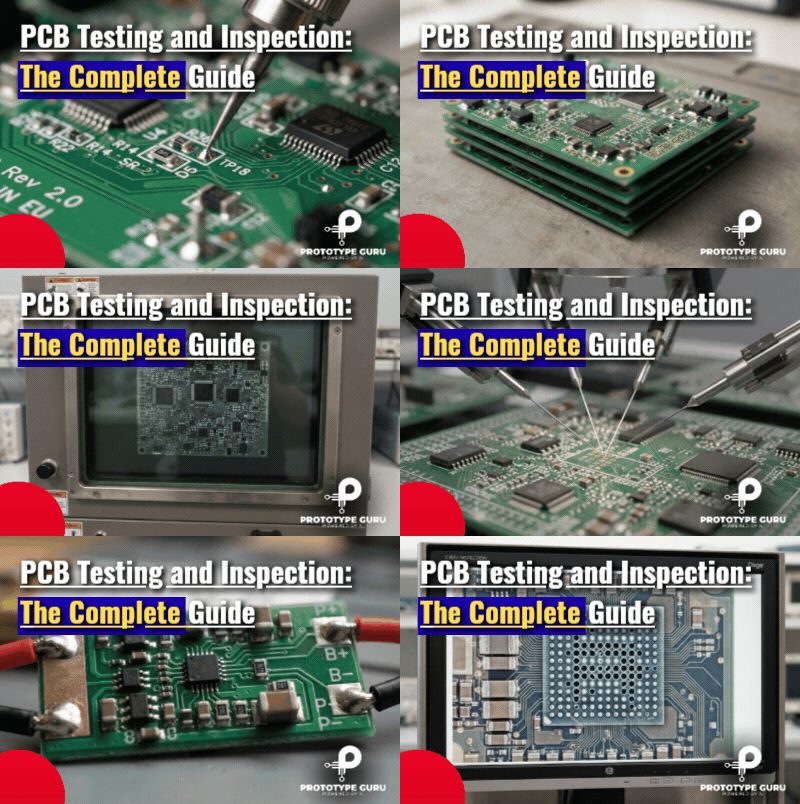
Quality control is one of the most important stages in PCB manufacturing. It ensures that every board meets electrical and mechanical standards before reaching final use.
PCB testing includes automated optical inspection, electrical testing, and functional testing. These methods help detect defects early in production.
PCB inspection checks soldering quality, component placement, and trace integrity. Electrical testing ensures continuity, while functional testing verifies real-world performance.
Strict quality control reduces failure rates and ensures long-term reliability in mass production.
Applications of PCB Manufacturing
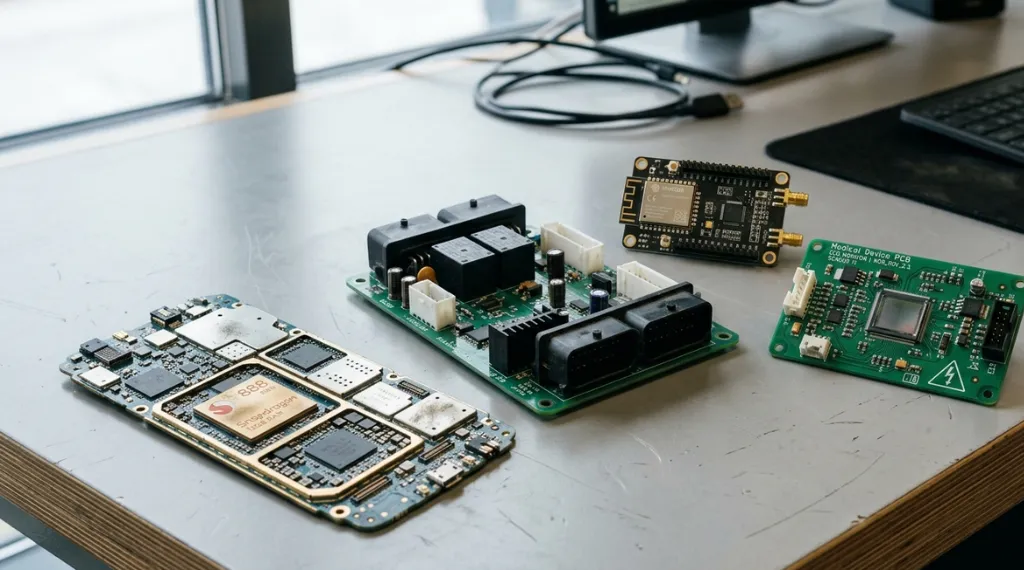
PCB manufacturing plays a crucial role in nearly all modern electronic systems. It is widely used in smartphones, IoT devices, automotive electronics, medical equipment, industrial automation, and communication systems. Each application demands specific levels of precision, complexity, and reliability. PCB technology makes it possible to build compact, efficient, and high-performance electronic devices that support today’s digital world.
Smartphones
PCBs enable compact circuit integration, high-speed processing, and efficient mobile performance.
IoT Devices
Used in smart sensors and connected systems for real-time data communication and automation control.
Automotive Systems
Supports ECUs, infotainment systems, safety modules, and advanced driver assistance technologies.
Medical Electronics
Ensures precise and reliable operation of diagnostic, monitoring, and healthcare devices.
Industrial Automation
Powers robotics, PLC systems, and automated factories for efficient and scalable production.
Communication Systems
Used in routers, networking devices, and telecom infrastructure for stable and fast connectivity.
Tools Used in PCB Design and Manufacturing
PCB design and manufacturing rely on advanced software tools to ensure accuracy, efficiency, and high-quality output. These tools help engineers design complex circuits, simulate performance, and detect errors before production. They also generate manufacturing-ready files like Gerber, which are essential for fabrication and assembly. Using the right tools improves reliability, reduces errors, and speeds up the overall development process significantly.
Common PCB tools include Altium Designer, Eagle, KiCad, Proteus, and OrCAD. These platforms are widely used for schematic design, simulation, and PCB layout generation. They help engineers create precise, manufacturable circuit boards efficiently for modern electronic systems.
PCB Fabrication vs PCB Assembly
PCB fabrication and PCB assembly are two closely related stages in electronics manufacturing. Fabrication is the process of producing the bare circuit board using etching, drilling, and lamination techniques. Assembly involves mounting electronic components on the fabricated board using SMT and through-hole methods. Fabrication focuses on building the physical structure of the PCB, while assembly focuses on enabling its electrical functionality. Both are essential for producing a complete electronic product.
| Aspect | PCB Fabrication | PCB Assembly |
|---|---|---|
| Core Output | Unpopulated PCB with copper traces and defined layers | Fully populated functional circuit board |
| Primary Focus | Physical structure, layer formation, and circuit pathways | Component integration and electrical functionality |
| Key Processes | Etching, drilling, lamination, copper plating | SMT placement, through-hole insertion, soldering |
| Materials Used | FR4 substrate, copper foil, chemical etchants | ICs, resistors, capacitors, diodes, connectors |
| Quality Control | Dimensional accuracy, layer alignment, copper integrity checks | AOI inspection, functional testing, solder joint verification |
| Manufacturing Stage | Initial stage of PCB production | Final stage after fabrication completion |
Prototype Guru PCB Manufacturing Services
Prototype Guru provides complete PCB manufacturing solutions for startups, engineers, and electronics companies.
Our services include PCB design, fabrication, assembly, testing, and prototyping support. We help transform ideas into real electronic products with reliable engineering and manufacturing support.
Whether you need a single prototype or small batch production, Prototype Guru ensures high-quality results with professional guidance.
Frequently Asked Questions (FAQs)
What is PCB manufacturing process?
↑What is the difference between PCB fabrication and PCB assembly?
↓What materials are used in PCB manufacturing?
↓What is SMT in PCB assembly?
↓Why is PCB testing important?
↓Final Conclusion
The PCB manufacturing process is a highly structured and essential part of modern electronics. It transforms digital designs into functional physical products through fabrication, assembly, and testing.
Understanding PCB fabrication and PCB assembly is important for engineers, startups, and hardware developers. With modern PCB manufacturing technology, production has become faster, more accurate, and more scalable.
Prototype Guru provides reliable PCB design and manufacturing services that help innovators turn ideas into real-world electronic products.