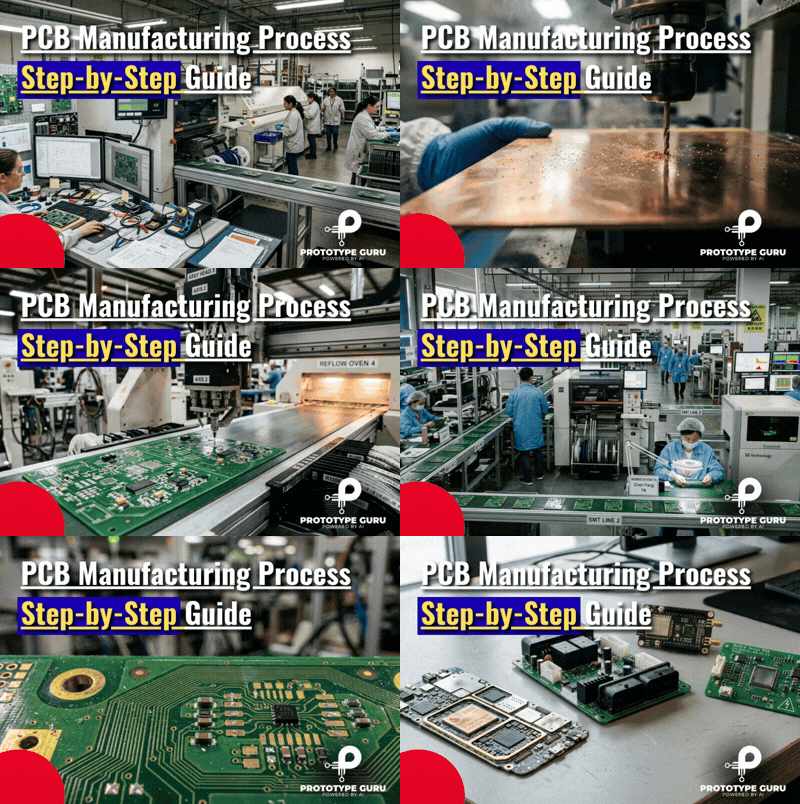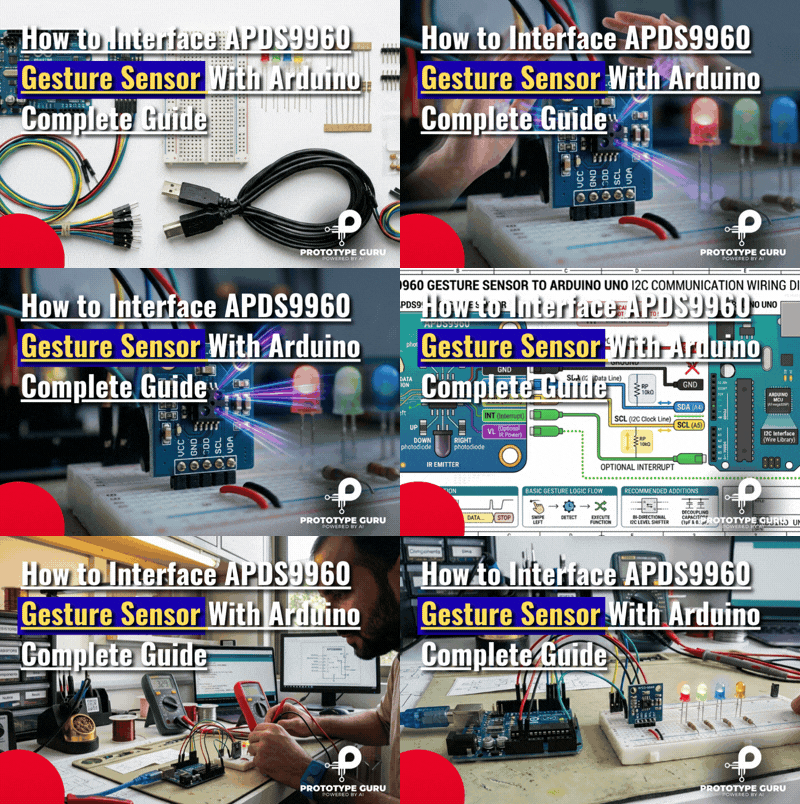

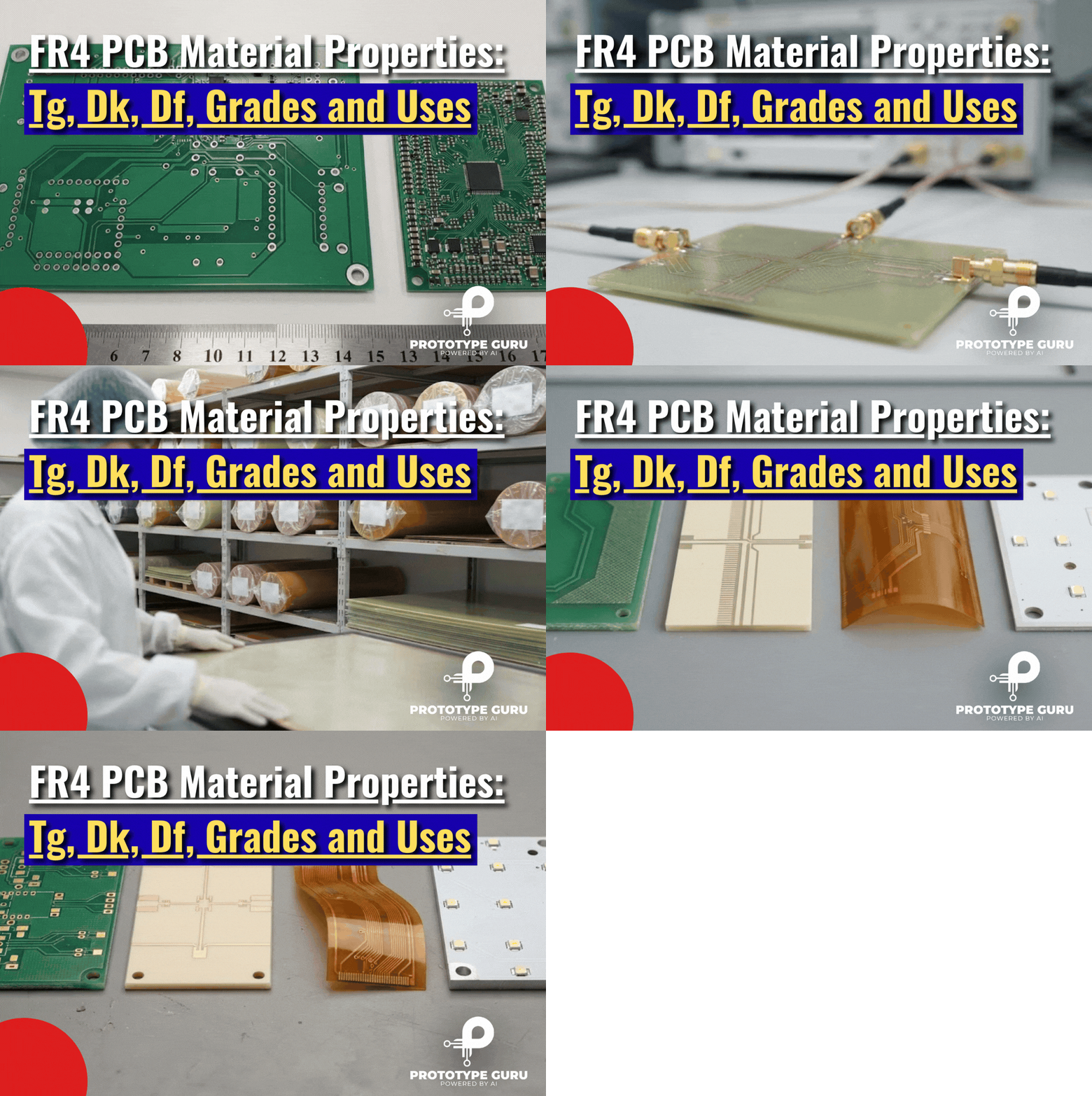
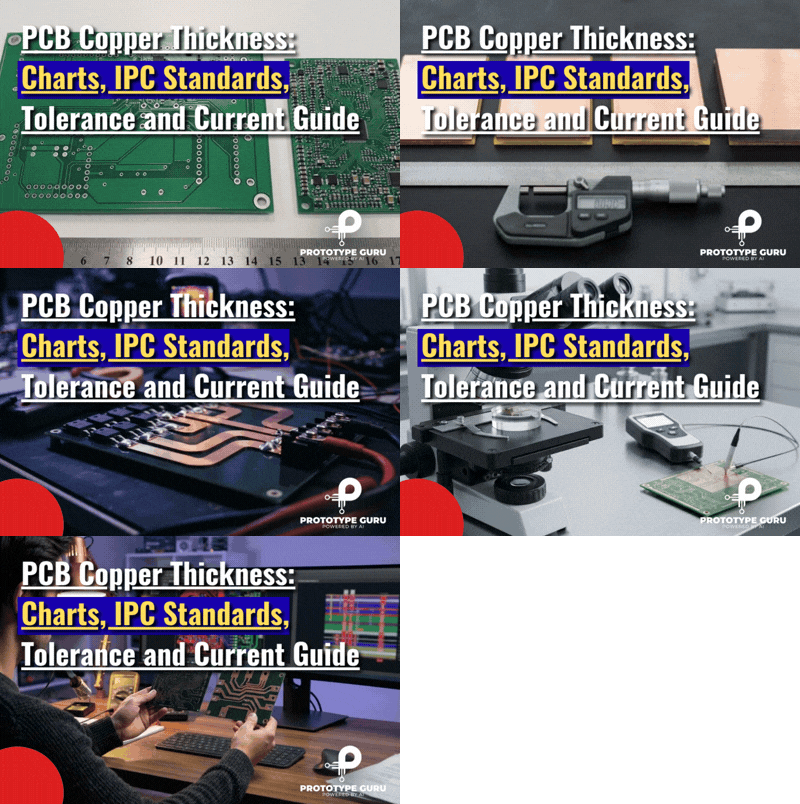






Hardware Development Process: Lessons from Real Experience
Years in hardware engineering clearly show that building electronics is not only about circuits or PCB design. Real success comes from structured hardware development processes, not trial and error. Every stage, from requirement gathering to prototyping and final production, directly affects reliability, scalability, cost control, and long-term performance.
When teams ignore proper planning, they often face redesign cycles, firmware instability, manufacturing delays, and expensive failures in the field. On the other hand, a well-defined hardware development process reduces uncertainty and improves consistency across the entire product lifecycle.
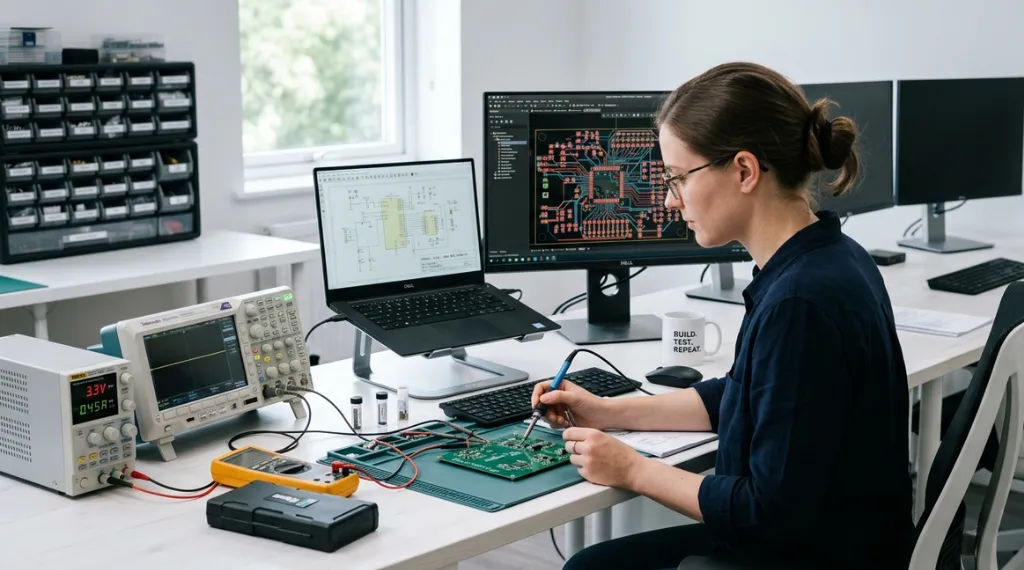
Modern hardware development combines PCB design, embedded firmware, mechanical integration, testing, manufacturing, and supply chain management into one connected workflow. Whether it is IoT devices, industrial systems, or consumer electronics, each stage must align properly with the next. Success depends on strong architecture, clean schematics, optimized PCB layout, signal integrity, and strict validation. Over time, engineers learn that documentation quality, manufacturability, and testing discipline are just as important as technical skills.
Architectural Phase, PRD, and Scope of Work

Every successful hardware project starts with a clearly defined Scope of Work. Without it, teams face unclear requirements, budget overruns, shifting goals, and delayed timelines. Hardware development requires precise planning because embedded design, PCB development, and firmware integration all depend on early alignment.
A well-structured SoW defines deliverables, milestones, technical boundaries, testing requirements, and manufacturing goals. This prevents costly redesigns later in the project lifecycle and keeps development focused and predictable.
The Product Requirement Document (PRD) acts as the technical foundation of the project. It defines power requirements, interfaces, environmental conditions, thermal limits, compliance needs, and functional behavior. During this phase, system architecture is finalized, and key components such as processors, sensors, memory, and connectivity modules are selected. Strong planning at this stage improves prototyping efficiency and reduces supply chain risks.
Key Milestones in This Phase
Requirement Finalization
↑Architecture Definition
↓BoM Optimization
↓Risk Analysis
↓Timeline Planning
↓Strong architectural planning reduces redesign cycles and improves coordination between hardware, firmware, QA, and manufacturing teams. Poor documentation at this stage leads to instability in later phases.
Schematic Design Phase: From Concept to Real Circuit

Schematic design is where ideas turn into real electronic systems. This stage includes power design, GPIO mapping, circuit validation, component selection, and library creation. Every signal path, power rail, and interface must be carefully designed to ensure stable performance.
Poor schematic design often leads to overheating issues, signal loss, high power consumption, and difficult debugging during later stages. A strong schematic design improves reliability and reduces development risks.
Modern electronic systems integrate digital components, analog circuits, wireless modules, embedded processors, and power management systems. Engineers working with platforms like Qualcomm, NXP, TI, Nordic, ST, and Microchip must ensure system compatibility and stability. Attention is given to EMI reduction, power efficiency, and manufacturing feasibility.
Core Schematic Activities in Hardware Development
Power Planning
Ensures stable, efficient, and noise-free power distribution across all system components for reliable hardware operation.
GPIO Mapping
Defines clear peripheral connections between processor pins and external modules like sensors, displays, and communication interfaces.
Component Library Creation
Builds verified and reusable schematic components to ensure design accuracy, consistency, and faster development cycles.
Circuit Validation
Confirms correct electrical behavior of all circuits, ensuring design stability before moving to PCB layout stage.
BoM Finalization
Optimizes cost, availability, and lifecycle of components to ensure scalable and production-ready hardware manufacturing.
Interface Design
Supports high-speed and low-speed communication standards including USB, CAN, SPI, I2C, and Ethernet for system connectivity.
A strong schematic process reduces debugging time and improves hardware reliability before PCB layout begins.
PCB Layout Design: Turning Design into Physical Hardware
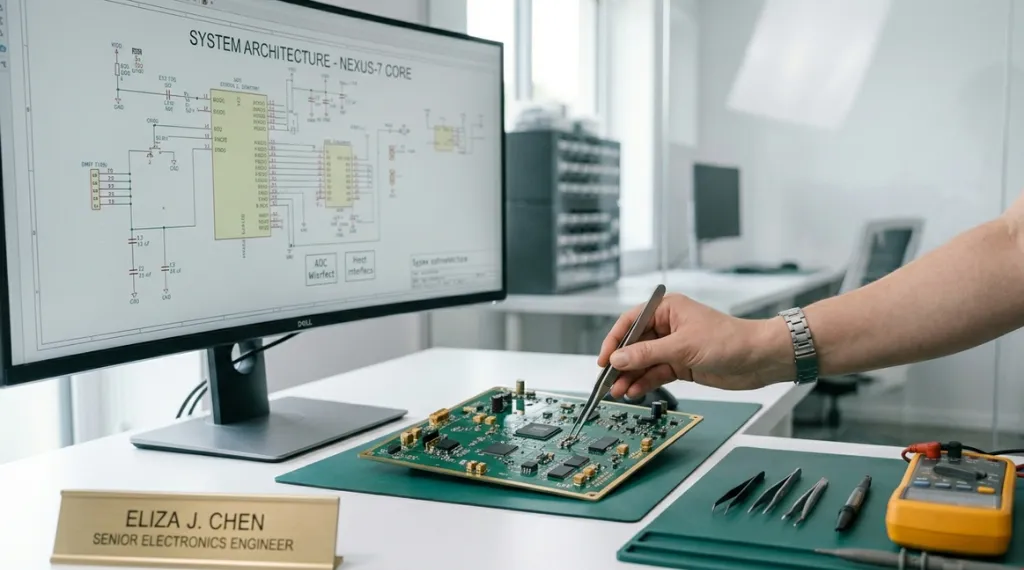
PCB layout is one of the most important stages in hardware development because physical design directly affects signal quality, EMI performance, and thermal behavior. Even a perfect schematic can fail if layout is not done properly.
Engineers must carefully handle impedance control, grounding strategy, power distribution, and high-speed signal routing. Modern systems using DDR, PCIe, USB, HDMI, and RF modules require precise layout engineering.
Important PCB Layout Practices in Hardware Development
PCB layout design plays a critical role in hardware performance, signal stability, thermal control, and manufacturing success. Proper layout practices ensure reliable and production-ready electronic systems.
-
Layer Stack Design
Controls impedance, signal isolation, and electromagnetic performance for stable high-speed PCB operation. -
Footprint Accuracy
Ensures correct component placement and alignment for reliable PCB assembly and manufacturing. -
Signal Integrity Control
Reduces noise, reflection, and data errors in high-speed digital and analog signal paths. -
Thermal Management
Prevents overheating of power circuits, processors, and high-load components through proper heat distribution. -
EMI Compliance
Minimizes electromagnetic interference to meet regulatory standards and ensure stable system operation. -
DFM and DFA Checks
Improves manufacturability and assembly efficiency, reducing production errors and overall cost.
PCB preparation also includes fabrication and SMT assembly planning. Accurate Gerber files and design rule checks ensure smooth manufacturing. Good PCB design improves first-pass success rate and reduces costly revisions.
Board Bring-Up and Product Validation
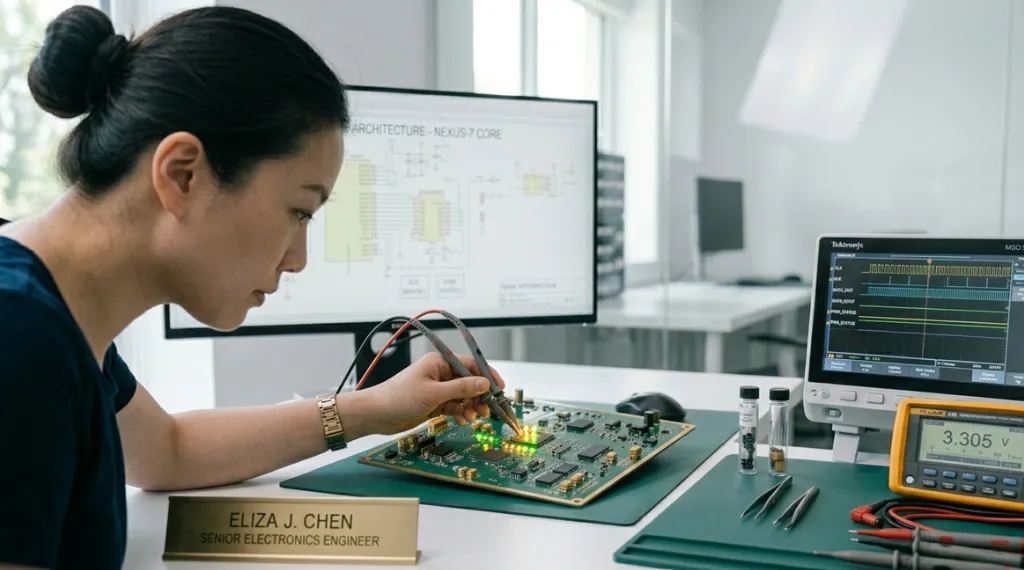
Board bring-up is the first real test of hardware in physical conditions. Engineers verify power rails, boot sequences, communication interfaces, and firmware integration. This phase often reveals issues not seen in simulation, such as thermal instability, assembly defects, or design errors.
Defines structured validation plans to verify hardware functionality, ensuring all system requirements are tested systematically.
Checks initial system startup, voltage stability, and processor boot sequence to ensure safe hardware initialization.
Connects embedded firmware with hardware peripherals to ensure proper communication and functional system behavior.
Performs quality assurance checks and production-level testing to ensure consistent performance across manufacturing batches.
Evaluates system performance under heat, load, and extreme conditions to ensure long-term reliability and stability.
Confirms full system readiness before deployment, ensuring hardware meets all design, safety, and production requirements.
Effective bring-up processes reduce field failures and improve product reliability. After this stage, continuous testing and firmware updates ensure long-term stability in real environments.
Semiconductor Architecture and System Selection
Choosing the right semiconductor platform is essential for performance, power efficiency, and scalability. Platforms from Qualcomm, NXP, Nordic, TI, ST, Renesas, and Microchip are widely used in IoT, automotive, and industrial applications.
Wrong selection can lead to power inefficiency, firmware limitations, and supply chain issues. Memory and communication systems like LPDDR, DDR, eMMC, UFS, WiFi, BLE, LTE, and GPS must be carefully balanced.
| Semiconductor Provider | Application Area | Core Strength |
|---|---|---|
| Qualcomm | Smart Devices & Edge AI Systems | High-performance processing for advanced embedded computing |
| Nordic Semiconductor | IoT & Wireless Systems | Ultra-low power consumption for battery-operated devices |
| NXP Semiconductors | Automotive & Industrial Systems | Stable and secure embedded architecture for mission-critical systems |
| Texas Instruments | Analog & Power Electronics | Reliable mixed-signal and power management solutions |
| STMicroelectronics | Microcontrollers & Embedded Control | Flexible MCU ecosystem for industrial and consumer applications |
| Microchip Technology | Embedded Systems & Control Units | Cost-efficient and scalable embedded hardware solutions |
Correct architecture selection improves scalability and reduces redesign risks across product generations.
Interfaces, Manufacturing, and System Optimization
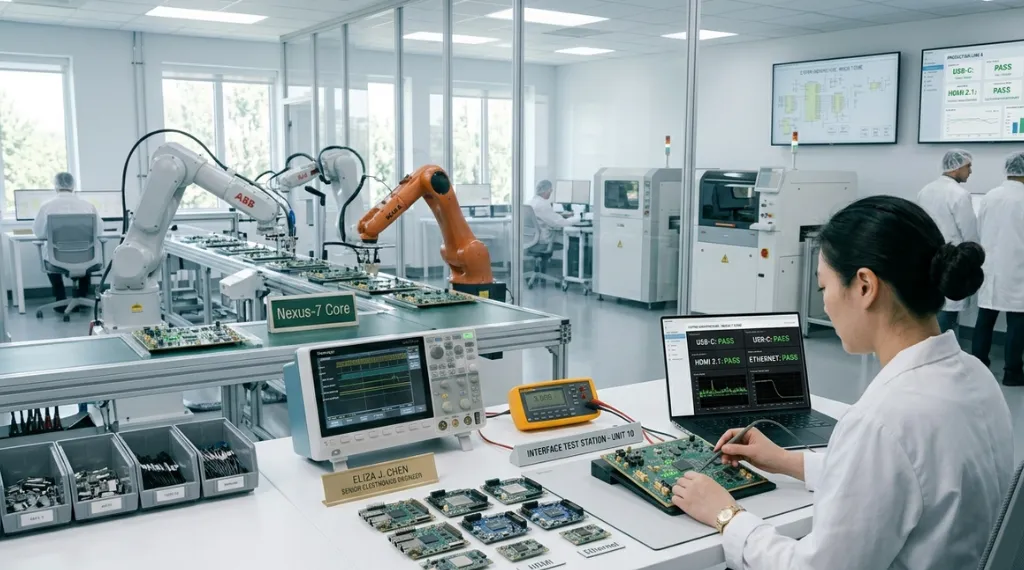
Modern hardware systems rely on interfaces such as USB, HDMI, PCIe, CAN, SPI, I2C, Ethernet, and wireless protocols. Each requires strict signal integrity, impedance control, and accurate routing.
PCB Communication Stability Risk
Small design errors can cause signal loss, communication failures, or system instability during hardware testing and validation stages.
PCB Optimization for Performance
Proper layout optimization improves thermal behavior, increases production yield, and ensures long-term electronic system reliability.
Signal Integrity Engineering
Engineers use stack-up design, differential routing, and controlled impedance techniques to maintain stable high-speed signal performance.
Power Distribution Network Design
Optimized power distribution ensures stable voltage delivery, reduces noise, and improves performance of processors and sensitive components.
DFM and DFA Optimization
Design for Manufacturing and Assembly techniques reduce production defects, improve assembly efficiency, and lower overall manufacturing cost.
End-to-End Hardware Readiness
Hardware development includes prototyping, enclosure design, supply chain planning, and QA to ensure full production-ready system delivery.
Effective Hardware Development Cycle
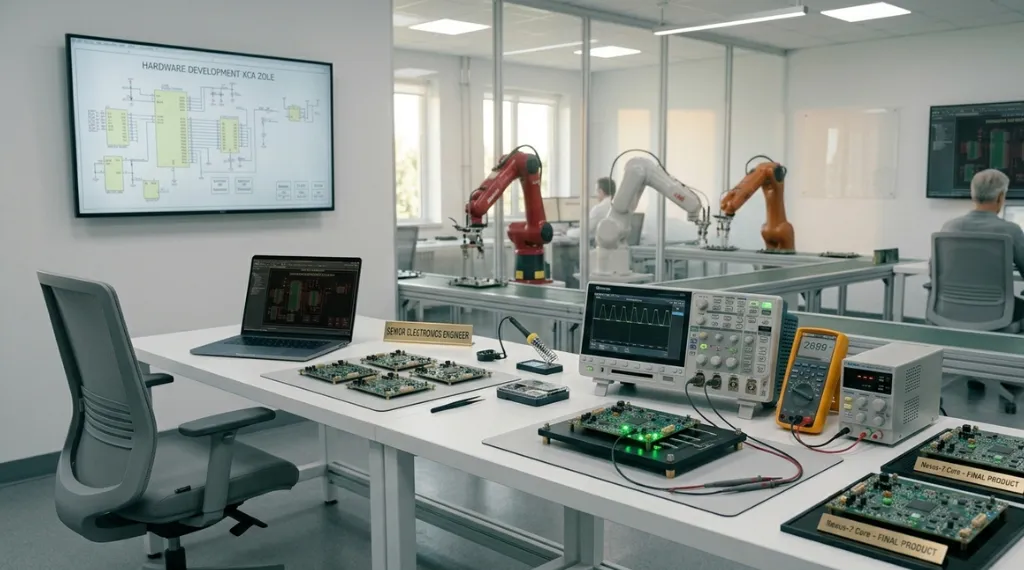
Successful hardware development follows a structured lifecycle instead of random experimentation. This includes requirement analysis, architecture design, schematic creation, PCB layout, prototyping, testing, validation, manufacturing, and long-term support.
Each phase contributes to product reliability and production readiness. Teams that focus on documentation, testing, and manufacturing early achieve faster product launches and fewer failures.
When organizations follow structured processes, hardware development becomes predictable, scalable, and cost efficient. This is what separates successful products from failed prototypes.
Final Thoughts: What Really Matters in Hardware Development
After years of experience in hardware engineering, one truth is clear: process matters more than shortcuts. Strong hardware development depends on planning, validation, testing, and manufacturing discipline.
Technology will continue to evolve with AI systems, advanced processors, wireless connectivity, and modern PCB technologies. However, core principles remain the same: clear documentation, strong architecture, reliable testing, and manufacturing readiness define success.
The best hardware products are not just designed well. They are carefully engineered, thoroughly tested, efficiently manufactured, and continuously improved throughout their lifecycle.