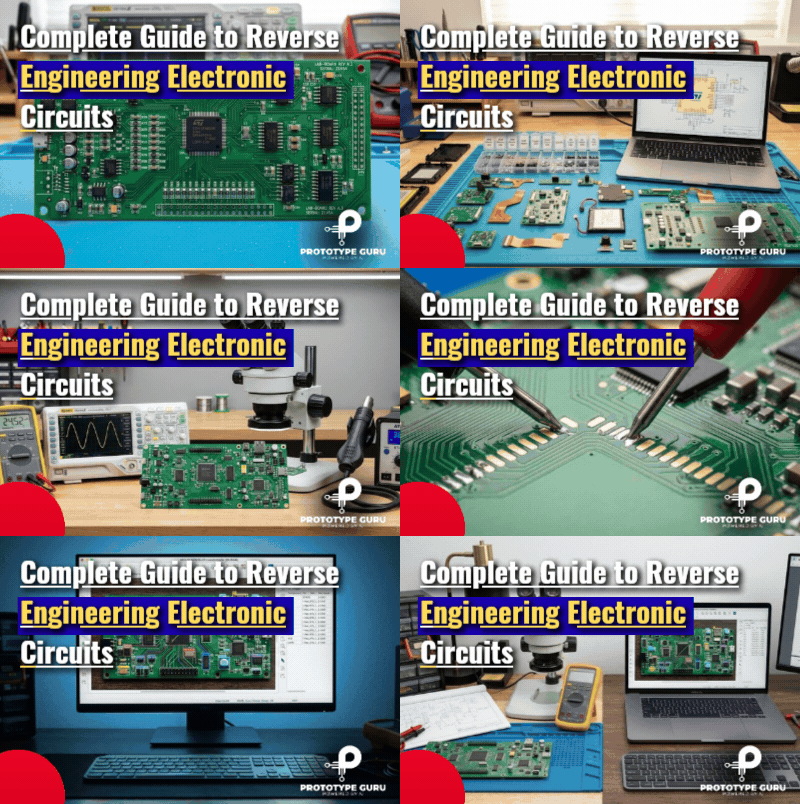





What Is Reverse Engineering Electronic Circuits?
Reverse engineering electronic circuits is the process of analyzing a finished electronic product or printed circuit board to understand exactly how it was built, how its components connect, and how the entire system functions, all without access to the original design files or manufacturer documentation.
Think of it like reading a book that someone printed but forgot to share the manuscript for. You are working backwards from the physical object to recreate the blueprint.
In practical terms, the workflow goes like this: fabrication → layout → schematic. This is the exact opposite of standard forward engineering, where you start with a schematic and end with a manufactured board. The end goal of electronic circuit analysis is a complete design package that includes the schematic diagram, bill of materials (BOM), layer layout, and in some cases, even the Gerber files needed to reproduce the board.
This discipline sits at the intersection of hardware analysis, signal tracing, component identification, and schematic reconstruction. It is used across industries ranging from consumer electronics and automotive to defense, industrial automation, and IoT product development.
If you are building a hardware startup, studying an undocumented legacy board, or trying to understand how a competitor solved a tricky design problem, this guide will walk you through the entire process from first principles.
Why Engineers and Startups Use Circuit Reverse Engineering
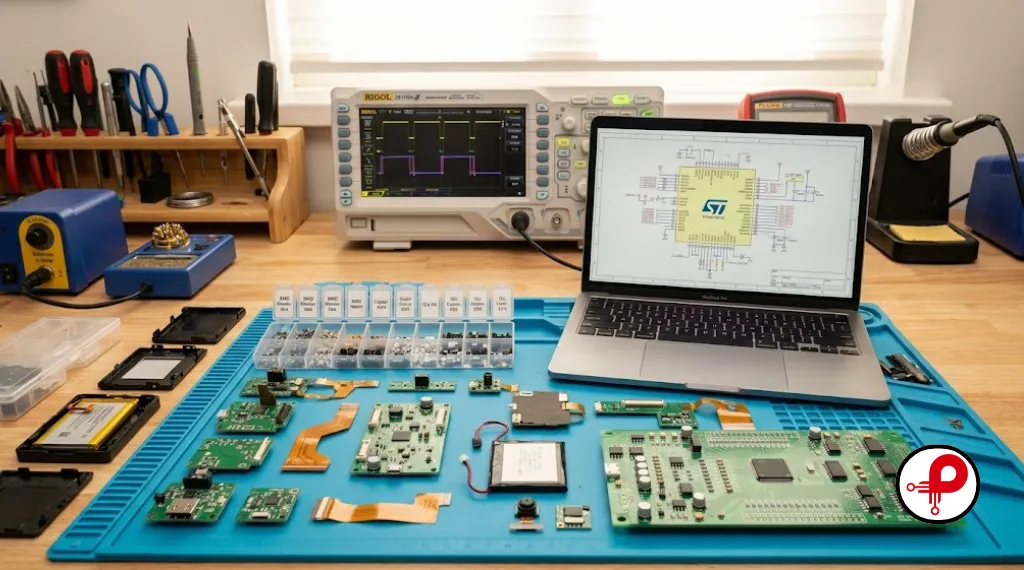
There is no single reason why teams pursue PCB reverse engineering. In reality, the motivations are as varied as the industries that rely on it.
Recovering Lost Design Files
Common in acquiring legacy industrial equipment where vendors are defunct. Reverse engineering allows engineers to recreate documentation from the board itself, enabling essential maintenance, repair, or upgrades.
Replacing Obsolete Components
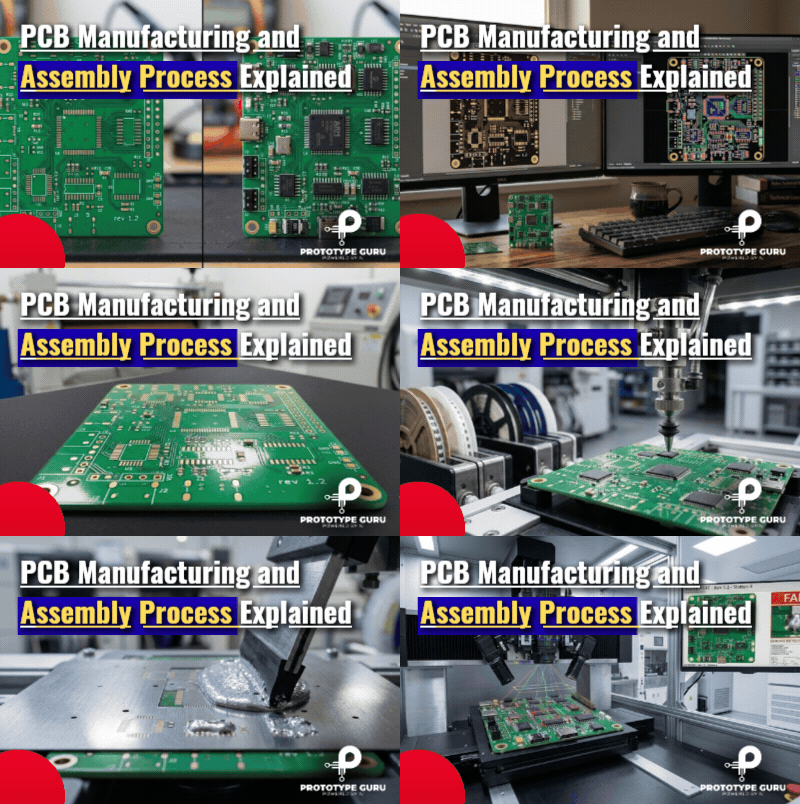
When a microcontroller hits end-of-life, the surrounding circuit must be understood to select a compatible replacement. If you are working through these design decisions, our guide on PCB manufacturing process fundamentals provides helpful background.
Competitive Analysis
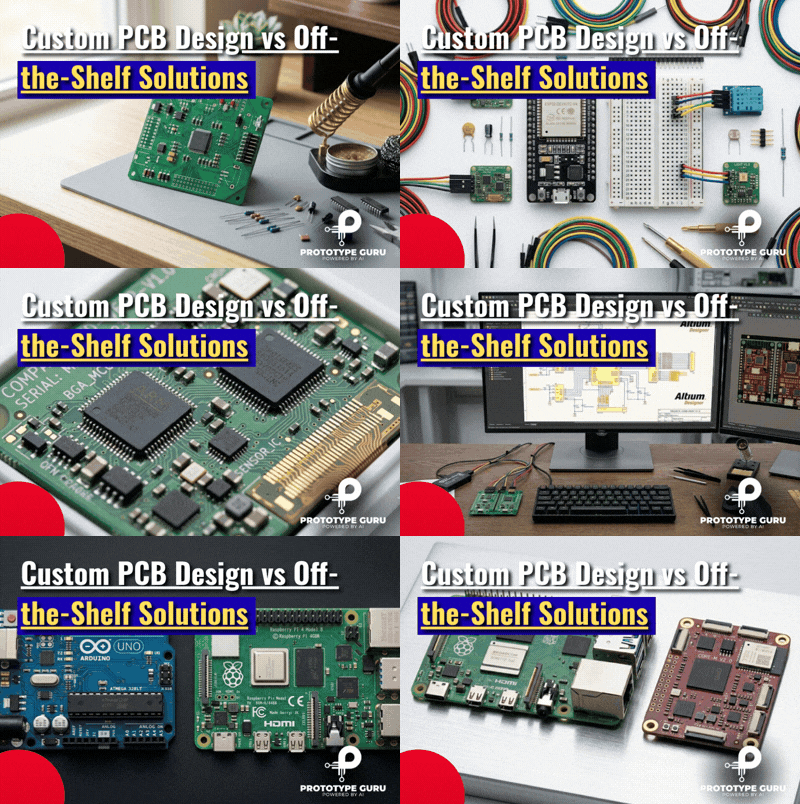
R&D teams tear down competitor products to study design choices, BOM costs, and engineering approaches. For startups exploring this, our custom PCB design vs off-the-shelf solutions guide is worth reading.
Failure Analysis and Debugging
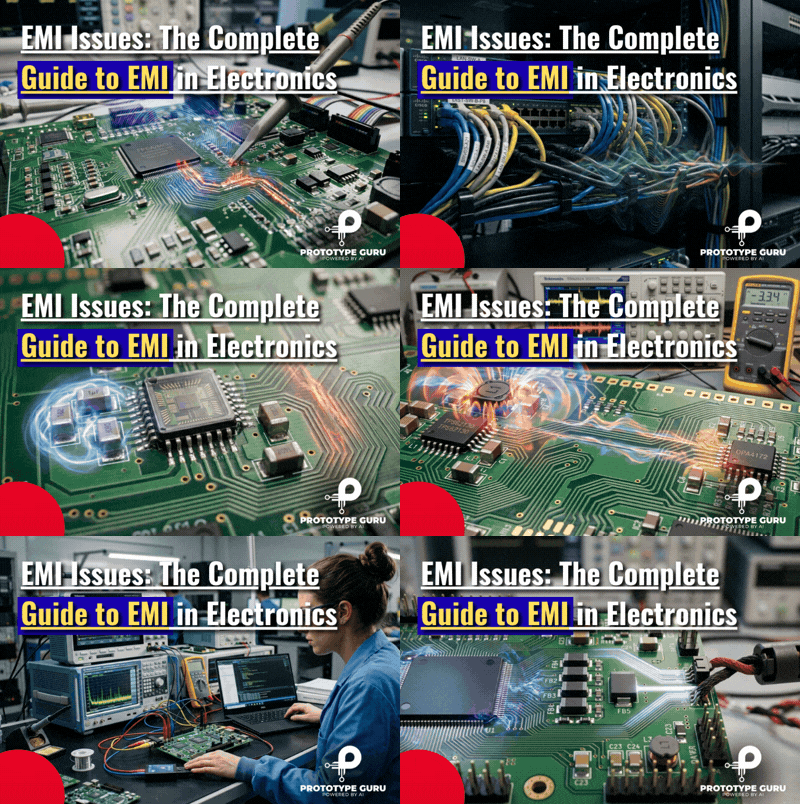
Reverse engineering exposes design flaws, counterfeit components, or marginal manufacturing. For EMI-related failures, our resources on EMI issues, causes, and fixes and electromagnetic compatibility testing are directly relevant.
Board Modernization
Legacy through-hole DIP designs can be updated into compact modern SMT layouts. Reverse engineering provides the accurate starting point for this transition. Our surface mount technology soldering guide covers what comes after the analysis is complete.
Learning and Skill Development
For junior engineers, electronic hardware reverse engineering is one of the fastest ways to develop circuit intuition by studying how experienced engineers solved real-world problems.
Legal and Ethical Considerations Before You Start
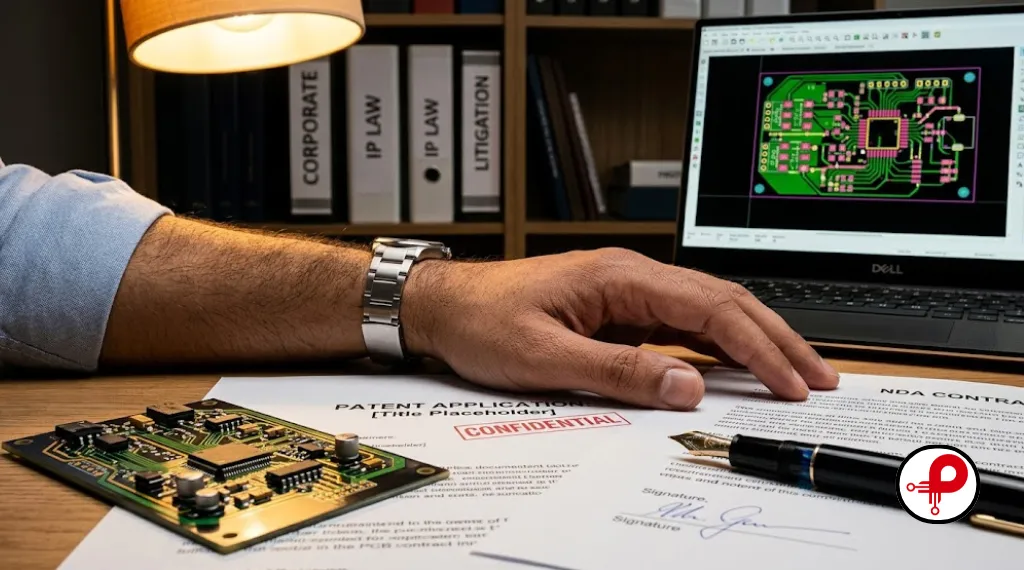
Before touching a board, you must understand where the legal boundaries are. Reverse engineering occupies a complex legal space, and the rules vary significantly between jurisdictions.
In the United States, the legality generally hinges on purpose. Reverse engineering for interoperability, repair, academic research, or security analysis is broadly permitted under fair use principles. Reproducing a patented design to manufacture a competing product without authorization is not.
In the European Union, similar principles apply, with the Software Directive and trade secret regulations adding additional nuance around firmware and embedded software.
Key questions to ask before starting any reverse engineering project:
Determine if the device design or specific internal mechanisms are covered by active patents, which may legally restrict reproduction or unauthorized manufacturing.
Review the acquisition terms, including End User License Agreements (EULA) or Non-Disclosure Agreements (NDA), which often explicitly prohibit reverse engineering.
Identify the purpose of your analysis: personal learning and repair often carry different legal implications compared to commercial product reproduction.
Check if the microcontroller firmware utilizes encryption, code signing, or hardware-based read-out protection (ROP) intended to prevent access to intellectual property.
When in doubt, consult a legal expert before proceeding. Document your reasons clearly and keep records of every step you take throughout the process.
Essential Tools for PCB Reverse Engineering
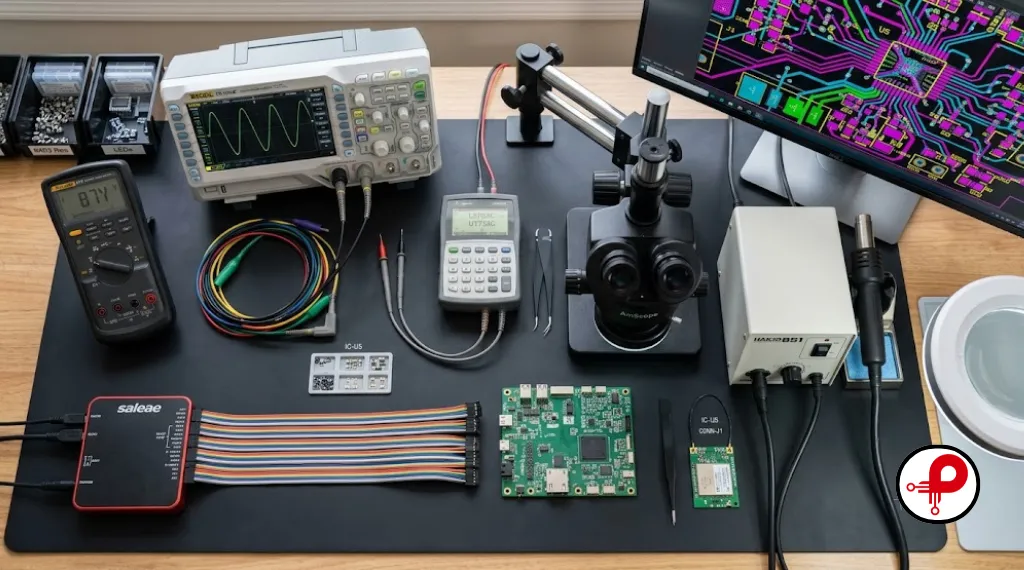
Getting the right tools in place before you start saves enormous time and frustration. Here is a breakdown of what professional engineers actually use.
Hardware Tools
| Tool | Purpose | Experience Level |
|---|---|---|
| Digital Multimeter | Continuity testing, resistance, voltage measurement | Beginner |
| Oscilloscope | Signal waveform analysis and timing verification | Intermediate |
| LCR Meter | Measuring inductance, capacitance, resistance in-circuit | Intermediate |
| Stereo Microscope | Inspecting fine-pitch SMD components and trace details | Intermediate |
| High-Resolution Scanner / DSLR Camera | Capturing layer images for digital reconstruction | Beginner |
| Logic Analyzer | Analyzing digital signals and communication protocols | Advanced |
| Hot-Air Rework Station | Desoldering components without damaging pads | Intermediate |
| Curve Tracer | Characterizing unknown semiconductor devices | Advanced |
| X-Ray Imaging System | Non-destructive inspection of inner layers and BGA pads | Advanced |
For any engineer working on power-related circuits, our wire AWG size conversion calculator and computer power supply wattage calculator are practical tools you will reach for during component analysis.
Workspace Essentials
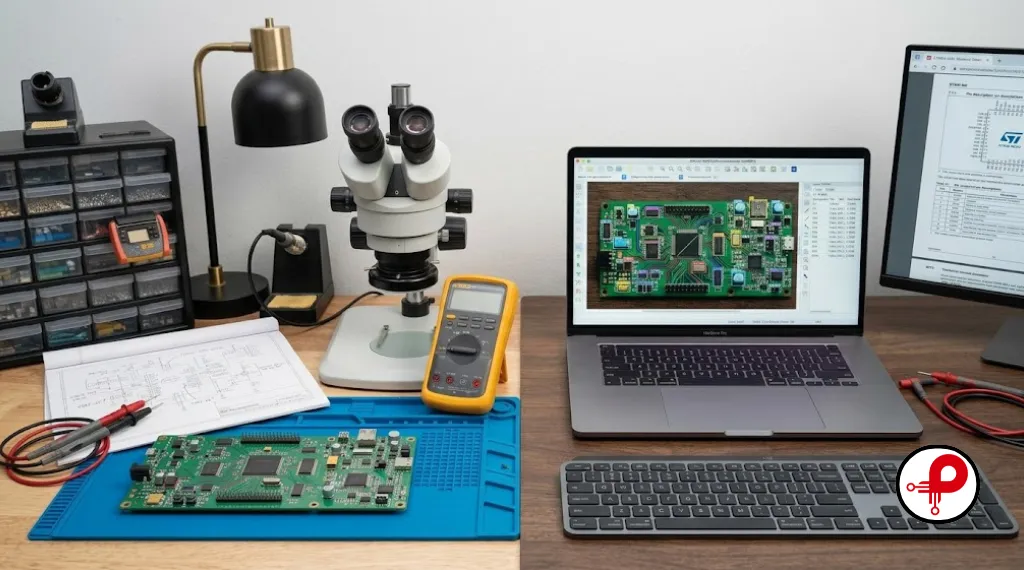
A clean and organized workspace matters more than most engineers admit. Good lighting, an anti-static mat, component trays with labels, and a fume extractor for desoldering are non-negotiables. Before any disassembly, photograph both sides of the board at the highest resolution your equipment allows. These images become your primary reference throughout the entire process.
Step-by-Step PCB Reverse Engineering Process
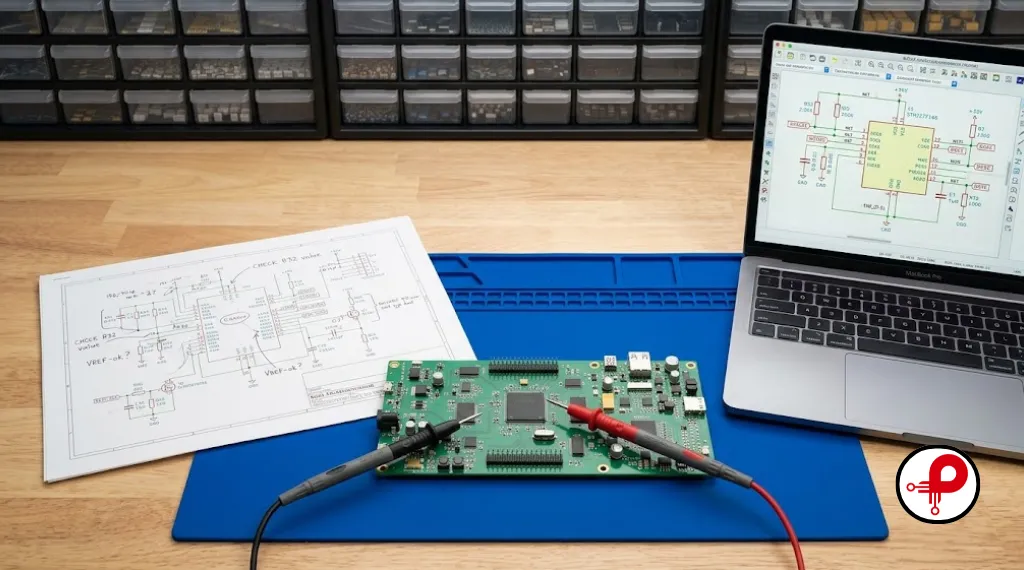
This is the workflow that works. Follow these stages in order and document every step.
Step 1: Initial Assessment and Documentation
Before you lift a soldering iron, evaluate what you are dealing with. Count the layers by looking at the board edge under strong light. Identify the board dimensions, connector types, and any visible component markings. Note the PCB manufacturer silkscreen if it is present.
Photograph both sides at high resolution. Use a dark background to maximize contrast between copper traces and the substrate. This photographic record is the foundation everything else builds on.
Record all visible component identifiers into a spreadsheet. Even partial markings are valuable. “Documentation is king,” as hardware explorer Joe Grand famously put it, and this is exactly where that principle applies most.
Step 2: Component Identification and BOM Creation
Create a Bill of Materials as you go. For every component on the board, record its type, value, reference designator, package style, and any visible part number.
For resistors and capacitors, you can often read values directly from markings using standard SMD coding. For inductors, an LCR meter gives you measured values. Use our capacitance conversion tool when converting between units during this stage, and our series and parallel capacitor calculator when verifying filter topologies you encounter.
For integrated circuits, search part numbers on manufacturer datasheets. When markings are worn or erased (a common anti-reverse-engineering measure), electrical characterization becomes necessary. Tracing the pin functions from circuit behavior is the technique here.
Step 3: Layer Imaging and Trace Mapping
For single-sided and double-sided boards, high-resolution scanning of both surfaces gives you most of what you need. For multilayer boards, the situation is more complex.
Non-destructive options include X-ray imaging and CT scanning, which reveal buried vias and inner trace routing without damaging the board. This equipment is expensive, but many contract labs offer this as a service.
When non-destructive methods are not sufficient, destructive delayering becomes necessary. This involves chemically etching away one copper layer at a time, photographing each layer before proceeding. The board is permanently destroyed in this process, so always work on a sample if your project allows it.
Once you have images of each layer, import them into image-editing software. Adjust contrast to make copper traces stand out clearly. Trace each net on a separate color-coded layer, with power nets in one color, ground in another, and signal lines in a third.
Step 4: Schematic Reconstruction
With your netlist taking shape, you can begin building the schematic in EDA software. Do not place components randomly. Organize the schematic by functional block: power supply, microcontroller, analog front-end, communication interfaces, and output stages.
This organization makes the schematic readable and reveals design intent that would otherwise be invisible. A schematic that “looks right” is not necessarily correct. Verification is essential.
Run the Electrical Rule Check in your EDA tool to catch unconnected pins, conflicting outputs, and power supply errors. For every active component, cross-reference connections against the manufacturer’s recommended application circuit in the datasheet. Discrepancies almost always indicate tracing errors.
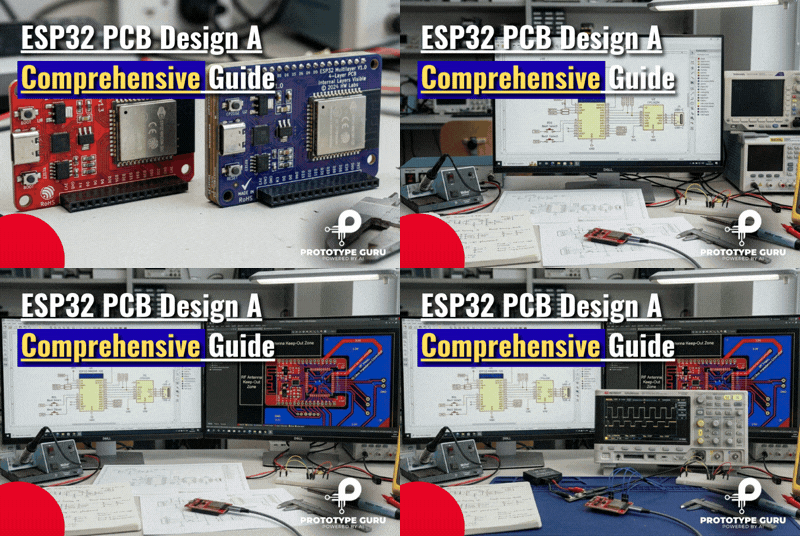
If you are working with an Arduino-based design or ESP32 module, our Arduino Uno quick guide and ESP32 PCB design guide can help you recognize standard reference designs quickly, saving significant time during schematic reconstruction.
Step 5: Verification and Prototype Validation
For high-stakes projects, the gold-standard verification is fabricating a prototype from the reverse-engineered design and confirming it functions identically to the original.
Run functional simulation of critical sections in LTspice or Multisim before committing to fabrication. For digital sections, a peer review by another engineer often catches mistakes that simulation cannot. Our automated optical inspection working principle guide explains how AOI fits into the validation workflow after fabrication.
PCB Tracing Techniques Explained
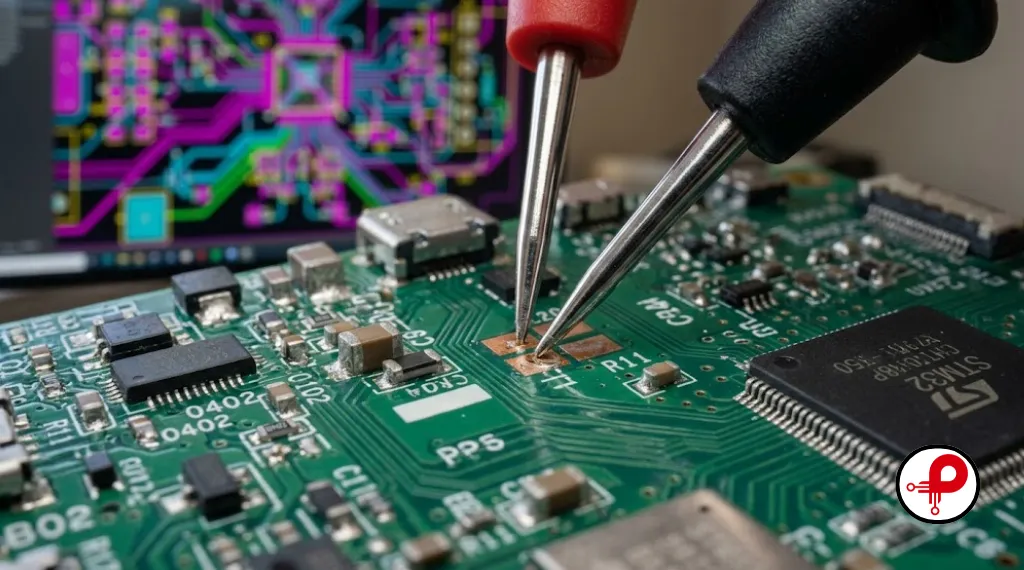
PCB tracing is where the real engineering judgment comes into play. There are several distinct approaches, each suited to different situations.
Visual Tracing
Import your high-resolution board images into GIMP, Photoshop, or Inkscape. Place digital trace marks on a separate layer, color-coding different nets. This is time-consuming but works for any board type and requires no specialized equipment.
Continuity Testing
Use a multimeter in continuity mode to probe connections between pads, vias, and test points. This method is especially powerful for confirming suspected connections and for navigating through multilayer boards where inner vias are not visible. Color-code your confirmed connections as you go to avoid duplication.
Signal Tracing with an Oscilloscope
For functional boards that you can power up, signal tracing reveals how data and power flow through the circuit. This technique helps identify communication buses (I2C, SPI, UART), clock signals, and power sequencing. Our guides on how Bluetooth works in embedded systems and high-frequency switching noise issues are directly relevant when you encounter RF or switching circuits during this phase.
X-Ray and CT Scanning
Industrial X-ray systems reveal internal structures without any damage to the board. This is essential for analyzing BGA packages and complex multilayer boards where inner trace routing is completely hidden. Advanced CT scanning generates a full 3D model of every layer simultaneously.
Automated Netlist Extraction
Some professional systems can probe test points or analyze image data to generate a netlist automatically. Flying probe testers, commonly used in manufacturing and failure analysis, are one example of this approach.
Best Software for Electronic Circuit Analysis
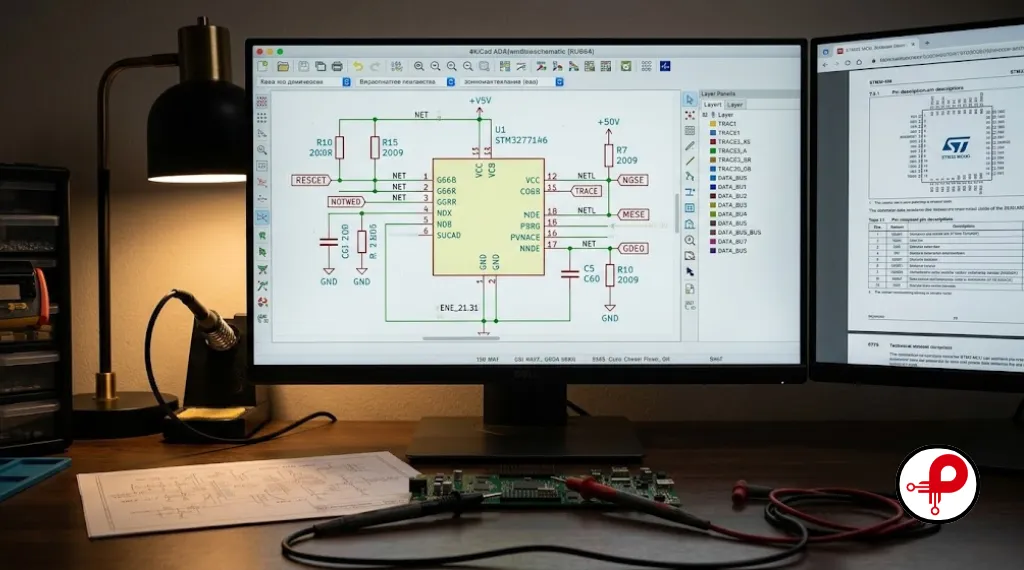
Choosing the right software determines how efficiently your project proceeds. Here is how the most widely used tools compare.
| Software | Best For | Cost | Skill Level |
|---|---|---|---|
| KiCad | Open-source schematic capture and layout | Free | Beginner to Advanced |
| Altium Designer | Professional-grade PCB reconstruction | Subscription | Advanced |
| Autodesk Eagle | Quick layout jobs and hobbyist projects | Free / Paid | Beginner to Intermediate |
| Cadence OrCAD | Analog and digital circuit simulation | Paid | Advanced |
| GIMP / Inkscape | Image processing and trace overlay | Free | Beginner |
| LTspice | Circuit simulation and verification | Free | Intermediate |
| AutoTrace | Raster to vector conversion for PCB images | Free | Beginner |
| PCB Tracer | Browser-based PCB reverse engineering annotation | Free | Beginner |
For beginners, starting with a multimeter, a flatbed scanner, and KiCad is perfectly adequate for simple single or double-sided boards. Professional engineers working on complex multilayer or HDI boards typically combine advanced microscopes, X-ray imaging, desoldering stations, and Altium Designer.
Common Challenges and How to Solve Them
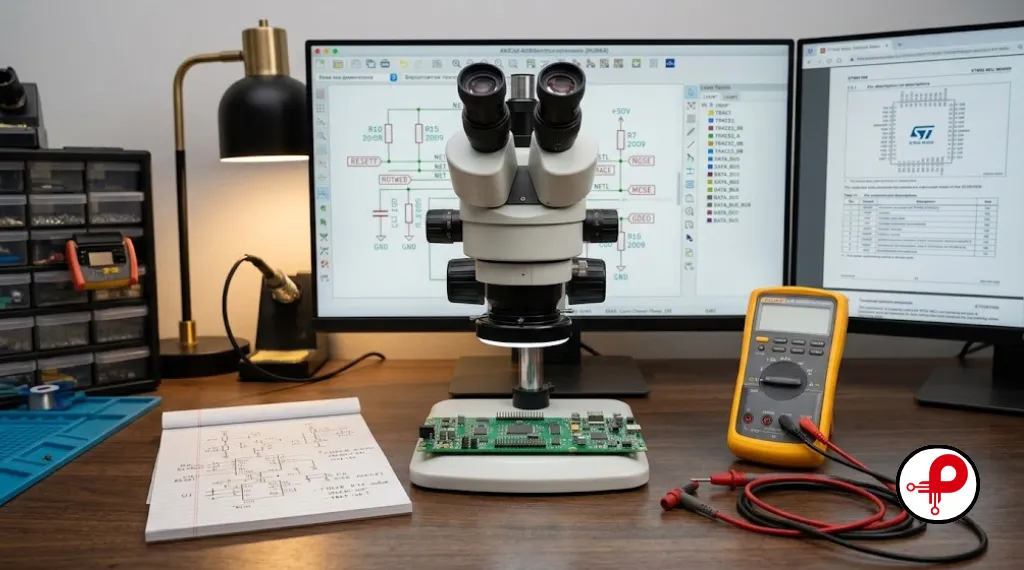
Even experienced engineers run into predictable obstacles. Knowing what to expect before you start means you can plan around them.
1. Unreadable Component Markings
Manufacturers often erase or obscure part numbers. The solution is electrical characterization: trace pin functions from circuit behavior, use an LCR meter for passive values, and use curve tracers for semiconductor identification. Decapsulation under a microscope can identify masked ICs, though this is destructive and rarely necessary.
2. Multilayer Complexity
Distinguishing inner layers in dense boards is difficult. Use registration marks or corner features as alignment references. For boards where visual methods fail, X-ray CT scanning is the reliable solution to prevent connection reconstruction errors.
3. Buried and Blind Vias
Standard photography cannot reveal buried vias. If CT scanning is unavailable, electrical probing (continuity testing between vias and surface pads) can map many inner connections indirectly.
4. Encrypted Microcontrollers
Many microcontrollers use read-protect fuses to prevent firmware extraction. While some older parts can be unlocked, modern secure-boot devices with hardware fuses generally cannot be cracked; this is a hard constraint in project scoping.
5. EMI and Signal Integrity Issues
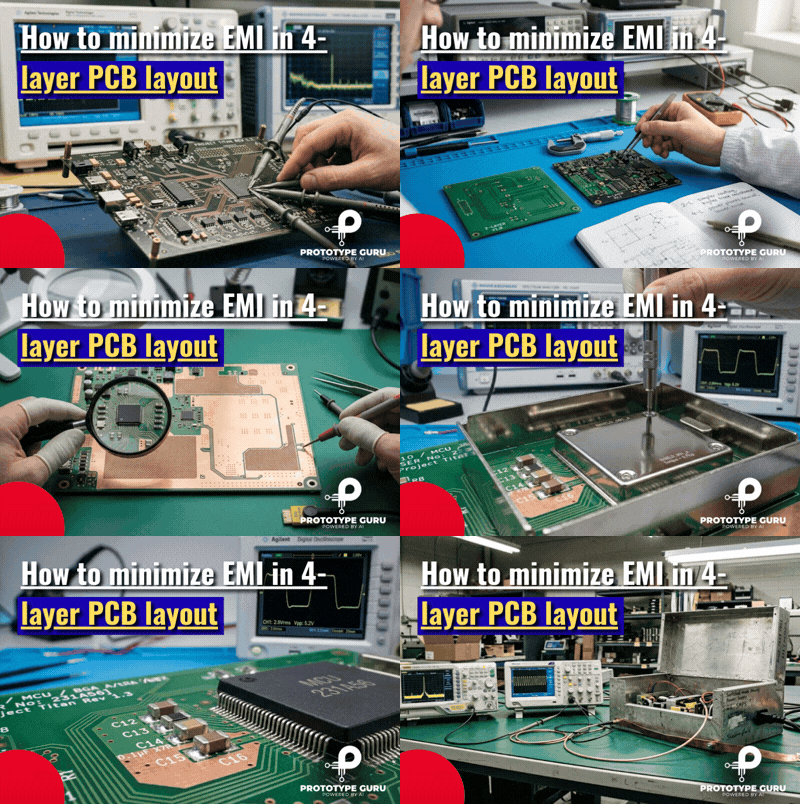
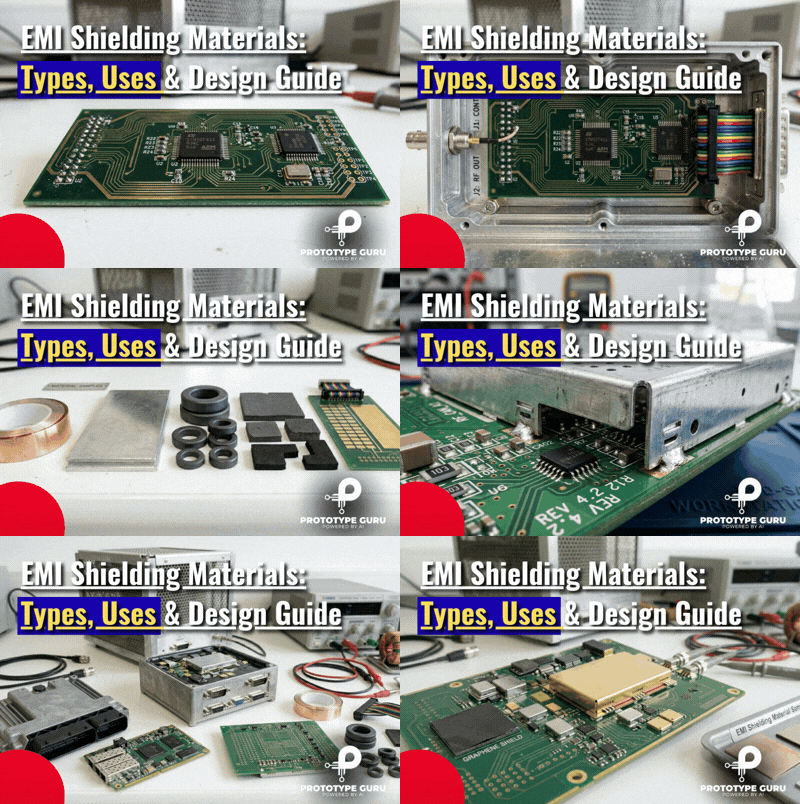
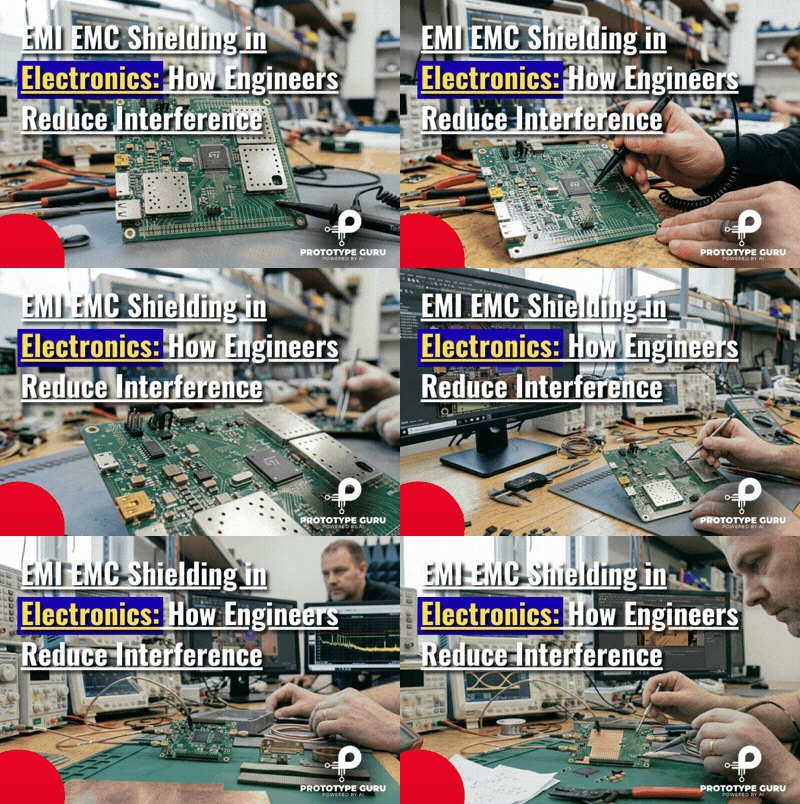
Subtle trace geometry details like impedance control and differential pairs are often lost. Before finalizing your design, review our resources on EMI shielding materials and minimizing EMI in 4-layer PCB layouts, as well as our guide on EMI/EMC filter design.
6. Conformal Coating and Potting
Chemical strippers can remove acrylic and urethane coatings. However, epoxy potting is highly resistant and often makes full reverse engineering impractical within standard budgets.
AI-Powered Reverse Engineering: The Future Is Here
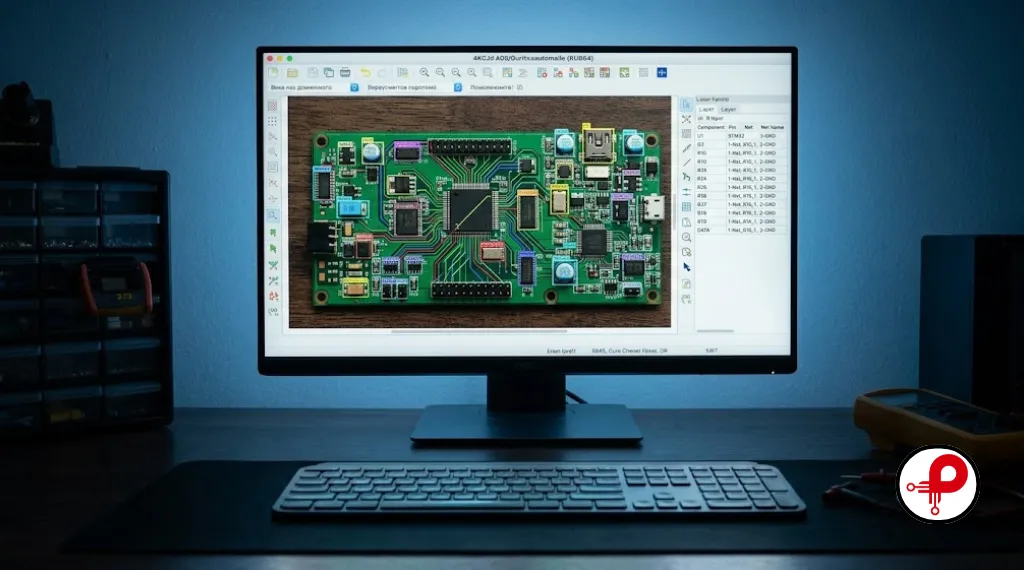
The landscape of reverse engineering electronic circuits is shifting rapidly because of artificial intelligence. What once required weeks of manual tracing can now be partially automated in hours.
AI-powered tools use neural networks to follow copper traces across multilayer boards, graph neural networks to map connections between components, and machine learning to predict circuit functionality based on component arrangement. Via detection algorithms identify connection points between layers automatically.
Modern commercial AI platforms for circuit board reverse engineering offer 90 to 95 percent component detection accuracy, multiple export formats compatible with KiCad, Altium, and Eagle, and batch processing for high-volume projects. Subscription pricing typically runs between $2,000 and $15,000 annually for commercial platforms.
The most effective real-world approach is a hybrid model: use AI to handle the initial 80 to 90 percent of the work (component detection, basic trace routing, netlist generation) and then switch to manual validation for the final 10 to 20 percent. Human judgment remains essential for resolving ambiguous traces, verifying critical connections, and checking unusual circuit sections that fall outside the AI’s training data.
For developers working on embedded projects that include audio or wireless functionality, our ESP32 audio player guide and Bluetooth embedded systems guide show the kinds of reference designs you will encounter regularly during reverse engineering of IoT and consumer electronics products.
Manual vs. AI-Powered Reverse Engineering: Comparison Table
| Factor | Manual Method | AI-Powered Method | Hybrid Approach |
|---|---|---|---|
| Time (Complex 8-layer Board) | 4 to 8 weeks | 4 to 12 hours | 1 to 2 weeks |
| Cost | Low (labor intensive) | High (subscription) | Medium |
| Accuracy | 85 to 92% | 90 to 95% | 95 to 99% |
| Equipment Required | Multimeter, microscope, scanner | AI platform, camera | Both |
| Best For | Simple to medium boards | Dense multilayer, high volume | Complex projects, startups |
| Human Expert Required | Yes | For validation | Yes (less time) |
| Firmware Extraction | Manual JTAG / UART | Not included | Separate step |
| BOM Generation | Manual | Semi-automated | Semi-automated |
Real-World Applications of Circuit Board Reverse Engineering
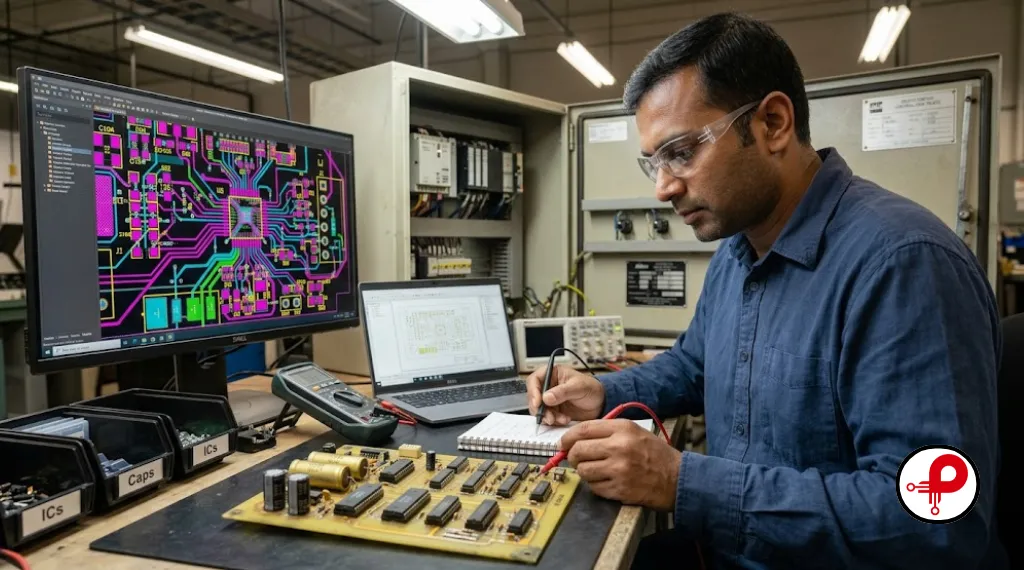
Understanding the full range of applications puts the technique in context and helps you decide whether it fits your project goals.
Industrial Equipment Maintenance
Legacy industrial controllers built decades ago are still running critical manufacturing processes worldwide. When a board fails and the manufacturer no longer supports it, electronic circuit analysis is the only path to keeping the line running. This is one of the most commercially valuable and legally straightforward applications of the discipline.
Consumer Electronics Product Development
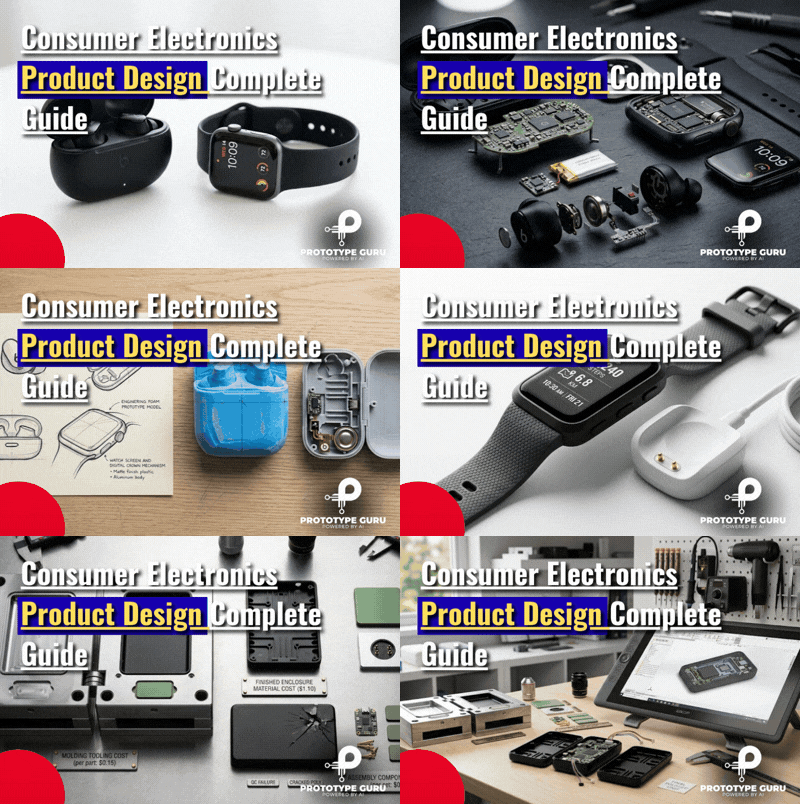
Consumer electronics teams regularly study competitive products to benchmark features, identify cost structures, and understand manufacturing approaches. Our consumer electronics product design guide covers how this analysis feeds into the broader product development cycle.
Hardware Startup Validation
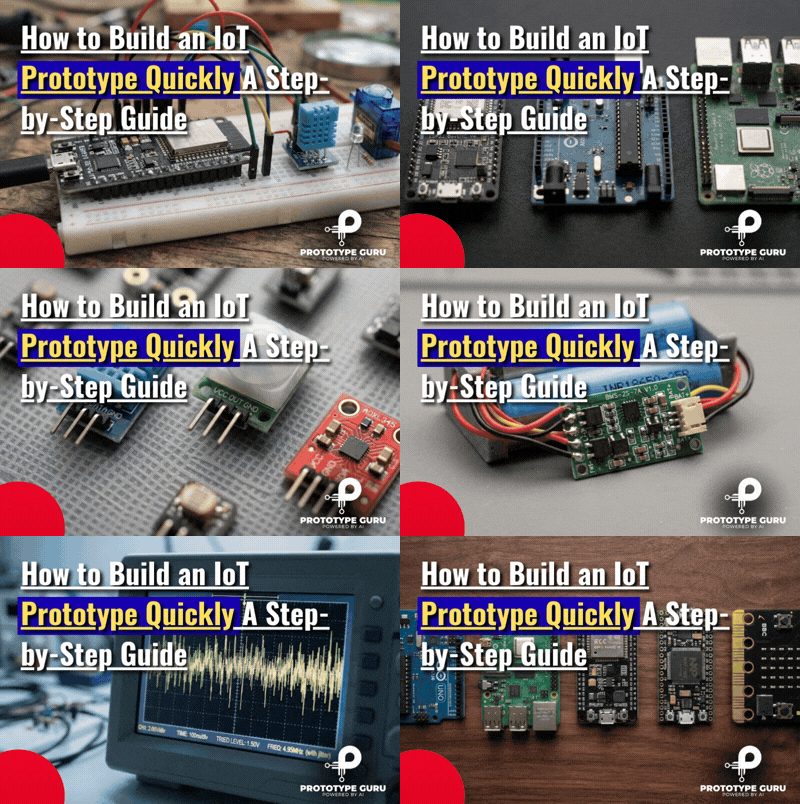
Startups entering established markets use competitive teardowns to calibrate their own designs. Understanding how existing products handle power management, EMI shielding, and microcontroller integration helps avoid known pitfalls. If you are at this stage, our hardware development for startups guide and electronics prototyping and product design resource are directly relevant.
Battery and Power Circuit Analysis
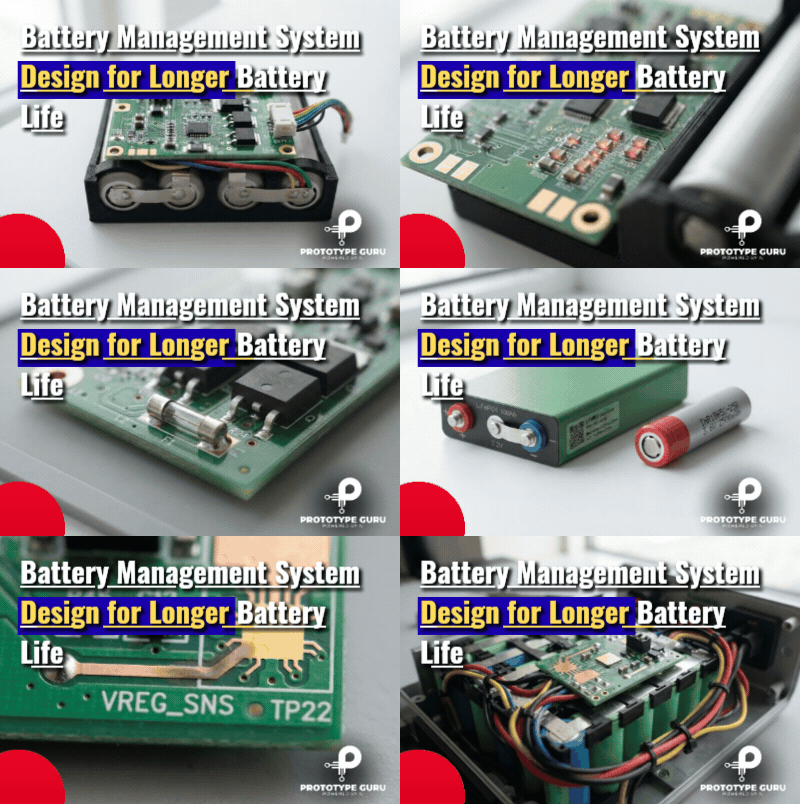
Power electronics present unique challenges in reverse engineering because of the importance of switching topology, gate drive timing, and protection circuit configuration. Our lithium-ion battery protection circuit guide explains the circuit patterns you will encounter most frequently when analyzing power management designs.
PCB Design Improvement and Modernization
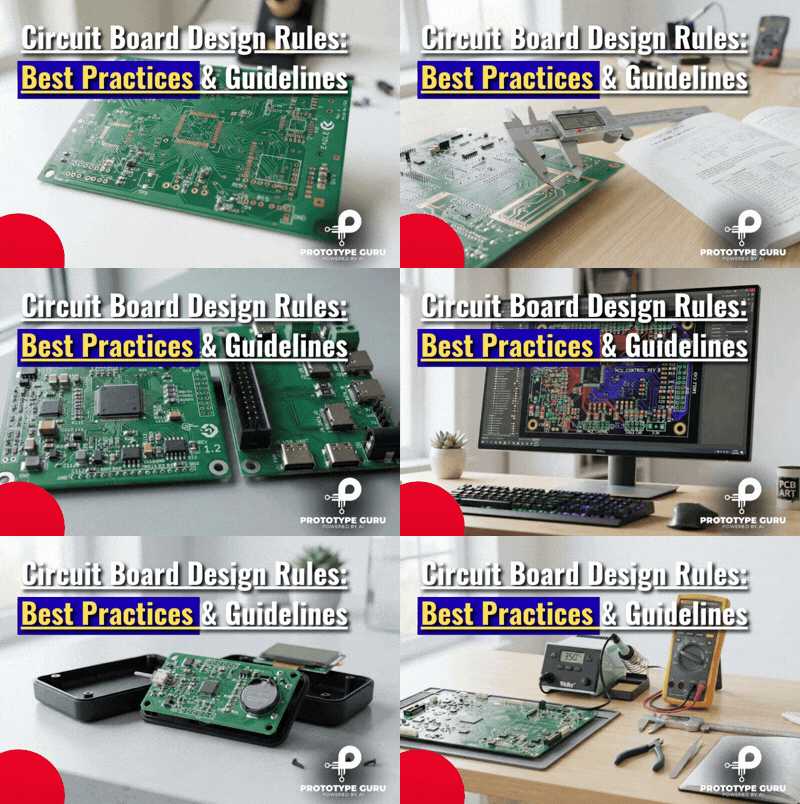
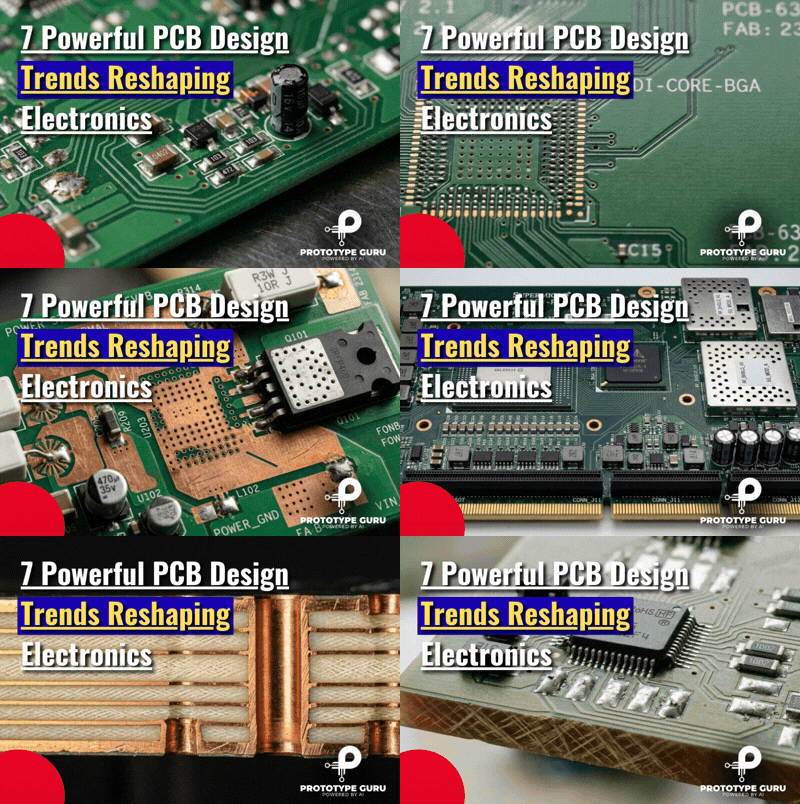
Many older designs violate current best practices around signal integrity, thermal management, and EMI compliance. Reverse engineering these boards and then redesigning them using modern techniques is a common commercial service. Our PCB design mistakes guide and PCB design trends resource help bridge the gap between the analyzed original and the improved redesign.
FAQ: Reverse Engineering Electronic Circuits
1. How long does it take to reverse engineer a circuit board?
↑2. Is reverse engineering electronic circuits legal?
↓3. What software do I need to start reverse engineering a PCB?
↓4. Can I reverse engineer a PCB without destroying it?
↓5. How do I identify unknown components on a PCB?
↓6. What is the difference between PCB reverse engineering and PCB cloning?
↓7. How does reverse engineering relate to EMI and signal integrity?
↓8. What mistakes do beginners make in PCB reverse engineering?
↓Final Thoughts: Building Real Skill in Hardware Reverse Engineering
Reverse engineering electronic circuits is not a shortcut or a trick. It is a genuine discipline that combines deep electronics knowledge, systematic documentation habits, and patient verification work. Every board you analyze teaches you something that no textbook captures, including how experienced engineers make tradeoffs, handle constraints, and solve real-world problems under cost and schedule pressure.
Whether you are a hardware startup benchmarking the competitive landscape, a maintenance engineer keeping legacy equipment running, or a student building circuit intuition through teardown analysis, the process rewards careful work and penalizes shortcuts.
Start with one board. Document everything from the first photograph to the final schematic verification. Trust the process. The skill compounds significantly with every project you complete.
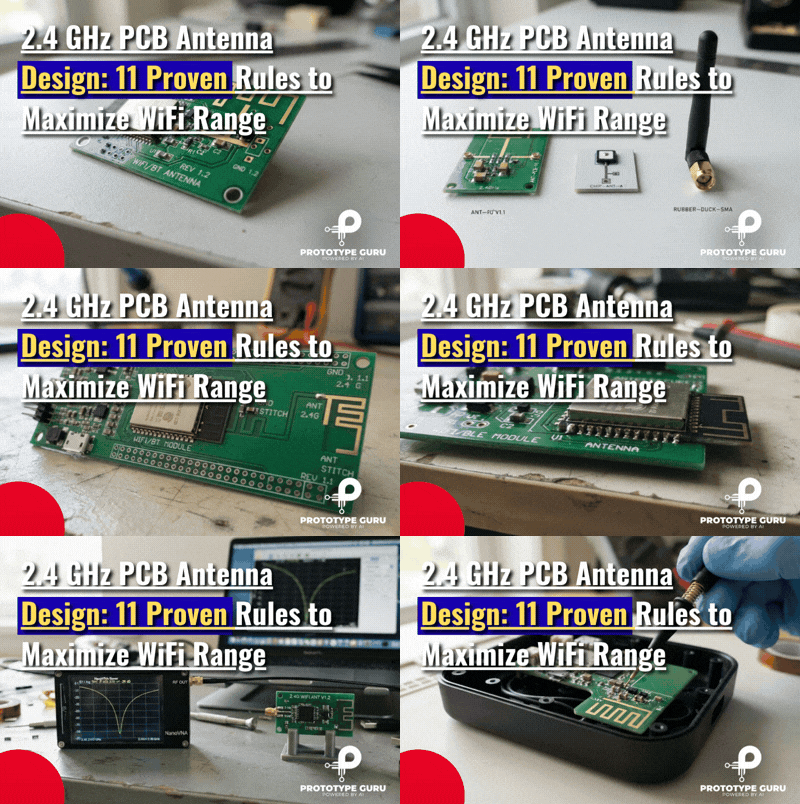
For deeper exploration of related topics, explore our guides on PCB design best practices, ESP32 PCB design, and hardware development for startups at PrototypeGuru.
External Resources for Further Learning:
- IPC Standards for PCB Design and Manufacturing — Industry-standard design rules referenced in professional reverse engineering work
- KiCad Official Documentation — Free EDA software used by engineers and hobbyists worldwide for schematic reconstruction
- Stanford EE368: Reverse Engineering Printed Circuit Boards — Academic paper covering systematic PCB analysis methodology
- All About Circuits: Circuit Analysis Tutorials — Excellent reference for understanding circuit topologies encountered during reverse engineering
Published by PrototypeGuru | Expert hardware engineering resources for startups and professional engineers