



Building a Smart ESP32 Audio Player Using YX5300 MP3 Module (Arduino IDE)
The ESP32 Audio Player using YX5300 MP3 Module is becoming one of the most practical embedded audio solutions for modern IoT and electronics projects. Developers can use this setup to play MP3 and WAV files directly from a microSD card while controlling playback through UART communication. The ESP32 offers strong processing capabilities, integrated WiFi and Bluetooth connectivity, and excellent compatibility with the Arduino IDE. Combined with the YX5300 MP3 decoder module, it creates a powerful yet low-cost audio playback system suitable for smart automation, industrial alert systems, educational electronics, robotics, and interactive consumer products.
Modern embedded systems increasingly rely on audio feedback to improve user interaction and operational efficiency. Voice notifications, sound effects, alarms, and audio prompts are now common features in IoT devices and automation products. The YX5300 module simplifies digital sound playback by internally handling audio decoding, reducing firmware complexity on the ESP32. At Prototype Guru, embedded engineers integrate such audio playback systems into commercial electronics, industrial products, and smart IoT devices where optimized PCB layout, stable firmware, and reliable playback performance are essential for scalable product deployment.
Understanding the Challenges in Embedded Audio Systems
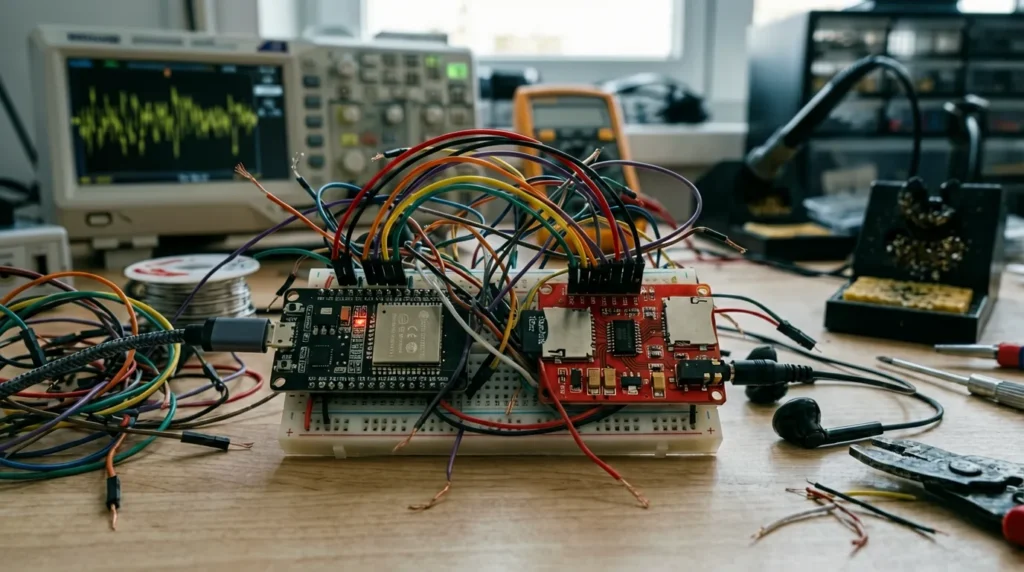
Implementing audio playback inside embedded systems is often more complicated than many developers expect. Most microcontrollers are not designed for real-time MP3 decoding, and software-based audio processing can heavily consume memory and processing resources. Developers frequently face issues related to serial communication timing, audio noise, playback delays, unstable power supplies, and firmware synchronization. Without a dedicated MP3 decoder module like the YX5300, achieving reliable audio playback can become difficult in commercial-grade embedded applications.
The ESP32 MP3 player architecture solves many of these problems by separating audio decoding from the main processor. The YX5300 handles MP3 and WAV decoding independently while the ESP32 focuses on IoT communication, control logic, and sensor integration. This division improves system stability and scalability. In industrial electronics and smart automation systems, this approach is preferred because it simplifies firmware debugging, improves playback reliability, and reduces processor overhead during long-duration operation.
Common Embedded Audio Problems
Commercial embedded products must undergo extensive testing before production deployment. Ignoring PCB isolation, thermal conditions, or EMI reduction techniques may lead to unstable performance in real-world applications.
Audio-based IoT systems also require optimized firmware architecture to maintain smooth playback while handling wireless communication, cloud connectivity, and sensor monitoring tasks simultaneously.
Technical Working of ESP32 and YX5300 MP3 Module
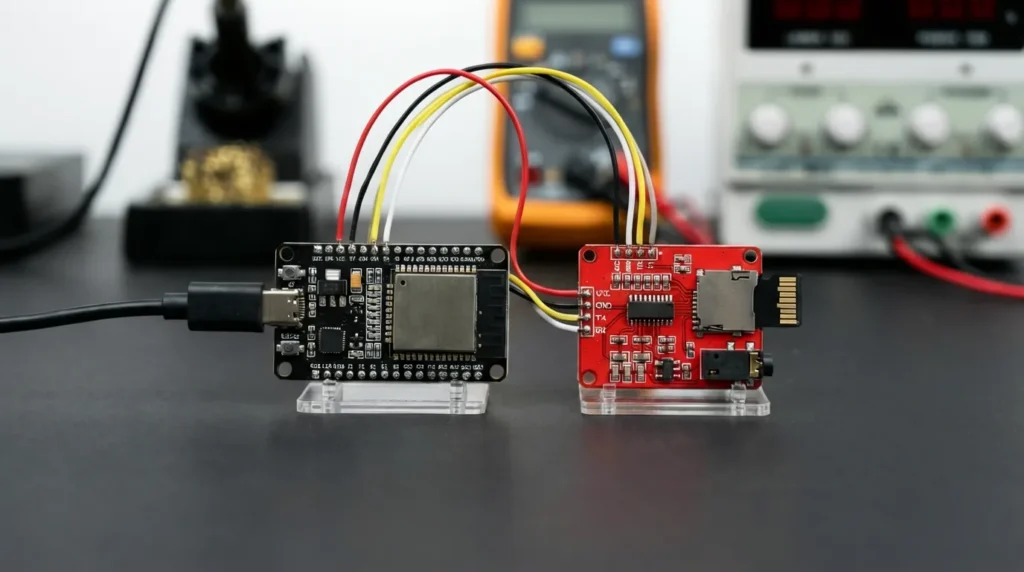
The YX5300 MP3 module works as a dedicated digital sound playback controller capable of decoding MP3 and WAV audio formats directly from a microSD card. It communicates with the ESP32 through UART serial communication, enabling developers to send commands such as play, stop, pause, volume adjustment, and track selection. Because the module handles decoding internally, the ESP32 remains free for wireless communication, cloud integration, and embedded control operations.
This hardware architecture is highly efficient for IoT applications because it minimizes processor workload while maintaining stable audio playback performance. The ESP32 acts as the system controller, managing firmware logic, user inputs, wireless communication, and automation triggers. Engineers designing commercial embedded products often prefer this structure because it simplifies firmware development and allows easy scalability for larger projects involving cloud-connected audio systems or smart automation platforms.
Key Technical Features of YX5300 MP3 Audio Module
The YX5300 MP3 audio module is widely used in ESP32 and Arduino-based embedded systems for audio playback applications. It simplifies music and voice playback by handling decoding and file management externally, making it ideal for IoT devices, automation systems, and interactive electronics projects.
- Dedicated MP3 Decoder: The YX5300 independently processes MP3 and WAV decoding tasks, reducing the processing load on the ESP32 or microcontroller and ensuring smooth audio playback.
- UART Serial Communication: Simple TX/RX UART communication allows easy control of playback functions like play, pause, volume control, and track switching using Arduino IDE or ESP32 firmware.
- microSD Card Support: The module supports microSD cards for storing large collections of audio files, making it suitable for music players, announcements, and voice systems.
- Compact Module Design: Its small and lightweight form factor makes it perfect for portable electronics, embedded IoT devices, and space-constrained hardware designs.
- Low Power Consumption: Designed for energy-efficient operation, the YX5300 is ideal for battery-powered systems such as wearable devices and remote IoT applications.
- Flexible Audio Integration: Easily integrates with amplifiers, speakers, sensors, and wireless triggers, enabling advanced multimedia and interactive embedded system designs.
The combination of ESP32 and YX5300 creates a reliable and scalable embedded audio project platform for industrial automation, robotics, smart healthcare, and consumer electronics applications.
Hardware Components and Circuit Design
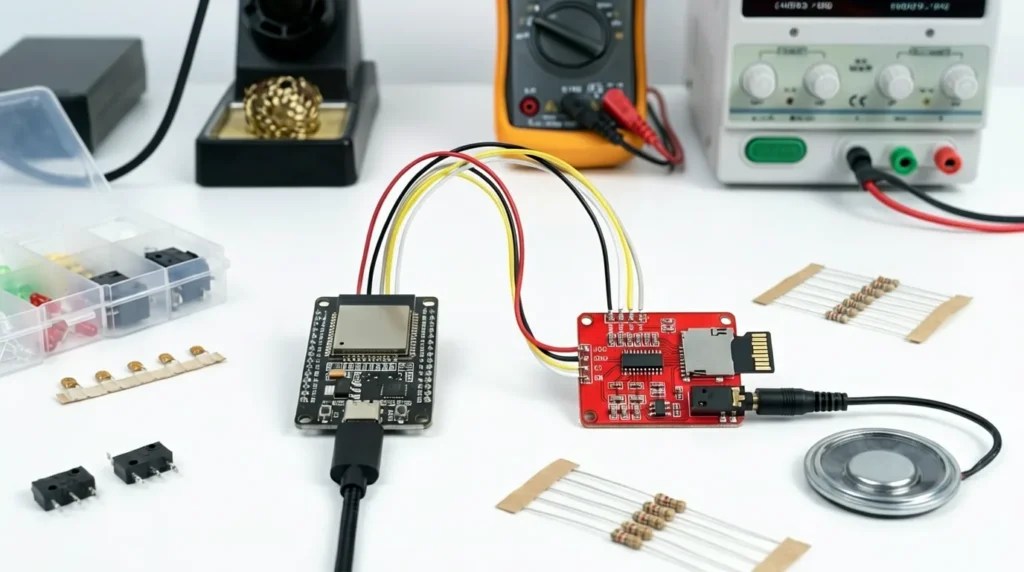
Building a reliable ESP32 audio player requires careful component selection and optimized circuit design. Signal integrity, stable power delivery, and proper speaker interfacing are critical factors in achieving professional-grade sound playback. Poor hardware wiring or incorrect grounding techniques can introduce audio distortion, playback delays, or unstable communication between the ESP32 and the YX5300 audio module.
Required Hardware Components for ESP32 + YX5300 Audio System
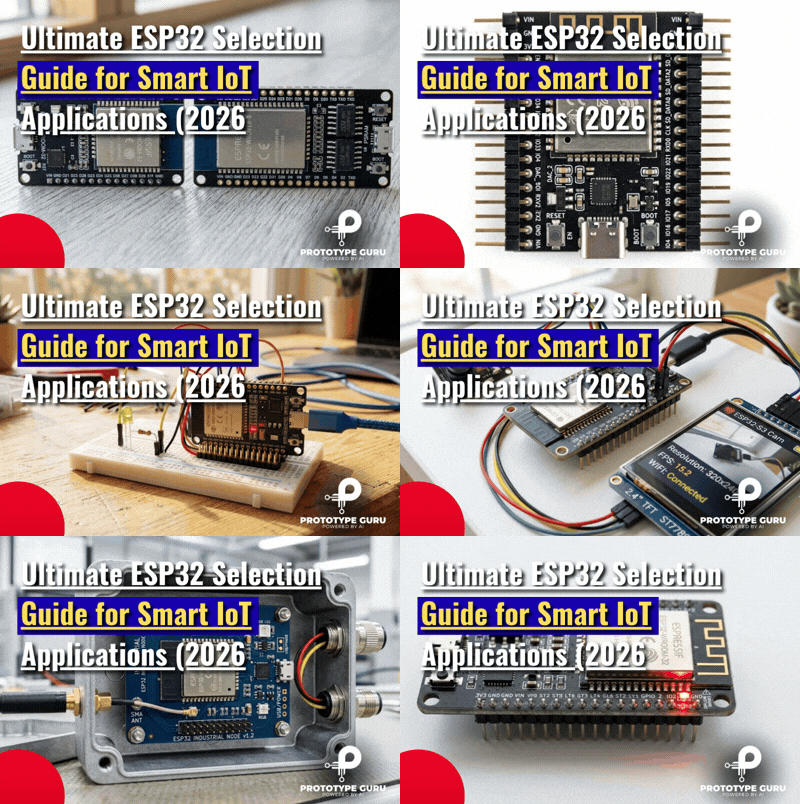
ESP32 Development Board
The ESP32 acts as the main controller, handling firmware execution, UART communication, and system logic. It also provides WiFi and Bluetooth connectivity for future IoT expansion and smart audio control applications.
YX5300 MP3 Audio Module
The YX5300 module is responsible for decoding and playing MP3/WAV files. It offloads audio processing from the ESP32 and enables smooth playback through simple UART commands.
microSD Card Storage
A microSD card is used to store audio files such as music, voice prompts, or announcements. It allows large-scale storage for multiple audio tracks in embedded systems.
Speaker or Audio Amplifier
The speaker or amplifier converts decoded audio signals into sound output. Amplifiers are often used to improve volume and sound quality in larger embedded audio projects.
Jumper Wires and Connectors
Jumper wires are essential for prototyping and testing connections between ESP32, YX5300, and other components. They allow quick hardware setup without PCB design.
Stable Power Supply
A stable and regulated power supply ensures uninterrupted operation of both ESP32 and YX5300 modules. It prevents resets, audio distortion, and system instability during operation.
Commercial PCB layouts should separate analog and digital grounds wherever possible to reduce EMI interference and improve sound clarity.
Proper decoupling capacitors near the audio module improve voltage stability during high-current playback conditions.
At Prototype Guru, engineers optimize PCB routing, grounding strategies, and thermal management to ensure reliable audio playback in commercial IoT and embedded systems.
Arduino IDE Setup and Firmware Programming
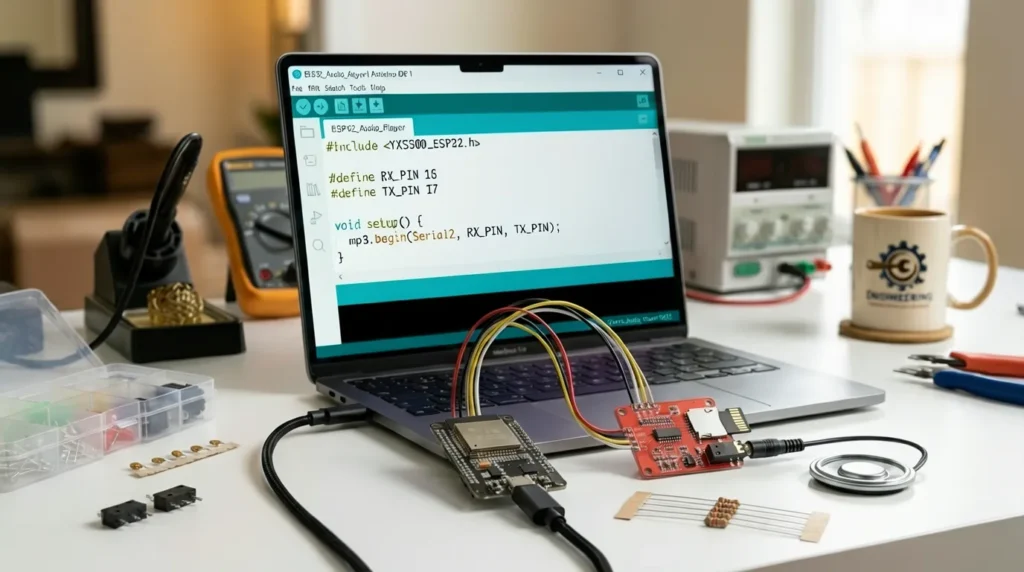
Before programming the ESP32 sound player, developers must install the ESP32 board package inside Arduino IDE. A compatible YX5300 library should also be added to simplify UART communication and playback command management. Correct baud rate configuration is essential because communication errors can prevent audio playback or cause delayed responses.
Developers typically initialize UART communication, scan audio files from the microSD card, and trigger playback using buttons, sensors, or wireless commands. The ESP32 can also integrate cloud-based control systems using WiFi connectivity.
Testing each hardware connection individually significantly reduces debugging time during firmware development and hardware validation.
Real World Applications of ESP32 Audio Systems
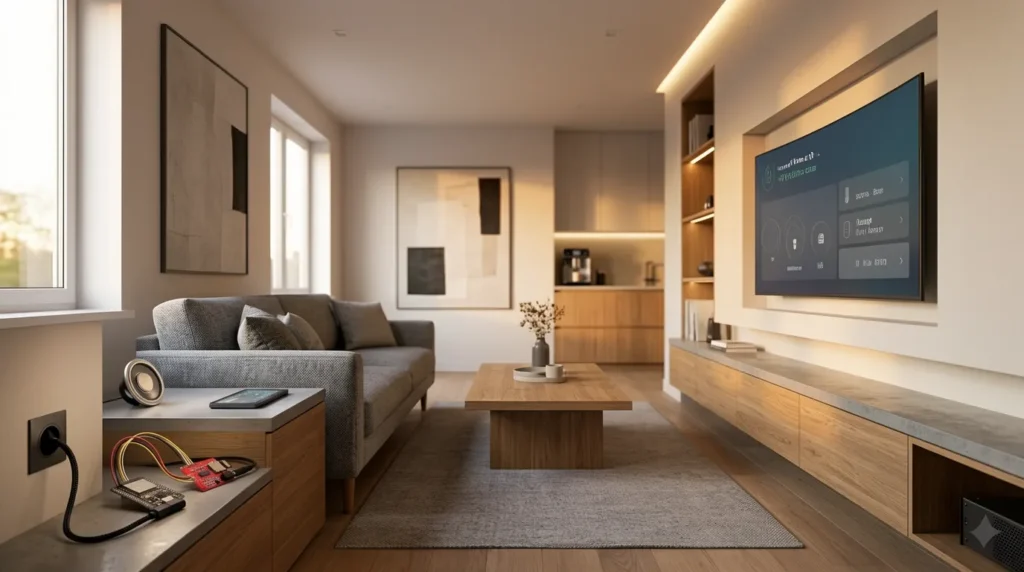
The ESP32 Audio Player using YX5300 MP3 Module can be integrated into a wide range of IoT and embedded electronics products. Smart devices increasingly rely on audio-based communication to improve user experience, accessibility, and operational efficiency. Audio prompts, alarms, and notifications help create interactive and intelligent systems across multiple industries including healthcare, robotics, industrial automation, and smart home technologies.
Modern startups and hardware companies use embedded audio systems for safety alerts, automation feedback, educational tools, and voice-controlled applications. Combining ESP32 wireless communication with YX5300 audio playback creates a highly scalable platform suitable for connected smart products and industrial monitoring systems.
| Application Area | Usage Description |
|---|---|
| Smart Home Systems | Used for voice alerts, doorbell audio, automation feedback, and smart assistant audio responses in home automation projects. |
| Industrial Automation | Provides machine status alerts, safety warnings, and operational audio notifications in factories and industrial control systems. |
| Robotics Projects | Enables interactive voice responses, sound effects, and audio feedback in robots and autonomous systems. |
| Healthcare Devices | Used for medication reminders, patient alerts, and medical device notifications to improve patient care systems. |
| Educational Electronics | Supports audio-based learning tools, interactive teaching kits, and STEM education projects using sound output. |
| Smart Retail Systems | Used for automated advertisements, promotional audio playback, and customer engagement systems in retail environments. |
Affordable hardware costs and excellent scalability make the ESP32 and YX5300 combination highly attractive for modern embedded product development.
Prototype Guru Embedded Product Development Services
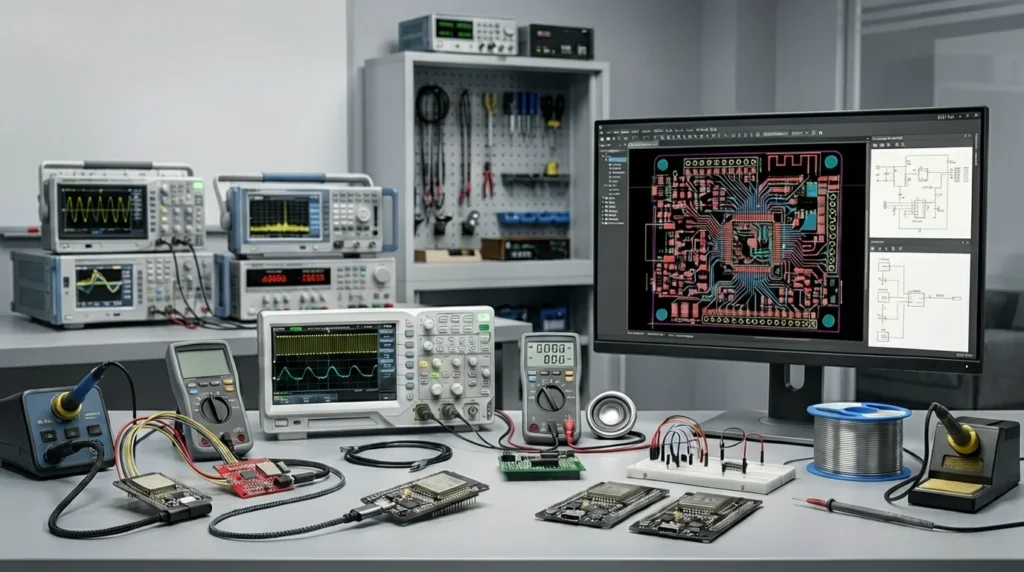
Developing a commercial embedded audio product requires expertise in hardware engineering, firmware development, PCB optimization, and manufacturing preparation. At Prototype Guru, engineering teams assist startups and businesses throughout the complete product development lifecycle, from concept validation to mass production support.
The company provides professional services in electronic hardware design, IoT integration, embedded firmware development, PCB design, wireless communication systems, manufacturing optimization, and certification support. These services help reduce engineering risks and accelerate product development timelines for hardware startups and industrial electronics companies.
Professional product validation is critical because many embedded audio systems fail during real-world deployment due to EMI interference, thermal instability, firmware synchronization problems, or unreliable PCB routing.
Prototype Guru also provides compliance support for CE, FCC, RoHS, EMC, and EMI testing to ensure embedded products meet commercial certification requirements.
Core Product Development Services
| Design Services | Development Services |
|---|---|
| Mechanical Design | Embedded Firmware Development |
| PCB Design & Layout | IoT Development |
| System Architecture | BLE/WiFi Connectivity |
| Design Consultation | Mobile App Development |
| Electronic Hardware Design | Cloud Integration |
| DFM/DFA Optimization | Embedded Systems Engineering |
Rapid prototyping, PCB assembly, testing, and BOM optimization services further help businesses validate hardware products before entering full-scale production.
The company additionally supports enclosure development, proof-of-concept engineering, environmental testing, and manufacturing sourcing for scalable electronics production.
Reliable embedded system engineering improves product quality, market readiness, and long-term operational stability.
Performance Optimization and Engineering Best Practices
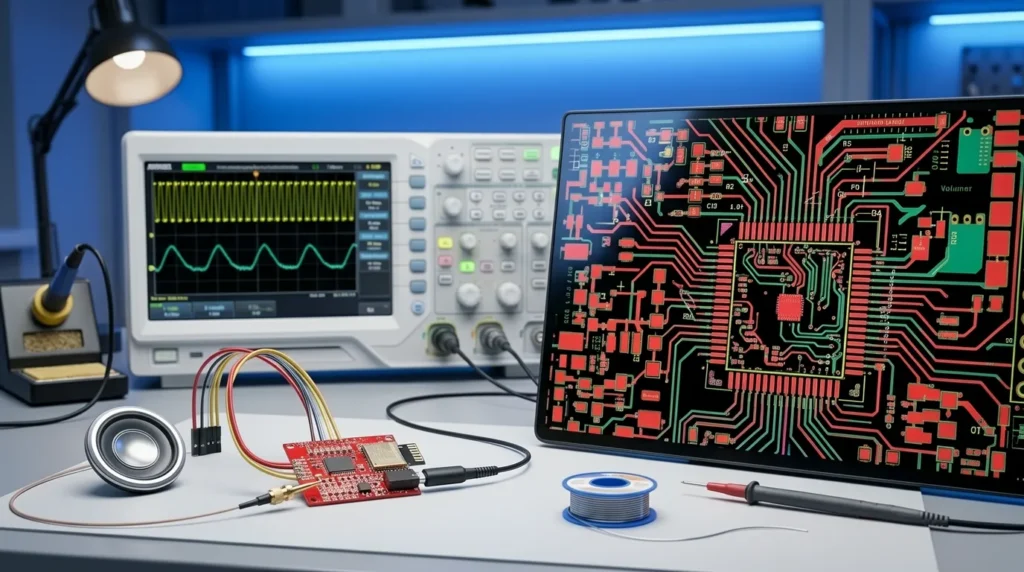
Reliable ESP32 audio playback depends heavily on optimized hardware and firmware design. Developers should always use stable power supplies because voltage fluctuations can introduce playback distortion or unexpected resets during operation. High-quality shielding and grounding techniques also improve overall audio clarity and reduce EMI interference in embedded systems.
Non-blocking firmware with UART enables smooth audio with multitasking IoT operations.
High-quality speakers and enclosures improve sound clarity and reduce distortion significantly.
Proper heat control ensures stable performance in continuous industrial audio systems.
EMI testing prevents noise issues and ensures stable embedded audio system operation.
Environmental tests ensure durability under humidity, vibration, and temperature stress conditions.
Stress testing identifies failures early, ensuring reliable commercial embedded product deployment.
Final Thoughts and FAQs
The ESP32 Audio Player using YX5300 MP3 Module is a powerful embedded solution for modern electronics and IoT systems. It combines reliable hardware decoding with flexible microcontroller control, making it ideal for both beginners and professional engineers. From simple sound projects to advanced industrial voice systems, this setup offers scalability, low cost, and strong performance.
With proper PCB design, stable firmware, and optimized power management, this system can easily be upgraded into commercial-grade products. Companies like Prototype Guru help transform such prototypes into fully engineered, certified, and production-ready embedded solutions for real-world applications.