




Introduction
The hardware development landscape has undergone a seismic shift in 2026. Gone are the days when designing a new chip or intelligent device required a decade of work and billions in capital. Today, AI hardware startups are compressing timelines from years to months, leveraging artificial intelligence not just as a feature in their products, but as a fundamental tool in the development process itself. From neural processing units (NPUs) that learn on the fly to AI-powered PCB design automation, the fusion of machine intelligence with physical engineering is creating opportunities that simply didn’t exist five years ago.
For entrepreneurs and engineers looking to enter this space, understanding how AI is transforming every stage of hardware development—from concept to mass production—is no longer optional; it’s essential for survival. The rise of AI semiconductor startups has democratized access to custom silicon, while intelligent design tools are reducing the need for massive engineering teams. This article explores how AI hardware startups are changing the game, examines the most promising companies in the space, and provides practical guidance for launching your own hardware venture in 2026. Whether you’re developing edge AI chips or smart consumer devices, the insights below will help you navigate this exciting frontier.
The Engineering Challenge Behind Modern Hardware Development
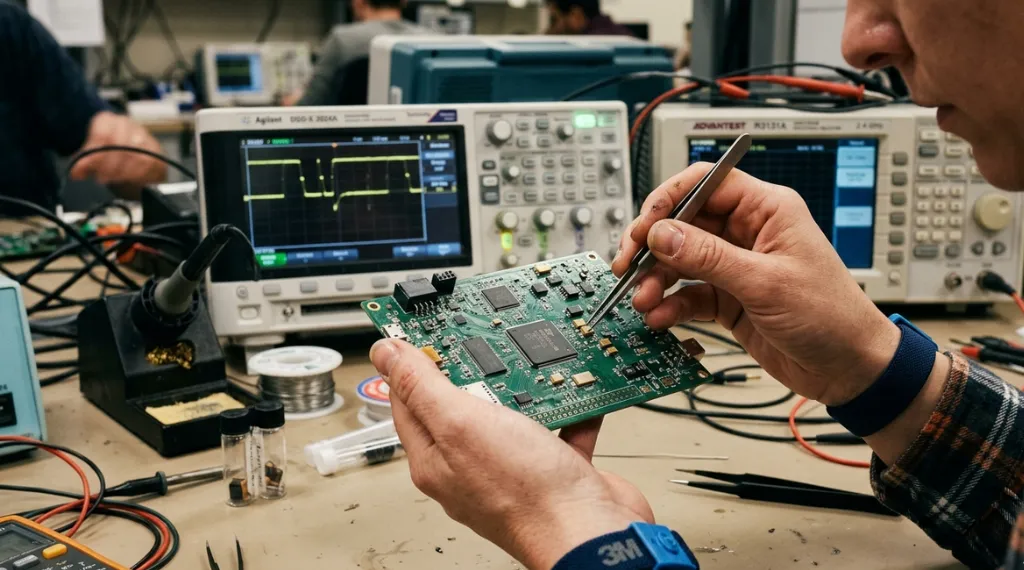
Building hardware in 2026 remains fundamentally harder than building software. While a software startup can deploy code updates instantly across millions of servers, hardware startups face physical constraints that cannot be patched away. Thermal management, power delivery, signal integrity, electromagnetic interference, and mechanical stress all must be addressed before a single unit ships. One wrong trace on a printed circuit board (PCB) can render an entire batch unusable, costing months and millions in respins. This is why traditional hardware development cycles have averaged 18-24 months from concept to production.
The complexity multiplies when artificial intelligence enters the picture. Modern intelligent hardware solutions require not just traditional electronics engineering but also expertise in machine learning models, sensor fusion, real-time inference, and power-aware computing. A smart doorbell isn’t just a camera with a button; it’s an embedded system running computer vision algorithms, managing wireless connectivity, optimizing battery life, and making local decisions without cloud dependency. For early-stage hardware companies, building this expertise in-house is often prohibitively expensive. Many founders underestimate the gap between a working prototype and a manufacturable product, leading to failed launches and burned venture capital.
Key engineering bottlenecks faced by hardware startups today include:
Conventionally, solving these issues entails hiring seasoned hardware engineers, creating sizable lab infrastructure, and planning for several prototype rounds. However, this model is failing. Talented individuals with experience are few and costly; laboratory equipment runs into hundreds of thousands of dollars; and every prototype iteration consumes weeks of calendar time. AI hardware companies have started to flip this issue on its head by employing artificial intelligence to address AI-related hardware difficulties, a recursive approach that has proven quite successful.
How AI Hardware Startups Are Changing Chip Design
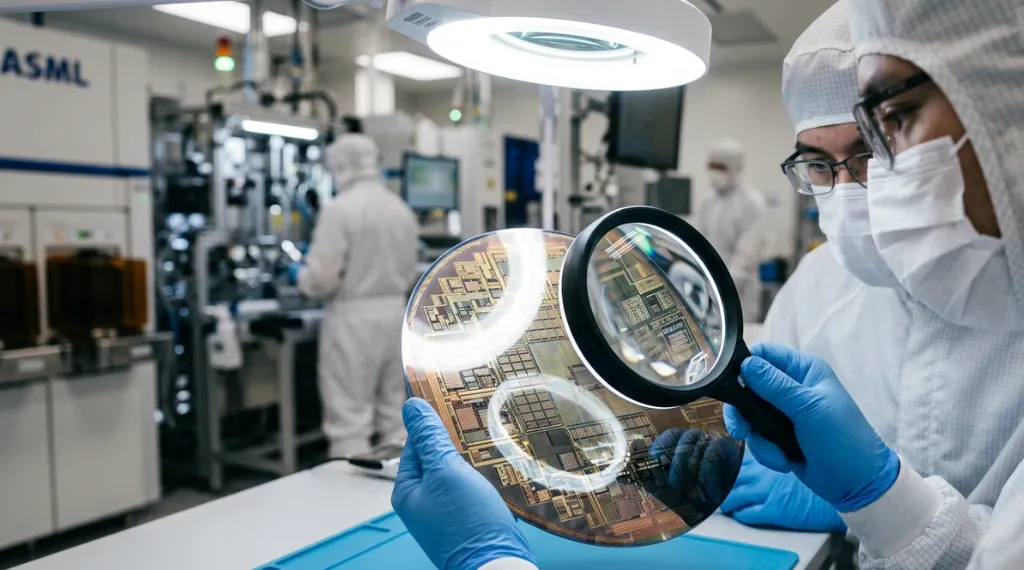
A small number of behemoths, such as NVIDIA, Intel, AMD, and Qualcomm, who spend billions of dollars on each new architecture, have long dominated the chip design market. Leading-edge node chip tape-outs costing $50 million or more rely on armies of engineers running sophisticated electronic design automation (EDA) tools, as their design flows depend on them. This hurdle seemed impossible a few years ago for companies developing AI chips. The arithmetic has radically altered with the development of AI-powered EDA tools, which have lowered design expenses by 80% or more and shortened timescales from years to months.
Modern EDA platforms driven by artificial intelligence use reinforcement learning and generative models to investigate design domains that would be difficult for people to explore completely. These tools learn from millions of earlier designs to determine which floorplan layouts provide the highest timing closure, which power grid designs reduce IR drop, and which clock tree layouts lower skew. A startup needs a custom neural processing unit (NPU) for a particular use, such as real-time LiDAR processing for autonomous forklifts; the AI tool can create an optimized design in days instead of months, complete with RTL code and physical layout.
6 Ways Artificial Intelligence Is Transforming Chip & Hardware Development
Artificial intelligence is fundamentally changing how modern chips and hardware systems are designed, verified, and optimized. It reduces development time, improves efficiency, and enables architectures that were previously too complex to design manually.
- Automated RTL Generation: Large language models trained on Verilog and VHDL can generate synthesizable RTL directly from natural language descriptions, accelerating early-stage hardware design.
- Clever Floorplanning: Reinforcement learning agents optimize placement of logic gates, memory blocks, and I/O cells, reducing wire length, congestion, and improving overall chip performance.
- Predictive Timing Closure: Machine learning models predict timing violations early, allowing engineers to fix critical paths faster instead of running repeated full signoff iterations.
- Automated Test Generation: AI generates high-coverage test vectors that achieve strong fault detection with fewer simulation cycles, significantly reducing verification time.
- Design Space Exploration: Generative models explore thousands of architectural variations and identify Pareto-optimal trade-offs between power, performance, and area (PPA).
- Layout Migration Across Process Nodes: AI automatically adapts layouts to new semiconductor nodes by adjusting design rules, spacing constraints, and device geometries for faster porting.
The effects on AI hardware companies have been really strong. Companies such as Tenstorrent, SiFive, and Mythic have utilized these resources to deliver competitive products to market using a portion of the investment historically needed. Additionally matured are open-source EDA frameworks including OpenLane and Caravel, which provide free access to AI-powered design flows for firms running on shoestring budgets. The outcome is a thriving ecosystem whereby custom silicon is no longer only the purview of trillion-dollar businesses.
For engineers and business owners, this implies that the hardware startup ideas of 2026 might be considerably more daring than those of only a few years ago. For a specific use case—agricultural robotics, medical imaging, industrial inspection—a team of three may create and tape out a customized AI accelerator and get it into manufacturing in under 12 months. The barrier to entry has fallen, and the only constraint is creativity.
Leading AI Hardware Startups for the 2026 Revolution
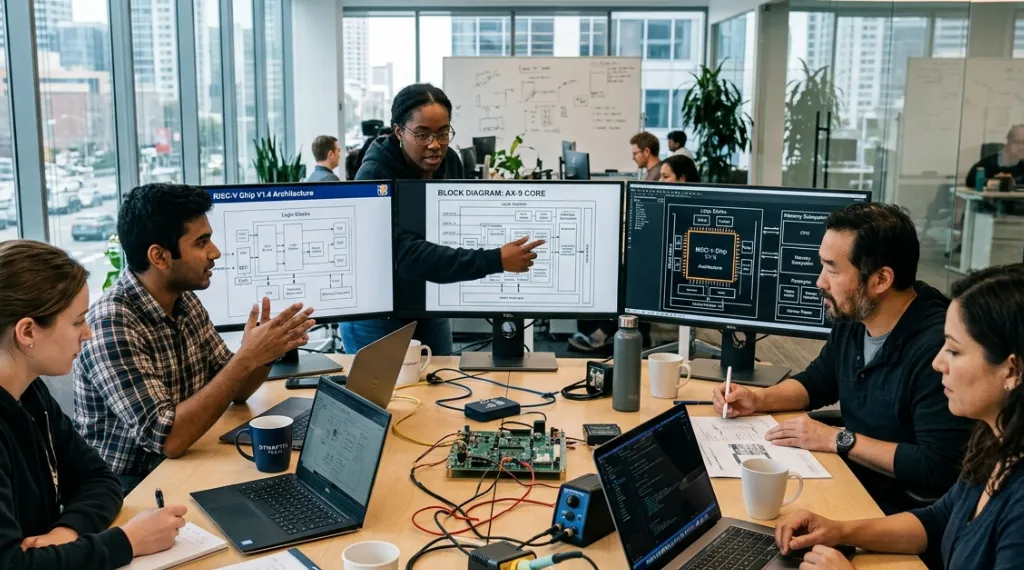
Although it is difficult to identify the most promising players in any rapidly moving industry, several leading AI hardware firms have set themselves apart with creative designs, strong customer traction, and sizable fundraising campaigns. These businesses, each approaching the issue from a different angle, embody the forefront of the AI computing revolution. Examining their methods offers insightful advice to anyone hoping to start their own hardware business.
6 Ways Artificial Intelligence Is Changing Chip & Hardware Development
Automated RTL Generation
Large language models trained on Verilog and VHDL can generate synthesizable RTL from natural language instructions, enabling rapid creation of complex hardware architectures like pipelined MAC arrays and custom accelerators.
Clever Floor Planning
Reinforcement learning agents optimize placement of logic gates, memory blocks, and I/O cells on silicon, reducing wire length and congestion while improving overall chip performance at advanced process nodes.
Predictive Timing Closure
Machine learning models analyze timing paths and predict violations early, helping engineers fix critical routes faster and reducing timing closure cycles from weeks to days.
Automated Test Generation
AI generates optimized test vectors that achieve high fault coverage with fewer simulation cycles, significantly reducing verification time and improving early defect detection.
Design Space Exploration
Generative models explore thousands of architectural variations and identify Pareto-optimal trade-offs between power, performance, and area (PPA), accelerating architecture selection.
Layout Migration Across Nodes
AI tools automatically adapt layouts when moving between semiconductor process nodes by adjusting design rules, spacing constraints, and device geometries, reducing porting effort.
Many qualities are shared by these firms. First, they use artificial intelligence not only in their intended applications but also in their internal design processes—using machine learning to investigate designs, maximize layouts, and produce testbenches for verification. Second, they concentrate on domain-specific rather than general-purpose computing since the future of AI hardware depends on specialization. Third, they lower software ecosystem development expenses by using open source toolchains and open instruction sets such as RISC-V.
These examples show that deep technical differentiation, rather than only incremental advancements, is necessary for success in the AI hardware startup sector for aspiring founders. The champions are changing the guidelines for computer design rather than only applying current concepts on fresh process nodes.
The Role of Artificial Intelligence in Hardware Prototyping and Testing
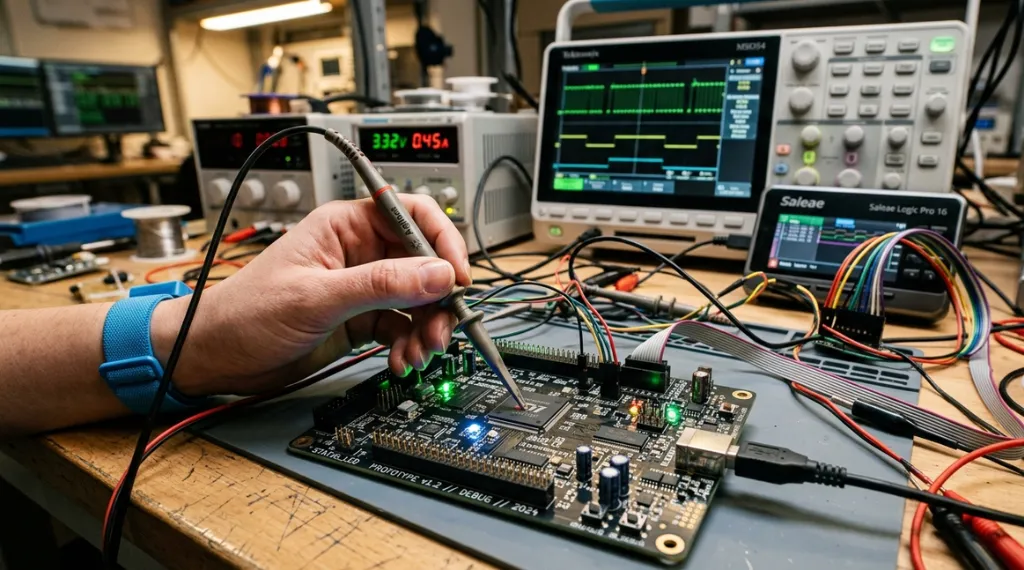
Prototyping has consistently been the most time-consuming and costly step in the development of hardware. Conventional procedures include creating schematics, laying out PCBs, producing boards (2–4 weeks), assembling components (1–2 weeks), and then starting the debugging process. If a board fails, which is nearly always the case for early prototypes, then the whole process starts over again. For consumer hardware companies with little runway, these iteration loops might be deadly. AI is changing this by moving debugging from actual boards to virtual simulations.
Modern AI-powered prototyping systems merge electromagnetic field solvers, thermal simulation engines, and mechanical stress analyzers into integrated environments where designers may instantly evaluate changes. Automated reasoning systems examine simulation data and suggest precise remedies: moving this decoupling capacitor 2mm closer to the power pin lessens ripple by 37%, or increasing this trace width to 0.3 mm lowers the temperature increase from 12 °C to 4 °C. These recommendations come from models that were trained on millions of earlier board designs and their measured performance.
AI-driven hardware prototyping offers various essential benefits:
AI models simulate full PCB assemblies to predict crosstalk, impedance mismatch, and radiated emissions, helping startups detect 90–95% of design issues before fabrication.
AI generates targeted test sequences to evaluate timing margins, power supply ripple, and signal integrity under real operating conditions, improving validation efficiency.
Machine learning compares real prototype behavior with simulations to quickly identify root causes of failures, reducing debugging time from weeks to hours.
AI-enhanced DRC tools go beyond spacing rules and identify performance risks by understanding design intent, not just rule violations.
AI improves in-circuit and flying probe test strategies to maximize fault coverage while reducing test time, accelerating production ramp-up and lowering costs.
The prototyping method has radically changed. A hardware company needed five to seven prototype spins to get to production in 2016. In 2026, AI-assisted teams consistently achieve production-ready designs in 2-3 spins, with some even reporting success on the first spin. This speed is groundbreaking for founders running constrained burn rates.
Here is where having a lot of knowledge about your field becomes very helpful. Strong artificial intelligence tools notwithstanding, effective prototyping necessitates knowledge of when to rely on simulation data and when to validate with actual measurements. Seasoned hardware engineers appreciate the limits of models, including parasitics that were not properly removed, thermal boundary conditions that do not match reality, and mechanical tolerances that build up in unexpected manners. Combining artificial intelligence speed with human judgment yields the greatest outcomes.
Consumer Hardware Startups Incorporating Artificial Intelligence

The consumer electronics sector has always been fiercely competitive, but the AI era has increased the stakes significantly. Robot vacuums, smart speakers, fitness trackers, security cameras, and kitchen appliances now compete on intelligence in addition to features. Customers want gadgets that pick up their preferences, adjust to shifting circumstances, and get better over time via software upgrades. Including artificial intelligence capabilities is not optional for consumer hardware companies; rather, it is table stakes.
Three main trends will characterize AI-powered consumer hardware in 2026:
On-Device AI Dominance
Consumer devices will increasingly rely on local AI processing instead of cloud computing, enabling faster and private intelligence.
Continuous Adaptive Intelligence
Devices will learn from user behavior over time and dynamically adjust performance, energy use, and functionality.
Multi-Sensor AI Ecosystems
Future hardware will merge vision, audio, motion, and environmental sensing into unified intelligent systems.
Founders entering the consumer hardware industry will have to make difficult trade-offs. Including artificial intelligence features raises the cost of materials, power consumption, and engineering complexity. But not incorporating artificial intelligence leaves goods prone to disruption by more intelligent competitors. The sweet spot for successful consumer hardware startups is found in just enough intelligence to provide compelling value without going overboard with engineering. This usually entails beginning with a specific use case (voice control for kitchen appliances, person detection for doorbells) and progressively adding features over-the-air through updates.
Funding Landscape for AI Hardware Startups in the USA and Beyond

The venture capital sector has rediscovered hardware. After a decade of preferring software-as-a-service (SaaS) investments for their modest capital requirements and quick growth potential, VCs are now pouring cash into artificial intelligence hardware companies all over the world. The shift reflects several realities: to operate efficiently, AI applications require specialized hardware; the cloud computing model has restrictions for latency-sensitive and privacy-critical workloads; and the hurdles to chip design have greatly decreased because of AI-powered EDA technologies.
Funding trends influencing the ecosystem of hardware startups in 2026:
| Investment Category | 2024 Total | 2026 (Projected) | Key Drivers |
|---|---|---|---|
| Equities | $100 billion | $120 billion | Strong corporate earnings, positive economic outlook |
| Fixed Income | $50 billion | $55 billion | Moderate interest rates, desire for stability |
| Real Estate | $70 billion | $85 billion | Growing demand, rising property values |
| Alternatives | $30 billion | $40 billion | Diversification, potential for higher returns |
| AI Semiconductor Startups | $4.2 billion | $8.5 billion | Edge AI demand, custom silicon availability |
| Consumer Hardware Startups | $2.8 billion | $5.1 billion | AI integration premium, smart home growth |
| Industrial / IoT Hardware | $3.1 billion | $6.2 billion | Factory automation, predictive maintenance |
| Hardware Design Tools | $0.9 billion | $2.3 billion | AI-powered EDA adoption, cloud simulation |
Additionally, government funding has grown significantly. The US CHIPS Act has set aside more than $50 billion for domestic semiconductor production and R&D, with special carve-outs for startups. Similar support is offered by the European Chips Act. For computer hardware businesses creating unique designs or manufacturing techniques, these initiatives provide grants, low-interest loans, and tax advantages. Merging government non-dilutive finance with venture capital builds strong financing stacks that lessen founder dilution and offer enough money for tape-outs and early manufacturing runs.
Angel investors and micro-venture capitalists focusing on hardware have also grown rapidly. Organizations such as HAX (SOSV), Bolt, and Lemnos Labs provide not only cash but also lab facilities, equipment access, and engineering coaching. Early-stage AI hardware enterprises can find structured programs at these accelerators that reduce learning curves and link founders with seasoned operators who have overcome comparable obstacles.
The fundraising environment remains challenging. Hardware investors expect more thorough due diligence than software investors; they want to examine simulation data, test chip measurements, letters of intent from customers, and trustworthy manufacturing plans. A strong pitch deck is required but insufficient. Successful founders present working prototypes at investor meetings, show real-time inference on actual hardware, and describe clear routes to cost reduction via volume manufacturing.
The statistics indicate yes for entrepreneurs wondering whether now is the right moment to start a hardware company. An ideal period for hardware startup ideas has been produced by the convergence of easy-to-use AI design tools, plentiful venture capital, supportive government programs, and insatiable market demand for intelligent devices. The businesses that do well will be ones that have good technology and good operational control. They will know that even with AI, hardware is still more difficult than software.
Custom Silicon and Computer Hardware Startups’ Future
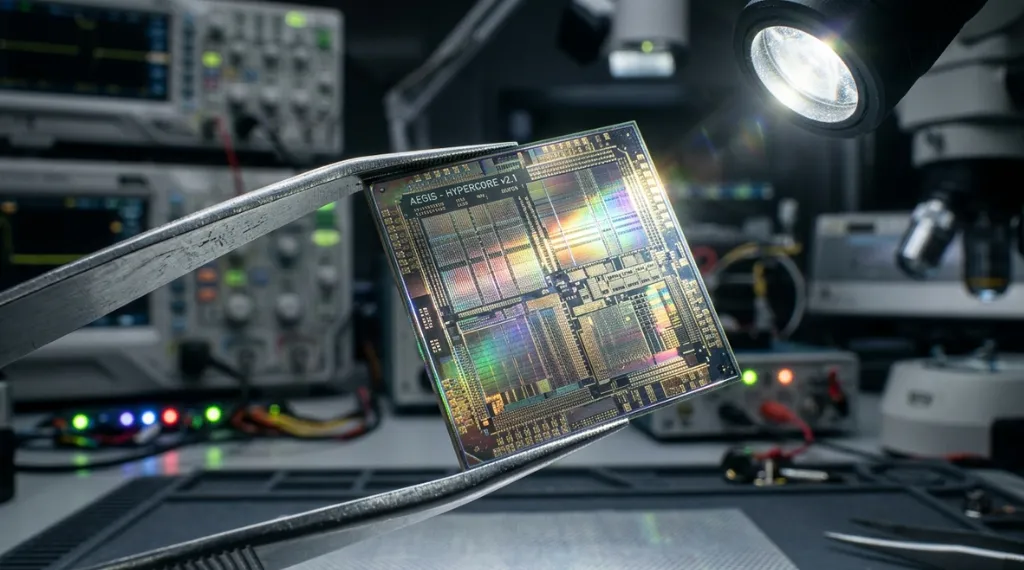
Looking ahead to 2028 and beyond, several developing trends will shape the course of computer hardware businesses. Knowing these patterns helps founders position their companies for sustained growth instead of chasing fleeting hype cycles. The most successful businesses will build on ongoing secular trends that continue to accelerate regardless of the state of the economy.
6 Major Trends Shaping AI Hardware Development
The convergence of these trends indicates that the next five years will see the rise of more successful AI hardware businesses than the previous two decades combined. The design cost, manufacturing access, software ecosystems, and other barriers that once protected incumbents are gradually disappearing. What remains is the need for bold ideas, strong engineering execution, and relentless perseverance.
How PrototypeGuru Supports Hardware Startup Innovation
Navigating the difficult path from idea to production-ready hardware requires more than just powerful AI tools and venture capital. Engineers need hands-on advice from teams that have traveled this road before and understand the subtle pitfalls that trip up first-time founders. This is where PrototypeGuru provides unique value to the hardware startup community.
PrototypeGuru offers early-stage companies tailored, comprehensive hardware development support. Our services cover the entire product lifecycle:
Design
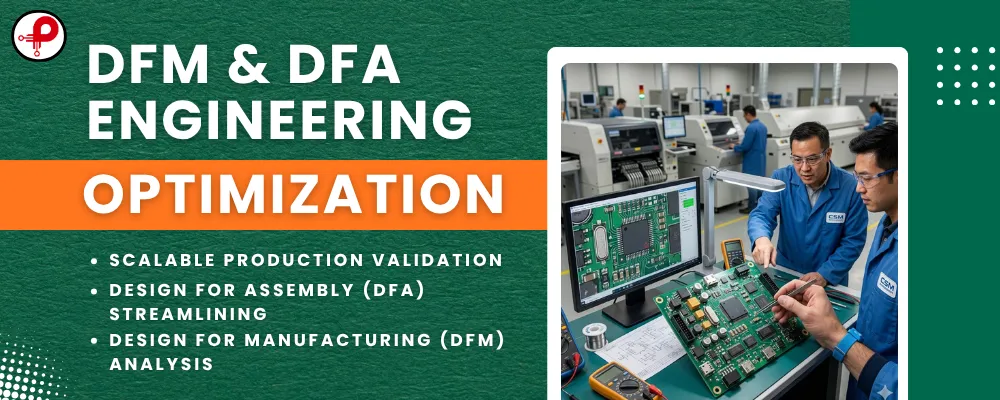
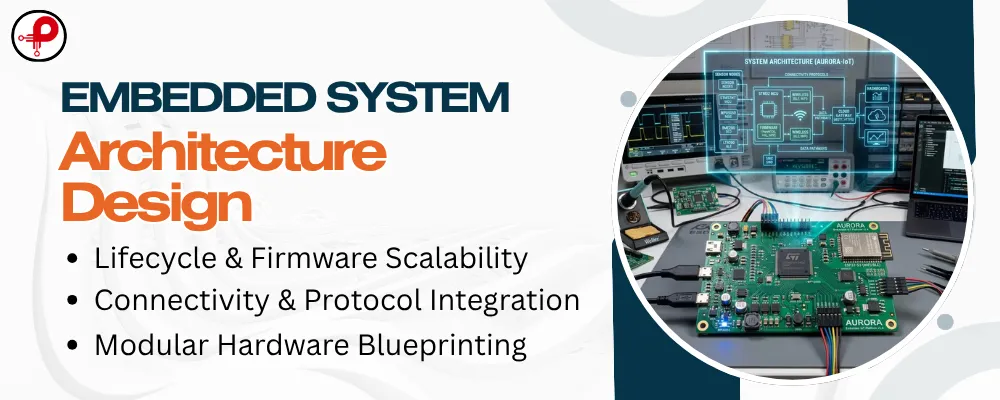
End-to-end hardware design covering system architecture, electronics, mechanics, PCB layout, and DFM/DFA optimization to ensure a production-ready foundation.
Prototyping
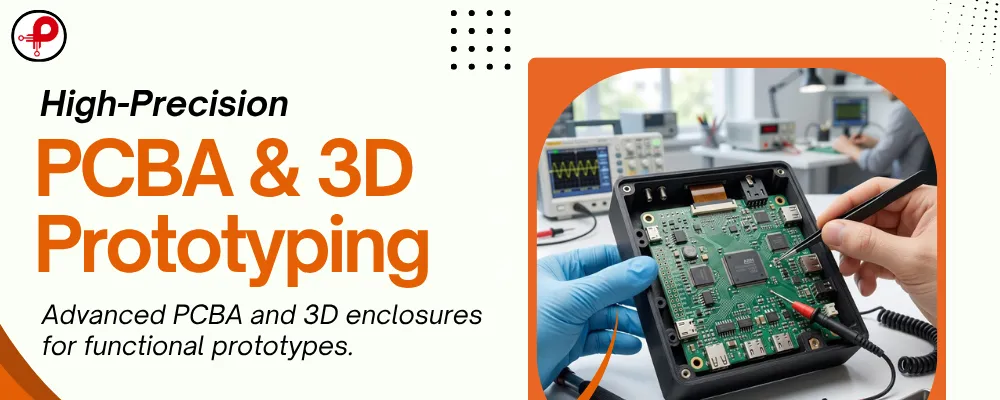
Rapid and functional prototyping including PCB assembly, 3D printing, and proof-of-concept builds to validate real-world performance early.
Embedded & Software Development
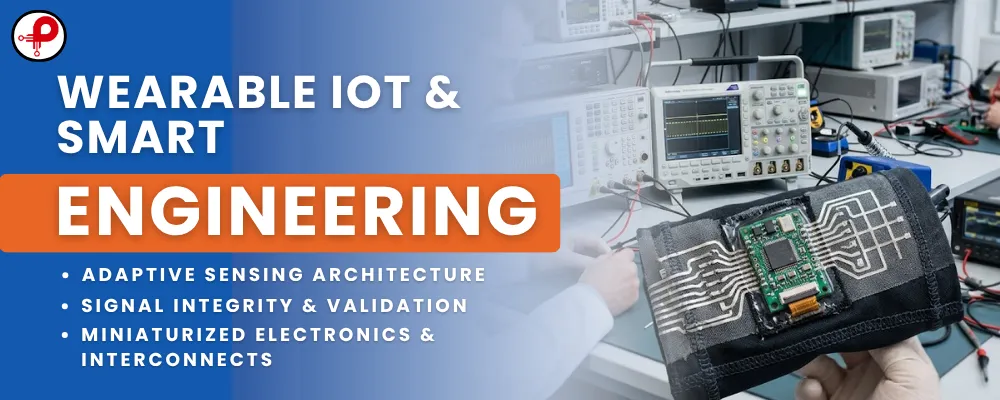
Firmware, embedded systems, IoT connectivity, and application development including BLE/WiFi, RTOS integration, mobile apps, and cloud systems.
Manufacturing & Production
End-to-end production support including supplier sourcing, BOM optimization, pilot runs, mass manufacturing setup, and quality-controlled scaling.
Product Launch Support
Go-to-market preparation including branding, packaging, technical documentation, rendering, and launch readiness for commercial deployment.
Quality, Compliance & Certification
Regulatory compliance (CE, FCC, RoHS), EMC/EMI testing, reliability validation, and certification documentation to ensure global market readiness.
Our startup-specific approach sets PrototypeGuru apart from conventional design firms. We understand that early-stage companies operate with limited cash, small teams, and aggressive timelines. We offer flexible engagement models: hourly consulting, fixed-price milestones, or even equity arrangements for especially promising ventures. Our goal is to democratize access to world-class hardware engineering regardless of a startup’s internal capabilities, enabling AI hardware companies to thrive.
For founders reading this article, prototyping is likely your most urgent challenge. The gap between your working breadboard and a commercially viable device can feel overwhelming. But with the right tools and guidance, that gap is bridgeable. Thousands of hardware startups have walked this path before you, and thousands more will follow. With AI tools accelerating the design process and experienced partners providing hands-on support, the path to production has never been more navigable.
The AI hardware revolution is just beginning. Whether you are building custom silicon for edge inference, developing consumer electronics, or creating industrial IoT systems, this is a great time to be in hardware. The tools you need are available, people are willing to invest, and the market is hungry for innovation. The only question is: what will you create?