



When a US founder decides to outsource hardware development engineer roles, the move is rarely random, it usually points straight to Asia. Building a hardware company from a garage idea to a shipped product is one of the hardest journeys in tech, and most early stage founders in the US discover the same painful truth within their first year: hiring a full in house hardware engineering team is slow, expensive, and often impossible on a startup budget. That is exactly why so many founders choose to outsource hardware development engineer work to specialized partners, contract hardware engineers, and offshore design teams in Asia instead of building everything from scratch with full time US staff.
This is not a fringe strategy anymore. It has become the default playbook for everyone from solo inventors with a single product idea to venture backed teams racing to hit a Series A milestone. If you have ever asked yourself why do startups outsource hardware development, or wondered whether it is even safe to outsource hardware development, this guide answers both. Below are 10 clear reasons US startups outsource hardware development engineer roles to Asia, the best countries for hardware outsourcing, how to avoid the common traps that scare founders away, and how a partner like prototypeguru fits into a smart hardware development strategy from prototype to production.
The Real Cost of Hiring Hardware Engineers in the US (Why Startups Outsource Hardware Development Engineer Roles)

Before talking about outsourcing, it helps to understand the baseline. According to salary benchmarks from Built In, the average hardware engineer in the United States earns around 140,000 dollars per year, with senior and staff level engineers commanding 160,000 to over 200,000 dollars in total compensation. A firmware engineer alone can cost a startup well over 150,000 dollars annually once bonuses and equity are factored in.
Now multiply that by the number of disciplines a single hardware product actually needs. A connected device with a custom enclosure typically requires an electrical engineer for schematic and PCB design, a firmware or embedded systems engineer, a mechanical engineer for the housing, an industrial designer, and often a compliance specialist for FCC and safety testing. Hiring even a lean team of four or five of these specialists in house can easily cross 600,000 dollars a year in salary alone, before benefits, equipment, lab space, and tooling costs are added.
For a pre seed or seed stage startup that has raised somewhere between 500,000 and 2 million dollars, spending that much on salaries before a single unit has been manufactured is simply not realistic. This is the core financial reality that pushes founders toward outsourcing, and it directly affects hardware startup funding trends, since investors increasingly expect founders to stretch limited capital across both product development and go to market spend. Understanding hardware funding and investment patterns helps founders decide how much of their runway should go toward outsourced engineering versus in house hires. The US Bureau of Labor Statistics projects steady growth in hardware engineering roles, which means competition for in house talent, and salaries, are likely to keep climbing rather than falling.
Here is a quick side by side look at how average annual hardware and electronics engineering costs compare across the regions covered in this guide. If you have been asking how much does it cost to outsource hardware development, the cost of hardware engineers in Asia, or is it cheaper to manufacture hardware in Asia, this table answers both at a glance.
| Region | Avg. Annual Engineer Cost (USD) | Talent Density for Hardware | Time Zone Overlap with US |
|---|---|---|---|
| United States | $110,000 to $165,000 | Very High | Full overlap |
| China (Shenzhen) | $25,000 to $50,000 | Extremely High | Minimal overlap |
| Vietnam | $12,000 to $25,000 | Medium, growing fast | Minimal overlap |
| India | $10,000 to $22,000 | Very High | Partial overlap (evenings) |
| Taiwan | $35,000 to $60,000 | High (precision focus) | Minimal overlap |
| Eastern Europe | $35,000 to $55,000 | Medium | Strong overlap |
These figures are general benchmarks, not fixed quotes, and actual rates vary by experience level, specialization, and project complexity. The pattern, however, holds across nearly every report: US based hardware engineering talent costs multiples of what equally skilled engineers cost in Asia, while nearshore options in Eastern Europe sit somewhere in between.
10 Reasons US Startups Outsource Hardware Development Engineers to Asia
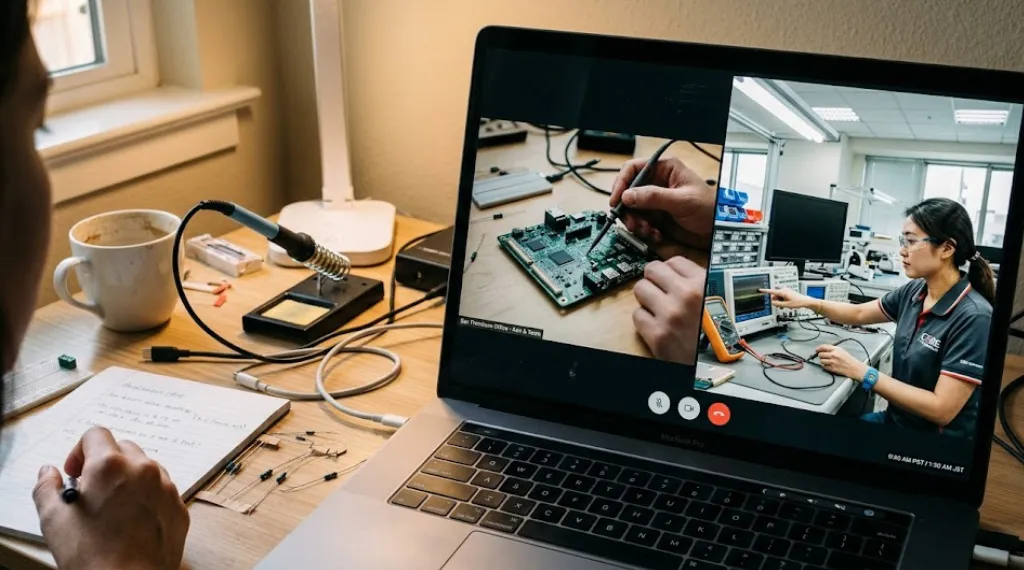
There are several converging reasons why US founders outsource hardware development engineer roles to Asia, and why this has moved from a niche workaround to a mainstream startup strategy. Before we get into the pros and cons of outsourcing hardware development, it helps to understand who founders typically turn to when they decide to hire hardware engineers outside the US: contract hardware engineers, dedicated hardware engineering team outsourcing firms, and full service hardware product development services companies that can cover everything from a single PCB revision to a complete product launch.
1. Dramatic Cost Savings
Hardware engineering costs in the US can be high; outsourcing to regions like China, Vietnam, or India leverages significantly lower salary structures without sacrificing quality, thanks to established manufacturing hubs and experienced talent.
2. Access to Specialized Skills On Demand
Outsourcing provides the flexibility to engage specialized experts—such as PCB layout engineers or firmware developers—for the exact duration needed, avoiding the overhead of permanent headcount before the product roadmap is finalized.
3. Faster Time to Market
Partnering with teams experienced in similar product development allows you to bypass the learning curve, enabling faster identification and resolution of complex issues like EMI or electromagnetic compatibility failures.
4. Proximity to Manufacturing
Teams based near your contract manufacturer can address tooling problems and perform factory visits in hours, eliminating the delays caused by long-distance communication and physical distance.
5. Lower Risk During the Validation Phase
Outsourcing keeps your burn rate flexible. It allows you to adjust project scope based on market feedback without the emotional and financial consequences of permanent layoffs.
6. Access to Component Sourcing and Supply Chain Knowledge
Experienced firms leverage existing relationships with distributors and testing labs, helping you navigate complex global supply chains that take years to build from scratch.
7. Built-In Manufacturing Transition
Many partners act as both design and manufacturing bridge-builders, ensuring a seamless transition from PCB design files to production lines without the friction of transferring data between unrelated vendors.
8. Round-the-Clock Development Cycles
By leveraging time zone differences, you can establish an effective 24-hour development cycle where design questions are answered and prototypes are built while your local team is offline.
9. Asia’s Component Ecosystem Reduces Lead Times
Teams in manufacturing hubs like Shenzhen can often source alternate parts within hours rather than weeks, preventing major delays when hitting critical deadlines like trade shows or shipping dates.
10. Government and Regional Incentives
Outsourcing to regions that actively court hardware innovation grants your startup access to subsidized lab space, tax incentives, and accelerator programs you could not fund independently.
Best Countries for Hardware Outsourcing: A Country by Country Breakdown

Not every country offers the same value proposition. Here is how the major hardware outsourcing destinations stack up for US founders in 2026, and how to find a hardware engineer in China or elsewhere depending on your product needs.
China: The Hardware Manufacturing Powerhouse
China, and Shenzhen in particular, remains the single most important hub for China manufacturing for startups and Shenzhen electronics manufacturing worldwide. If you are wondering how to find a hardware engineer in China, Shenzhen is almost always the starting point. Shenzhen hosts thousands of electronics manufacturers, component suppliers, and assembly houses within a tight geographic radius, supported by a deep Asia tech talent pool and an active Shenzhen hardware accelerator scene that helps early stage teams get from idea to working sample quickly. Investors who have backed both Chinese and US hardware startups have noted that a single week working in Shenzhen can be equivalent to a month of progress in the United States, simply because of how close the design, sourcing, and manufacturing loop is.
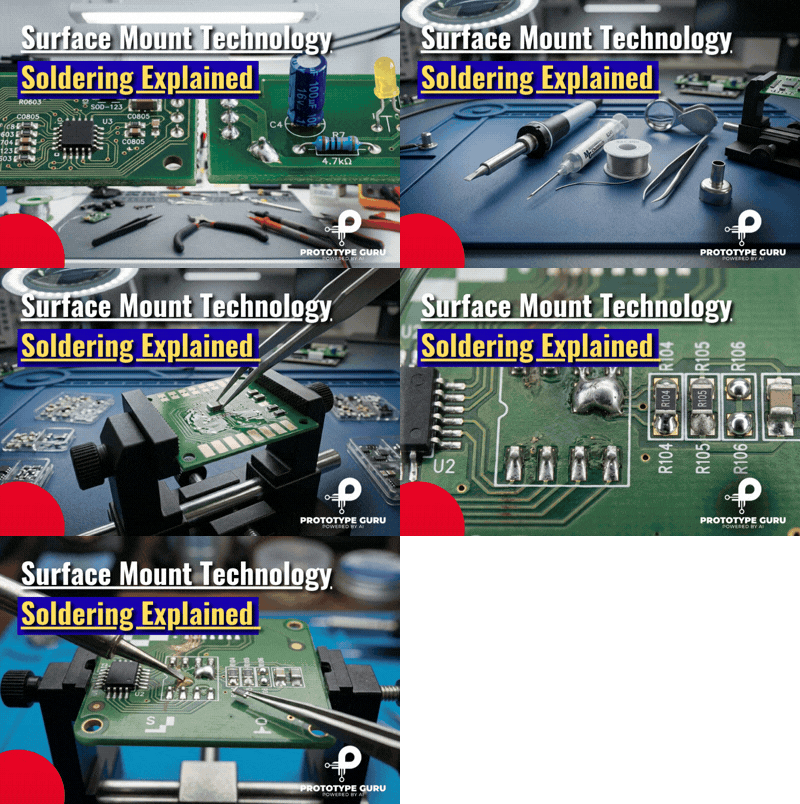
Huaqiangbei, Shenzhen’s famous electronics market district, gives engineers same day access to components, from microcontrollers and sensors to connectors and batteries, which dramatically shortens prototype iteration cycles. Many founders also use Alibaba supplier sourcing to identify smaller component vendors and assembly shops before committing to a larger manufacturing partner. The region is also home to a dense network of PCB design and assembly houses, surface mount technology soldering lines, and automated optical inspection facilities that most US based teams simply do not have local access to. For larger scale production, companies like Foxconn contract manufacturing operations remain central to the global tech supply chain China depends on, while TSMC chip manufacturing anchors the broader semiconductor supply chain that feeds Shenzhen’s component markets. According to FDI China’s overview of Shenzhen’s prototyping ecosystem, the region’s tightly integrated supply chain allows manufacturers to offer feedback that improves product designs while reducing production costs.
The tradeoff is that hardware engineering salaries in China have risen significantly over the past decade. Average engineering salaries in China now sit well above those in India and Vietnam, though they remain a fraction of US rates, particularly outside Tier 1 cities like Shanghai and Beijing. This is the heart of the US vs China manufacturing costs comparison most founders run before committing to a partner.
Vietnam: The Rising Alternative
Vietnam has become one of the most attractive alternatives for offshore hardware engineering, especially for companies looking to diversify away from China. Cities like Ho Chi Minh City and Hanoi have growing pools of electronics and embedded systems talent, often trained by international companies like Samsung that have built large R&D operations there as part of the wider Vietnam electronics manufacturing sector.
Salaries in Vietnam tend to run meaningfully lower than in China, reflecting some of the lowest engineering outsourcing rates in the region, and the talent pool, while smaller, is growing quickly. For startups that need solid embedded firmware work or PCB layout support without the full Shenzhen ecosystem, Vietnam is increasingly a strong middle ground on China vs India outsourcing decisions.
India: Deep Talent Pool, Strong English Communication
India offers one of the largest engineering talent pools in the world, with particular strength in embedded software development, firmware, and IoT product development. Communication is often smoother for US founders due to widespread English fluency and overlapping working hours with US evening schedules.
The cost advantage in India can be significant, with average hardware and software engineering salaries running far below US equivalents. The main consideration for hardware specific work is that India’s component sourcing and manufacturing ecosystem is less mature than China’s, so many India based teams will still source components or arrange final assembly through China based partners, often through cross border manufacturing partnerships that connect Indian design teams with Chinese factories.
Taiwan: Precision Engineering and Semiconductor Expertise
Taiwan, home to major operations within the Taiwan semiconductor industry, brings a different kind of value. While overall salary levels in Taiwan sit closer to other developed Asian economies, the depth of expertise in precision PCB manufacturing, high reliability electronics, and semiconductor adjacent design work makes Taiwan a strong choice for products with demanding technical requirements. Taiwan is also one of the most established tech hubs in Asia for hardware reliability testing and component qualification.
Eastern Europe and Latin America: Nearshore Options
For startups that prioritize overlapping time zones with US business hours, Eastern Europe and Latin America offer growing pools of embedded and electrical engineering talent. These regions typically sit between Asian outsourcing rates and US salaries, offering a middle path for teams that value real time collaboration over the lowest possible cost. Across the broader Asia manufacturing ecosystem, many founders also tap into startup hardware accelerator programs that connect early stage teams directly with vetted design and manufacturing partners, regardless of which region they ultimately choose.
OEM vs ODM vs EMS: Which Outsourcing Model Fits Your Startup
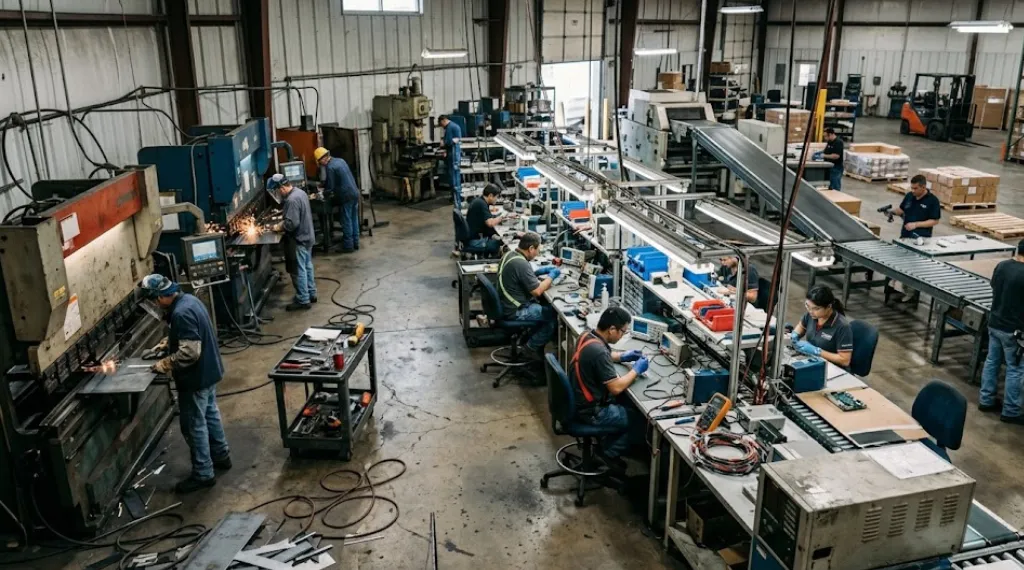
One of the most confusing parts of outsourcing hardware development is understanding the different manufacturing partnership models. If you are asking what is the difference between OEM and ODM, here is the short version: getting this wrong can mean losing control of your product design before you even realize it happened.
OEM (Original Equipment Manufacturer) means your startup owns the design, the intellectual property, and the brand. The manufacturer simply builds the product to your specifications. This is the model that gives founders the most long term control, and it is the model most venture backed hardware startups should aim for once they have a finished design.
ODM (Original Design Manufacturer) means the manufacturer designs and builds the product, which your company then rebrands and sells. This can dramatically speed up time to market and lower upfront development costs, but it comes with a serious tradeoff: the ODM typically retains ownership of the design and may sell the same base product to other companies, including your competitors.
EMS (Electronics Manufacturing Services) providers focus on production, assembly, and supply chain management based on a design you already own. This is often the right choice once your product design is finalized and you simply need scalable production.
For most US hardware startups, the smartest path is to start with a design partner who works under an OEM style relationship, where you retain full ownership of your schematics, PCB layouts, firmware, and mechanical files, and then transition into an EMS relationship for production once the design is locked.
Here is a simple comparison to keep these models straight when you are evaluating proposals.
| Model | Who Owns the Design | Best For | IP Risk Level |
|---|---|---|---|
| OEM | Your startup | Startups with a unique product and strong IP | Low, if contracts are clear |
| ODM | The manufacturer | Fast time to market on commodity style products | High |
| EMS | Your startup (manufacturer just builds) | Scaling production once design is finalized | Low |
| JDM (joint design) | Shared, defined by contract | Balancing speed with some design control | Medium |
When in doubt, choose the model that keeps your schematics, PCB layout files, and firmware source code in your hands, confirm this in writing before any design work begins, and make sure design for manufacturing (DFM) reviews are included as a deliverable rather than an optional extra.
How to Protect Your IP When You Outsource Hardware Development Engineer Teams

If you are researching how to protect IP when manufacturing overseas, the ODM vs OEM decision covered above is your starting point. IP protection is the number one fear founders raise when considering offshore hardware engineering, and it is a legitimate concern. According to Hubble Network’s guide for hardware engineers, startups that fail to clearly define design ownership and DFM responsibilities upfront often find their switching costs skyrocket once a manufacturing relationship is underway. Loss of design visibility, IP leakage, and dependence on overseas suppliers are real risks when partnerships are not managed carefully.
Here are the practical steps that actually reduce risk:
Every engagement must include an NDA and a contract explicitly defining ownership of design files, firmware source code, PCB layouts, and all derivative works. Never rely on verbal understandings.
Ensure partners deliver native, editable design files—such as Gerber files, schematic source files, and firmware repositories—rather than locking your intellectual property inside proprietary systems.
For products with novel core technology, consider keeping the most sensitive algorithms or firmware logic with a small, internal, trusted team while outsourcing commodity tasks like enclosure design or standard PCB layout.
Choose partners who specify component sourcing rather than locking you into a closed reference design. A “build-to-print” model is a key indicator that the partner isn’t trying to trap you in their proprietary platform.
Be cautious of free or discounted design services tied to exclusive manufacturing contracts. These can be acceptable, but only if the intellectual property terms are crystal clear and fully understood from the very first day.
Use clear written agreements. Every engagement should include a non disclosure agreement and a contract that explicitly states who owns the design files, the firmware source code, the PCB layouts, and any derivative work created during the engagement. Verbal understandings are not enough.
Keep design files under your control. Work with partners who deliver native, editable design files such as Gerber files, schematic source files, and firmware repositories, rather than partners who keep these files locked inside their own systems.
Split sensitive work across partners when appropriate. For products with a genuinely novel core technology, some startups choose to keep the most sensitive algorithm or firmware logic developed by a small trusted team while outsourcing more commodity work like enclosure design or standard PCB layout.
Choose partners who specify component sourcing rather than locking you into a closed reference design. This is one of the clearest signals that a partner is operating in a build to print model rather than trying to lock you into their proprietary platform.
Avoid free design services tied to manufacturing contracts without reading the fine print. Some manufacturers offer free or heavily discounted design work in exchange for exclusive manufacturing rights, which can be reasonable, but only if the IP terms are crystal clear from day one.
The Hidden Engineering Risks That Kill Hardware Products
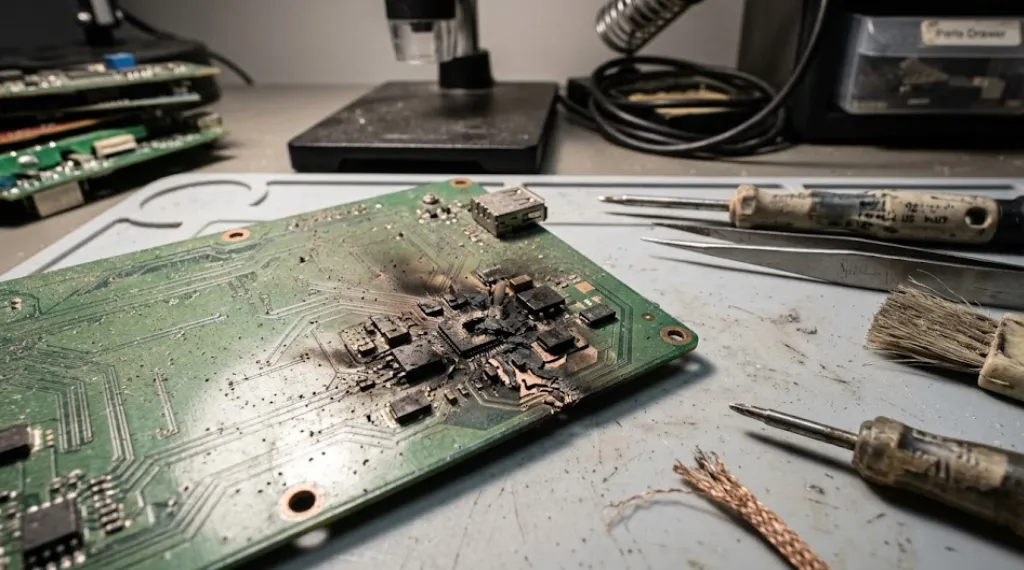
Cost and IP get most of the attention, but the engineering quality of your outsourced team is what ultimately determines whether your product actually works once it leaves the prototype stage. This is where the difference between an experienced hardware development agency and a cut rate freelancer becomes obvious.
Electromagnetic Interference and Noise
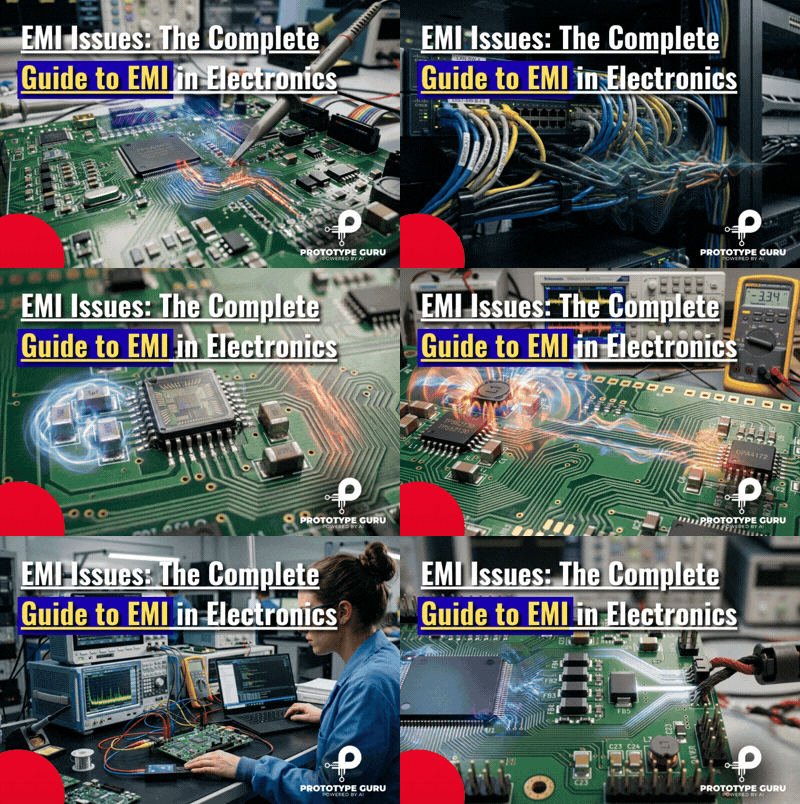
One of the most common reasons hardware products fail certification or behave unpredictably in the field comes down to EMI issues, causes, examples and fixes that were never addressed during the design phase. High switching frequency components like motor drivers, switching power supplies, and wireless modules can all generate noise that interferes with other parts of the circuit, or with nearby devices.
Teams experienced in high frequency switching noise issues know how to plan PCB layouts from the very first revision to minimize these problems, rather than trying to patch them after a failed compliance test. This includes proper grounding strategies, component placement, and trace routing decisions that are second nature to engineers who have shipped dozens of products through FCC and CE testing. For a deeper technical breakdown, how EMI and EMC filters reduce noise in power electronics is a useful reference for understanding filter selection and placement.
Multilayer PCB Layout Mistakes
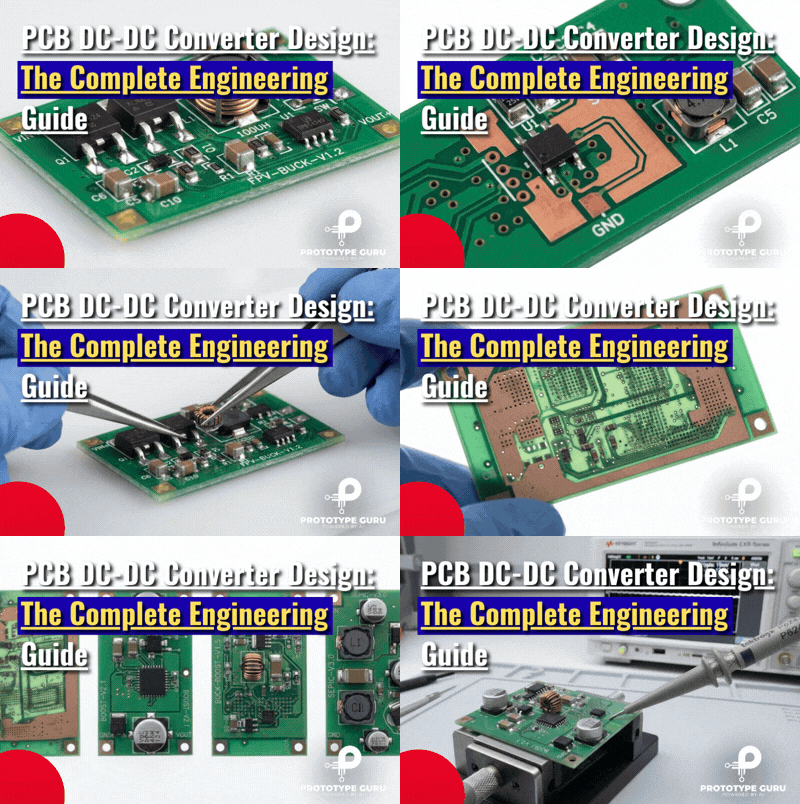
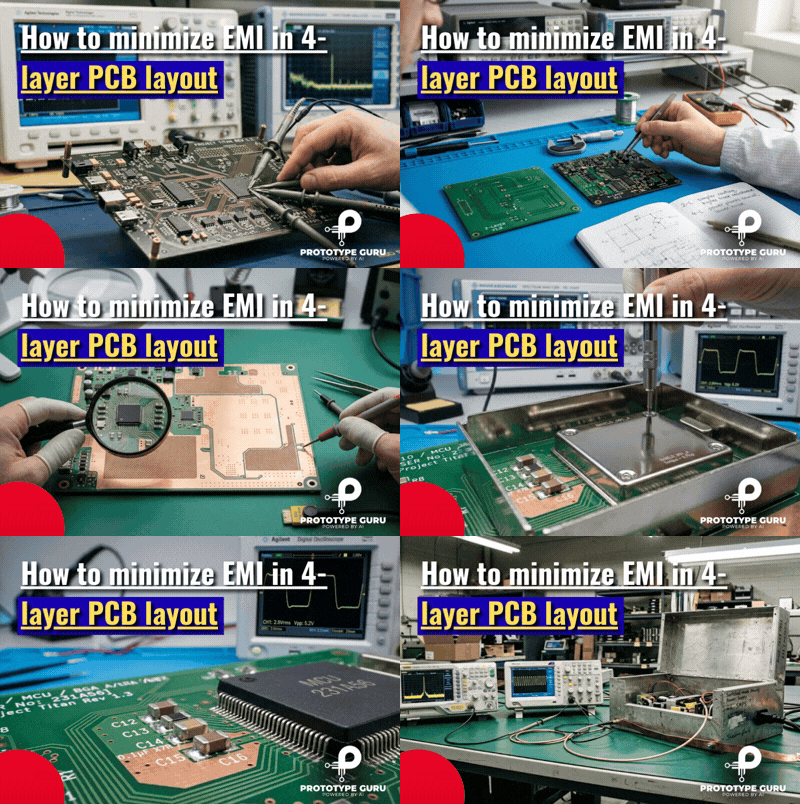
For any product with wireless connectivity, motors, or high speed digital signals, how to minimize EMI in a 4 layer PCB layout becomes a critical design skill. Poor layer stacking, inadequate ground planes, and improperly routed power traces are some of the most common reasons prototypes that work on the bench fail when built in volume, where component tolerances and manufacturing variation start to matter.
Battery and Power Management Failures
Products with rechargeable batteries carry serious safety and compliance requirements. A properly designed lithium ion battery protection circuit is not optional, it is a safety requirement that protects against overcharge, overdischarge, short circuits, and thermal events. Startups that skip proper battery protection design, or rely on a generic reference design without proper validation, are taking on significant liability risk along with the risk of a recalled product.
Wireless Connectivity Implementation
Many modern hardware products depend on Bluetooth, WiFi, or other wireless protocols. Understanding how Bluetooth works in embedded systems and IoT at the hardware level, including antenna placement, RF shielding, and coexistence with other wireless signals on the same board, is the difference between a product that connects reliably and one that generates endless customer support tickets about connectivity issues.
Shielding and EMC Compliance
When EMI cannot be designed out entirely through layout alone, proper EMI shielding materials and types become necessary. Knowing when and how to apply shielding, rather than treating it as an afterthought bolted on after a failed test, is a hallmark of an experienced hardware design team.
How to Hire a Contract Manufacturer and Choose the Right Partner
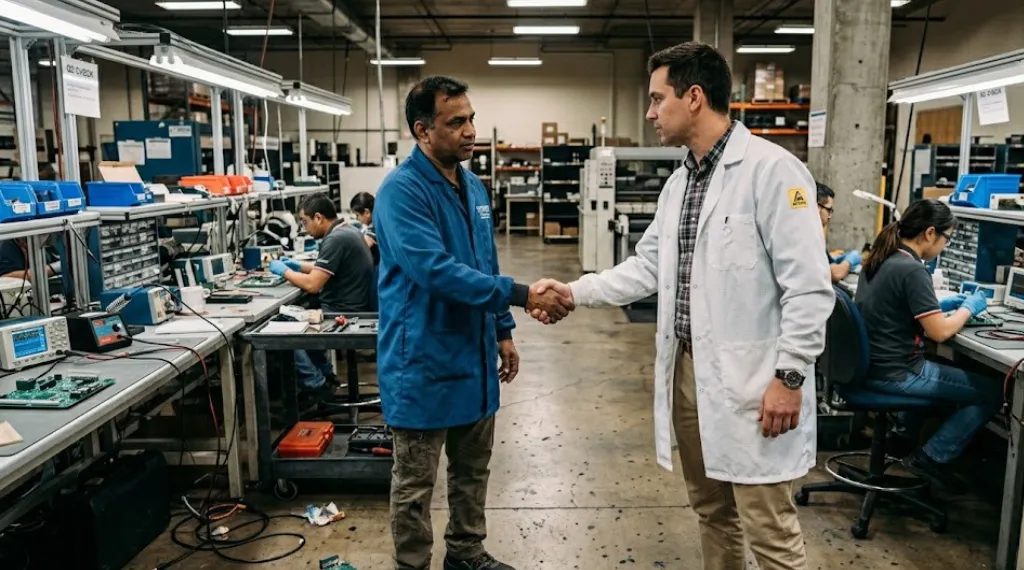
With so many hardware development outsourcing companies competing for startup business, how do you actually evaluate them? If you are wondering how to hire a contract manufacturer, how to choose a hardware development partner, or looking for a product design firm for hardware startups, here are the questions that matter most.
Do they show you real past projects, not just marketing renders? Ask to see actual PCB layouts, enclosure designs, or firmware architecture diagrams from previous client work, with client permission of course. A partner who can walk you through real design decisions on a past project is far more valuable than one who only shows polished marketing images.
Do they understand design for manufacturing from day one? What is design for manufacturing, often abbreviated DFM, means designing your product so it can actually be built efficiently at scale, with reasonable tolerances, standard components, and assembly processes that match what real factories can do. A partner who only thinks about whether something works on a single prototype, without considering how it will be built thousands of times, is setting you up for expensive redesigns later. This is also a good moment to consider what skills do hardware engineers need on your specific project, since a team strong in firmware may be weak in mechanical design, and vice versa.
Can they explain their process for handling EMI, thermal, and compliance issues proactively? If a potential partner cannot clearly explain how they approach electromagnetic compatibility testing before a product goes to a certification lab, that is a warning sign. The best partners build compliance considerations into the design from the earliest schematic stage, not as a final checkbox.
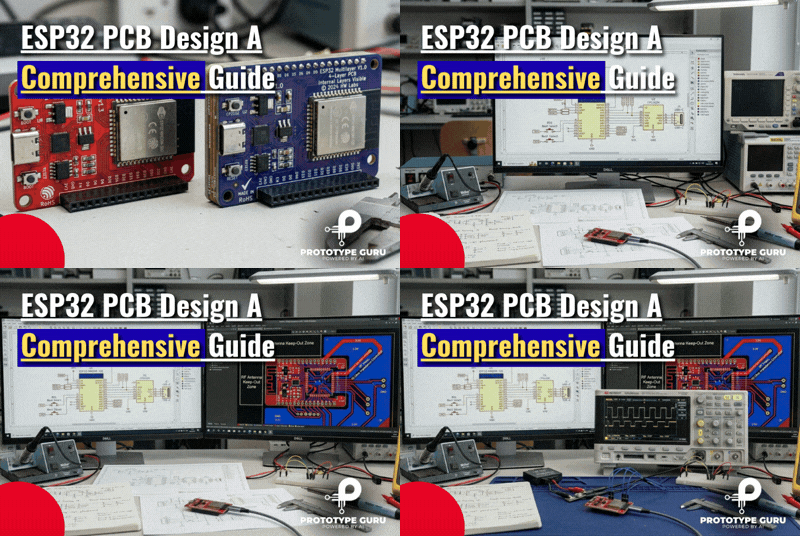
Do they have experience with your specific component ecosystem? If your product is built around an ESP32 or similar microcontroller, ask specifically about their experience with ESP32 PCB design best practices, including antenna placement, power supply decoupling, and peripheral integration. Experience with the exact chips and modules you are using translates directly into fewer prototype revisions.
What does their quality control process look like? Ask how they use automated optical inspection and other quality control methods during assembly. A partner who has invested in proper inspection equipment is signaling that they take production quality seriously, not just prototype quality.
How do they handle communication across time zones? Whether your partner is in Shenzhen, Hanoi, or Bangalore, you need clarity on response times, meeting availability, and how design reviews will be conducted. This is also where founders learn how to manage a remote hardware engineering team effectively, and it is one of the most important factors when you decide to hire electronics engineers from a different country. Misaligned communication expectations are one of the most common sources of frustration in outsourcing relationships.
Hardware Product Lifecycle: From Prototype to Production
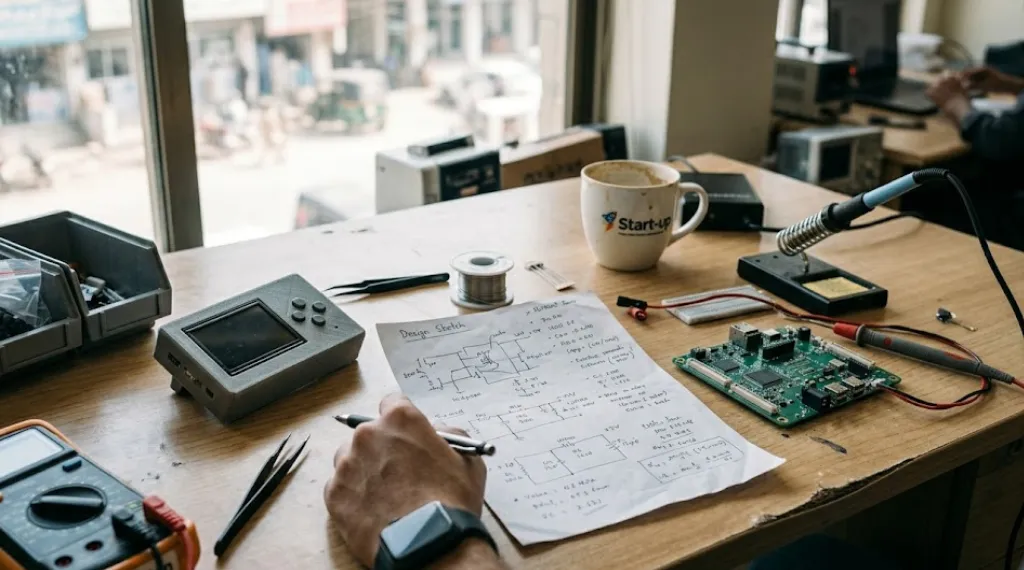
Founders often underestimate how long the journey from a working prototype to a manufacturable product actually takes, and how long does hardware product development take is one of the most common questions we hear. While timelines vary significantly based on product complexity, a realistic outline for a moderately complex connected hardware product looks something like this. If you are also asking what is the best way to prototype a hardware product, the answer almost always starts with the same first step below.
Weeks 1 to 4: Concept and Schematic Design
Define project requirements, select key components, and create the initial electrical schematic. Establish a strong foundation for EMI management early to avoid downstream complications.
Weeks 4 to 8: PCB Layout and First Prototype
Translate the schematic into a physical board layout, adhering to specific fabrication house requirements. Build and conduct initial testing on the first prototype units.
Weeks 8 to 16: Iteration and Validation
The core engineering phase. Resolve issues discovered during initial testing—including power delivery, wireless performance, mechanical fit, and firmware bugs—through multiple board revisions.
Weeks 16 to 24: Pre-production and Compliance
Refine the design toward its final form. Address regulatory requirements, perform electromagnetic compatibility (EMC) testing, and initiate mechanical tooling for enclosures.
Weeks 24 Onward: Pilot Production and Scale-up
Validate manufacturing processes with a small pilot run. Plan for mass production, secure second-source components, and lock in pricing for high-volume manufacturing.
Startups that try to compress this timeline too aggressively, particularly by skipping proper EMI and compliance work, often end up paying for it later with failed certifications, expensive board respins, or product recalls.
Is It Safe to Outsource Hardware Development? Red Flags and Scams

Unfortunately, the same factors that make outsourcing attractive, low cost and geographic distance, also create opportunities for bad actors. If you are wondering is outsourcing hardware development safe, the honest answer is yes, as long as you know how to avoid scams when outsourcing hardware. Here is what experienced founders watch for.
If a quote is dramatically lower than every other partner, investigate why. It may signal cut corners on component quality, testing, or hidden restrictive IP terms.
Any legitimate partner should be comfortable signing an NDA and a clear statement of work. Hesitation here is a significant red flag.
Established partners should be able to provide evidence of past work and connect you with previous clients, even if specific project details are confidential.
Be cautious of partners pushing for large manufacturing commitments before your design has undergone proper prototyping and validation.
If you cannot get a straight answer regarding ownership of schematics, PCB files, and firmware source code, assume you will not receive them.
How PrototypeGuru Helps You Outsource Hardware Development Engineer Roles

This is exactly the gap that prototypeguru was built to close. As a hardware design and development company and electronics product development company, prototypeguru works with IoT product development company clients and standalone hardware startups alike. Rather than forcing US founders to choose between an expensive in house team and a risky, opaque offshore arrangement, prototypeguru combines experienced hardware engineering expertise with transparent processes covering everything from initial schematic design through PCB design and assembly, firmware development, EMI and EMC management, and a clear path toward manufacturing partners for production scale up.
For startups working through early stage electronics prototyping and product design in the USA, prototypeguru offers product design and engineering services and industrial design services, including practical guidance on topics like how to minimize EMI in a 4 layer PCB layout, proper lithium ion battery protection circuit design, ESP32 PCB design best practices, and EMI shielding materials and types, without the overhead of building a full internal engineering department.
Because prototype quality directly determines how smoothly your product transitions to manufacturing, prototypeguru places heavy emphasis on getting design for manufacturing considerations right from the first prototype revision, rather than treating manufacturability as an afterthought. This applies equally to consumer electronics manufacturing projects, IoT device development, and products that combine mechanical engineering design with electrical engineering design in a single enclosure. As a manufacturing partner for startups and a provider of hardware prototyping services, prototypeguru reduces the number of costly board respins and helps startups move from a working prototype to a production ready design with far fewer surprises.
Frequently Asked Questions
1. Why do US startups outsource hardware development engineers to Asia?
↑2. Is it safe to outsource hardware development engineer work overseas?
↓3. How much does it cost to outsource hardware development engineers?
↓4. What services can an outsourced hardware development engineer provide?
↓5. Which countries are best for hardware development outsourcing?
↓6. How can startups protect intellectual property when outsourcing hardware development?
↓7. What are the advantages of outsourcing hardware product development?
↓8. How does Prototype Guru help startups outsource hardware development engineers?
↓Final Thoughts: How to Outsource Hardware Development Engineer Work the Right Way
The decision to outsource hardware development engineer roles to Asia is rarely about choosing the cheapest possible option. The startups that get this right treat outsourcing as a way to access expertise, speed, and manufacturing proximity that would take years and millions of dollars to build internally, while keeping tight control over their intellectual property and design quality.
Whether you are evaluating teams in Shenzhen and learning how do startups find manufacturers in China, exploring offshore hardware engineering options in Vietnam or India, figuring out how to outsource electronics manufacturing for the first time, or looking for a US based hardware product development services partner or hardware development agency who can manage the entire process end to end, the same principles apply. Protect your IP with clear contracts, prioritize partners who think about EMI, compliance, and design for manufacturing from day one, and choose a team that can walk your product confidently from a rough concept all the way to a manufacturable, certifiable, sellable product.
If you are starting that journey and want a partner who understands both the engineering details and the realities of bringing a hardware product to market, prototypeguru is built specifically for founders navigating exactly this path.