
Introduction: Why Getting the Design Right the First Time Saves Everything
If you have ever watched a promising product idea die on the factory floor, you already understand the cost of poor planning. Industrial product design engineering is the discipline that prevents exactly that from happening.
This is not just about making something look good. It is about making sure the product you dream up on paper can actually be built at scale, at a reasonable cost, and without endless rounds of rework that drain your budget and delay your launch date.
Over the past eight years working in the hardware development and product engineering space, I have seen two types of teams. The first group treats design and manufacturing as separate problems. They hand off CAD files, cross their fingers, and wonder why the factory keeps sending them back revision requests. The second group integrates industrial product design engineering from day one, and those teams consistently ship better products faster and cheaper.
This article breaks down exactly how to be in that second group. Whether you are a hardware startup trying to get your first product to market, or an established manufacturer looking to improve your industrial design engineering services, this guide covers everything you need to know.
1. What Is Industrial Product Design Engineering?
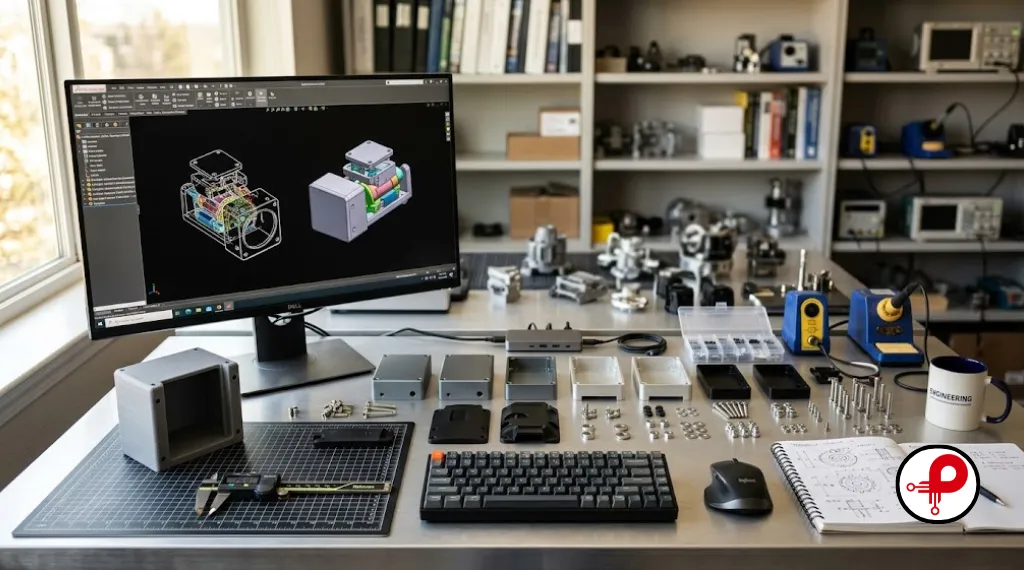
Industrial product design engineering is the process of conceptualizing, developing, and refining physical products so they perform reliably, look purposeful, and can be manufactured efficiently at scale. It sits at the intersection of mechanical engineering, industrial design, material science, and manufacturing know-how.
Think of it as the bridge between a great idea and a production-ready product. Without this bridge, you either build something beautiful that cannot be manufactured affordably, or something manufacturable that nobody wants to buy.
A true industrial product design engineering company brings multiple disciplines under one roof: mechanical CAD modeling, structural analysis, industrial design for user experience, electronics integration, and design for manufacturing (DFM) analysis. The goal is to make sure every decision made in the design studio aligns with what will actually happen on the production floor.
For hardware startups especially, this integrated approach is not a luxury. It is the only affordable way to move from prototype to mass production without burning through your entire runway.
2. Why Industrial Product Design Engineering Matters More Than Ever
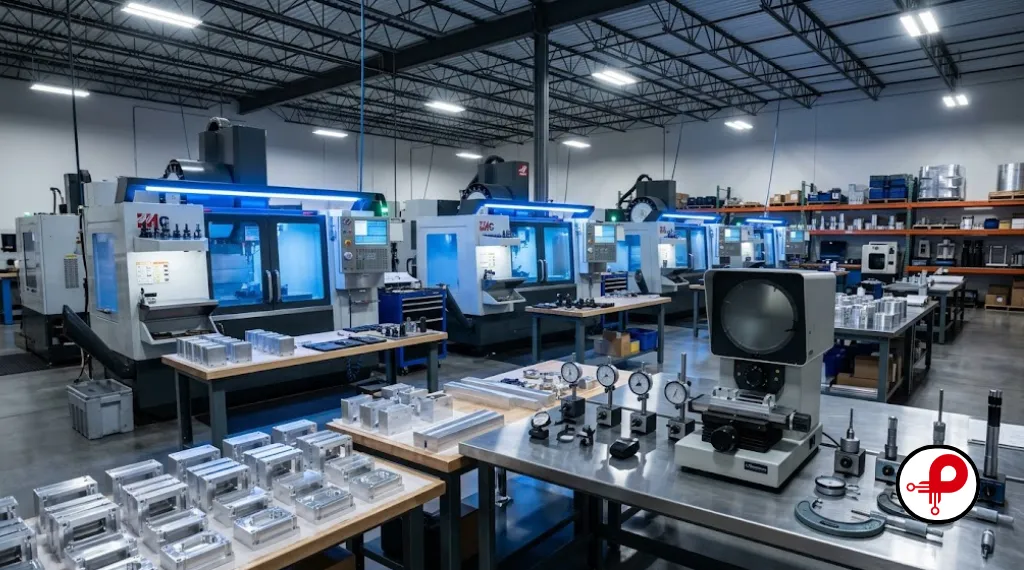
Modern hardware development moves faster than ever, while manufacturing challenges continue increasing across industries. Industrial product design engineering helps companies reduce costly production errors, improve manufacturability, accelerate product launches, and optimize product performance before tooling and mass production begin. Investing early in professional engineering support lowers risks, controls development costs, and ensures reliable, scalable manufacturing outcomes.
Professional engineering workflows reduce delays, accelerate prototyping cycles, and help products reach manufacturing and market faster successfully.
Design optimization eliminates unnecessary complexity, reduces tooling modifications, and improves material efficiency during production and assembly processes.
Engineering validation identifies mechanical, thermal, and electrical issues before production, preventing failures and improving long-term product performance.
DFM-focused engineering ensures products can be manufactured efficiently using standard production methods, reducing factory complications and production errors.
Accurate engineering analysis minimizes repeated design changes, saving development time, engineering resources, and expensive prototype manufacturing costs.
Industrial product engineering prepares products for mass manufacturing, ensuring consistent quality, assembly efficiency, and supply chain compatibility globally.
3. The 7-Stage Industrial Product Design Engineering Process
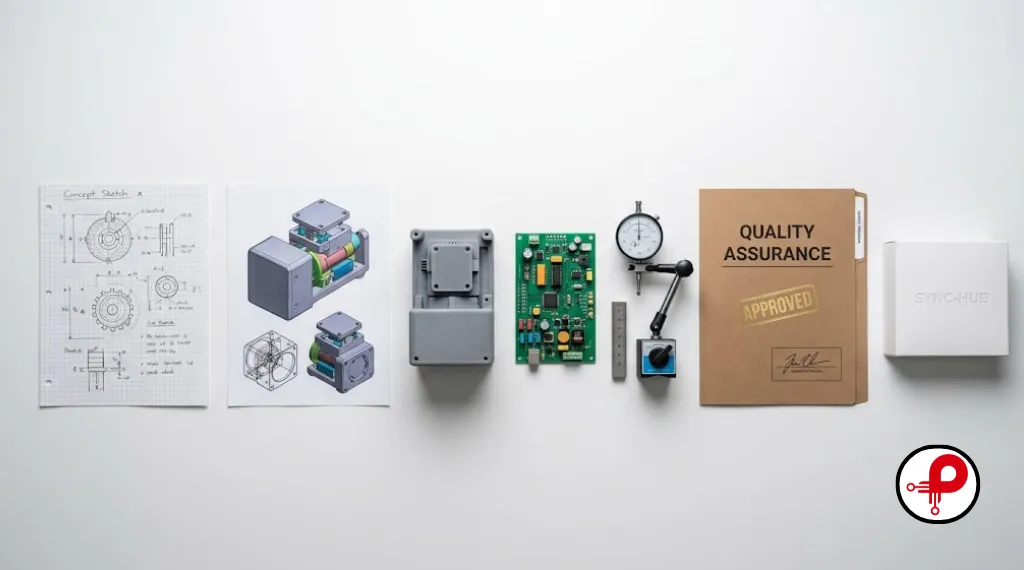
Every product moves through a lifecycle, and understanding each stage helps you allocate resources properly and avoid the mistakes that kill products before they launch.
Stage 1: Discovery and Requirements Definition
Before any sketching or CAD modeling begins, a competent engineering design consultancy will push you to define exactly what the product needs to do. This includes functional requirements, target user needs, regulatory constraints, cost targets, and manufacturing volume expectations. The discovery phase sounds bureaucratic. It is anything but. Skipping it is how you end up six months into development realizing your product cannot pass CE or FCC certification because nobody thought about electromagnetic compatibility from the start. You can learn more about why this matters in this practical guide on electromagnetic compatibility testing.
Stage 2: Concept Development and Industrial Design
With requirements locked, the team moves into concept generation. Industrial designers create sketches, mood boards, and rough 3D concepts that explore how the product could look and feel. This stage focuses on user interaction, aesthetics, ergonomics, and brand language. Good industrial design engineering services at this stage do not just ask “what looks good?” They ask “what can we realistically make?” Early DFM thinking here saves enormous amounts of time later.
Stage 3: Detailed CAD Product Design
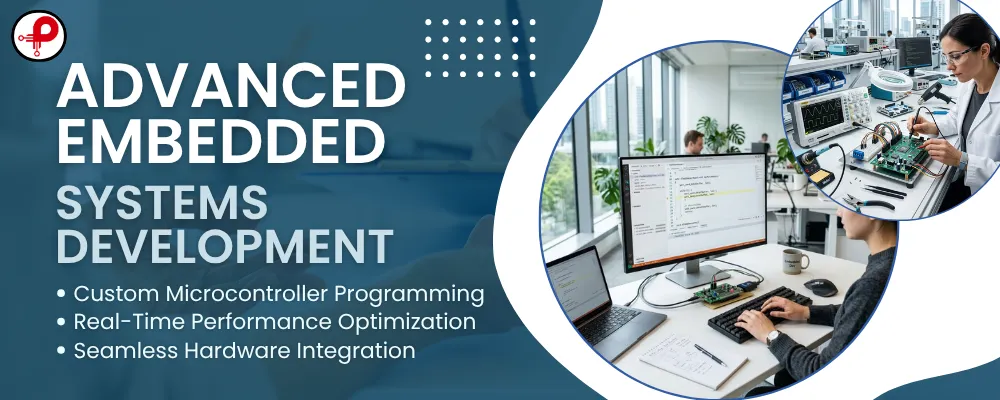
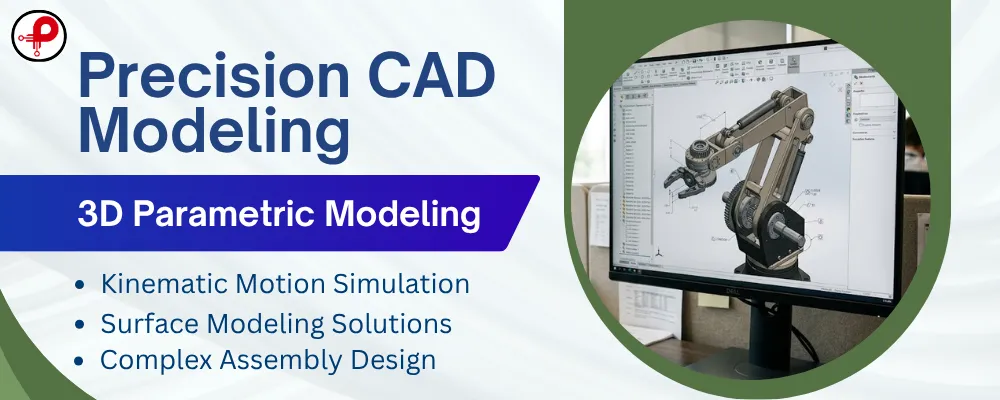
Once a concept direction is approved, mechanical engineers build out the detailed CAD model. This is where every surface, fastener hole, rib, boss, snap-fit, and tolerance gets defined. CAD product design services at a professional level use parametric modeling tools like SolidWorks, CATIA, or Fusion 360 to create designs that can be directly handed to a manufacturer. The CAD stage is also where PCB and mechanical integration happens in earnest. The electronics team needs to confirm that the PCB fits inside the enclosure, that connectors land in the right positions, and that there is adequate thermal clearance around heat-generating components. For embedded systems and IoT products, this coordination is especially critical. A useful reference for this kind of integration work is this detailed guide on ESP32 PCB design.
Stage 4: DFM Analysis and Optimization
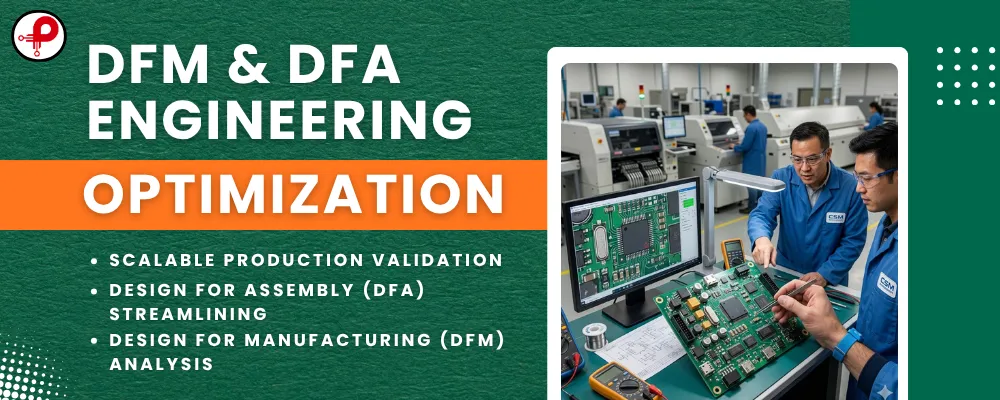
This is arguably the most important stage in the entire process. Design for manufacturing (DFM) analysis takes the CAD model and asks a critical question: can this actually be built affordably? A proper DFM optimization review covers draft angles for injection-molded parts, minimum wall thickness, parting lines, undercut geometry, tolerances for mating parts, fastener accessibility, and material selection relative to the intended manufacturing process. The DFM stage is where sheet metal product design gets scrutinized for bend radii and blank development. It is where injection molding-ready design is validated for gate placement and flow simulation. It is where custom enclosure design gets tested against the tooling constraints of the chosen manufacturer. More detail on how to approach this process from the electronics side is available in this guide on PCB manufacturing process that walks through the steps from design to finished board.
Stage 5: Engineering Prototype Development
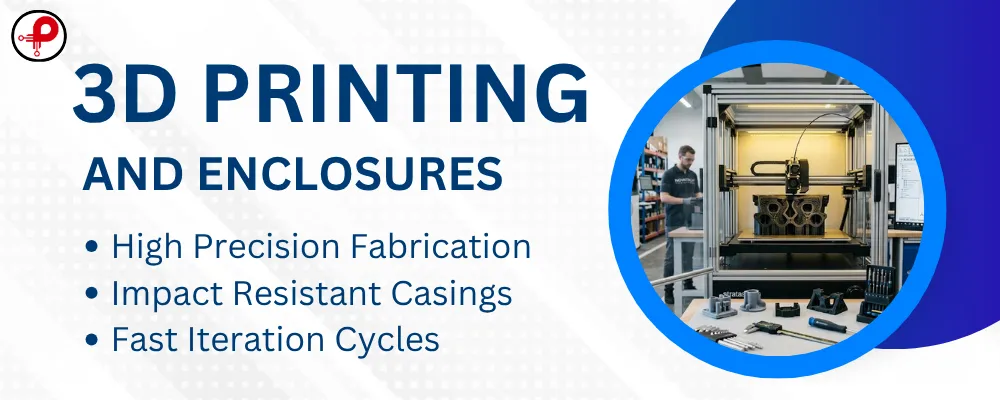
Prototypes serve different purposes at different stages. Early prototypes are about form and fit. Later prototypes are about function and manufacturability. For rapid prototyping for hardware startups, 3D printed mechanical prototypes are invaluable for testing ergonomics, checking assembly clearances, and presenting to stakeholders. However, 3D prints are not a substitute for production-representative prototypes when you need to validate thermal performance, structural integrity, or surface finish quality. A production-representative prototype uses the actual intended manufacturing process or something very close to it. If your product will be injection molded in ABS, a CNC-machined aluminum prototype is more informative than a 3D-printed one. The materials behave differently, and those differences matter. Industrial design and prototyping should go hand in hand. Every prototype cycle teaches you something. The goal is to extract as much learning as possible from each iteration so that you can converge on a production-ready design efficiently.
Stage 6: Validation and Testing
Before a product goes into mass production, it needs to be validated against its requirements. Product design validation testing covers mechanical stress, drop testing, thermal cycling, IP rating testing, EMC/EMI compliance, and regulatory certification depending on the product category. This is where problems with high-frequency switching noise in power supplies get caught before they become field failures. Understanding how these noise issues arise is essential, and this resource on high-frequency switching noise issues explains the root causes and practical mitigation strategies. For products with wireless connectivity, validation also includes RF performance testing and regulatory certification for markets like the US, EU, and others.
Stage 7: Production Handoff and Manufacturing Support
The final stage of industrial product design engineering is the transition to volume production. This involves creating complete manufacturing documentation including assembly drawings, bill of materials, inspection criteria, and process specifications. A good engineering design consultancy does not disappear at this point. Production engineering support during the early manufacturing runs helps catch process-related issues before they become systemic quality problems.
4. DFM Optimization: The Engine Behind Production-Ready Products
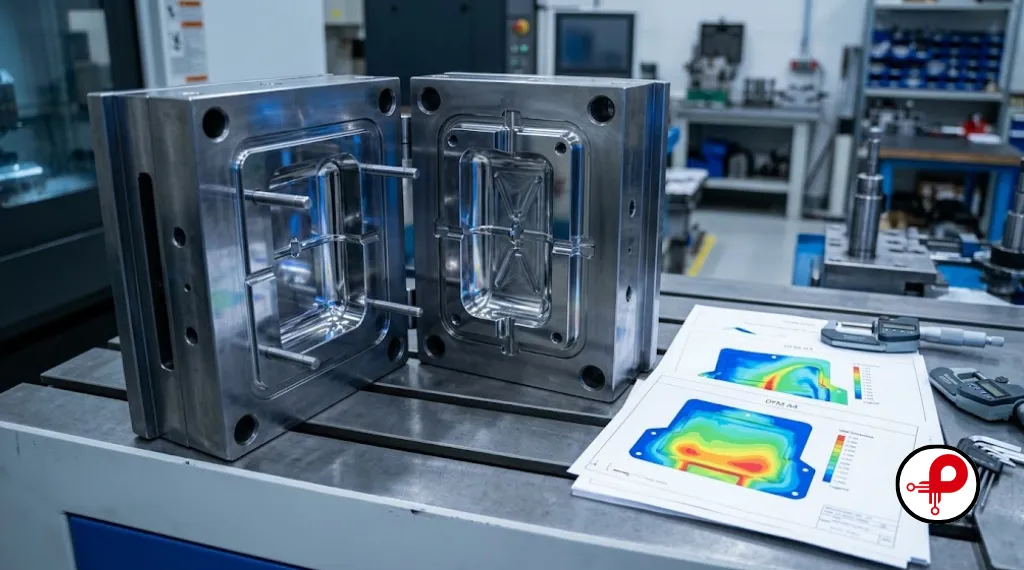
DFM optimization services are what separate engineering teams that ship products on time from those that are perpetually stuck in revision cycles.
The core idea behind DFM is simple: every design decision either makes your product easier and cheaper to manufacture, or harder and more expensive. Most design decisions have manufacturing implications that are not obvious to someone without manufacturing experience. DFM analysis surfaces those implications early, when changes are cheap.
Here are the key areas that DFM analysis addresses:
-
Material Selection
The right material for a part depends not just on the mechanical requirements but on the manufacturability of that material in the intended process. Choosing a glass-filled nylon when a standard ABS would do adds cost without adding value.
-
Part Consolidation
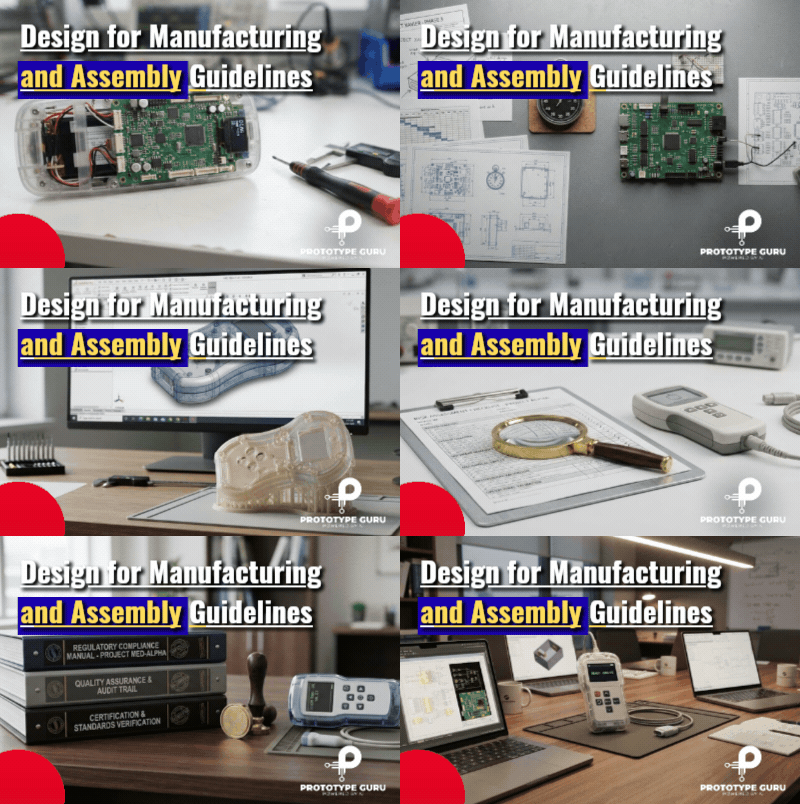
Every separate part in an assembly is a part that needs to be designed, tooled, inspected, stored, and assembled. DFM often reveals opportunities to combine multiple parts into a single molded or machined component, reducing both part count and assembly time.
-
Tolerance Management
Overly tight tolerances are one of the most common and costly DFM mistakes. When tolerances are tighter than the process naturally produces, costs jump because the manufacturer has to slow down and inspect more carefully. DFM analysis pushes tolerances to be exactly as tight as they need to be, no tighter.
-
Assembly Sequence Optimization
How a product is assembled affects how long it takes and how many errors occur. DFM thinking encourages designs where assembly moves in one direction, fasteners are accessible with standard tools, and there is no risk of assembling components in the wrong orientation.
5. CAD Product Design Services and Mechanical Modeling
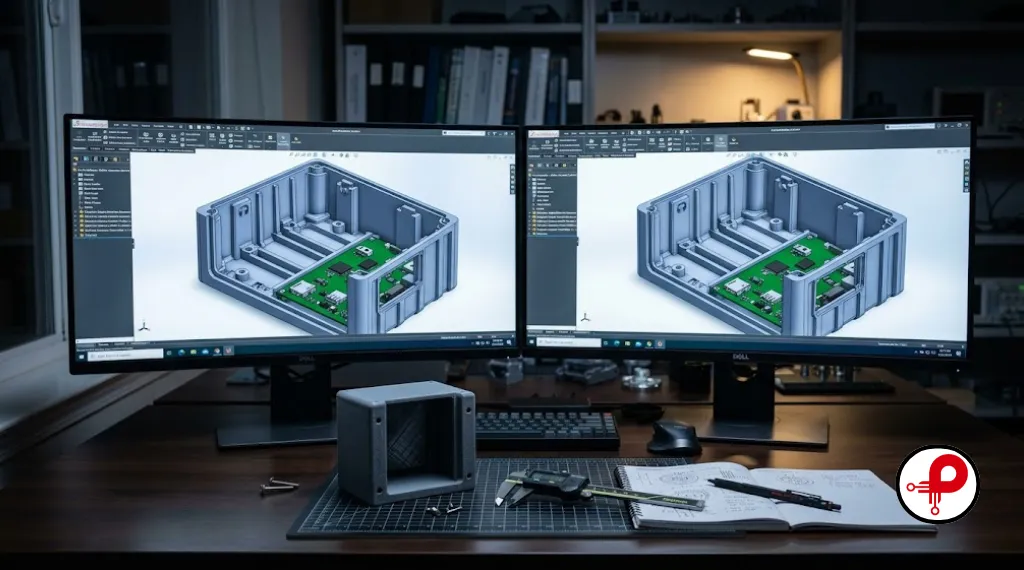
Professional CAD product design services are the foundation of any serious industrial product design engineering effort. But not all CAD work is equal.
Parametric CAD modeling, done correctly, allows the design to be modified quickly when requirements change or manufacturing feedback demands a revision. It also enables accurate simulation for structural analysis, thermal analysis, and assembly clearance checking before a single part is cut.
Mechanical CAD modeling services at a professional level include full 3D assemblies with realistic tolerances, exploded views for assembly documentation, and GD&T (Geometric Dimensioning and Tolerancing) callouts that give manufacturers the information they need to produce parts correctly the first time.
For products with complex electronics, CAD product design must incorporate the PCB envelope, connector positions, cable routing paths, and thermal management features like heat sinks and vent holes. The mechanical and electronic teams need to be working from the same master model to avoid integration surprises during prototyping.
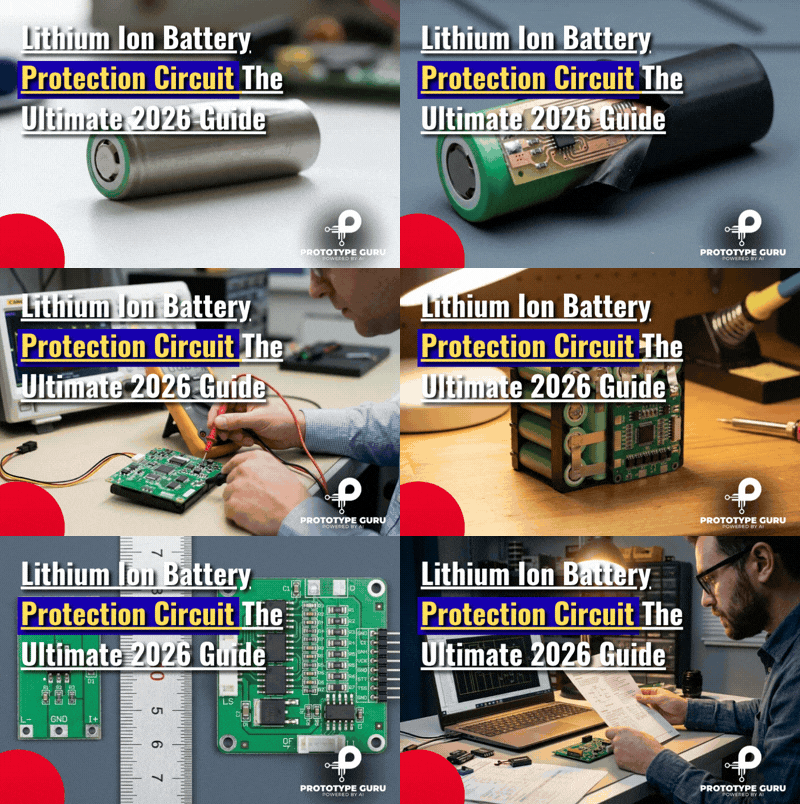
If your product uses a lithium-ion battery, the mechanical design also needs to accommodate the protection circuit board and the physical and thermal requirements of the cell itself. This guide on lithium-ion battery protection circuits covers the design considerations that affect both the electronics and the enclosure.
6. Rapid Prototyping for Hardware Startups
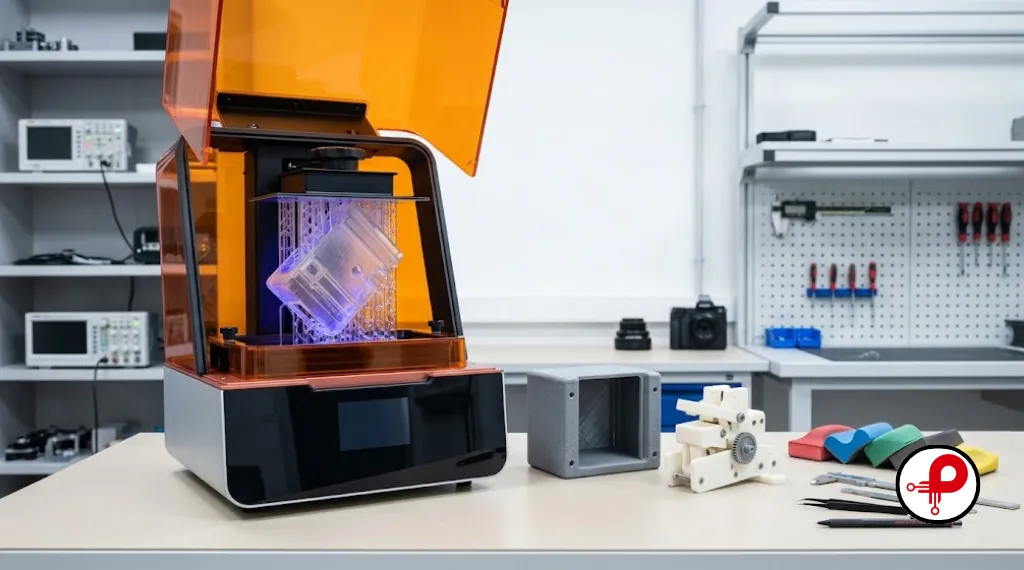
One of the most valuable capabilities available to modern hardware startups is rapid prototyping. Technologies like FDM and SLA 3D printing, CNC machining, urethane casting, and SLS allow engineering teams to create physical prototypes in days rather than weeks.
But rapid prototyping for hardware startups is only valuable when it is used strategically. Here is how experienced engineering teams think about it:
Use low-cost 3D printing to check ergonomics, assembly clearances, and visual proportions. These are not meant to work. They are meant to be held, examined, and iterated on quickly.
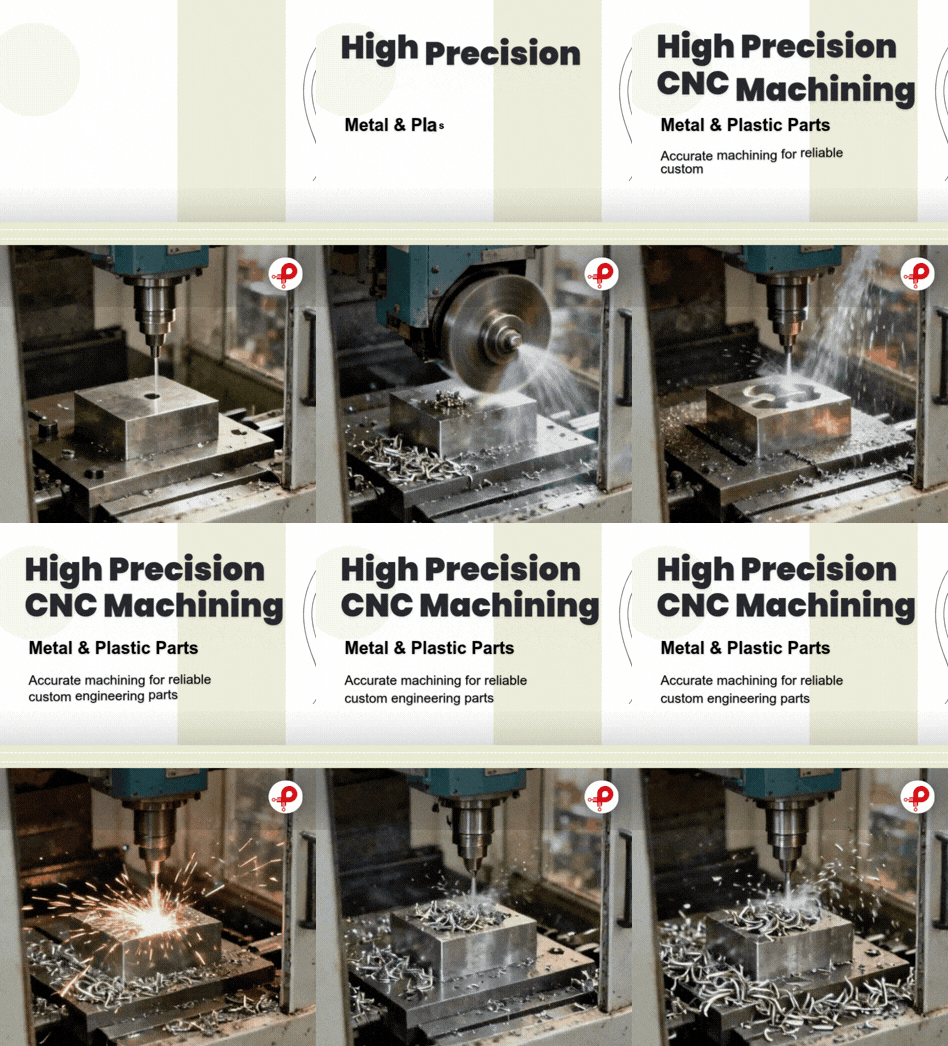
Use CNC machining or SLS printing with functional materials to build prototypes that can be tested. These prototypes validate mechanical function, thermal performance, and assembly sequence.
Use production-representative processes to build final validation prototypes. For injection-molded products, this might mean soft tooling in aluminum for short runs. For sheet metal products, it means laser-cut and bent parts made from the exact specified material and thickness.
The 3D printed mechanical prototypes stage is also a good time to conduct user testing and gather feedback before committing to production tooling. This saves significant money and produces a better end product.
7. PCB and Mechanical Integration in Industrial Design
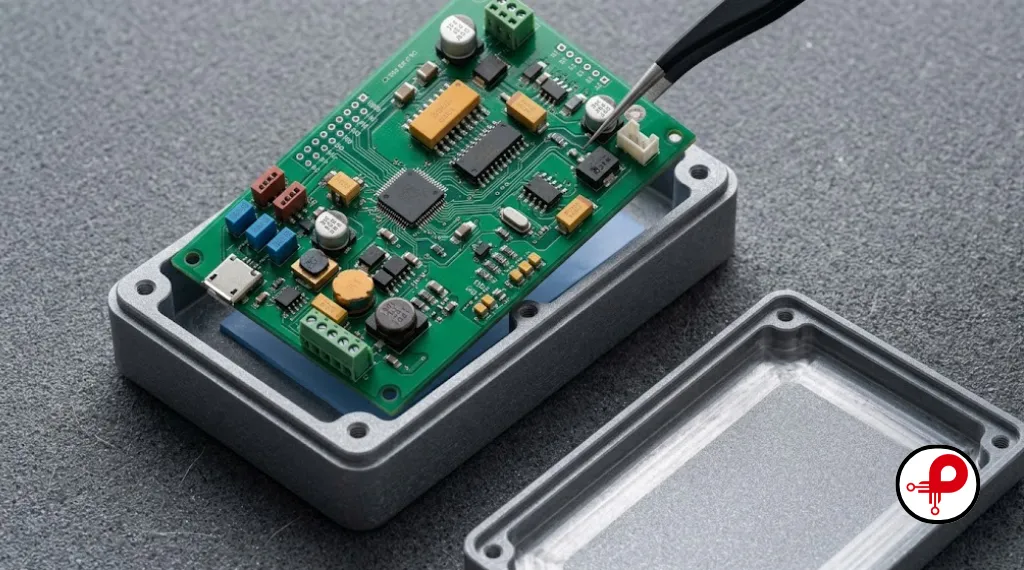
One of the most technically challenging aspects of industrial product design engineering is making the electronics and the enclosure work together seamlessly.
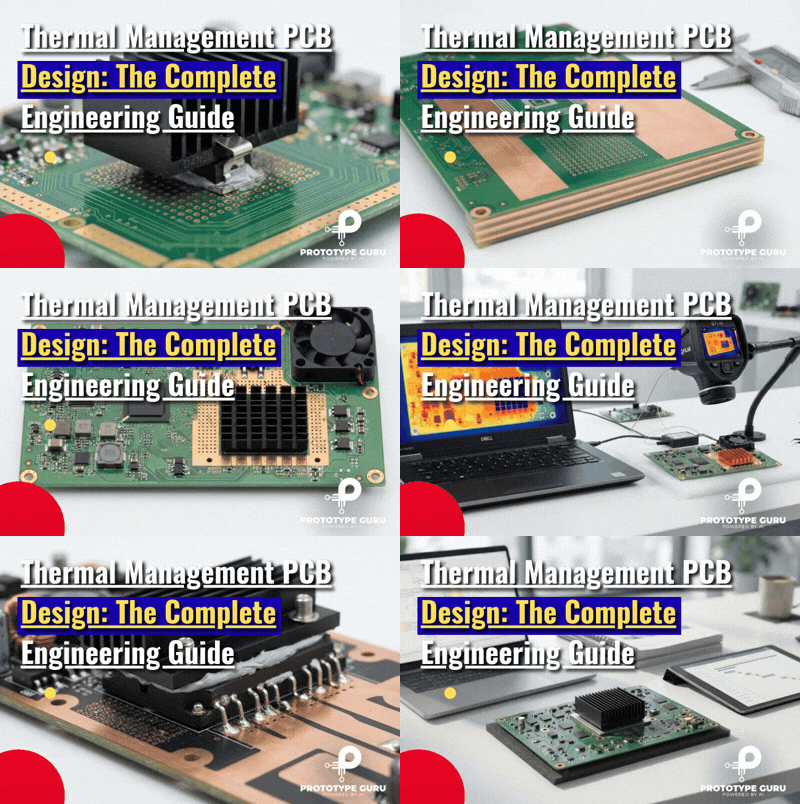
This is not just about making sure the PCB fits inside the box. It is about ensuring that the thermal design keeps components within their operating temperature range, that the enclosure does not create EMI issues for the internal electronics, that connectors and indicators land in positions that are both functional and manufacturable, and that the assembly can be done efficiently on a production line.
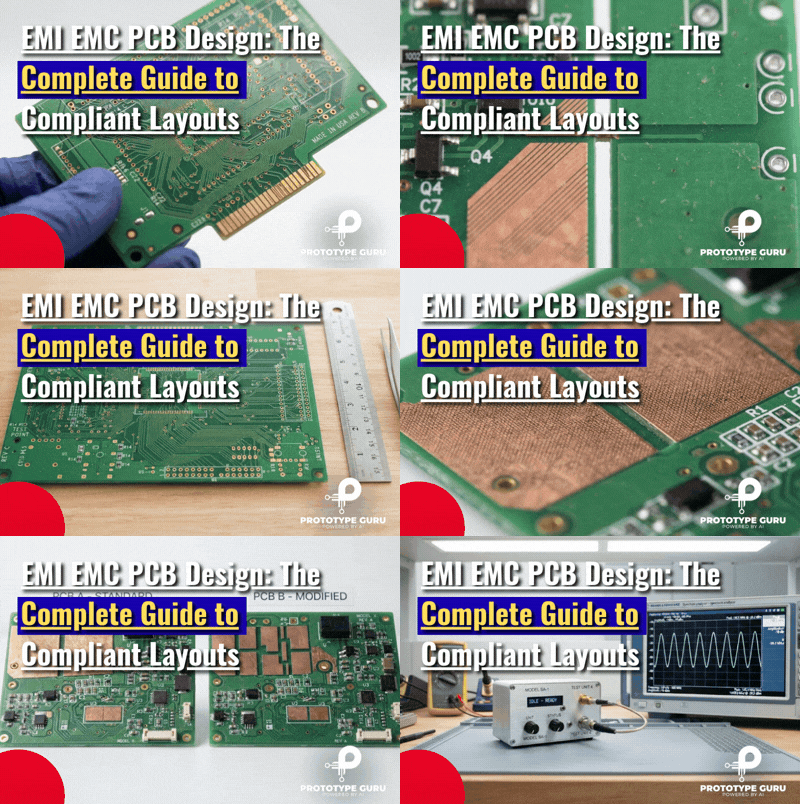
EMI shielding materials and techniques play a significant role here. Metal enclosures provide natural Faraday shielding, but plastic enclosures need additional treatment. This guide on EMI shielding materials explains the options available and how to choose the right approach for your product.
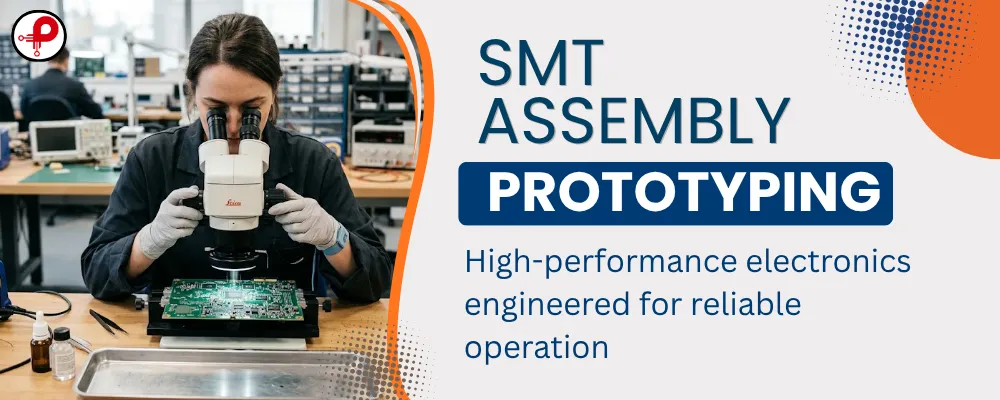
Surface mount technology soldering is another area where the mechanical design has a direct impact. If the PCB layout requires components to be placed near the edges where mechanical fasteners create stress, or if the assembly process does not allow for proper solder reflow, quality problems arise. Learning more about surface mount technology soldering helps mechanical designers understand the constraints their electronics colleagues are working within.
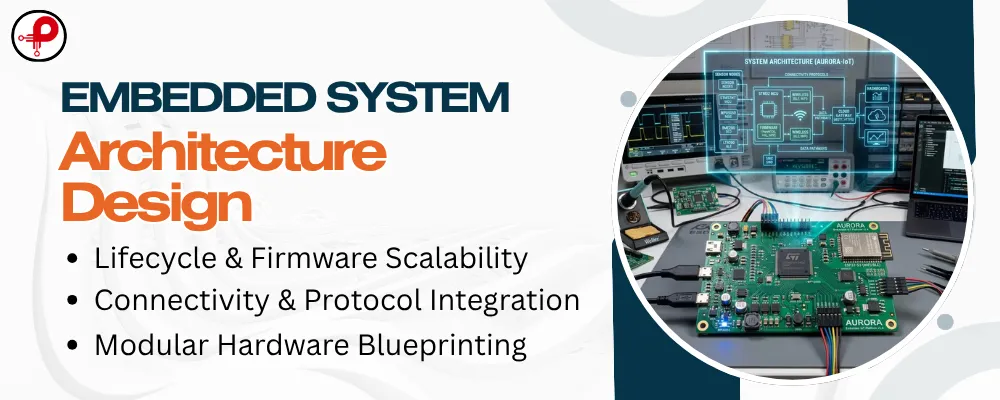
For connected products using Bluetooth or other wireless protocols, antenna placement is a critical mechanical design decision. A metal enclosure that blocks the antenna signal, or a mechanical feature that sits directly over the antenna trace, will cause real-world connectivity problems that are very difficult to fix after tooling is cut. This resource on how Bluetooth works in embedded systems covers the RF design considerations relevant to enclosure design.
8. Sheet Metal, Injection Molding, and Custom Enclosure Design
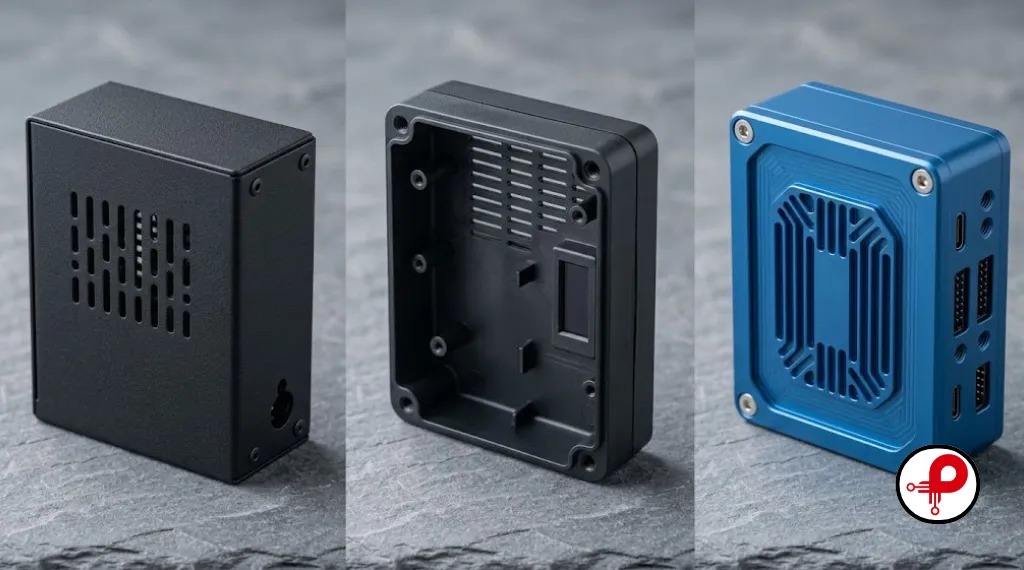
The manufacturing process chosen for the enclosure has enormous implications for both cost and design freedom. Understanding these trade-offs is essential for any industrial product design engineering team.
Injection Molding
Injection molding is the dominant manufacturing process for plastic enclosures in volume production. It produces consistent, high-quality parts at low per-unit cost when volumes are high enough to justify the tooling investment. Injection molding-ready design requires attention to wall thickness uniformity, draft angles on all vertical faces, appropriate placement of ejector pin marks, and gate positions that allow the mold to fill completely without weld lines in critical areas.
Sheet Metal Product Design
For products that need metal enclosures, sheet metal fabrication is often the most cost-effective approach for both prototyping and production. Sheet metal product design requires understanding bend radii, minimum flange lengths, hole-to-edge distances, and the limitations of the available forming equipment. Industrial automation hardware often uses sheet metal enclosures because they provide excellent EMI shielding, good thermal conductivity, and structural rigidity.
Custom Enclosure Design
For products with unusual form factors or specialized requirements, custom enclosure design from scratch is sometimes necessary. This is where the industrial design engineering services team earns their fee by balancing aesthetics, ergonomics, structural requirements, sealing requirements, and manufacturing constraints into a single coherent design.
Electronics Enclosure Prototyping
Electronics enclosure prototyping before committing to production tooling is always worth the investment. A prototype enclosure lets you validate assembly sequence, check thermal performance with real electronics inside, test IP sealing if required, and verify that connector cutouts and panel labels land in the right positions.
9. How to Choose the Right Product Design Engineering Company
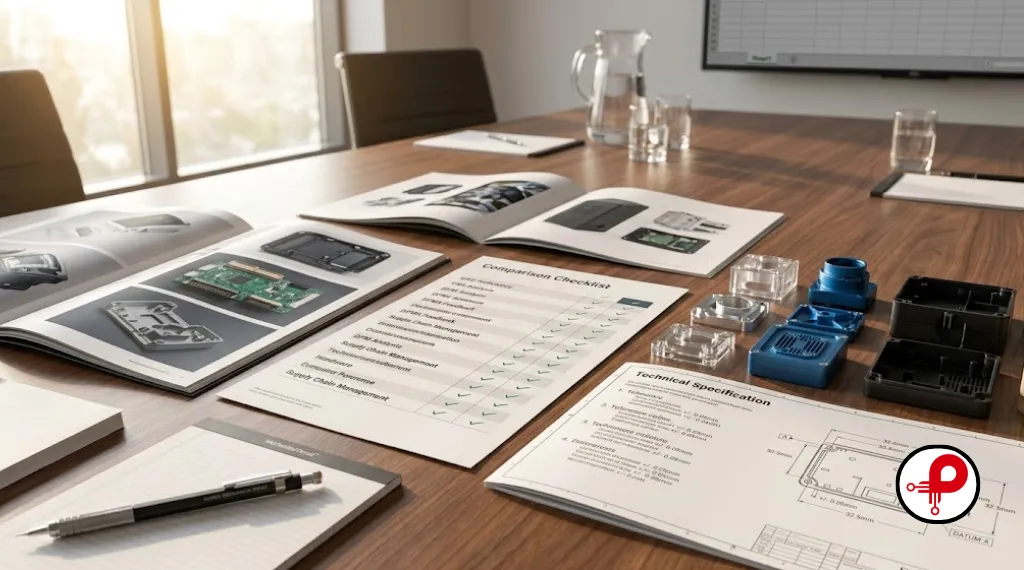
Not all product engineering solutions providers are created equal. Here is what to look for when selecting a partner for your industrial product design engineering project.
| Criteria | Why It Matters |
|---|---|
| End-to-End Capability | Ensures seamless coordination between design, engineering, prototyping, and manufacturing processes. |
| Manufacturing Experience | Prevents costly production mistakes and improves real-world manufacturability from early design stages. |
| DFM Integration | Reduces tooling issues, manufacturing defects, and unnecessary production costs before manufacturing begins. |
| Electronics Integration Capability | Improves coordination between PCB design, enclosures, thermal management, and regulatory compliance requirements. |
| Track Record with Similar Products | Demonstrates proven expertise handling products within your industry and technical complexity level. |
| Rapid Prototyping Support | Accelerates product validation, testing, design revisions, and development timelines before mass production. |
| Communication & Project Management | Keeps development organized, transparent, and aligned with deadlines, budgets, and engineering objectives. |
| Production Scalability Expertise | Ensures the product can transition smoothly from prototype stage to high-volume manufacturing successfully. |
10. Common Mistakes That Kill Products Before They Launch
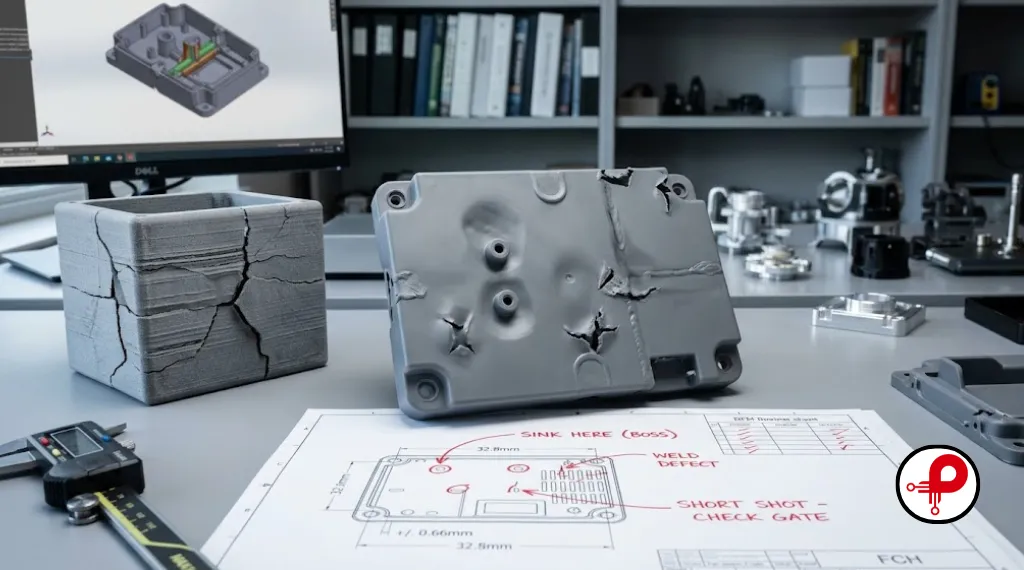
Even experienced teams make mistakes. Here are the most common ones in industrial product design engineering and how to avoid them.
Mistake 1: Designing in Isolation
When designers work without input from manufacturing engineers, the resulting design often looks great but cannot be built efficiently. Get manufacturing perspectives into every design review from the very beginning.
Mistake 2: Ignoring EMI from the Start
EMI problems are among the most expensive to fix late in development. If your product contains any switching power supply, digital clock signals, or wireless radio, EMI needs to be designed out from the beginning, not filtered out at the end. Understanding EMI issues, causes, and fixes early prevents very expensive late-stage surprises. For products with power electronics specifically, this handbook on EMI and EMC filters in power electronics is essential reading.
Mistake 3: Prototyping with the Wrong Process
A 3D printed prototype teaches you certain things. A CNC-machined prototype teaches you other things. An injection-molded prototype from soft tooling teaches you yet more. Using the wrong prototype type for the questions you are trying to answer wastes time and gives you false confidence.
Mistake 4: Skipping Automated Inspection
As products move toward production, quality control processes need to scale with them. Manual inspection cannot keep up with production volumes. Understanding how automated optical inspection works helps you design products and processes that can be inspected efficiently at scale.
Mistake 5: Treating PCB Design as an Afterthought
The PCB is often the most expensive and longest-lead item in the product. PCB design mistakes that get caught late are extremely costly to fix because they may require new tooling, new components, or complete redesigns. This guide on PCB design mistakes covers the most common errors and how to avoid them.
Mistake 6: Not Planning for EMC Testing
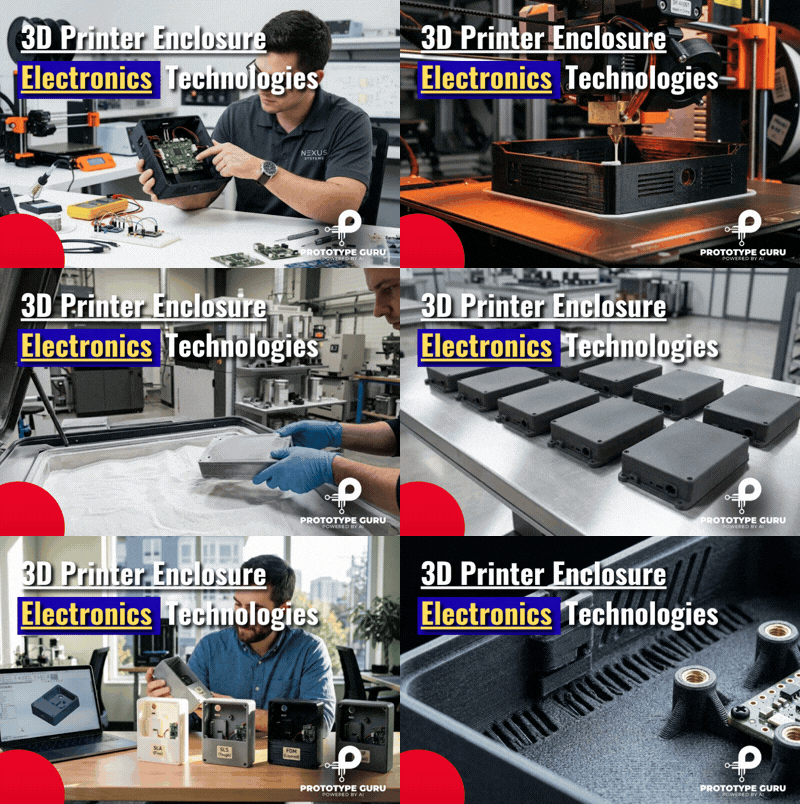
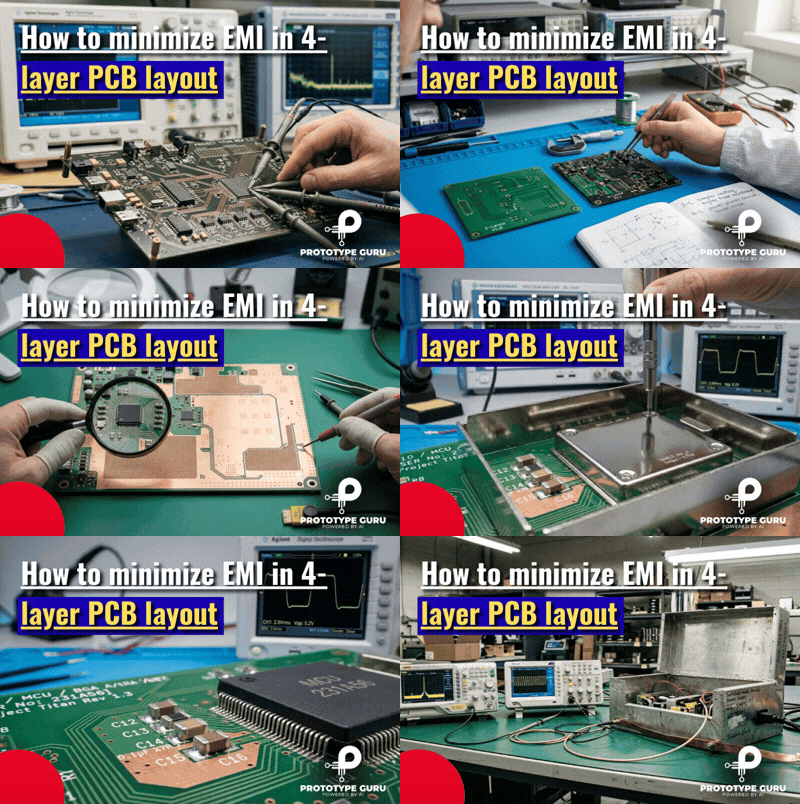
Many hardware teams build their product and then send it to a test lab hoping it passes. This approach fails regularly. Products with poor PCB layout, inadequate shielding, or insufficient filtering often require multiple test lab visits before they pass. For 4-layer PCBs specifically, this guide on minimizing EMI in 4-layer PCB layout provides specific layout strategies that make EMC testing easier to pass.
11. Industry Trends Shaping Industrial Product Design Engineering in 2025 and Beyond
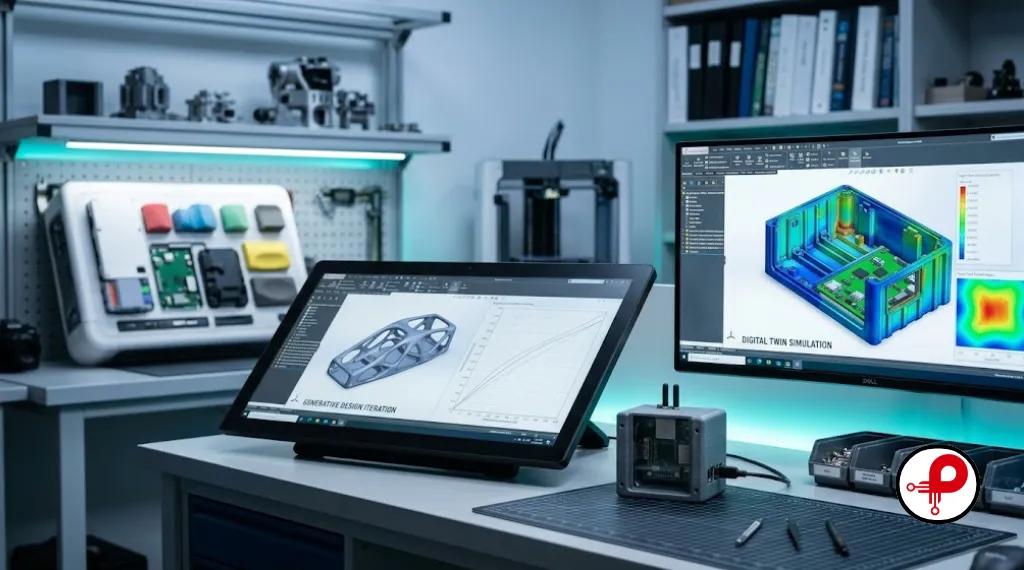
The field of industrial product design engineering is not static. Several trends are reshaping how products are designed and developed.
AI tools support generative design, where software proposes geometries optimized for specific loads and manufacturing constraints, ideal for weight reduction and structural efficiency.
Creates a virtual replica of physical products to simulate behavior, predict failure modes, and optimize performance, becoming standard in industrial automation design.
Environmental requirements now include lifecycle analysis, material recyclability, and energy consumption in manufacturing, alongside traditional cost and quality metrics.
Modular designs improve repairability and upgradeability, reducing warranty costs, extending product life, and offering greater flexibility when requirements evolve.
Sophisticated PCB design is essential for modern high-speed or high-power electronics. Stay current with latest PCB design trends to make better engineering decisions.
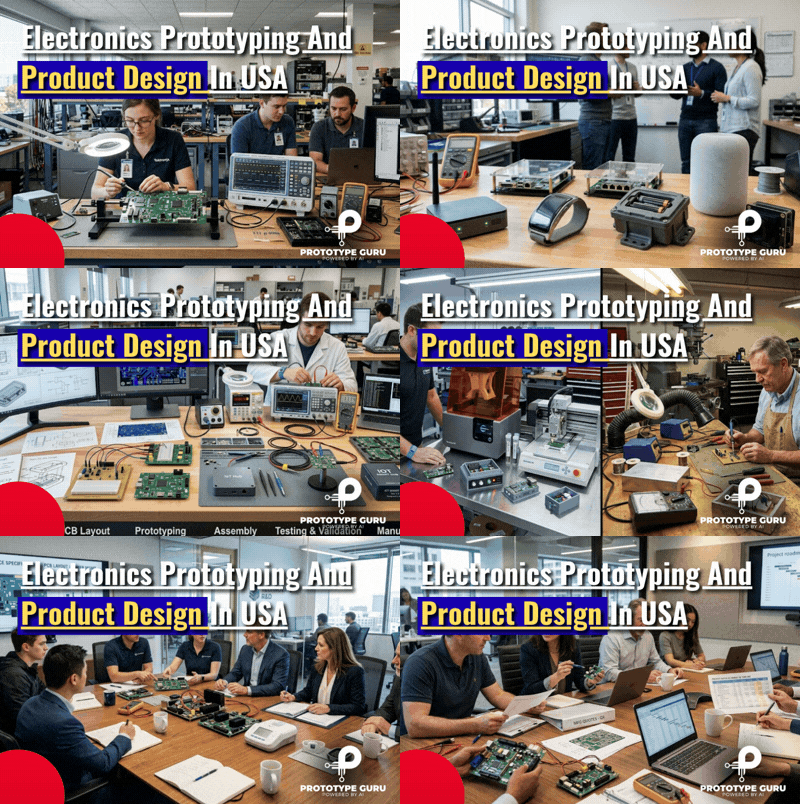
For teams based in the US, understanding the local ecosystem for electronics prototyping and product design is also valuable. This resource on electronics prototyping and product design in the USA covers the landscape of domestic design and manufacturing services.
12. Practical Tools Every Industrial Product Design Engineer Should Know
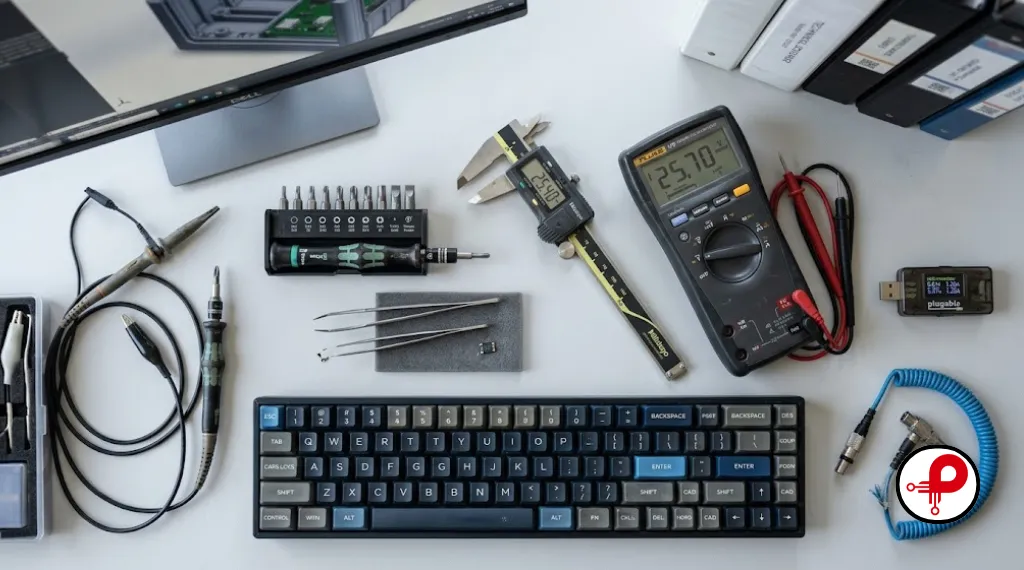
Great industrial product design engineering is supported by the right tools. Here are some that experienced teams rely on every day.
For electrical calculations that inform mechanical and thermal design decisions, tools like a wire AWG size conversion calculator and a computer power supply wattage calculator help engineers size components correctly from the start. When designing power filtering networks, tools like a capacitance conversion calculator and a series and parallel capacitor calculator make it fast to validate filter designs without manual arithmetic.
For PCB layout, simulation tools for signal integrity, power integrity, and thermal analysis are increasingly available at accessible price points. Using them is not optional for products that will face regulatory testing.
For mechanical design, FEA (Finite Element Analysis) tools built into modern CAD platforms allow stress analysis, deflection prediction, and vibration mode analysis without requiring a separate specialized software package.
Conclusion
Industrial product design engineering done well is one of the highest-leverage investments a hardware company can make. The discipline brings together mechanical design, electronics integration, material expertise, and manufacturing knowledge into a coherent process that takes a product from concept to production-ready as efficiently as possible.
The seven-stage process described here, from discovery through production handoff, provides a framework that experienced engineering teams follow because it works. DFM optimization is not a step you add at the end. It is a mindset you bring to every design decision from the very first sketch.
Whether you are a startup taking your first hardware product to market or an established manufacturer trying to reduce development costs and time-to-market, investing in serious industrial product design engineering services pays for itself many times over. The cost of getting design right early is always a fraction of the cost of fixing it late.
The products that win in the market are almost never the most creative or the most technically ambitious. They are the ones that actually get built, at a cost that makes business sense, at a quality level that earns customer trust. That is what good industrial product design engineering makes possible.
FAQ: Industrial Product Design Engineering
1. What is the difference between industrial design and product engineering?
↑2. How do I find the best industrial product design company for my startup?
↓3. How do product design services for startups differ from enterprise engagements?
↓4. What is design for manufacturing and why does it matter?
↓5. How long does the industrial product design engineering process take?
↓6. How do I prepare a product for manufacturing?
↓7. What should I budget for industrial design engineering services?
↓8. Can affordable industrial design engineering services still deliver quality results?
↓For more technical resources on hardware design and development, explore the full library at Prototype Guru, including guides on Arduino development for embedded systems projects and practical coverage of ESP32 audio applications for connected product developers.
External Resources for Further Reading:
- IPC Standards for PCB Design and Manufacturing — The industry association that sets global standards for electronic circuit boards.
- ASME Standards for Mechanical Design — Standards covering GD&T, pressure vessels, and mechanical engineering best practices.
- UL Product Safety Certification — Testing and certification body for product safety in North American markets.
- European CE Marking Requirements — Official EU guidance on CE marking requirements for products sold in Europe.