
Why Hardware Development Is Harder Than It Looks
Most startup founders who come from a software background underestimate what it takes to bring a physical electronic product to life. Unlike an app that you can update overnight, hardware development locks you into decisions early. A wrong component choice at the PCB design stage can cost you six months and tens of thousands of dollars. A firmware bug discovered after tooling is cut can delay your entire launch.
The good news? Hardware development for startups has become more accessible than ever. Better prototyping tools, smarter EMS partners, and communities like Prototype Guru have lowered the barrier for founders who are serious about building real products.
This guide walks you through every stage of the hardware product development process — from your first sketch on a napkin to your first mass production run — with the practical detail that most founders wish they had before they started.
Step 1: Validate Your Hardware Idea Before Writing a Single Line of Code
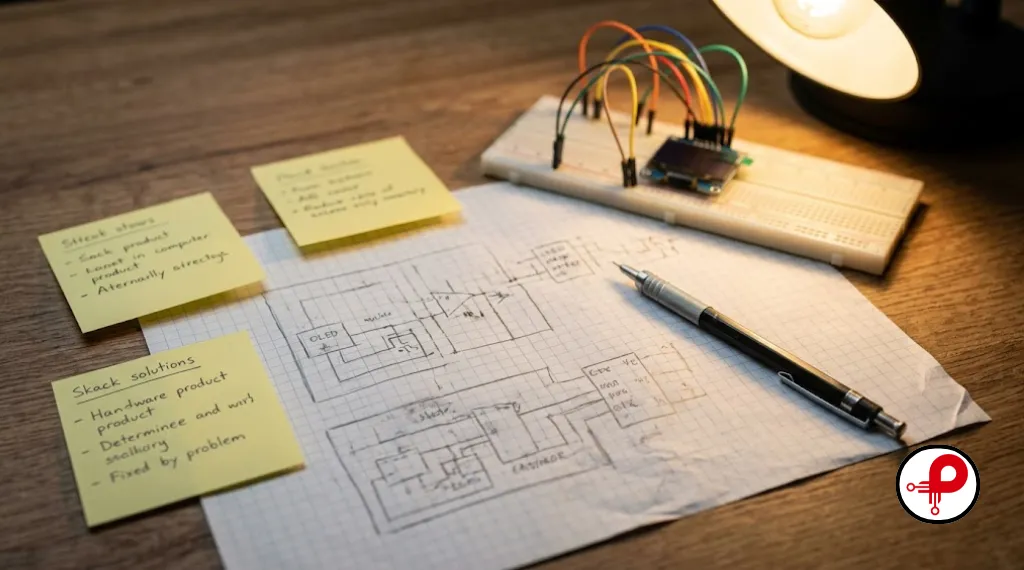
The number one mistake founders make in hardware development is jumping straight into design before validating the market. Unlike software, hardware carries real upfront costs. Tooling, PCB fabrication, component sourcing, and enclosure design all require money before you have a single unit to sell.
Start by answering three honest questions:
Does your target customer actually have this problem? Hardware solutions solve physical-world problems—power management, connectivity, sensing, control. If you cannot clearly define the pain, you will build the wrong product.
Would someone pay for your solution today? Validation in hardware does not require a finished product. A rough 3D-printed model, a Kickstarter-style landing page, or even a manual “Wizard of Oz” prototype can generate pre-orders and investor interest.
Can you manufacture it profitably at scale? Run early numbers on your bill of materials. If your BOM costs $80 at 1,000 units and your target retail price is $100, you have a business model problem before you even open a schematic editor.
This upfront clarity protects your runway. Hardware startup development cycles are long — typically 12 to 24 months from idea to shipping product — and burning cash on a product nobody wants is the fastest way to run out of time.
Step 2: Define Your Hardware Requirements and Bill of Materials
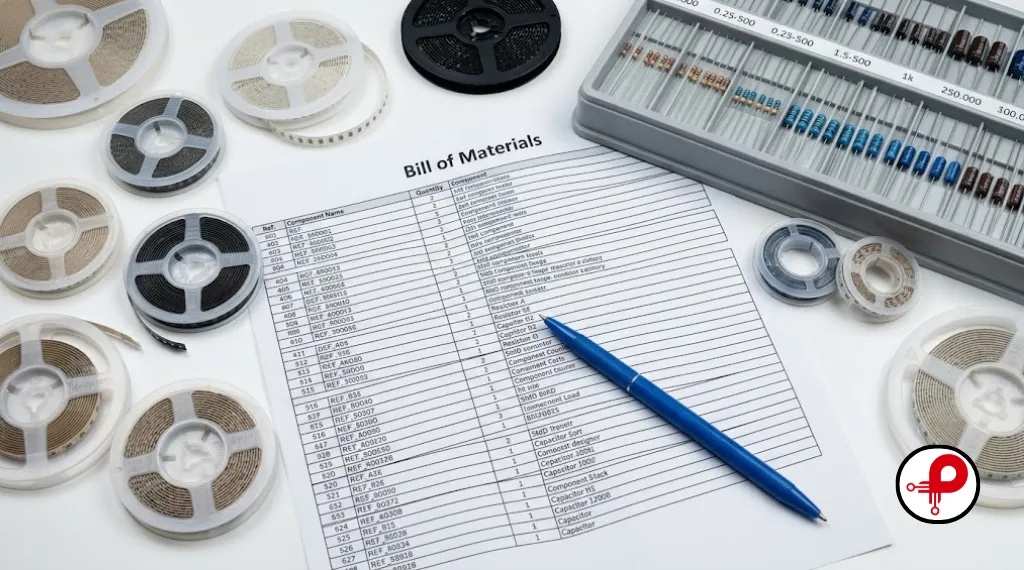
Once you have validated the idea, you need a Product Requirements Document (PRD). This is not a formal corporate document. It is a living list that defines what your hardware product must do, how it must behave, and what constraints it operates under.
A solid PRD for hardware development should cover:
What must the device do? What sensors, actuators, radios, or displays does it need to fulfill its core purpose?
What is the acceptable power draw? What processing speed does the firmware need? Define temperature and humidity ranges.
Does it need FCC, CE, UL, or RoHS compliance? These standards shape component selection from day one.
What is your target BOM cost at 1,000 vs 10,000 units? Designing for the right price point prevents painful redesigns later.
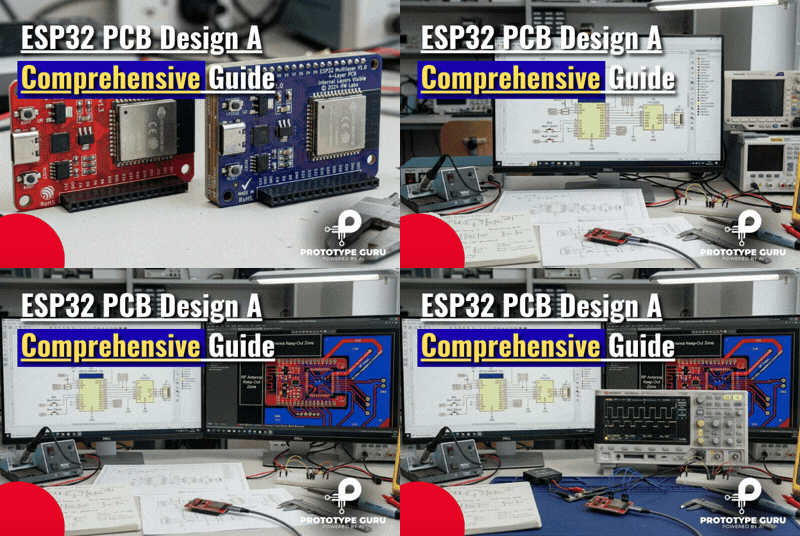
Your initial bill of materials (BOM) comes directly from this document. Even a rough BOM with 20 to 30 line items gives you real cost data early. Tools like Octopart or Mouser’s BOM tool let you price components quickly. If you are building an IoT device, resources like the ESP32 PCB design guide on Prototype Guru show you how to plan your component selection around a capable, low-cost microcontroller that the maker community knows deeply.
Step 3: Build Your Proof of Concept (POC)
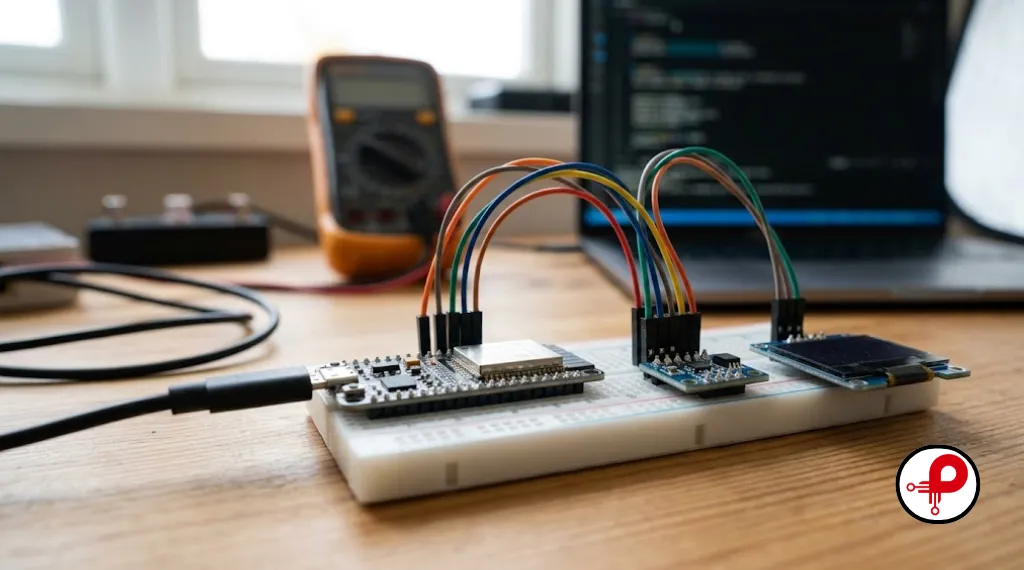
The proof of concept is the scrappiest, fastest version of your product that you can build. It does not need to look good. It does not need to fit in an enclosure. It just needs to demonstrate that your core idea works.
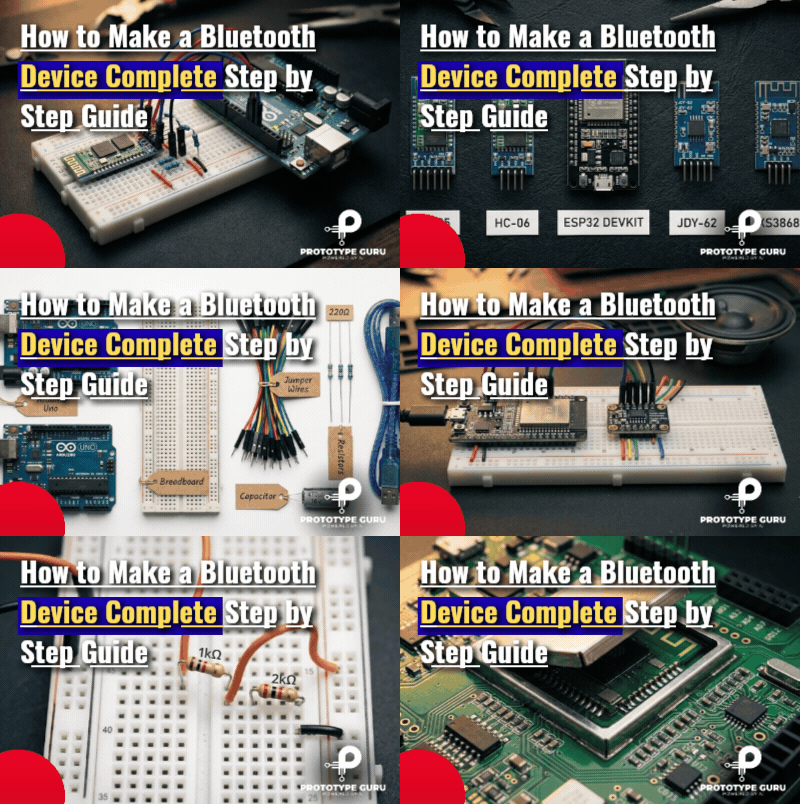
Most POC builds for hardware startups use off-the-shelf development boards like the Arduino Uno or ESP32 on a breadboard. These platforms let you validate sensors, communication protocols, and power management without spending weeks on custom PCB design.
If you are building a connected device, for example, your POC might be an ESP32 dev board talking to a sensor over I2C, logging data to a cloud dashboard over Wi-Fi. You are not trying to prove manufacturability at this stage. You are proving that the physics and the software work together. Resources like the Arduino Uno complete guide are genuinely useful here for founders who are not trained electronics engineers.
A good POC answers one question clearly: does this core technology actually work the way I think it does?
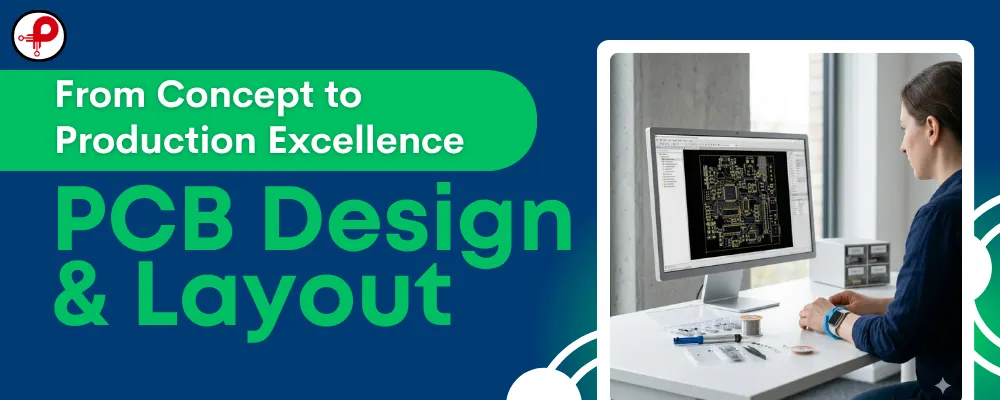
Step 4: PCB Design and Schematic Development
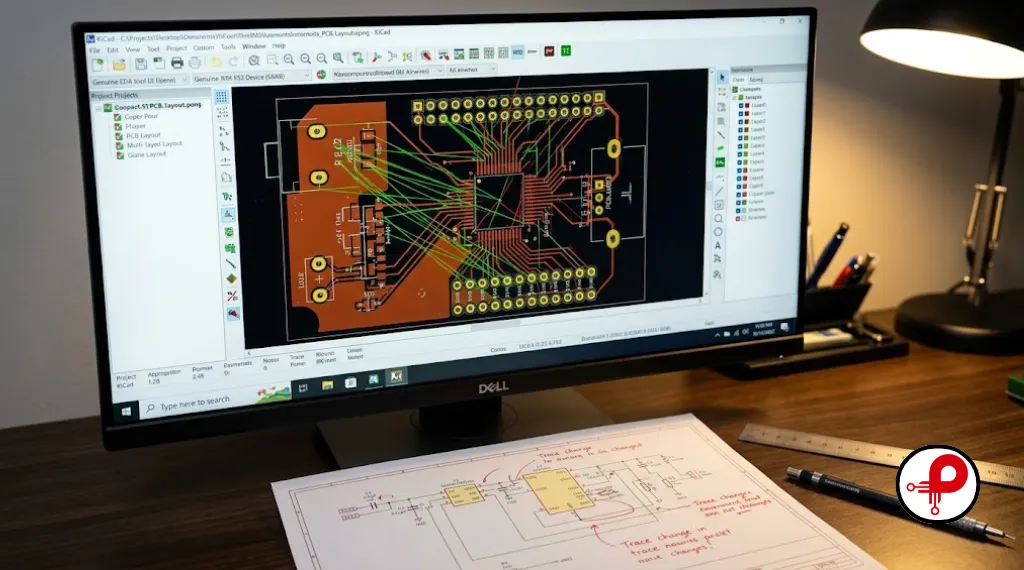
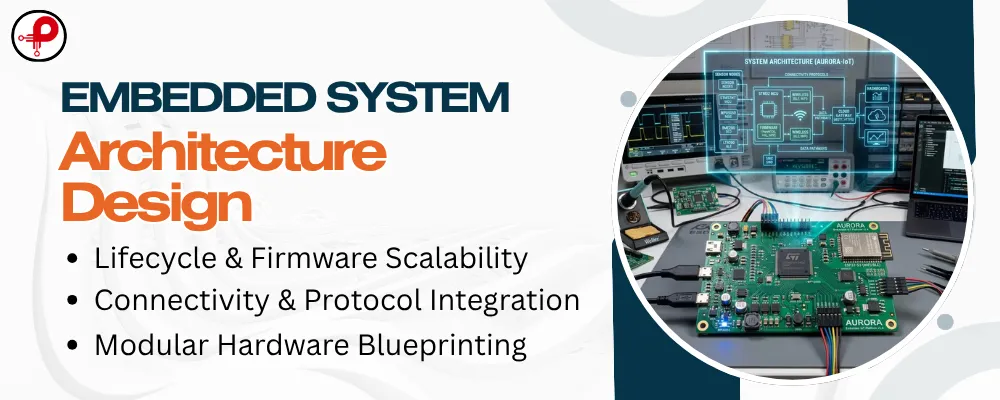
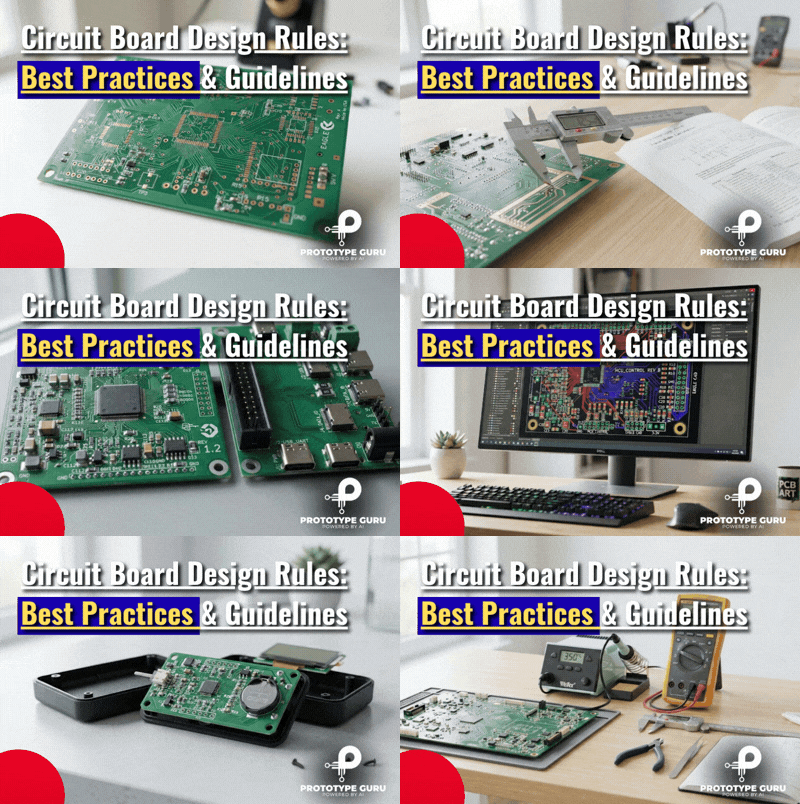
Once your proof of concept validates your core idea, it is time to move off the breadboard and onto a custom PCB. This is where hardware development starts to get serious — and expensive — so taking the time to do PCB design right pays dividends through every subsequent stage.
Custom PCB development involves two phases: schematic capture and layout.
The Phases of Custom PCB Development
Schematic Capture
In this phase, you translate your circuit from a breadboard into a formal electrical diagram using EDA tools like KiCad, Altium Designer, or Eagle. Every component receives a unique symbol, every connection is defined by a net name, and the schematic serves as the single authoritative reference for your entire design.
Layout & Routing
This is where physical engineering decisions occur. You place components on the board and route copper traces to connect them. Key considerations—such as trace width for current capacity, ground plane design for noise immunity, and precise placement for thermal management—are finalized here to ensure reliable performance.
Best Practices for PCB Success
Standardize Your Layer Count
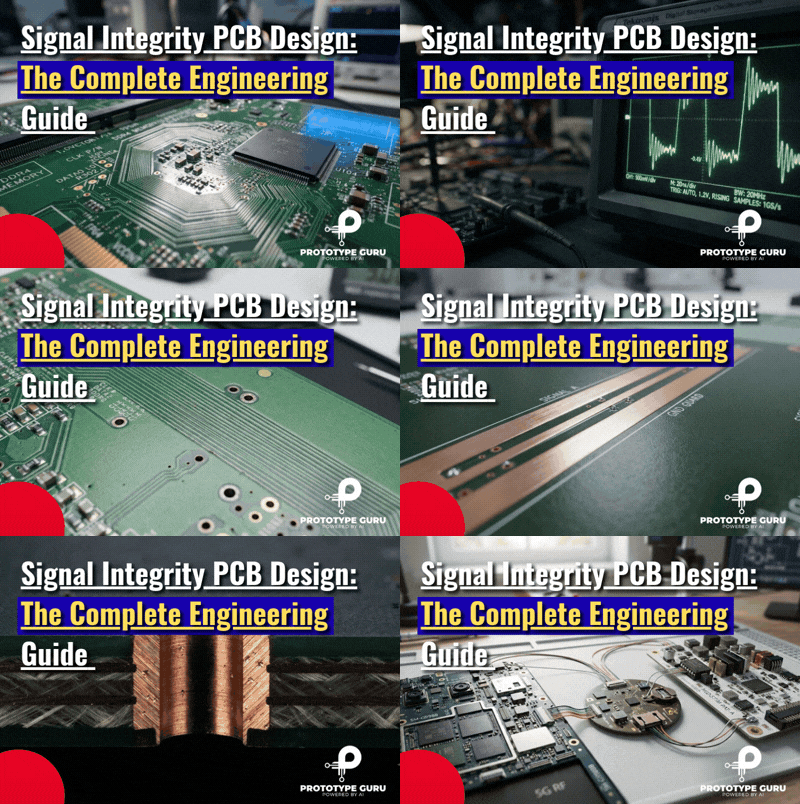
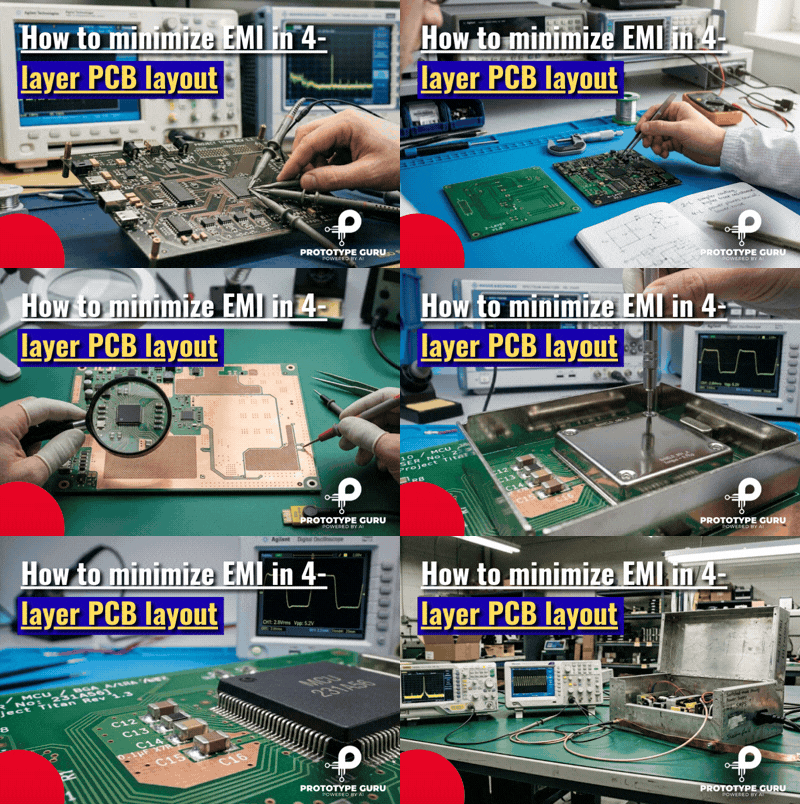
For most startup products, a four-layer PCB is a smart default. Two signal layers, one ground plane, and one power plane provide excellent EMI performance and routing flexibility. If you are working with high-speed signals or RF components, the 4-layer PCB EMI minimization guide on Prototype Guru covers the layout rules that experienced engineers use to prevent noise problems before they start.
Design for Assembly (DFA)
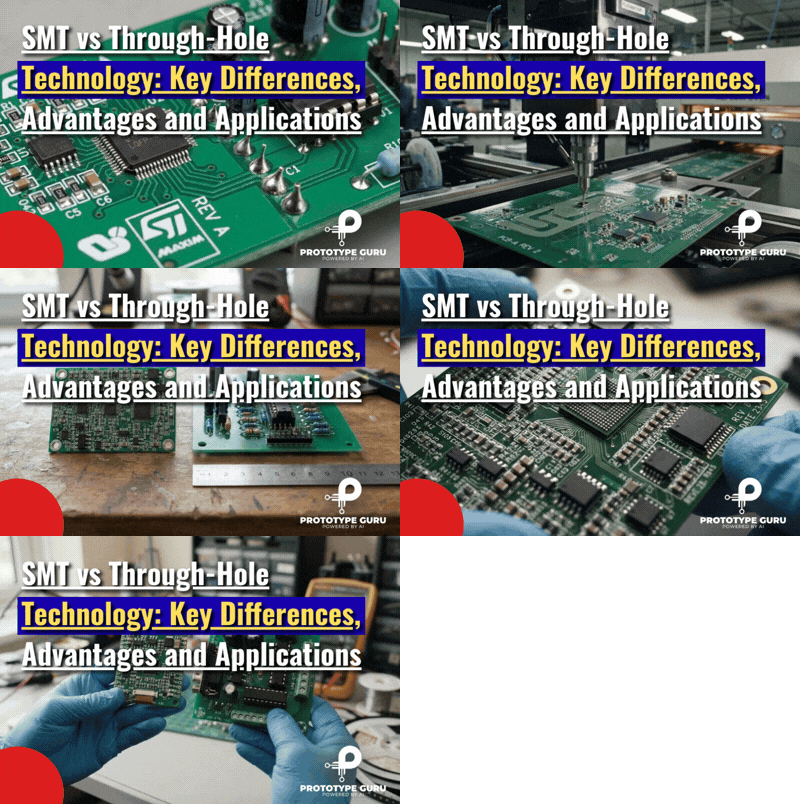
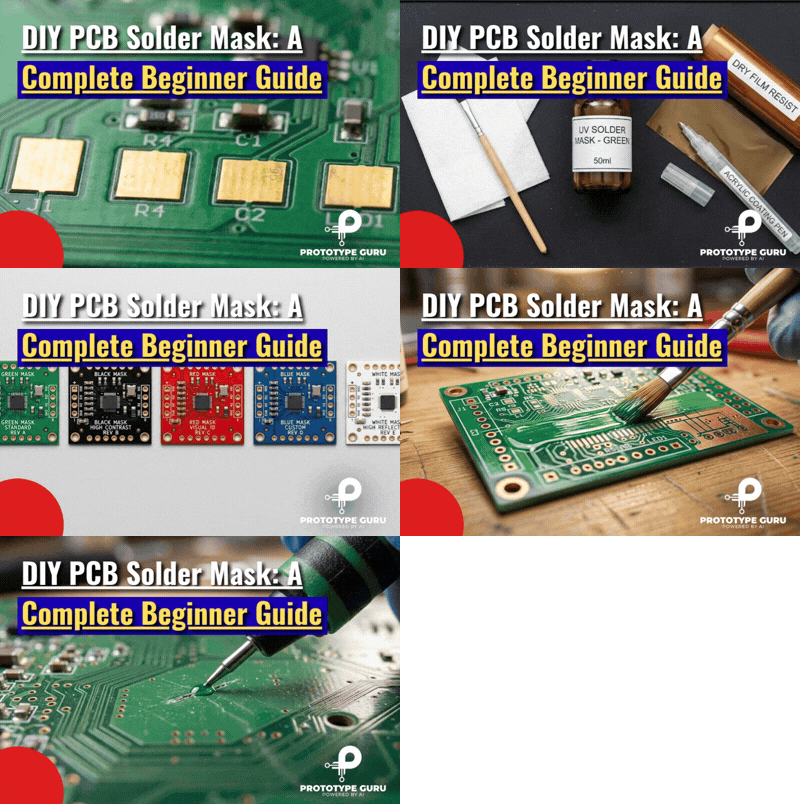
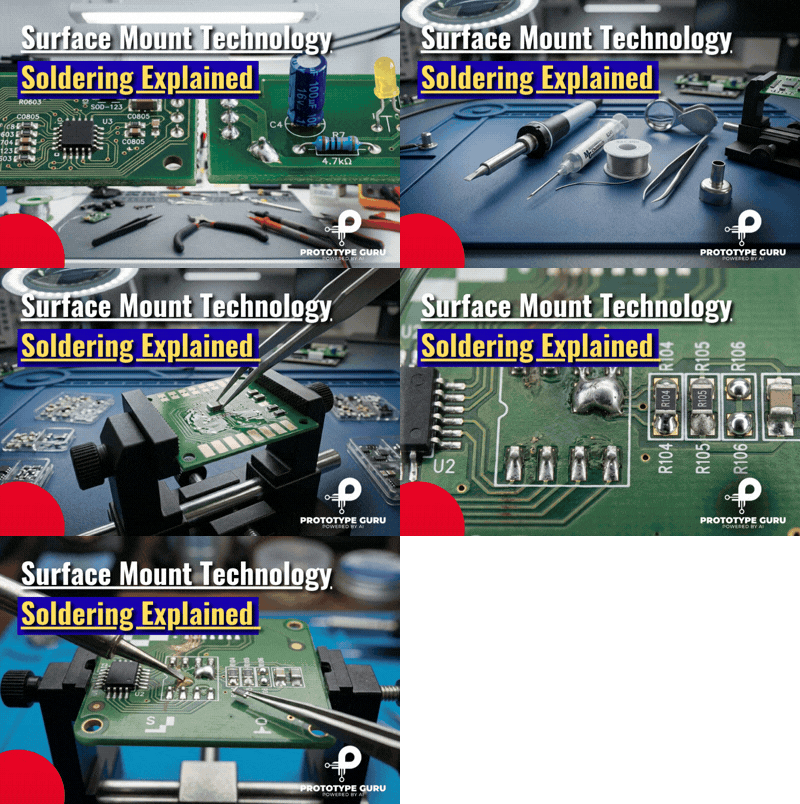
Surface mount technology (SMT) is the dominant assembly method for production hardware today. Understanding SMT design rules—pad sizes, component spacing, and solder mask requirements—from the beginning of your layout saves you costly rework later. The surface mount technology soldering guide on Prototype Guru is a practical reference for founders learning these rules for the first time.
Automated Validation
Before you order your first prototype PCBs, always run Design Rule Checks (DRC) and Electrical Rule Checks (ERC) in your EDA tool. These automated checks catch the most common layout mistakes before they become expensive fabrication problems. Understanding the PCB manufacturing process in detail helps you design boards that are easier and cheaper to fabricate.
Step 5: Firmware Integration with Hardware
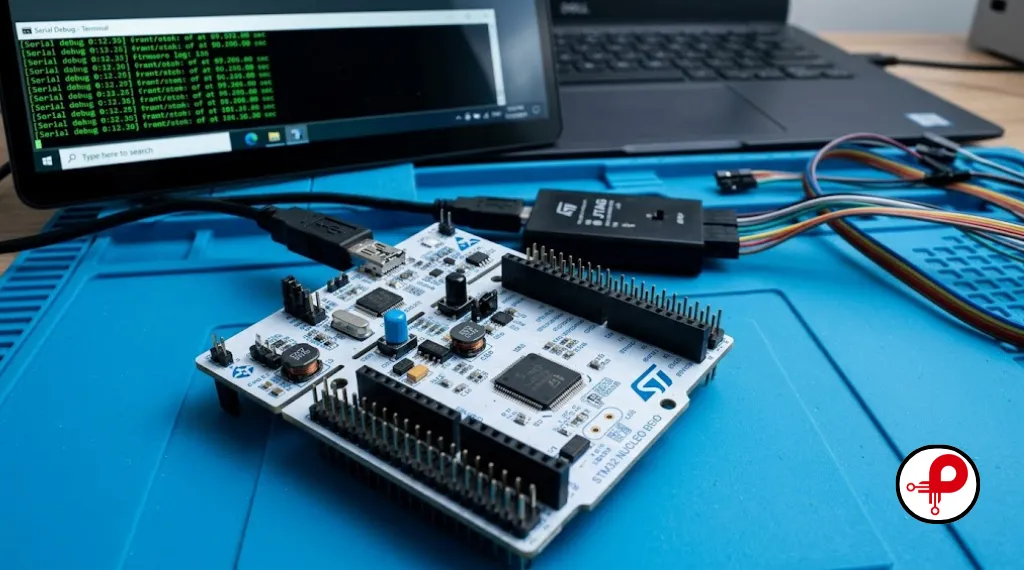
Hardware and firmware are inseparable in modern electronics product development. Your PCB is just metal and silicon until the firmware brings it to life. For startup hardware teams, the firmware integration phase is where most of the real development time goes.
Firmware development for embedded hardware typically involves:
Writing and testing peripheral drivers for every IC on your board — sensors, displays, communication modules, power management chips.
Implementing the core application logic — the state machine, data processing pipeline, or control algorithm that makes your product useful.
Developing the communication stack — whether that is Bluetooth Low Energy, Wi-Fi, LoRa, or a wired protocol like CAN or RS-485. For IoT startups, understanding how Bluetooth works in embedded systems is foundational knowledge.
Writing over-the-air (OTA) update capability from the start. Hardware products need firmware updates after launch, and building OTA capability in early is dramatically cheaper than retrofitting it later.
One practical tip for hardware development teams: establish a hardware-in-the-loop (HIL) testing framework early. Automated tests that run against real hardware catch regressions that purely software-level unit tests miss completely.
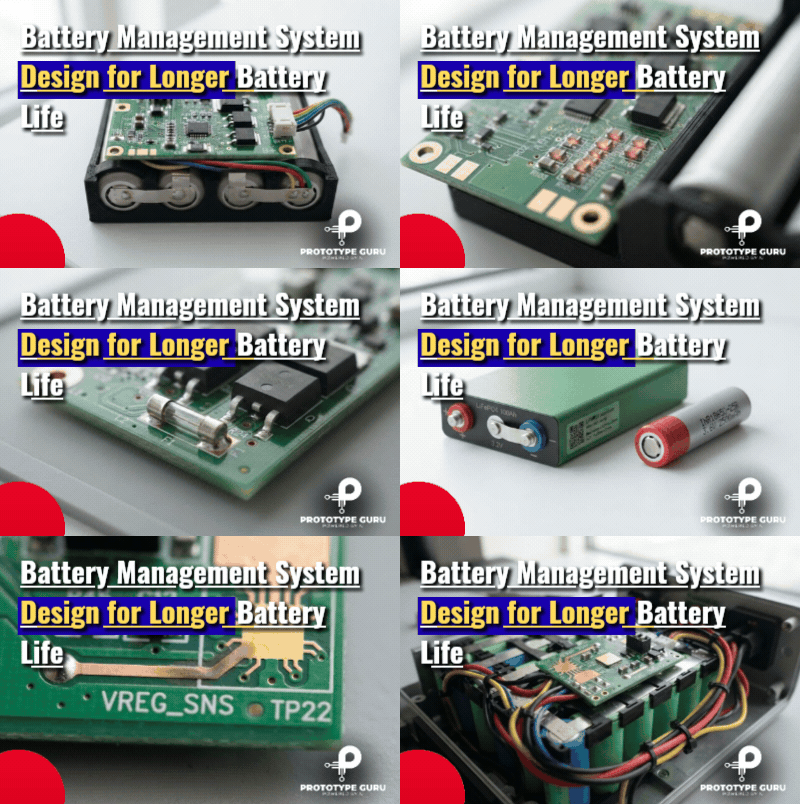
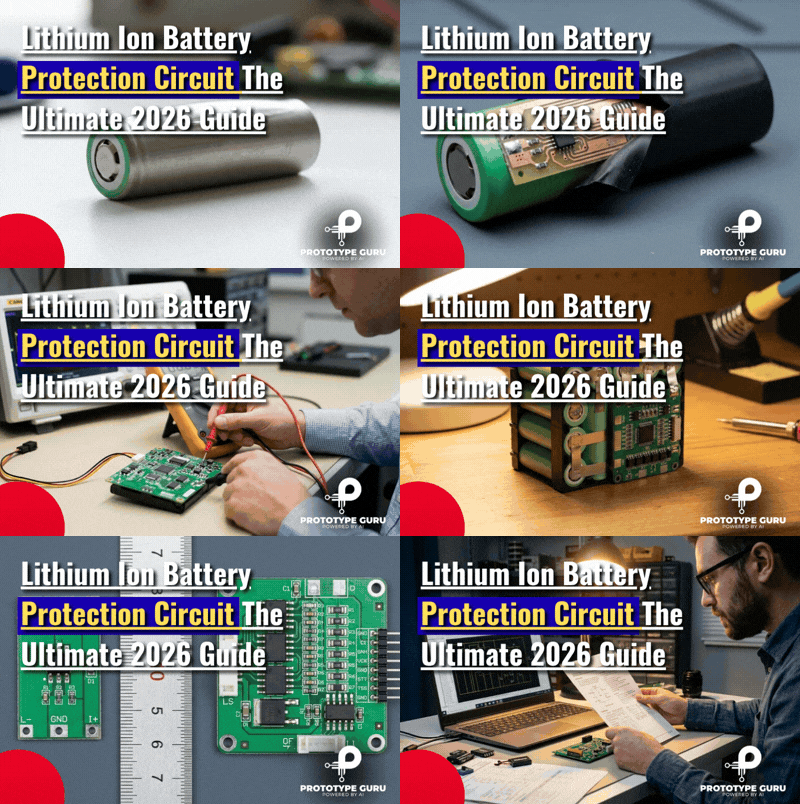
If your product uses lithium-ion cells, firmware also plays a critical role in battery management. Improper charging and protection logic can destroy cells or, worse, create safety hazards. The lithium-ion battery protection circuit guide on Prototype Guru covers the hardware and firmware considerations that keep battery-powered products safe.
Step 6: EVT, DVT, and PVT — The Three Prototype Stages Explained
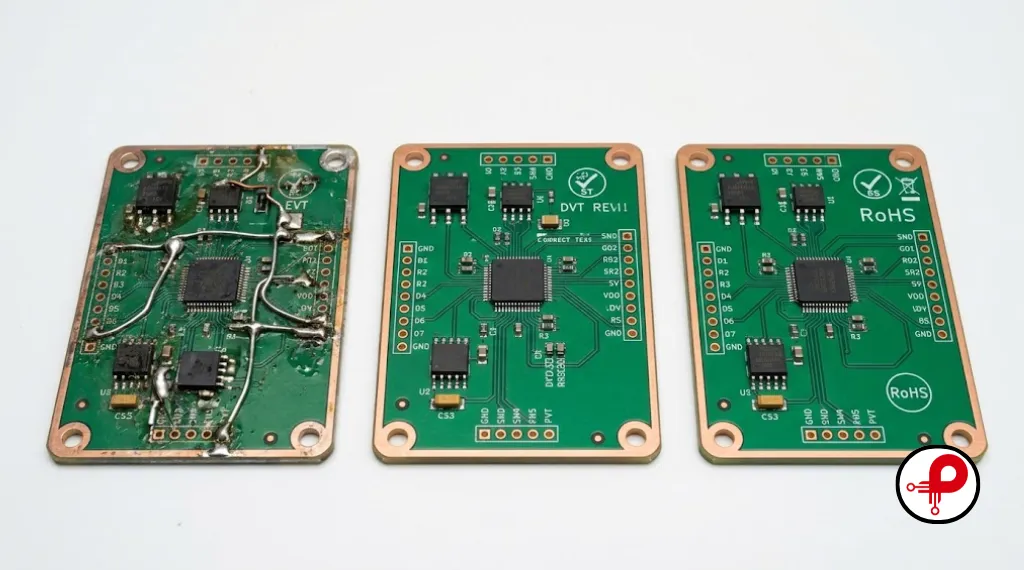
Professional hardware development for startups follows a structured prototype progression that has been refined by the electronics manufacturing industry over decades. Understanding these stages helps you plan your budget and timeline realistically.
Engineering Validation Testing (EVT)
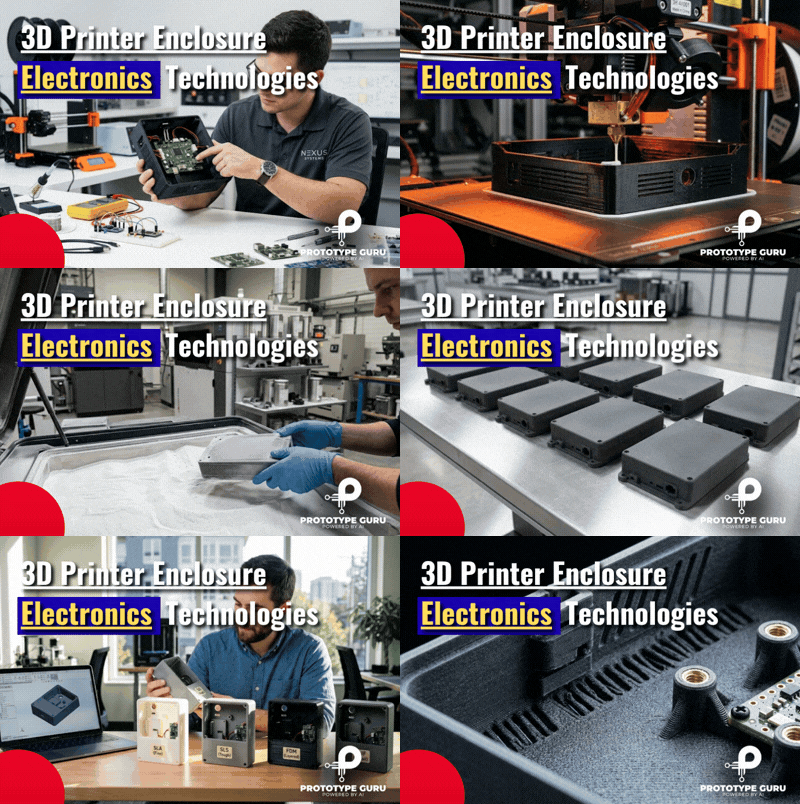
EVT is your first real prototype build—typically 10 to 100 units built using actual custom PCBs and 3D-printed or CNC-machined enclosures. The goal is to validate that your engineering design works as intended. You are testing core functionality, running thermal stress tests, characterizing sensors, and identifying design issues before they become structural problems.
Design Validation Testing (DVT)
DVT follows a successful EVT. By this stage, your design is largely stable and your enclosure is close to final. DVT units are built at volumes of 100 to 500 and are used for regulatory certification testing, user studies, and supply chain qualification. This is also where you conduct formal reliability testing—drop tests, temperature cycling, humidity exposure, and accelerated life testing.
Production Validation Testing (PVT)
PVT is the final gate before mass production. Your manufacturer builds 500 to 2,000 units using the actual production line, tooling, and assembly process. The goal is to validate that the manufacturing process consistently produces a high-quality product at production speeds, ensuring the assembly line is optimized before full-scale commercialization.
Step 7: EMI, Signal Integrity, and Compliance Testing
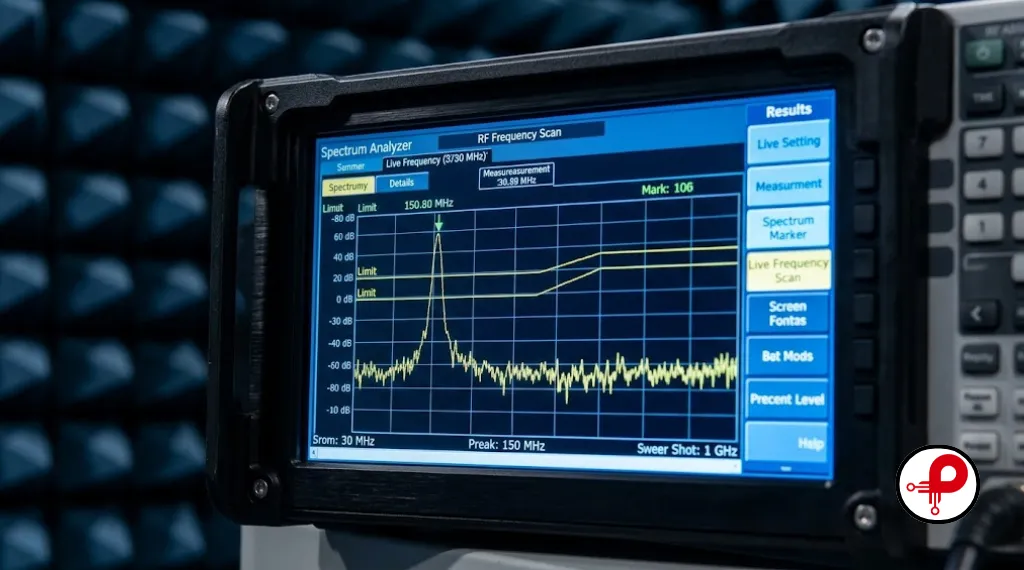
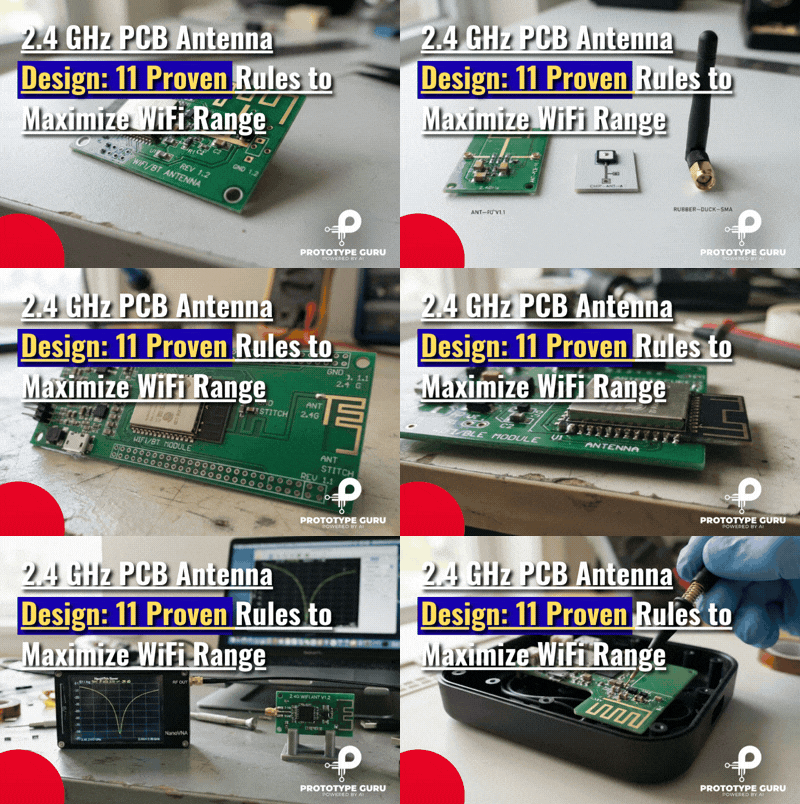
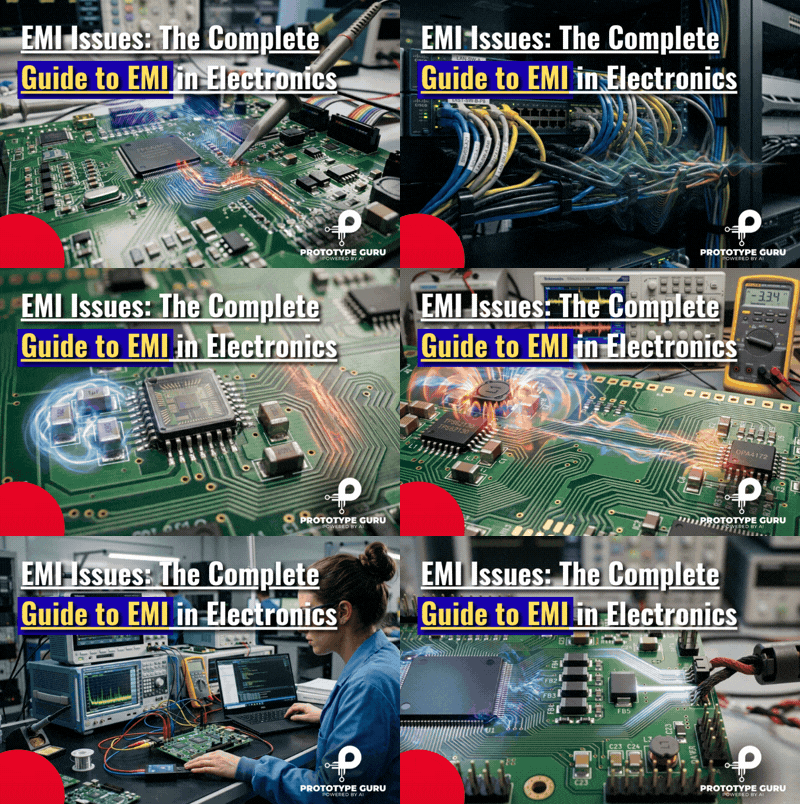
Electromagnetic interference is the invisible enemy of every hardware startup. Products that work perfectly on your lab bench can fail spectacularly when placed near other electronics or subjected to real-world environmental noise. EMI compliance is also a legal requirement — your product cannot legally be sold in most markets without passing FCC Part 15 (US) or CE (EU) testing.
EMI problems in hardware development typically come from three sources: high-frequency switching power supplies, fast digital signals with steep edges, and RF transmitters. Switching power supplies deserve special attention because they generate broadband noise that can couple into sensitive analog circuits or radiate from PCB traces acting as antennas. The high-frequency switching noise guide on Prototype Guru is an excellent practical reference for understanding and solving these issues before they show up in a compliance test chamber.
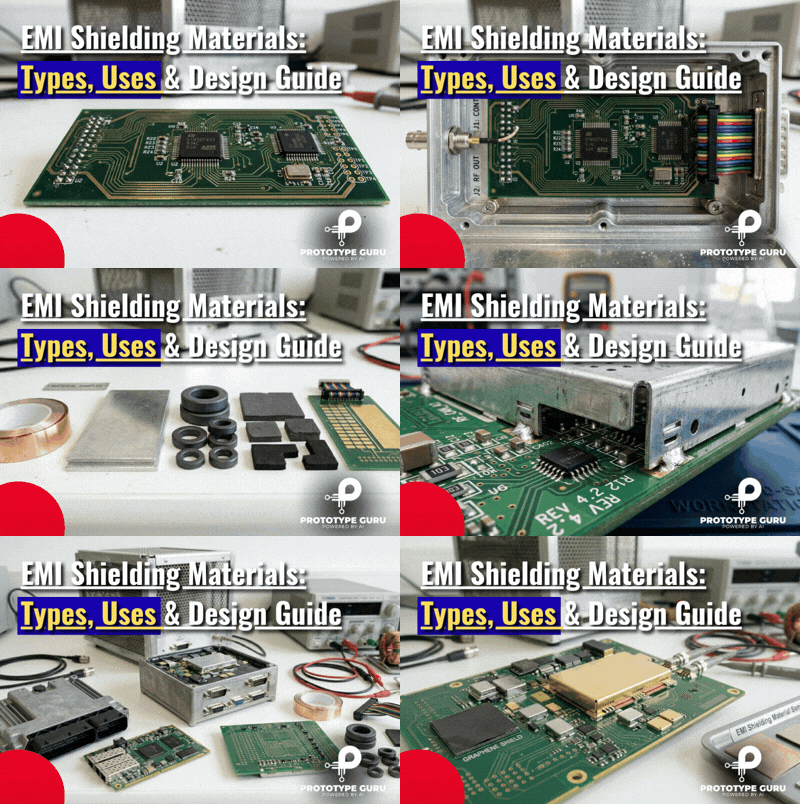
Good PCB layout practice addresses most EMI problems before they start. Proper ground planes, careful return current path management, and filter placement at power inputs all contribute to a clean electromagnetic profile. If you do encounter EMI issues late in development, EMI shielding materials provide a hardware-level fix that can be applied without a full PCB redesign.
For products with switching regulators or motor drives, EMC filter design is non-negotiable. The EMI and EMC filter design handbook on Prototype Guru covers the engineering principles that help you design filters that actually work, not just ones that check a box.
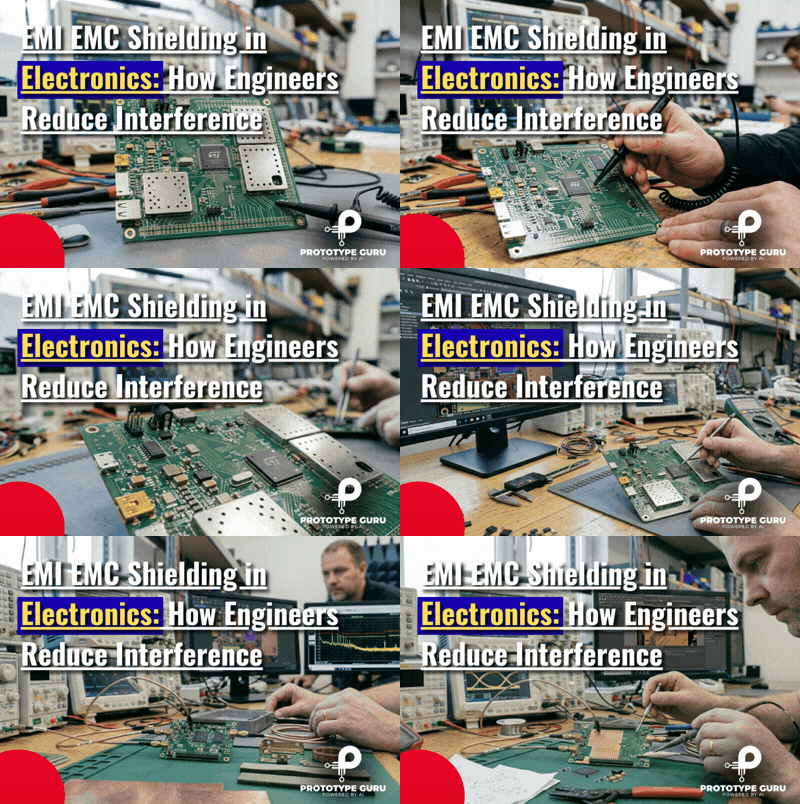
Before investing in formal compliance testing at an accredited lab — which can cost $5,000 to $20,000 per test session — do your own pre-compliance testing. The electromagnetic compatibility testing guide explains how to set up informal pre-compliance measurement using a near-field probe and spectrum analyzer. Catching EMI issues early can save you multiple expensive trips to the compliance lab.
Automated optical inspection (AOI) is a critical quality assurance tool for catching PCB assembly defects during production. Understanding how AOI works helps you design boards that inspect reliably and helps you have informed conversations with your contract manufacturer about their inspection process.
Step 8: Design for Manufacturability (DFM) and Choosing a Contract Manufacturer
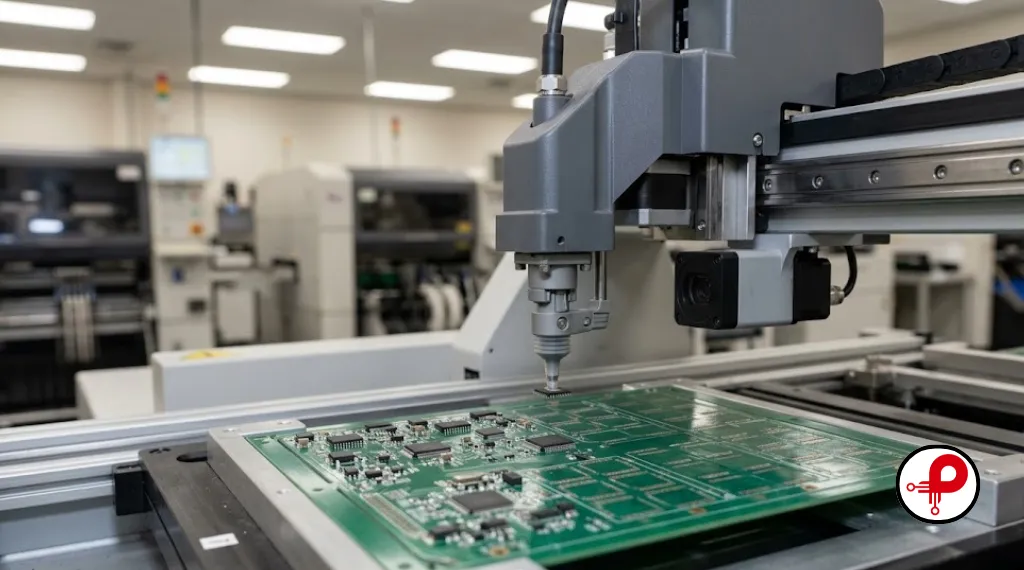
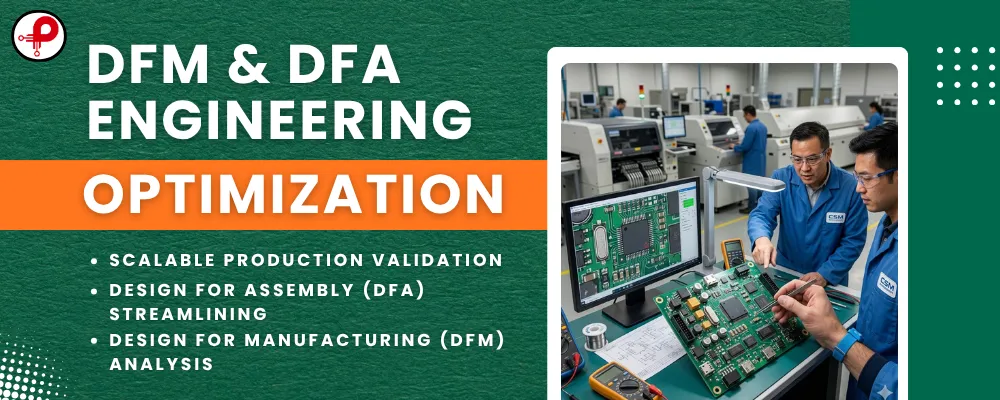
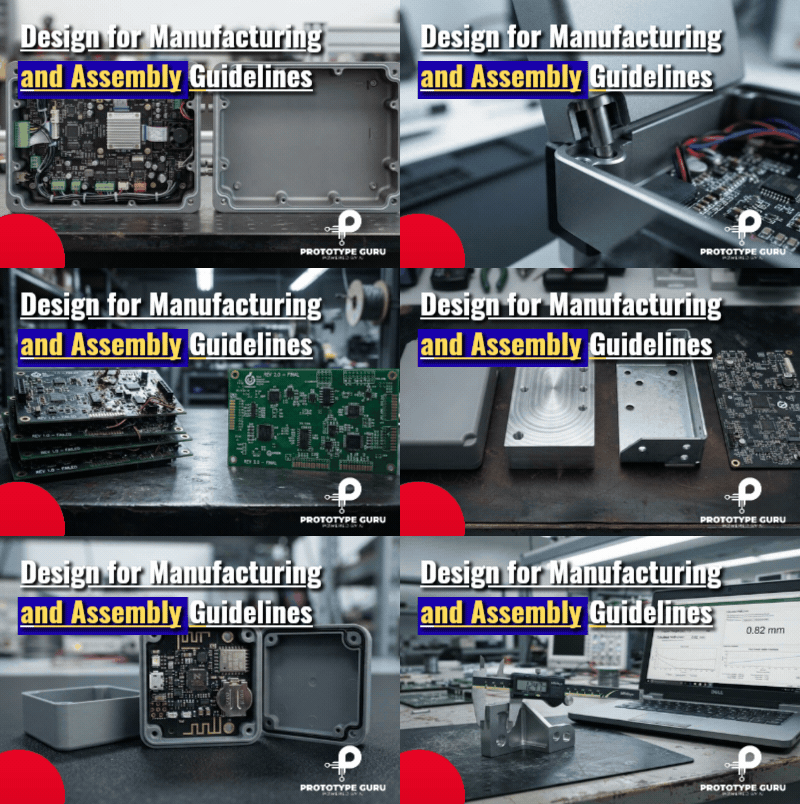
Design for manufacturability is the discipline of designing your hardware product so that it can be manufactured consistently, quickly, and cost-effectively at scale. DFM analysis should begin during the PCB layout phase and continue through enclosure design and assembly planning.
Key DFM considerations in hardware development include:
Component Availability
Are your chosen components available from multiple distributors? Components sourced from a single supplier create catastrophic supply chain risk. The chip shortage of 2021 to 2023 taught this lesson to thousands of hardware startups the hard way.
Assembly Complexity
Can your PCB be assembled using standard SMT processes, or does it require unusual hand-soldering, specialized connectors, or complex sub-assembly steps? Each complexity multiplier increases your unit cost and reduces yield.
Test Access
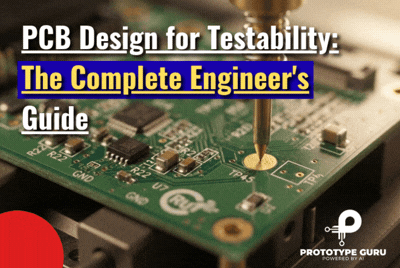
Does your PCB design include test points for in-circuit testing (ICT) or functional test fixtures? Without test access, your contract manufacturer cannot efficiently screen out defective units during production.
Enclosure Design
Is your enclosure designed with appropriate draft angles for injection molding? Are snap-fit tolerances appropriate for your material choice? Early involvement of a mechanical engineer who understands manufacturing constraints prevents expensive tooling changes.
Choosing Your Contract Manufacturer
Selecting the right contract manufacturer (CM) is one of the most consequential decisions in a startup hardware development roadmap. The wrong CM can destroy your margins, delay your launch, and deliver inconsistent quality that damages your brand.
Evaluate contract manufacturers on five criteria: experience with products similar to yours, geographic location relative to your component supply chain, minimum order quantities (MOQs) that match your initial production volumes, quality certifications (ISO 9001, IPC class standards), and communication responsiveness.
Do not sign a manufacturing agreement based on price alone. A CM that quotes 20% lower than competitors but delivers 15% defect rates costs you far more in the end.
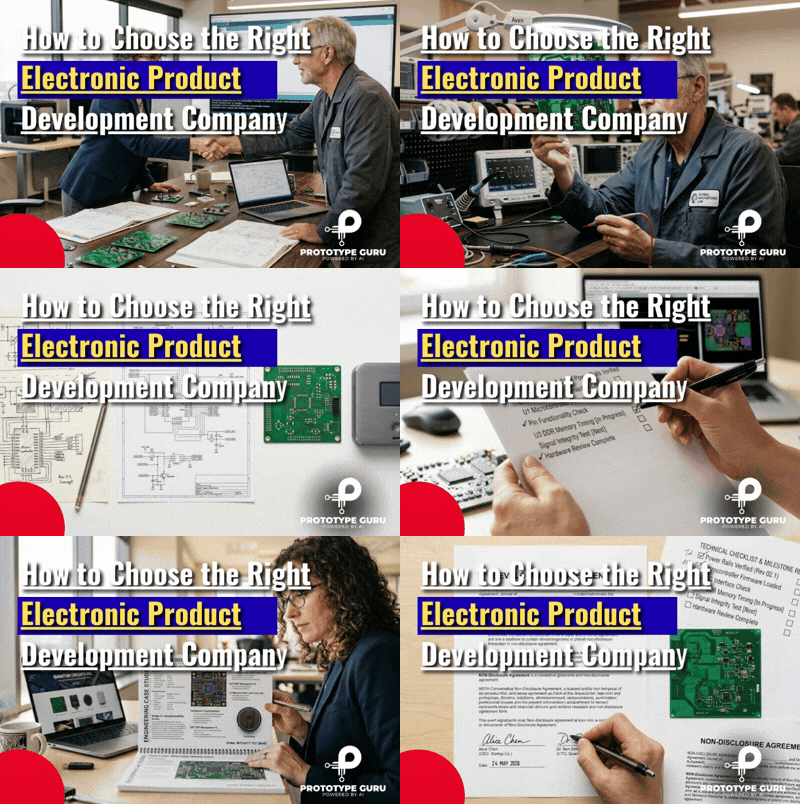
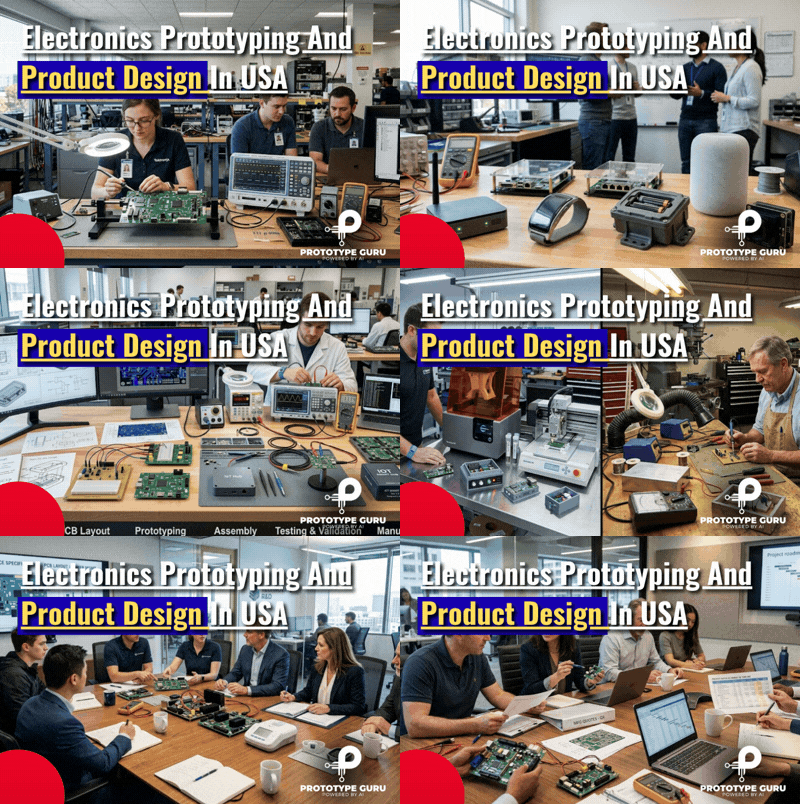
For startups in the United States seeking contract prototyping and product design support, specialized firms that offer electronics prototyping and product design services can bridge the gap between your engineering team and overseas volume manufacturing.
Step 9: Pilot Production Run and Quality Assurance
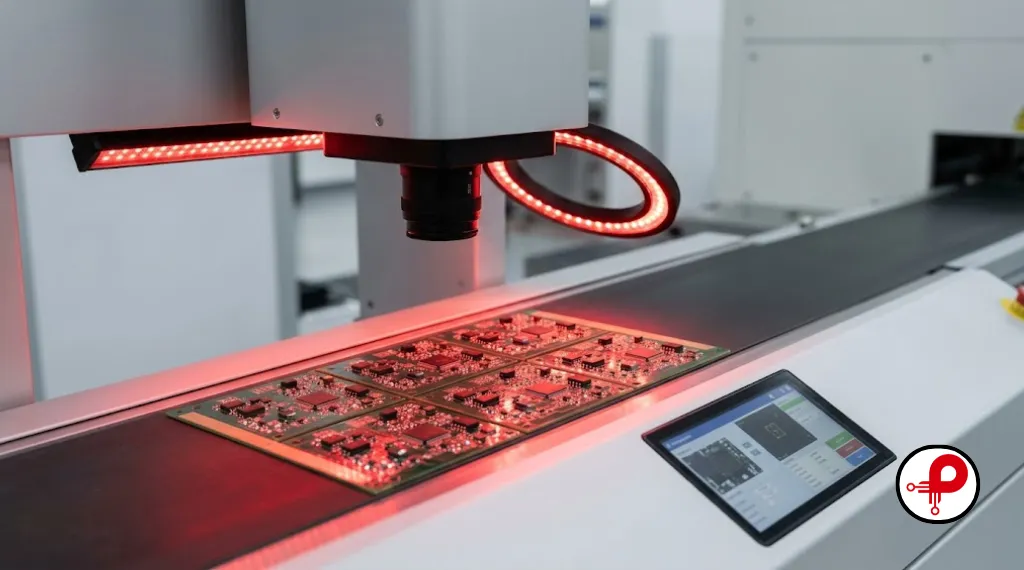
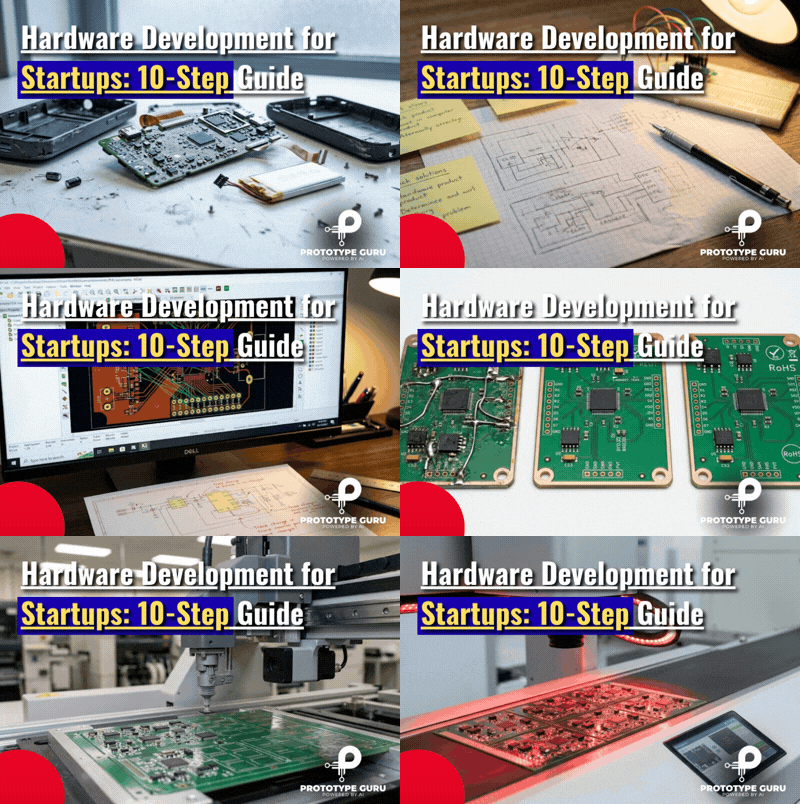
The pilot production run — sometimes called a pilot build or NPI (new product introduction) run — bridges the gap between DVT prototype builds and full mass production. Typical volumes are 500 to 2,000 units. The pilot run serves several critical purposes.
First, it validates your manufacturing process at production conditions. Are the solder paste stencils printing cleanly? Are the pick-and-place programs accurate? Is the reflow oven profile producing reliable solder joints?
Second, it builds up your initial inventory. Many startups sell their pilot run units as a pre-launch batch, generating early revenue and real-world user feedback before committing to full production.
Third, it stress-tests your quality assurance process. Your incoming material inspection, in-process testing, and final product inspection procedures need to work correctly before you are producing 5,000 units per week.
For hardware startups, the pilot run is also the time to finalize packaging. Retail-ready packaging has its own lead times and tooling costs. Starting the packaging development process during DVT so that it is ready for the pilot run avoids delays that can push your launch date by weeks or months.
Step 10: Mass Production and Supply Chain Management
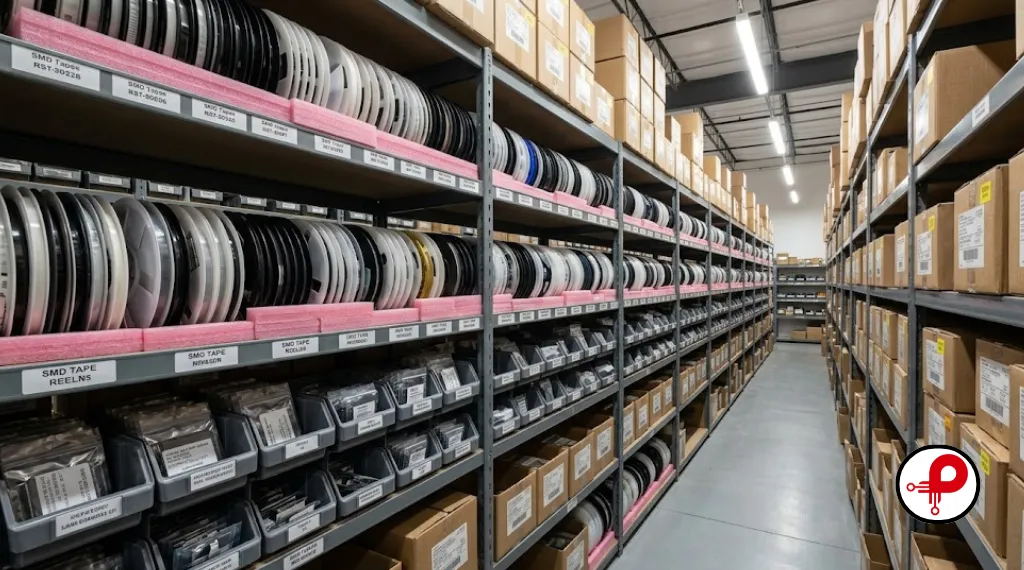
Mass production is the goal that all previous hardware development stages have been building toward. Getting here means your design is validated, your manufacturing process is tuned, and your supply chain is qualified. Now the challenge shifts from engineering to operations.
Key operational priorities in mass production include:
Expert safety stock calculations for long-lead-time components and proactive qualification of second-source parts for critical single-source items to mitigate supply chain risks.
Synchronizing PCB fabrication lead times, component arrival schedules, and contract manufacturer (CM) production capacity into a reliable, predictable delivery timeline.
Implementing statistical process control (SPC) for key manufacturing metrics and conducting regular quality audits at your CM facility to ensure consistent output.
Managing engineering change orders (ECOs) for end-of-life components, resolving emergent manufacturing issues, and identifying continuous cost reduction opportunities.
Startups often underestimate the complexity of supply chain management at scale. Building a relationship with a dedicated supply chain manager or working with a product operations firm before you hit mass production volumes is an investment that pays back quickly in avoided stockouts and production delays.
How Much Does Hardware Development Cost for a Startup?
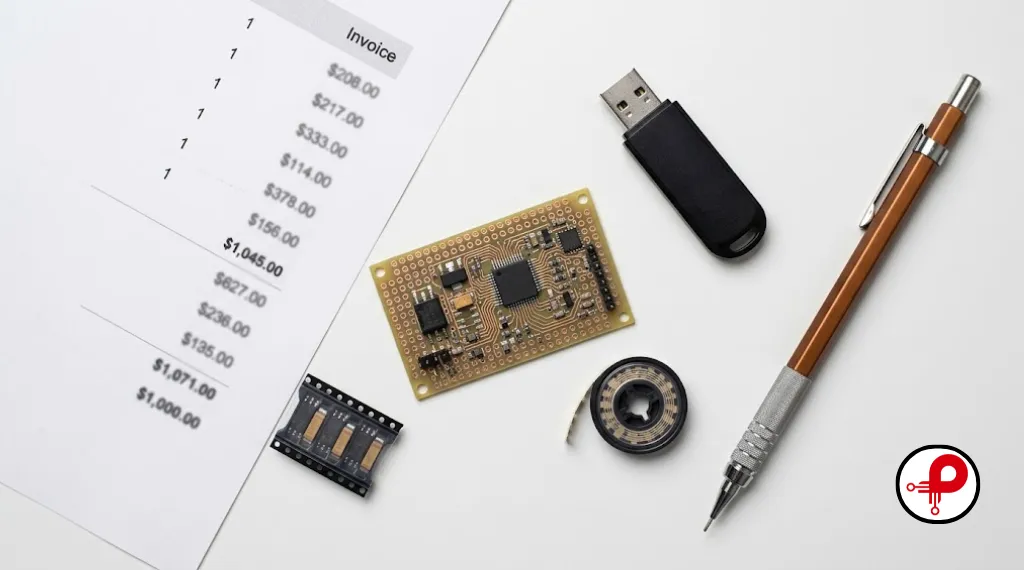
Hardware development costs vary enormously depending on product complexity, your team’s internal capabilities, and how many prototype iterations you need. Here are realistic ballpark figures for 2025:
Proof of concept (POC): $2,000 to $10,000 — mostly developer boards, sensors, and engineering time.
First PCB prototype (EVT): $10,000 to $50,000 — schematic capture, PCB layout, first article fabrication, and initial assembly. More complex products with RF, high-power, or multi-layer designs sit at the high end.
DVT prototyping: $30,000 to $150,000 — higher volumes, enclosure tooling, compliance testing, and user study units.
Pilot production: $50,000 to $300,000 — depending on MOQs, component costs, and packaging.
Total path from idea to first 1,000 units shipped typically ranges from $200,000 to $1,000,000 for a moderately complex consumer electronics product. IoT products with standard off-the-shelf wireless modules sit closer to the low end. Medical devices, industrial hardware, or products with specialized sensing sit at the high end or beyond.
This is why hardware startups need to think about fundraising strategy alongside their hardware development roadmap. According to industry data, average successful hardware crowdfunding campaigns raised approximately $368,000 in 2024, which is enough to cover a first prototype cycle and pilot production for a well-scoped product.
External resources like Predictable Designs and MistyWest’s hardware guide offer detailed cost breakdowns from teams that have managed hundreds of real hardware projects.
How Long Does Hardware Product Development Take?
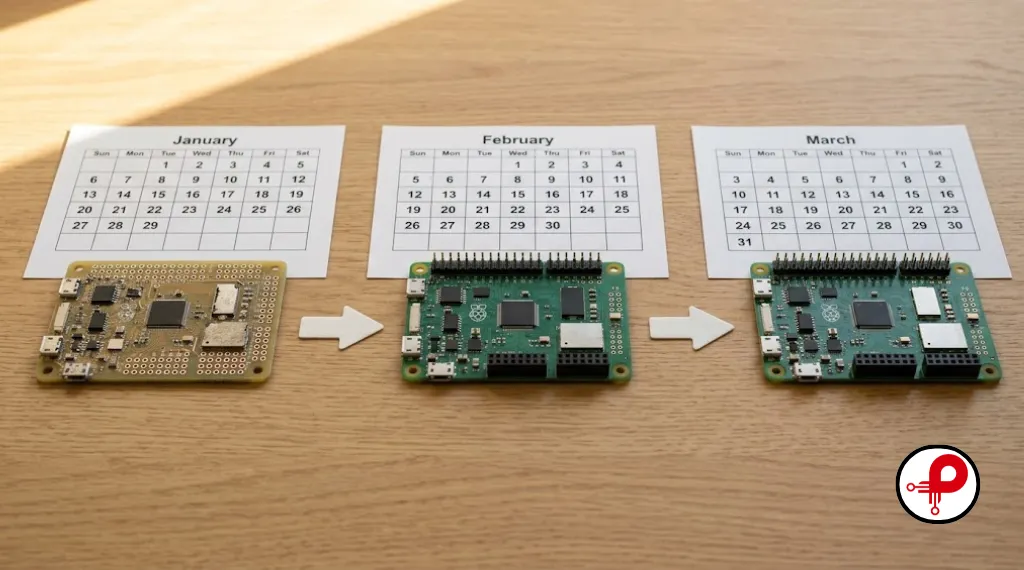
Honest timeline expectations for hardware development are critical for founder planning and investor conversations. Here is a realistic breakdown:
| Stage | Typical Duration |
|---|---|
| Idea validation and PRD | 4 to 8 weeks |
| Proof of concept | 4 to 12 weeks |
| PCB design and first prototype | 8 to 16 weeks |
| EVT build and testing | 6 to 12 weeks |
| DVT build and testing | 8 to 16 weeks |
| Compliance certification | 8 to 20 weeks |
| PVT / pilot production | 8 to 16 weeks |
| Mass production ramp | 8 to 16 weeks |
Adding these up honestly: 12 to 24 months from validated idea to first mass production units, assuming no major redesigns are required. Products that need regulatory certification in multiple markets, products with complex mechanical assemblies, or products that require specialized components with long lead times sit at 24 months or beyond.
Common Mistakes Startup Founders Make in Hardware Development
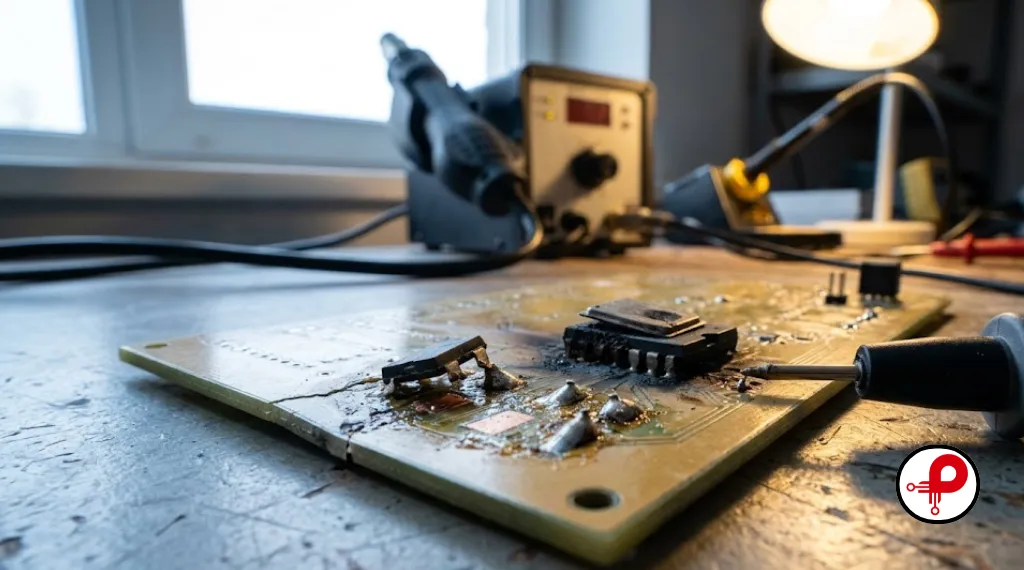
Understanding where other startups have failed helps you avoid the same expensive lessons.
Skipping the validation stage. Building hardware without demand validation is the fastest way to spend $500,000 on a product nobody buys. Talk to 50 potential customers before spending on tooling.
Underestimating BOM costs. Component pricing at 100 units is not representative of pricing at 10,000 units, and vice versa. Model your unit economics at multiple production volumes before committing to a business plan.
Ignoring DFM until DVT. Design for manufacturability concerns that are addressed during PCB layout cost almost nothing to fix. The same issues discovered after tooling cost tens of thousands of dollars and months of delay.
Not planning for EMI from the beginning. Most EMI problems are PCB layout problems. Fixing them late in development — after the board is otherwise finalized — requires a redesign. Getting guidance on EMI issues and their fixes early in the design process is dramatically cheaper than discovering them during compliance testing.
Single-sourcing critical components. If there is only one supplier for a key component in your design, you are one shortage away from a production halt. Qualify second sources for any component with no standard alternative.
Underbudgeting prototype iterations. Your first prototype will not be ready for production. Your second probably will not be either. Budgeting for three to five EVT iterations is realistic, not pessimistic.
Choosing a manufacturer based on price alone. A CM that cannot meet your quality requirements at your volume destroys your brand faster than any competitor could.
FAQ: Hardware Development for Startups
1. How do startups develop hardware products step by step?
↑2. What is the process of building a hardware startup product from scratch?
↓3. How do you turn an idea into a physical electronic product?
↓4. How long does hardware product development take for a startup?
↓5. How do I validate a hardware product idea before spending on manufacturing?
↓6. What are the stages of hardware product development?
↓7. How do I choose a manufacturer for a hardware startup?
↓8. What is the biggest challenge in hardware development for startups?
↓9. What resources help with embedded hardware development?
↓10. How do I reduce cost in hardware development as a startup?
↓Final Thoughts: Building Hardware Is Hard, But It Is Worth It
Hardware development for startups is genuinely difficult. The timelines are long, the costs are real, and every stage of the process reveals new problems you did not anticipate. But hardware products also create durable competitive advantages that software alone cannot replicate. A well-engineered physical product is much harder to copy than a software feature.
The founders who succeed in hardware are not necessarily the ones with the most technical experience. They are the ones who respect the process, validate before they build, iterate quickly through prototypes, and build the right team and partnerships around them.
If you are building an electronics product and need guidance on PCB design, EMI testing, firmware integration, or any aspect of the development process, Prototype Guru publishes in-depth technical resources written specifically for engineers and founders navigating these challenges. Explore topics like electromagnetic compatibility testing, high-frequency switching noise, and the PCB manufacturing process to build the technical knowledge that helps you make better decisions at every stage of your hardware development journey.
The path from idea to shipped product is long. Start walking it with your eyes open, and you will be one of the startups that makes it across.