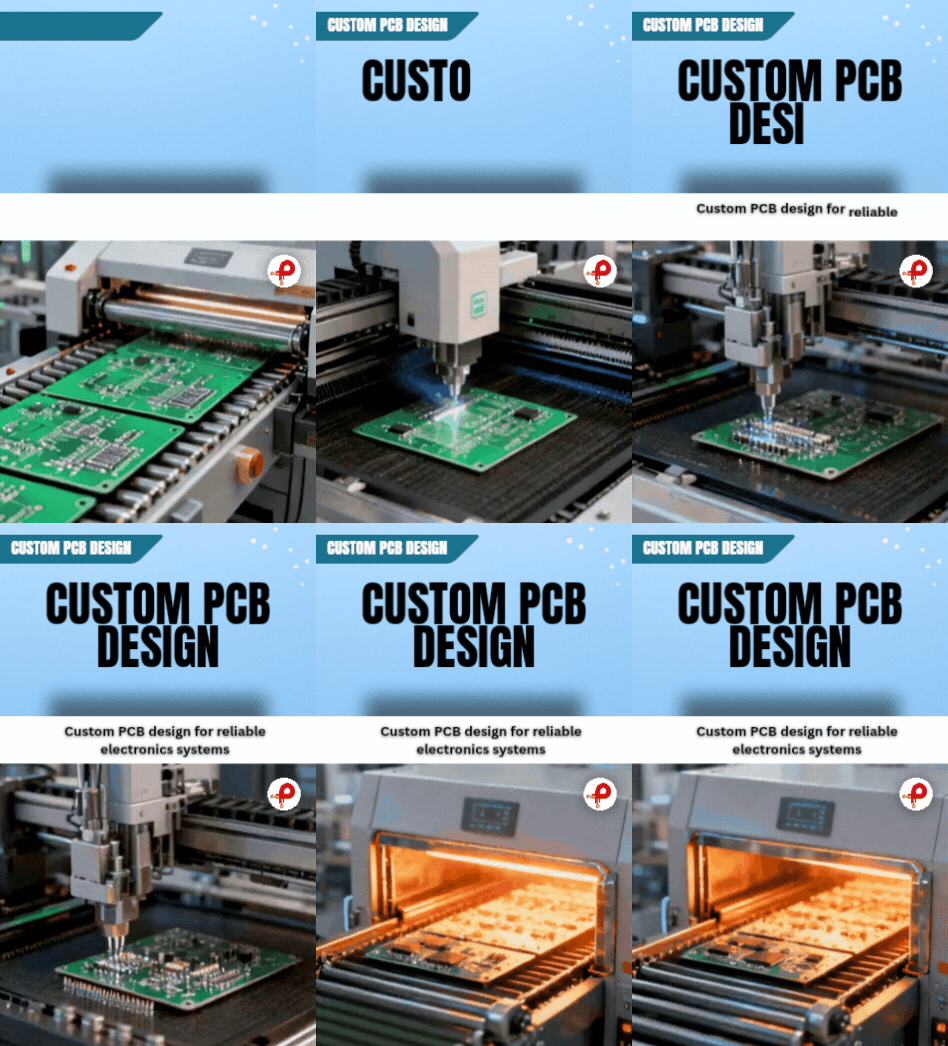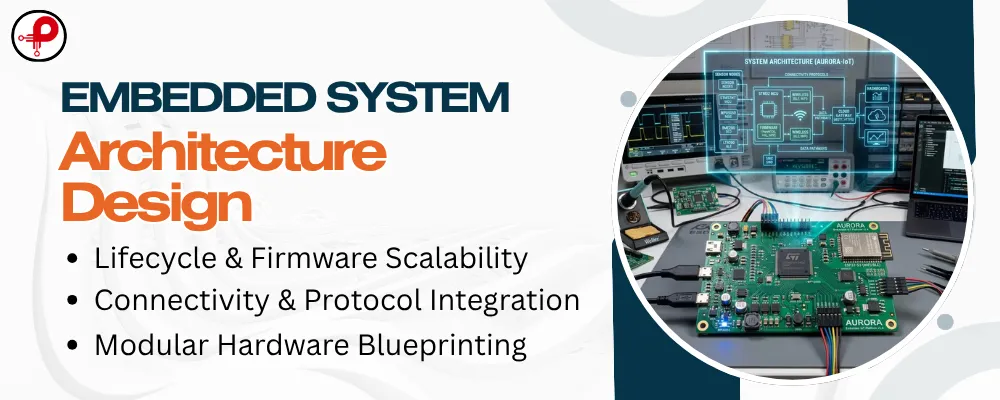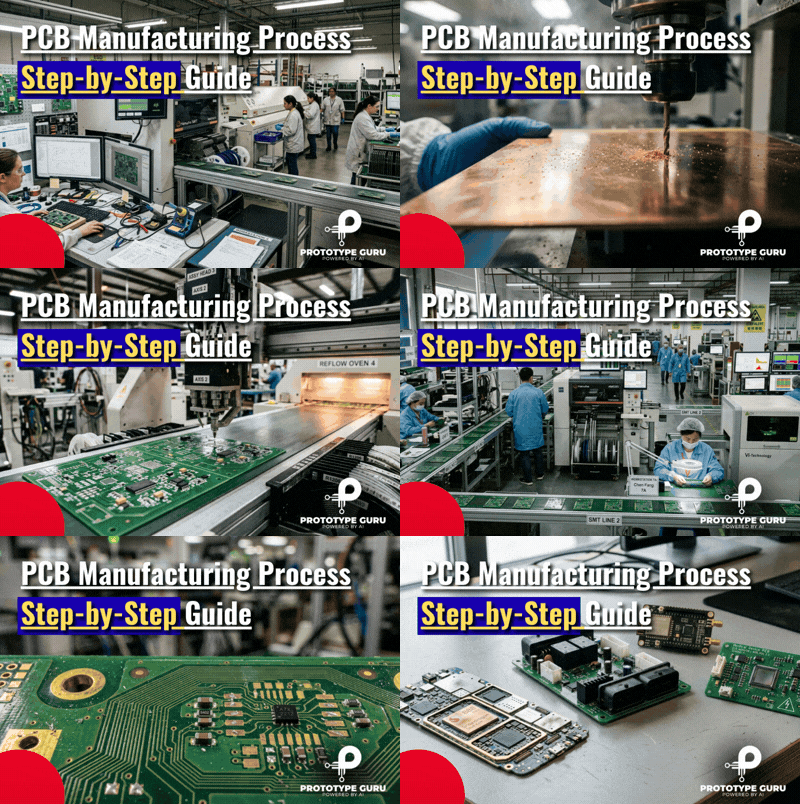




What Is PCB Manufacturing and Assembly?
If you have ever held a smartphone, a laptop, or any piece of modern electronics, you have held the result of a carefully controlled PCB manufacturing and assembly process. But most engineers, startup founders, and product designers who are new to hardware rarely understand what actually happens between a schematic and a working board.
PCB manufacturing and assembly is the complete end-to-end process of turning a digital circuit design into a fully functional, component-populated electronic board. It involves two distinct but closely connected phases. First, PCB fabrication, which is where the bare board itself is created using copper layers, substrate materials, and precision chemical etching. Second, PCB assembly, which is where all the electronic components such as resistors, capacitors, microcontrollers, and connectors are placed and soldered onto that bare board to bring it to life.
Together, these two phases are what the industry calls PCB board assembly manufacturing. Understanding every stage of this pipeline matters deeply if you want to reduce production costs, avoid redesigns, and get your product to market without delays. Whether you are working on a consumer gadget, an industrial controller, or a medical device, the fundamentals of printed circuit board assembly remain the same.
This guide walks you through every stage in clear, practical detail, drawing on over eight years of hands-on experience in electronics product development and PCB fab and assembly projects across multiple industries.
PCB Fabrication vs PCB Assembly: What Is the Difference?
This is one of the most common questions engineers and startup founders ask, and it is important to answer it clearly before going deeper.
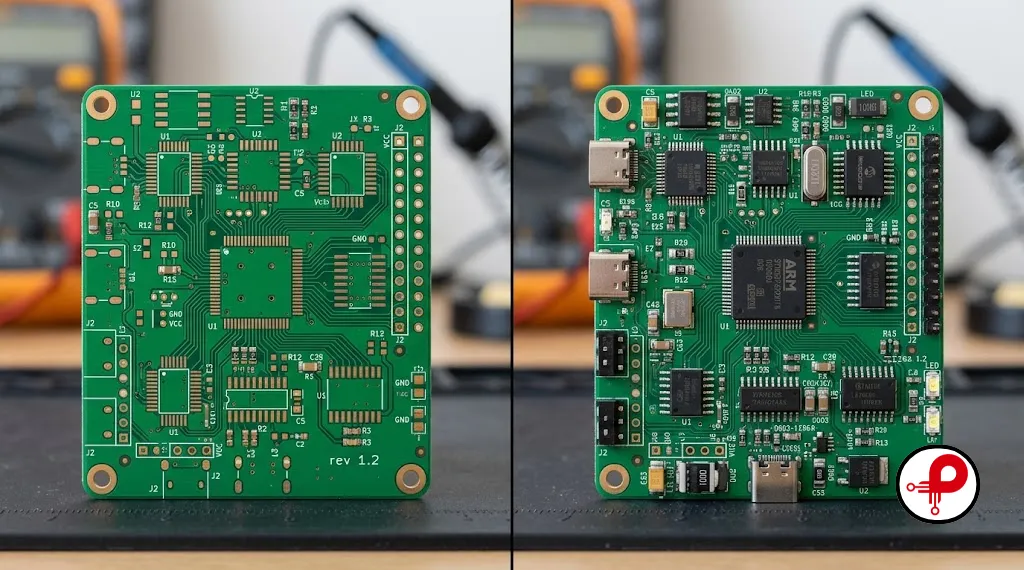
PCB fabrication (also called PCB manufacture) refers to the process of creating the physical circuit board itself. No components are added at this stage. The fabricator takes your Gerber files, which are the industry-standard design output files containing all layer information, drill data, and copper traces, and uses them to produce the bare board. The output is a blank green (or other colored) board with exposed copper pads, drilled holes, silkscreen labels, and a solder mask, but nothing else.
PCB assembly (also written as PCBA) is what happens after fabrication. This is where your bill of materials (BOM) comes in. Components are loaded onto the board using automated machines and then permanently soldered in place.
| Feature | PCB Fabrication | PCB Assembly |
|---|---|---|
| Also Known As | PCB manufacture, PCB fab | PCBA, circuit card assembly |
| Input Files | Gerber files, drill files | BOM, component footprints, pick and place files |
| Output | Bare board | Populated, functional PCB |
| Key Processes | Etching, lamination, drilling | Solder paste printing, component placement, soldering |
| Equipment | CNC machines, laminators | SMT lines, reflow ovens, wave solder machines |
| Quality Check | AOI, electrical test (bare board) | AOI, X-ray, functional test |
Many companies today offer combined PCB fabrication and assembly as a single service, which is often called turnkey PCB assembly. This is usually the most efficient route for startups and small-to-medium production runs.
How Long Does PCB Manufacturing and Assembly Take?
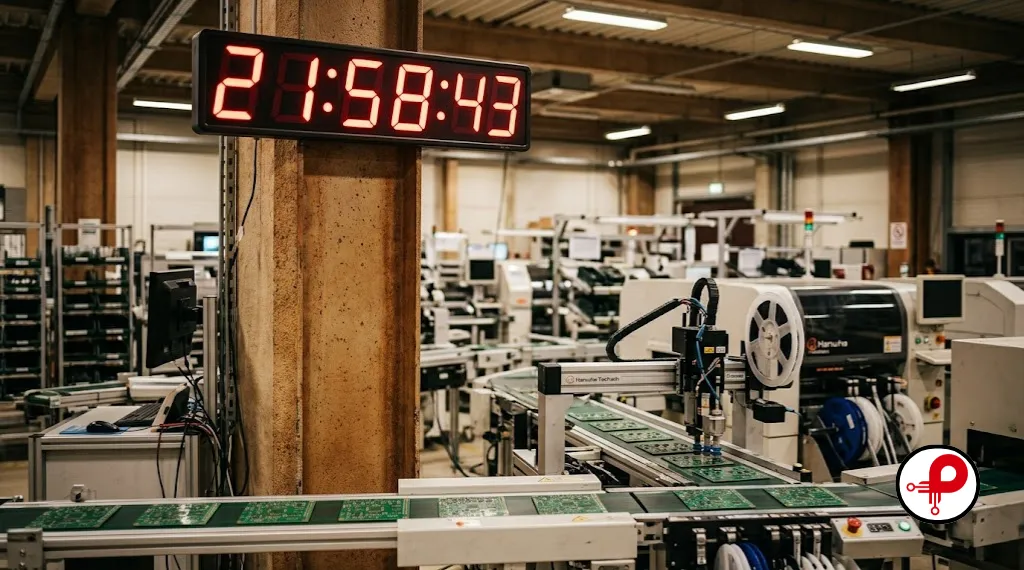
Turnaround time is something every product team asks about early in the process, and the honest answer is: it depends on several factors.
For a simple 2-layer board with standard components, you can expect as little as 3 to 5 business days for fabrication and another 3 to 5 days for assembly if you are using an expedited service. For more complex multilayer designs with fine-pitch BGA components or specialized materials, the combined PCB production and assembly timeline can stretch to 3 to 6 weeks.
Here is a general breakdown:
| Board Type | Fabrication Time | Assembly Time | Total Estimate |
|---|---|---|---|
| 2-layer prototype | 1 to 3 days | 2 to 4 days | 3 to 7 days |
| 4-layer standard | 3 to 5 days | 3 to 5 days | 6 to 10 days |
| 6 to 8 layer | 5 to 10 days | 5 to 7 days | 10 to 17 days |
| High-density / BGA | 7 to 14 days | 7 to 14 days | 14 to 28 days |
| High volume production | 10 to 20 days | 7 to 14 days | 17 to 34 days |
Delays most often come from incomplete documentation. If your Gerber files have errors, your BOM has missing part numbers, or your component library uses non-standard footprints, expect to lose days to back-and-forth communication. Preparing clean, complete design outputs before you submit to a PCB assembly manufacturer is the single most effective way to shorten your lead time.
Stage 1: PCB Design and Layout Preparation
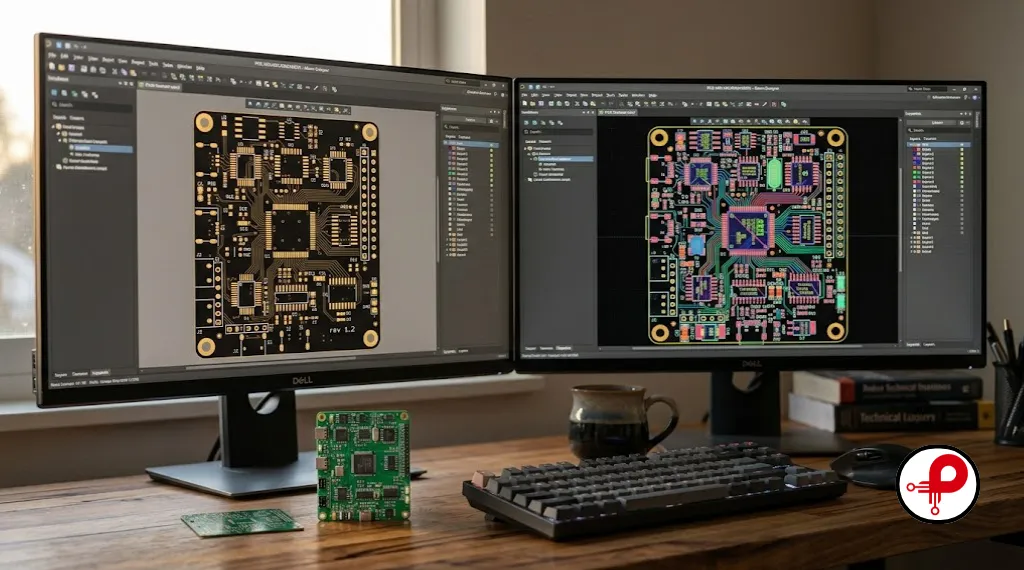
Every successful PCB manufacturing and assembly project starts with a strong design. No matter how good the fabrication and assembly house is, a poorly designed board will always produce problems on the production floor.
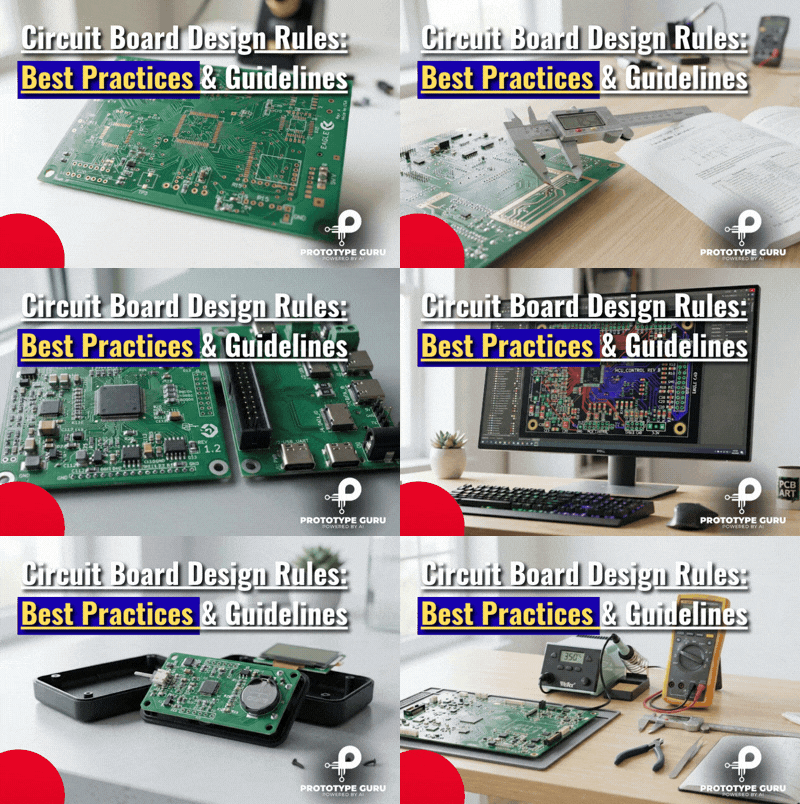
PCB design and layout involves using EDA software such as Altium Designer, KiCad, or Eagle to design the schematic, define component footprints, route the copper traces, and set up design rules that match your target manufacturer’s capabilities. The output of this stage is a complete design package that typically includes your Gerber files, a pick and place (centroid) file, a drill file, and your bill of materials.
For startups and first-time hardware developers, some of the most damaging errors happen at this stage. Common PCB design mistakes include using incorrect land patterns for components, violating minimum trace width and spacing rules, placing components too close to board edges, or failing to account for thermal relief on high-power pads. If you want to avoid these pitfalls, read our detailed guide on PCB design mistakes every engineer must avoid.
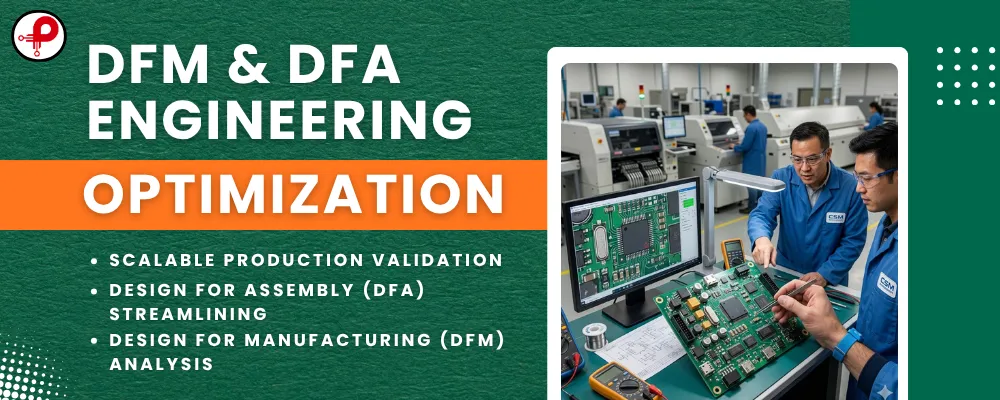
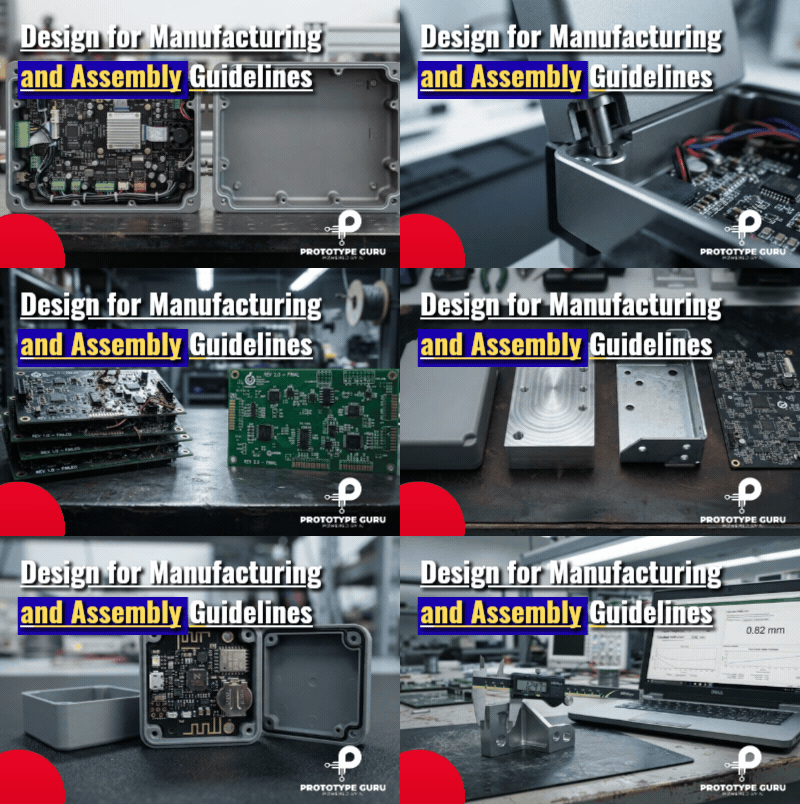
One important consideration at the design stage is DFM, which stands for Design for Manufacturability. A DFM review checks whether your design can actually be built reliably on real assembly equipment. Many experienced PCB assembly manufacturers will do a DFM check before production starts and flag issues before they cost you money.
For startups comparing custom-built PCBs against off-the-shelf modules, this comparison of custom PCB design vs off-the-shelf solutions is worth reading before committing to either approach.
Stage 2: PCB Fabrication (Board Manufacturing)
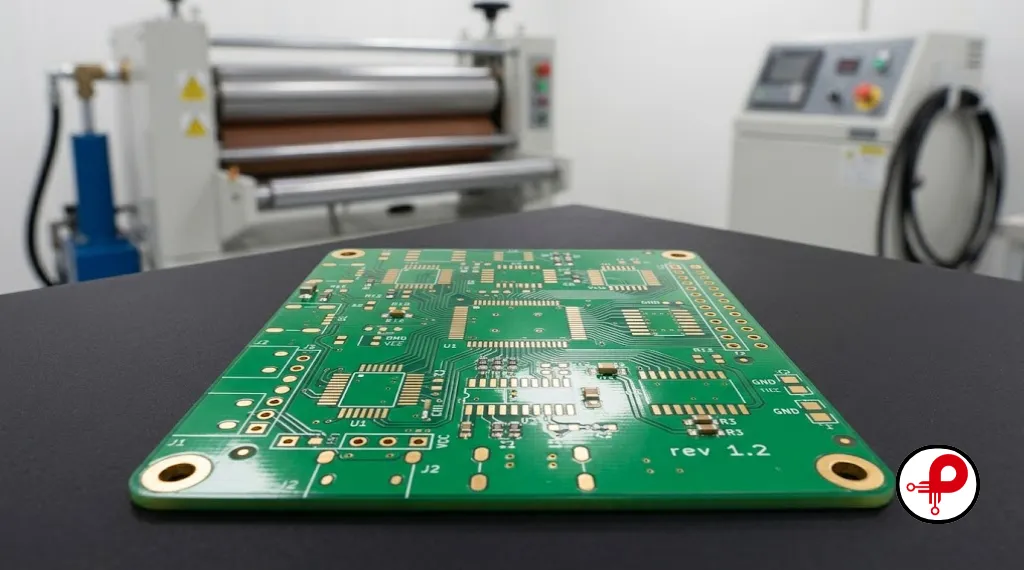
Once the design is finalized and the Gerber files are verified, PCB fabrication begins. This is where the physical board is created, and it involves multiple precision steps that most people outside the industry never see.
1. Inner Layer Imaging
Copper is exposed onto a laminate using UV light through a photomask. Unwanted copper is then chemically etched away, leaving the design traces.
2. Lamination
Etched inner layers are stacked with prepreg and pressed together under heat and pressure to form a single, solid multilayer board core.
3. Drilling
Computer-controlled machines create through-holes and vias; laser drilling is utilized for high-density microvias.
4. Copper Plating
Drilled holes are plated with copper via electroplating to create essential electrical connections (vias) between board layers.
5. Outer Layer Imaging and Etching
The outer copper layers are imaged and etched using the same process as the inner layers to finalize all copper features.
6. Solder Mask Application
A protective, photoimageable solder mask is applied to cover copper traces, leaving only component pads exposed and preventing solder bridges.
7. Silkscreen Printing
Essential markings such as reference designators, logos, and polarity indicators are printed onto the board for assembly and maintenance.
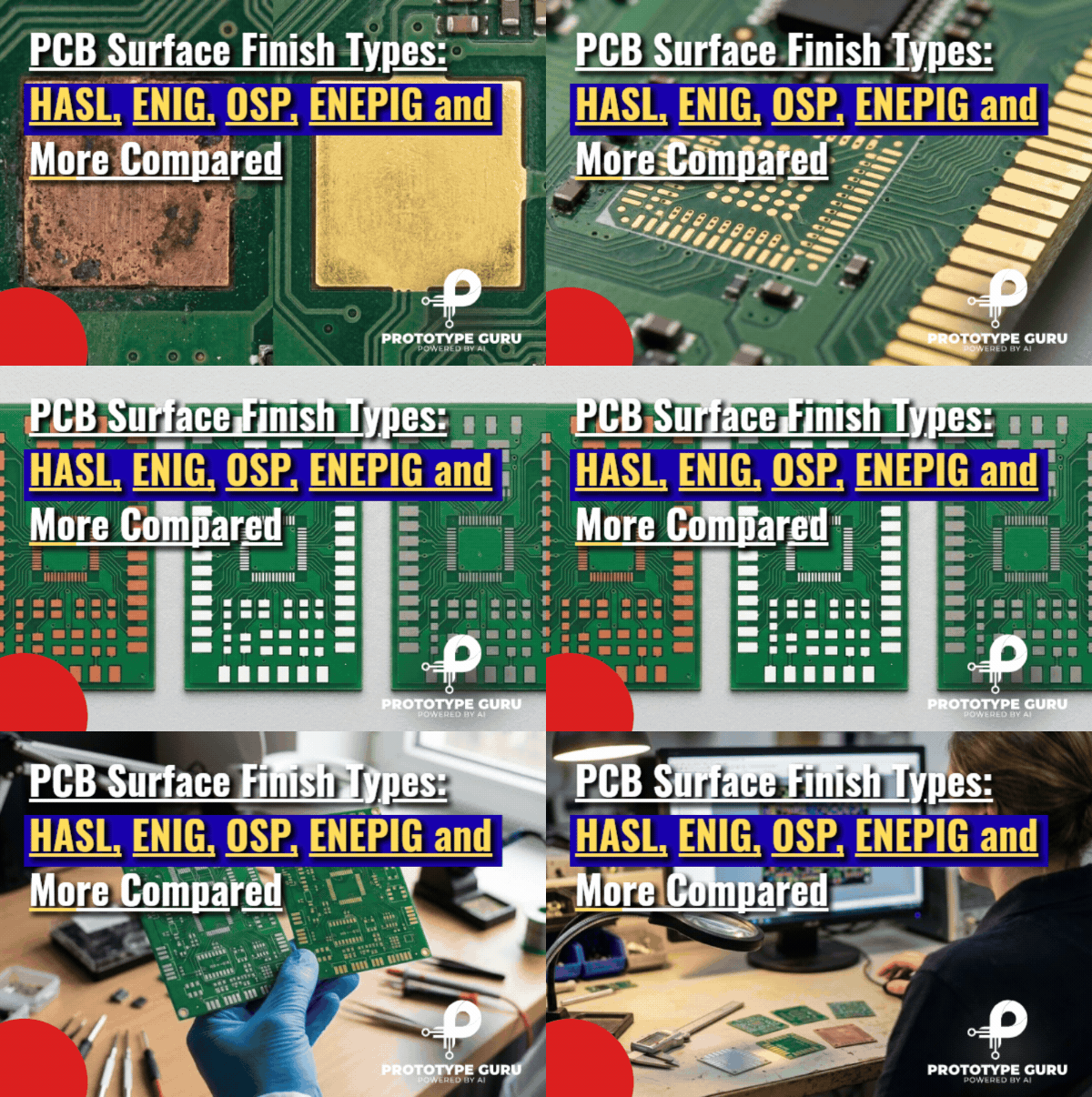
8. Surface Finish
Exposed pads receive a finish like HASL, ENIG, or OSP to prevent oxidation and ensure reliable solderability during assembly.
9. Electrical Testing and Final Inspection
Boards undergo flying probe or bed-of-nails testing to verify connectivity and ensure no shorts or open circuits exist before shipping.
For a deeper dive into what happens at the fabrication stage and how it connects to your design decisions, see our complete PCB manufacturing process guide.
Stage 3: Solder Paste Printing
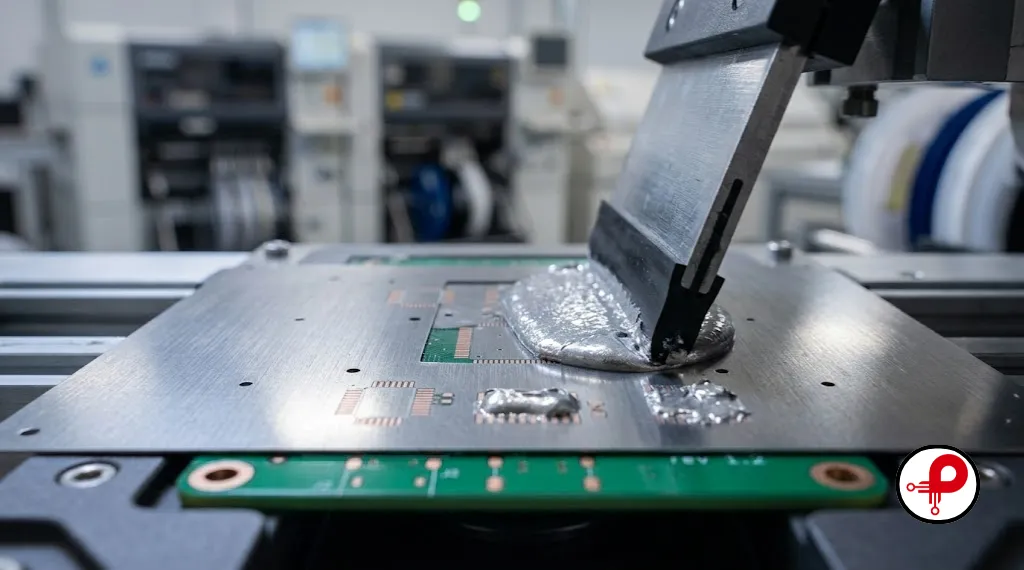
The very first step in PCB assembly is solder paste printing, and it is one of the most critical steps in the entire process. Get this wrong and you will see defects at every stage downstream.
Solder paste is a mixture of tiny solder alloy particles suspended in a flux medium. It is applied to the surface of the bare PCB through a stainless steel stencil that has precision-cut apertures corresponding exactly to the solder pads on your board.
A squeegee blade presses the paste through the stencil openings and onto the pads. The stencil thickness (typically 0.12 mm to 0.15 mm) and aperture size determine how much paste is deposited. Too little paste leads to dry joints. Too much paste leads to solder bridges.
High-volume SMT assembly lines use automated solder paste inspection (SPI) machines immediately after printing. These 3D optical systems measure the volume, height, and coverage of every solder paste deposit and flag any boards that fall outside acceptable tolerances before components are placed.
Stage 4: Component Placement Using SMT
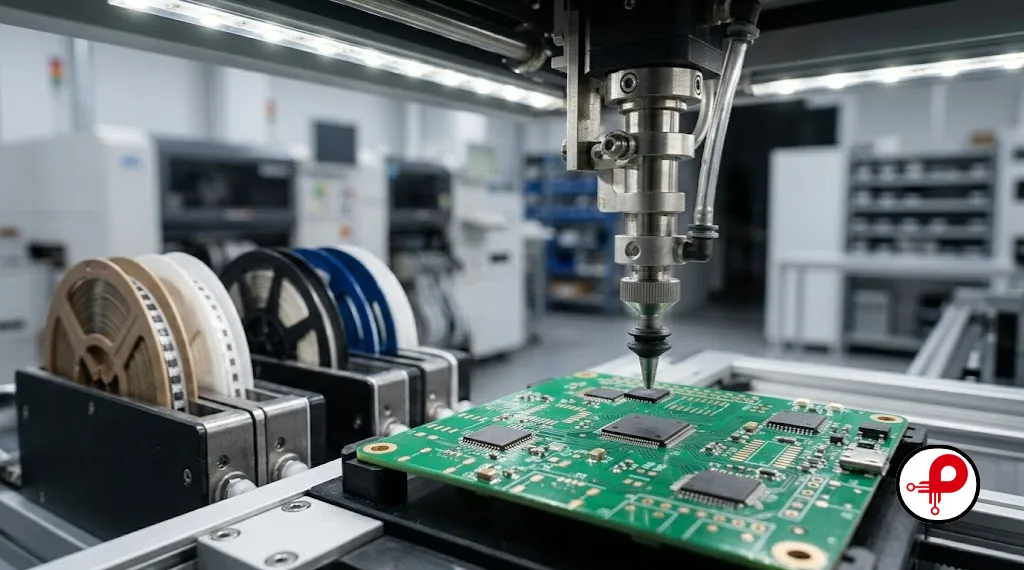
Surface mount technology (SMT) is the dominant method for assembling printed circuit boards in modern manufacturing. In SMT assembly, components are placed directly onto the surface of the board rather than being inserted through drilled holes.
After solder paste is printed, the board moves to pick and place machines. These are high-speed robotic systems that pick components from tape reels, trays, or tubes using vacuum nozzles and place them onto their designated pads with extraordinary precision. Modern SMT pick and place machines can place thousands of components per hour, with placement accuracies in the range of ±0.05 mm or better.
The pick and place file from your PCB design, which contains the X and Y coordinates and rotation angles of every component, is what programs these machines. This is why having clean, accurate design documentation is so important.
Components placed during this stage include resistors, capacitors, inductors, transistors, integrated circuits, connectors, LEDs, and more complex devices such as fine-pitch QFP packages and BGAs.
BGA assembly (Ball Grid Array) deserves special mention because BGA devices have solder balls arranged in a grid pattern on the underside of the package. You cannot see the solder joints with the naked eye once the component is placed. BGA assembly requires extremely precise paste printing, controlled placement, and a very carefully profiled reflow oven. X-ray inspection is typically required to verify BGA joints after soldering.
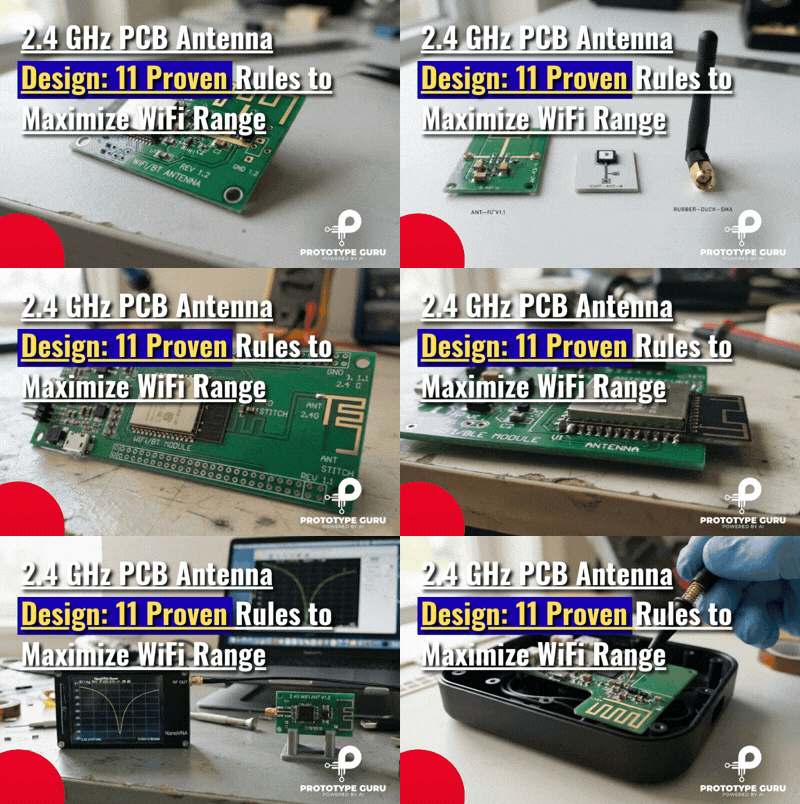
For engineers designing boards with wireless connectivity, understanding how component placement interacts with RF performance is particularly important. Our ESP32 PCB design guide covers placement strategies for RF-sensitive designs in practical detail.
Stage 5: Reflow Soldering
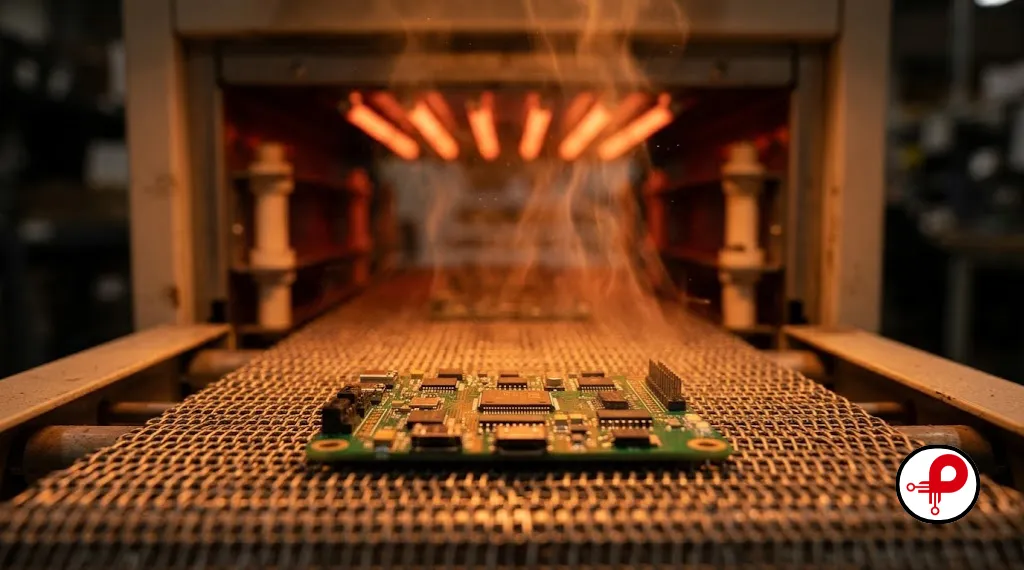
Once all SMT components are placed, the board travels through a reflow oven. This is where the solder paste is melted and then cooled to form permanent, reliable solder joints between the component leads and the PCB pads.
A reflow oven is a long convection oven with multiple independently controlled temperature zones. The thermal profile of the oven is programmed to match the requirements of the solder paste alloy and the heat sensitivity of the components being processed. A typical lead-free reflow profile follows four stages:
The board temperature rises gradually to drive off solvents from the flux in the paste and prevent thermal shock to components and the board substrate.
Temperature is held relatively steady, allowing the board to reach a uniform temperature. This activates the flux, which removes oxidation from the pad surfaces to prepare them for solder wetting.
Temperature rises above the solder alloy’s liquidus point (approx. 217–220°C for SAC305). The solder melts, wets the pads and leads, and forms the joint.
The board cools rapidly in a controlled way. This creates a finer grain solder microstructure, resulting in better mechanical and electrical reliability.
Reflow soldering is used for virtually all surface-mounted components in modern circuit board assembly. The reflow process also handles double-sided boards, where components on one side are reflowed first (typically using a reduced paste volume and glue dots to hold components during the second pass) before the second side is processed.
For a comprehensive look at surface mount technology and reflow process best practices, our SMT soldering guide covers all the variables that affect joint quality.
Stage 6: Through Hole Assembly and Wave Soldering
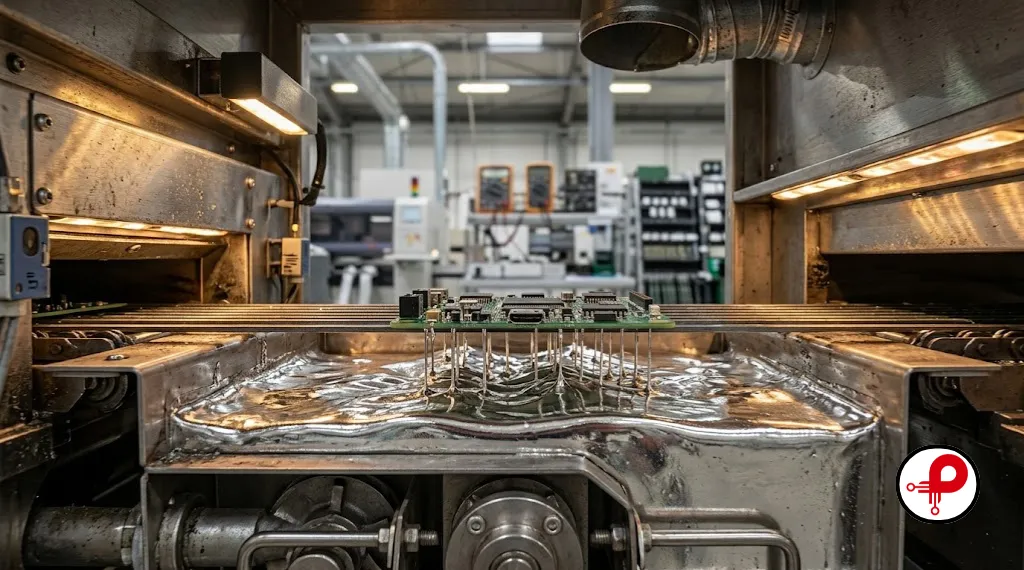
Not every component can be placed by an SMT machine. Large connectors, through-hole capacitors, transformers, heat sinks, and some other components are designed with leads that pass through drilled holes in the PCB. These require through hole assembly.
Through hole components offer excellent mechanical strength because the component lead passes completely through the board and is soldered on both sides. This makes them preferred for high-stress applications such as connectors that will be repeatedly mated and unmated, or components subject to significant vibration.
There are two common methods for soldering through hole components:
Wave Soldering: The assembled board (with through hole components inserted) is passed over a standing wave of molten solder. The solder wave wets the component leads and pad barrels through capillary action, forming joints simultaneously across the entire bottom side of the board. Wave soldering is efficient for high volume PCB production and assembly of boards with large numbers of through hole components.
Selective Soldering: For boards that mix SMT and through-hole components (mixed technology assemblies), selective soldering uses a small controlled solder jet or mini-wave to solder only specific through-hole areas without exposing heat-sensitive surface mount components to the full wave. This gives precise control and is increasingly common as SMT has grown dominant.
Hand Soldering: For prototypes, rework, or small quantities, skilled technicians can hand solder through hole components. This is slower but gives flexibility that machines cannot always match, particularly for prototype PCB fabrication and assembly runs.
Stage 7: PCB Quality Control, AOI, and Testing
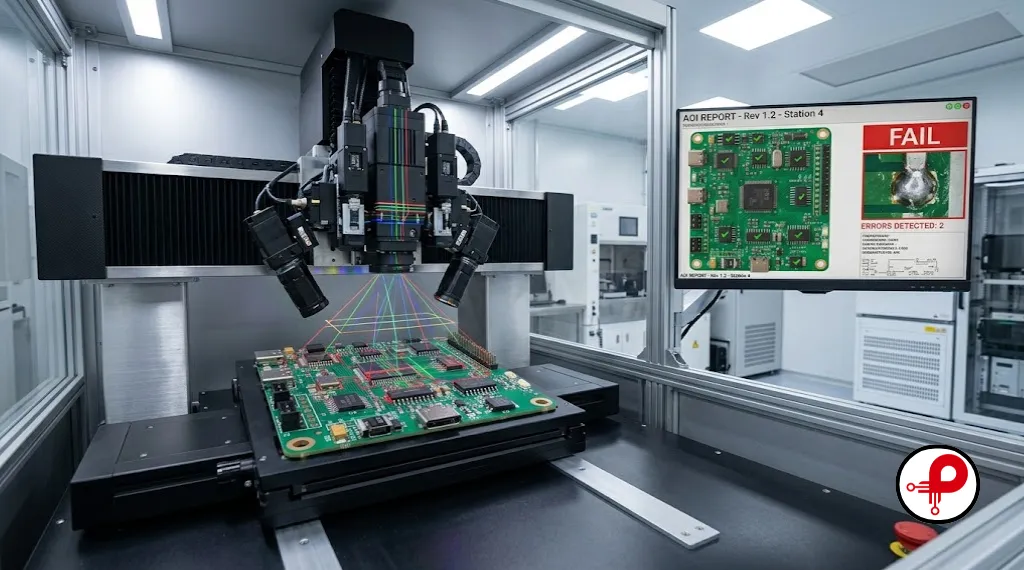
No PCB assembly process is complete without rigorous quality control. The role of AOI (Automated Optical Inspection) in PCB manufacturing and assembly is to catch visual defects that are invisible to the naked eye at production speeds.
Automated Optical Inspection (AOI) uses high-resolution cameras and sophisticated image processing algorithms to scan the assembled board and compare it against a golden reference image derived from your design data. AOI can detect missing components, wrong components, solder bridges, lifted leads, insufficient solder, polarity errors, and misaligned components. It operates at high speed and can inspect boards after both solder paste printing (SPI) and after reflow soldering. To understand how AOI works in detail, see our guide on automated optical inspection working principles.
X-Ray Inspection: For BGA packages and other hidden solder joints, X-ray inspection is the only reliable way to verify joint quality. 2D and 3D X-ray systems give cross-sectional views of solder connections underneath BGA packages, revealing voids, bridges, and incomplete wetting.
In-Circuit Testing (ICT): ICT uses a bed-of-nails fixture or flying probe system to make electrical contact with test points on the assembled board and verify component values, solder joint integrity, and basic circuit function. ICT is particularly effective for high volume production runs where defect rates need to be measured at a statistical level.
Functional Testing: This is the final validation stage where the assembled PCB is powered up and tested against its actual performance specification. Functional tests verify that the firmware runs correctly, that all interfaces work, that power consumption is within spec, and that the board does its intended job. For products entering production, functional test coverage rates are a key quality metric.
Burn-In Testing: Some industries, particularly military and medical electronics manufacturing services, require boards to be operated continuously under elevated temperature or voltage stress to screen out early-life failures before the product ships.
Turnkey PCB Assembly vs Partial Assembly Services
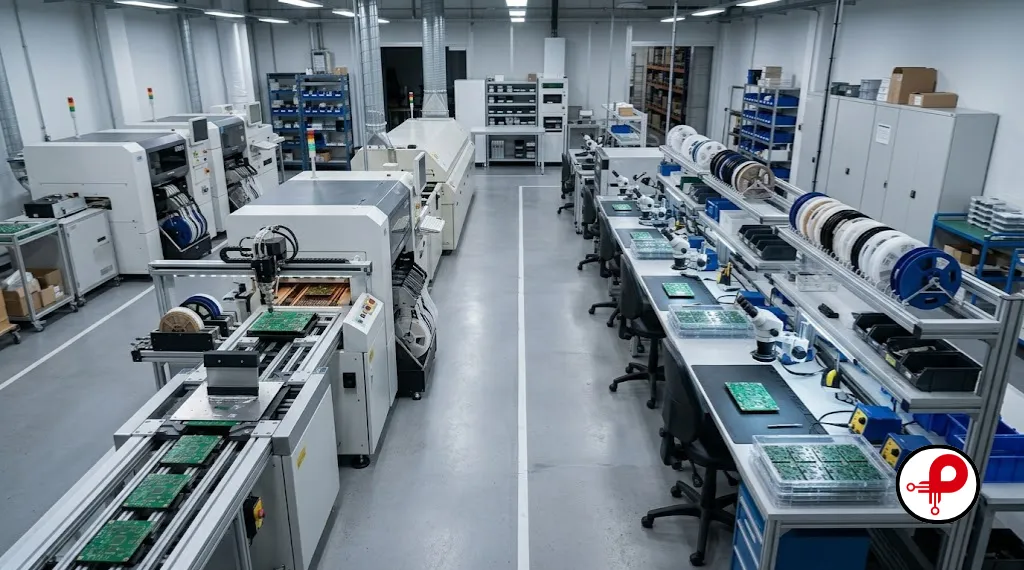
When selecting a PCB assembly manufacturer, one of the first choices you will face is between turnkey and partial assembly service models.
| Feature | Turnkey PCB Assembly | Partial (Consignment) Assembly |
|---|---|---|
| Component Sourcing | Manufacturer sources all parts | Customer supplies all or some components |
| Convenience | High | Lower (you manage procurement) |
| Cost (per unit) | Can be higher for small runs | Can be lower if you have components |
| Lead Time | Usually faster overall | Depends on your sourcing speed |
| Quality Control | Manufacturer is fully accountable | Shared responsibility |
| Best For | Startups, prototypes, new products | Companies with existing supply chains |
A true turnkey PCB assembly service handles everything from procuring components based on your BOM, through fabrication, assembly, testing, and shipping. You provide design files and receive finished boards. This model is ideal for hardware startups and companies doing PCB prototyping because it reduces the coordination burden dramatically.
Partial assembly (also called consignment assembly) is common for established manufacturers who already have component inventory or prefer to control their own supply chain.
How to Choose a PCB Assembly Manufacturer
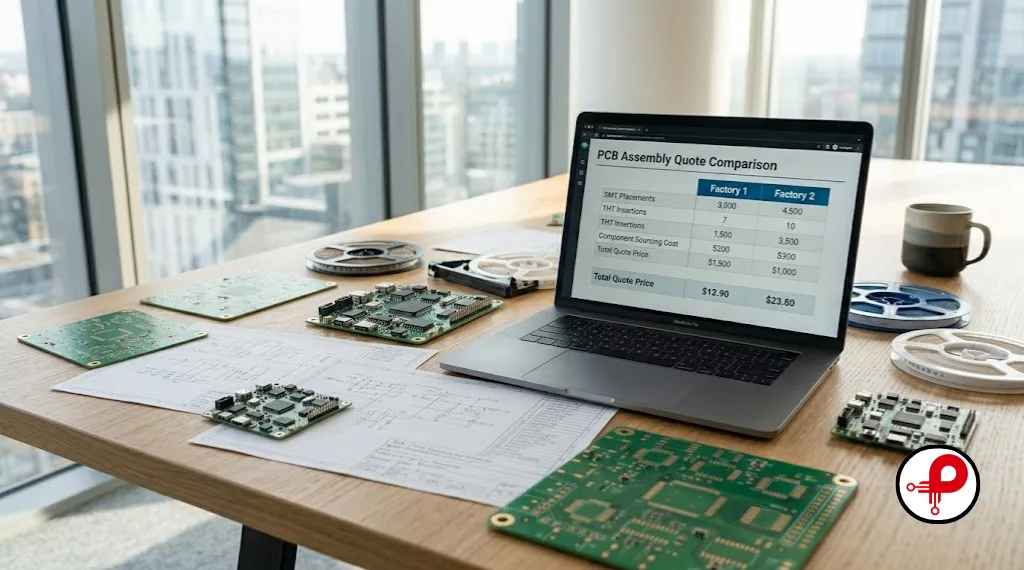
Choosing the right PCB assembly manufacturer is one of the most consequential decisions in your hardware product journey. Here are the key factors experienced engineers evaluate:
Can the manufacturer handle your design’s complexity? Check minimum trace width, smallest component pitch, layer count, and X-ray capabilities.
Look for ISO 9001, IPC-A-610, and industry-specific standards like ISO 13485 (medical) or AS9100 (aerospace).
Ensure sourcing from authorized distributors to mitigate counterfeit risks; demand component traceability documentation.
A proactive Design for Manufacturability review before production saves significant costs and ensures reliability.
Verify they can handle your prototype run today and scale to high-volume production tomorrow to avoid supply chain risks.
Reliable partners provide proactive issue reporting and dedicated engineering support, which are critical indicators of partnership quality.
For startups navigating the full hardware development journey, our hardware development for startups guide covers how to structure your vendor relationships and when to bring manufacturing partners into your design process.
Common PCB Assembly Defects and How to Reduce Them
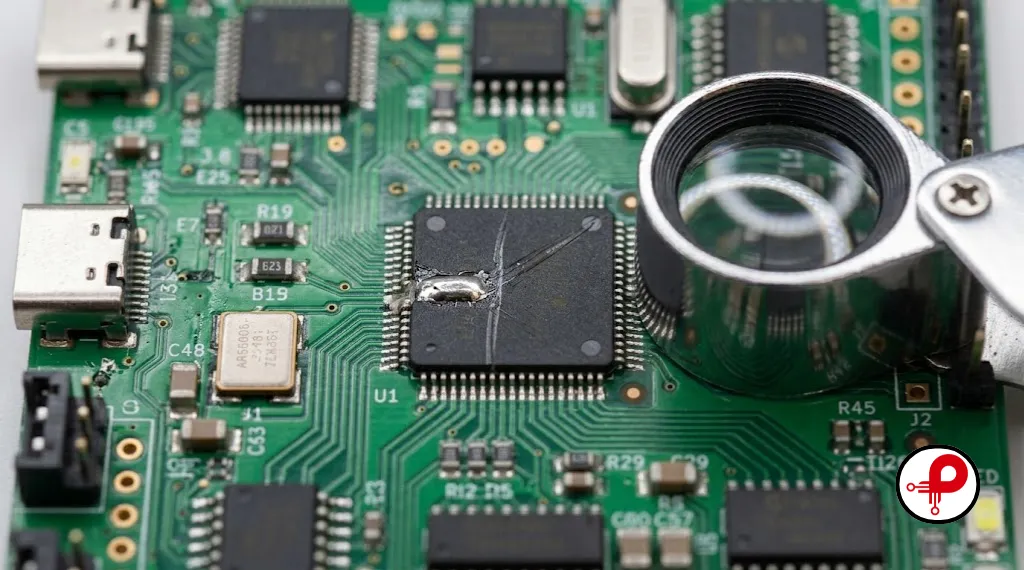
Even in a well-run assembly operation, defects can occur. Understanding the root causes helps you design better boards and specify better process controls.
Solder Bridges
Occur when solder flows between adjacent pads. Typically caused by excess paste or stencil errors. Reducing paste volume and increasing inspection rigor during printing prevents these bridges.
Tombstoning
A two-terminal component stands on one end during reflow due to unequal heating forces. Symmetric pad design and avoiding placement of small components near large thermal masses effectively mitigate this.
Cold Solder Joints
Dull, grainy joints lacking proper wetting, often caused by insufficient reflow temperatures or oxidized leads. Proper paste storage, regular stencil cleaning, and optimized reflow profiles are critical remedies.
Component Misalignment
Placement errors often resulting from incorrect centroid data, worn nozzles, or machine vibration. Regular machine calibration and SPI (Solder Paste Inspection) catch these issues before the reflow process.
BGA Voids
Gas pockets inside BGA solder balls that compromise reliability. Prevented by proper component storage, controlled baking to remove moisture before reflow, and optimizing thermal profiles to manage flux outgassing.
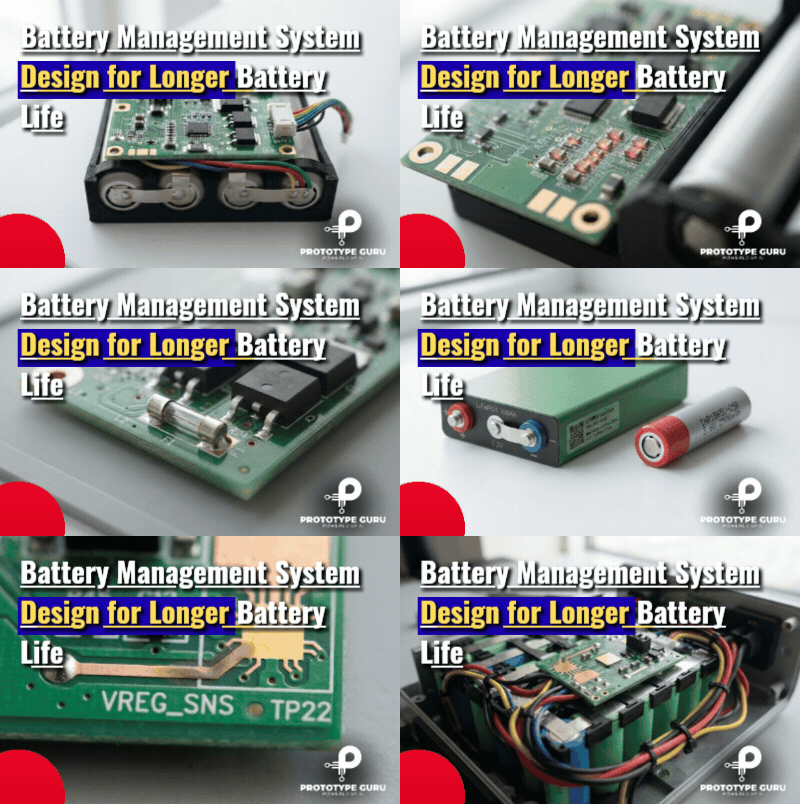
To further reduce EMI-related failures in assembled boards, which often get worse after assembly due to high-frequency noise from switching regulators, see our guide on high frequency switching noise issues and our guide on how to minimize EMI in 4-layer PCB layout.
Quality Standards That Apply to PCB Assembly
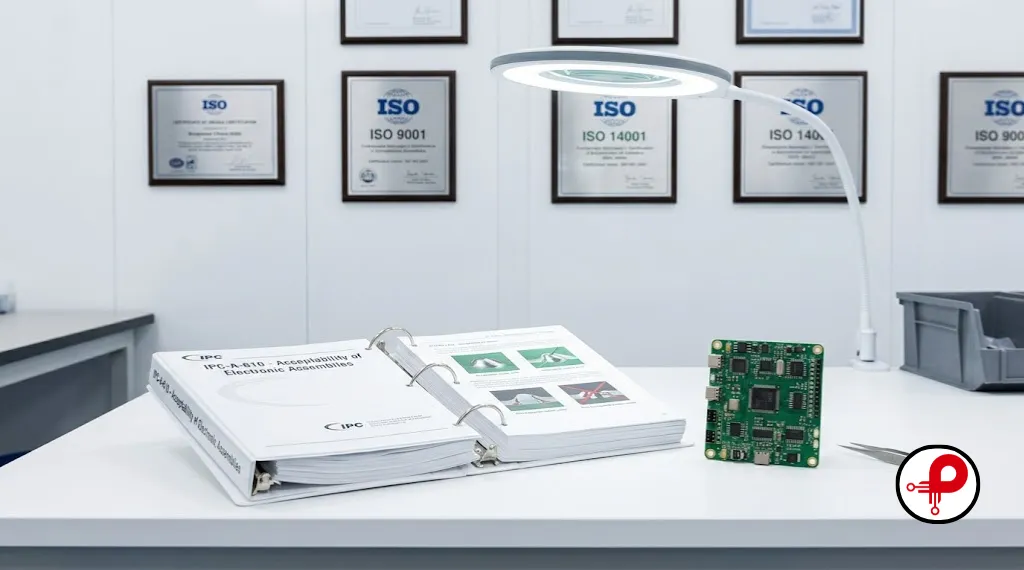
PCB assembly quality is governed by several internationally recognized standards that define acceptable workmanship, materials, and test methods. Knowing which standards apply to your industry segment helps you specify the right quality level with your manufacturer.
IPC-A-610: This is the most widely used standard for acceptability of electronic assemblies. It defines three classes of acceptance criteria based on end use. Class 1 is general electronics, Class 2 covers dedicated service electronics (most commercial products), and Class 3 applies to high-reliability electronics such as military, aerospace, and medical devices.
IPC-J-STD-001: The Requirements for Soldering Electrical and Electronic Assemblies standard. This defines the materials, methods, and criteria for producing quality solder connections.
ISO 9001: The general quality management system standard. Most serious PCB assembly manufacturers maintain ISO 9001 certification as a baseline demonstration of process control.
ISO 13485: Required for manufacturers involved in medical device production. Adds medical-specific quality management requirements on top of ISO 9001.
IATF 16949: Automotive quality management standard, required for assemblies destined for automotive applications.
RoHS and REACH Compliance: European regulations restricting hazardous substances in electronic equipment. Most modern commercial PCB board assembly manufacturing uses lead-free solder alloys and RoHS-compliant components to meet these requirements.
When your product involves EMC compliance and regulatory testing, understanding how the assembly process affects electromagnetic emissions is important. Our guide to electromagnetic compatibility testing and EMI shielding materials overview are useful references once your boards are assembled and moving toward certification.
For a broader view of where PCB assembly fits into the complete product development cycle for consumer electronics, our consumer electronics product design guide is worth reading alongside this article.
External Resources for Further Learning
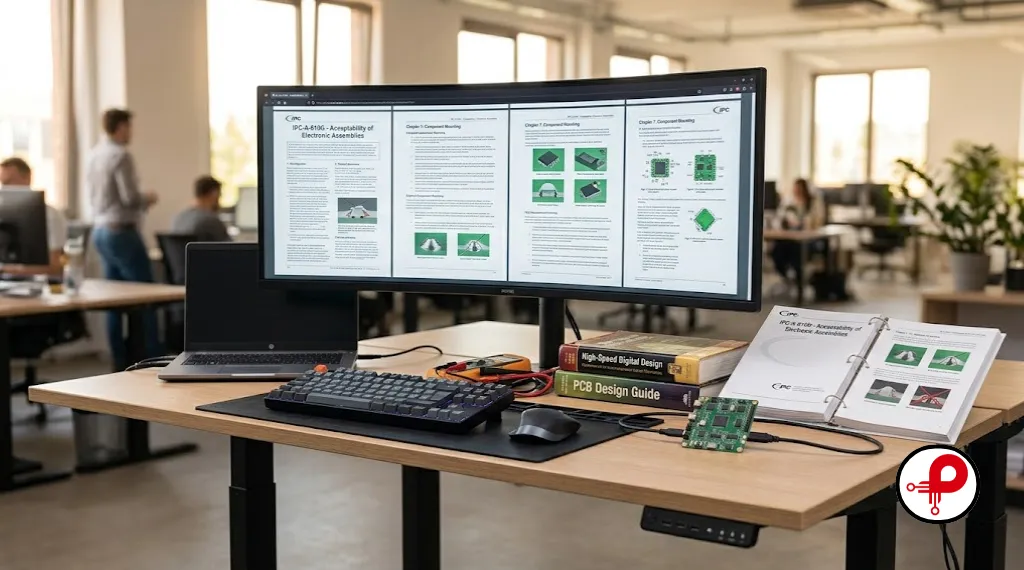
For engineers and product teams who want to go deeper, these external references provide authoritative information directly from the industry bodies that govern PCB manufacturing and assembly standards:
The IPC (Association Connecting Electronics Industries) publishes all the core workmanship and process standards referenced in this article. You can explore their standards library at ipc.org.
The IPC-A-610 Acceptability of Electronic Assemblies standard is available through the IPC store and is the definitive reference for assembly quality criteria.
JEDEC (jedec.org) publishes component handling, moisture sensitivity, and packaging standards that affect how components are managed before and during PCB assembly.
The NASA Workmanship Standards (available at nepp.nasa.gov) provide an extremely detailed reference for high-reliability assembly and inspection, even for commercial engineers who want to understand best practices.
FAQ: PCB Manufacturing and Assembly
1. What is the PCB assembly process step by step?
↑2. What is SMT in PCB assembly?
↓3. What is turnkey PCB assembly?
↓4. How does wave soldering work?
↓5. What quality standards apply to PCB assembly?
↓6. How do I reduce PCB assembly defects?
↓7. What is the difference between PCB fabrication and assembly?
↓Final Thoughts
Understanding the full PCB manufacturing and assembly process gives you a real advantage as an engineer, product manager, or startup founder. Every stage, from the first line of PCB design and layout to the final functional test on the production floor, is interconnected. A decision made at the design stage influences what happens in fabrication. A fabrication choice affects how the assembly process runs. An assembly process choice determines what defects you see and what quality standards you can meet.
The most successful hardware teams treat their PCB assembly manufacturer as a technical partner from early in the design phase rather than a vendor you hand files to at the end. The closer that collaboration happens, the fewer surprises you encounter in production.
If you are building a new product and want to understand how PCB manufacturing and assembly fits into your broader product development roadmap, explore our electronics prototyping and product design in USA guide to understand the full journey from concept to production-ready hardware.
Written by the Prototype Guru engineering team. With over 8 years of hands-on experience in PCB design, fabrication, and electronics manufacturing services, we help startups and product companies bring hardware to life.