



What Is an Electronic Product Development Company?
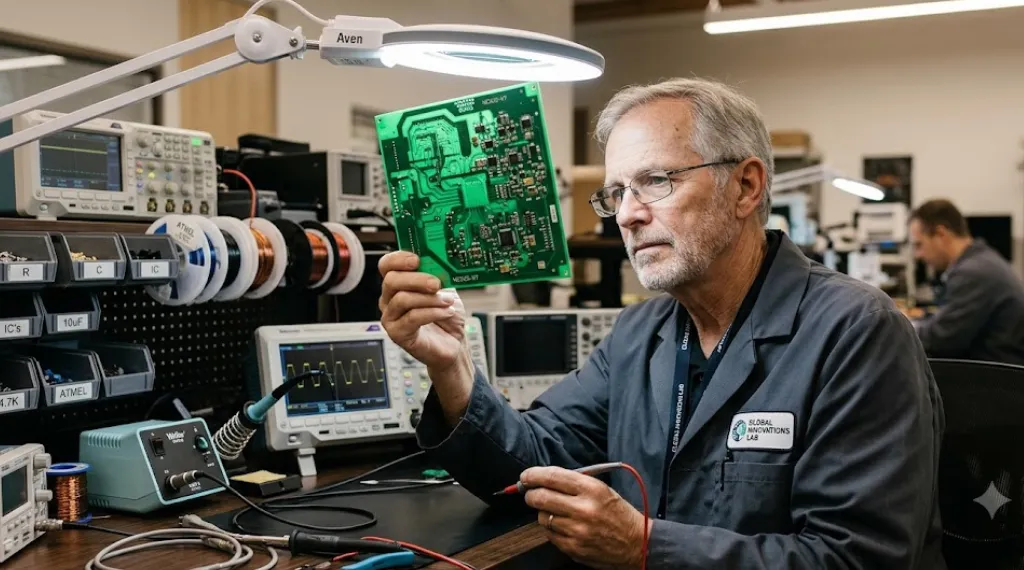
An electronic product development company is a specialized engineering firm that takes your product idea, no matter how rough or early stage it might be, and transforms it into a fully functional, market ready electronic device. These companies handle everything from schematic design and PCB layout to firmware development, prototyping, testing, and transferring designs to manufacturing partners.
Think of them as a full stack engineering team you hire on demand. Instead of building an in house team of hardware engineers, embedded developers, mechanical designers, and compliance specialists, you bring in an electronic product development company that already has all of that expertise under one roof.
According to Statista, the global electronics manufacturing services market is projected to surpass $1.1 trillion by 2030, driven by explosive demand for IoT devices, smart home products, and connected healthcare gadgets. This growth means there are more providers than ever competing for your business, which makes choosing the right electronic product development company both more important and more difficult than it has ever been.
Whether you are a startup trying to launch your first hardware product or an established business adding a connected device to your existing lineup, finding the right electronic product development partner is arguably the single most important decision you will make throughout the entire process. This guide will walk you through exactly how to do that.
Why Choosing the Right Partner Changes Everything

Here is something most people do not realize until they are already deep into a project: the electronic product development company you choose shapes your product outcome more than any other single factor. More than your idea. More than your budget. More than your timeline.
Poor planning and weak project management can delay product launches by months and significantly increase total project costs.
Incomplete source files make future product updates, manufacturing transfers, and scaling operations much more difficult and costly.
Undocumented, proprietary firmware creates long-term dependency on the original developer for essential maintenance and future updates.
Engineering oversights often cause regulatory failures that necessitate expensive redesigns and repeated, time-consuming testing cycles.
Inexperienced teams frequently overlook critical design constraints, leading to massive engineering rework and unexpected budget inflation.
Ambiguous ownership agreements can trigger severe legal conflicts regarding source code, design rights, and overall product intellectual property.
These are not rare scenarios. They happen constantly, especially to first time hardware founders who prioritized price over capability. According to Harvard Business Review, execution failures rather than bad ideas are the primary cause of startup failure. Choosing the wrong electronic product development partner is one of the clearest execution failures you can make, and it is entirely avoidable with the right evaluation process.
The Full Electronic Product Development Process, Stage by Stage
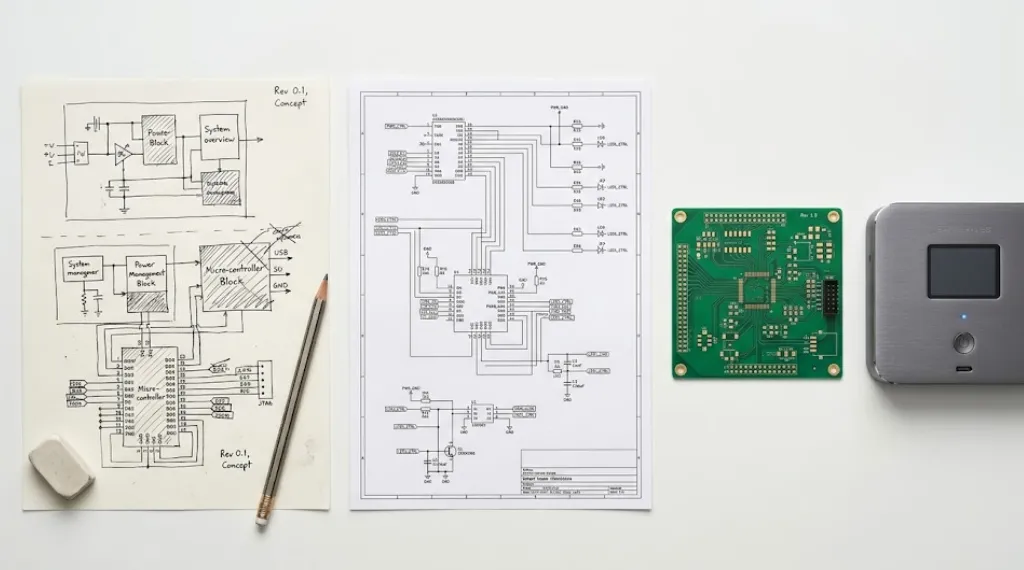
Before evaluating any electronic product development company, you need to understand what end to end development actually looks like. This knowledge helps you ask smarter questions, catch gaps in a proposed scope, and spot when something important is being skipped or underpriced.
Stage 1: Concept Definition and Requirements Analysis
Every successful product starts with a clear problem statement and a measurable set of requirements. At this stage, the electronic product development company should help you define what the product does, who it is for, what performance targets it needs to hit, and what regulatory certifications it will require in your target markets.
This is not a formality. A poorly defined specification causes cascading problems in every stage that follows. Good companies push back here. They ask uncomfortable questions because they know a vague spec leads to scope creep, budget overruns, and late stage redesigns that cost far more than the initial savings gained from rushing this phase.
Stage 2: System Architecture and Component Selection
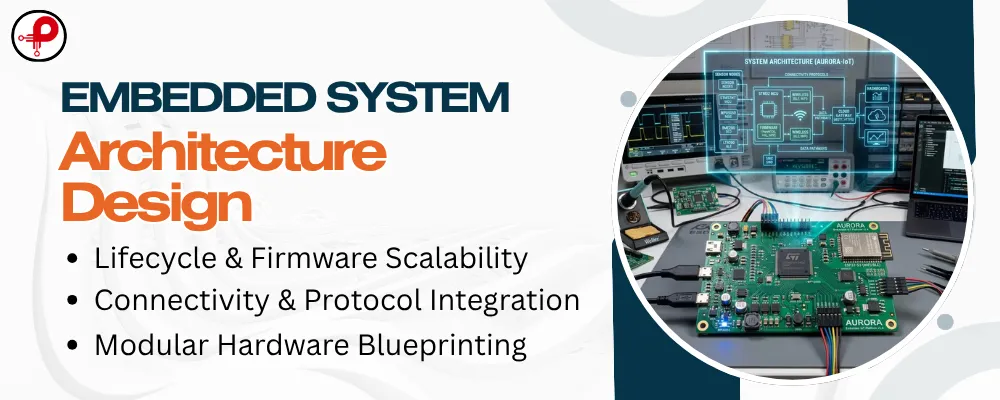
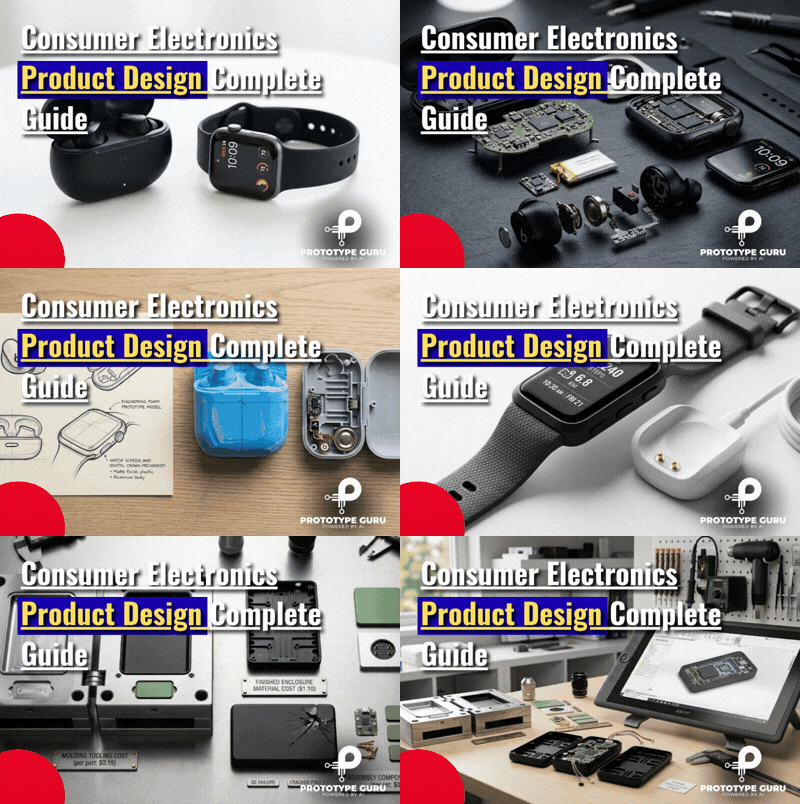
Once requirements are locked, the engineering team designs the system architecture. This includes selecting the right microcontrollers, communication modules, sensors, and power management ICs. They also build the initial Bill of Materials and estimate production costs at different volume levels.
Component selection matters enormously at this stage. Choosing a discontinued or long lead time component early on can delay your product launch by months. Experienced engineers within any reputable electronic product development company know how to select components that are available, affordable at scale, and backed by strong manufacturer support.
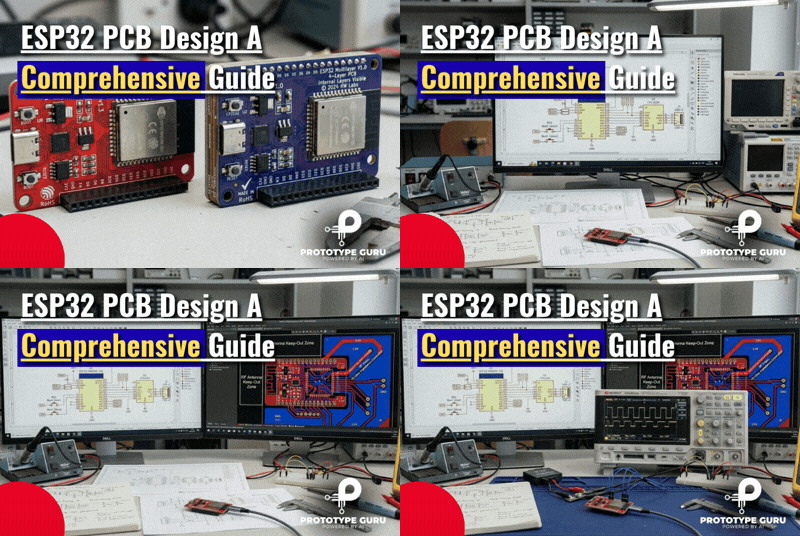
For IoT or wireless products, this is also where the choice of a platform like the ESP32 can make a significant difference. Our ESP32 PCB Design Guide covers how it offers built in Wi-Fi and Bluetooth, strong community support, and a wide ecosystem of libraries that reduce firmware development time considerably. Any experienced electronic product development company working on connected devices should be fluent in this platform.
Stage 3: Schematic Design and PCB Layout
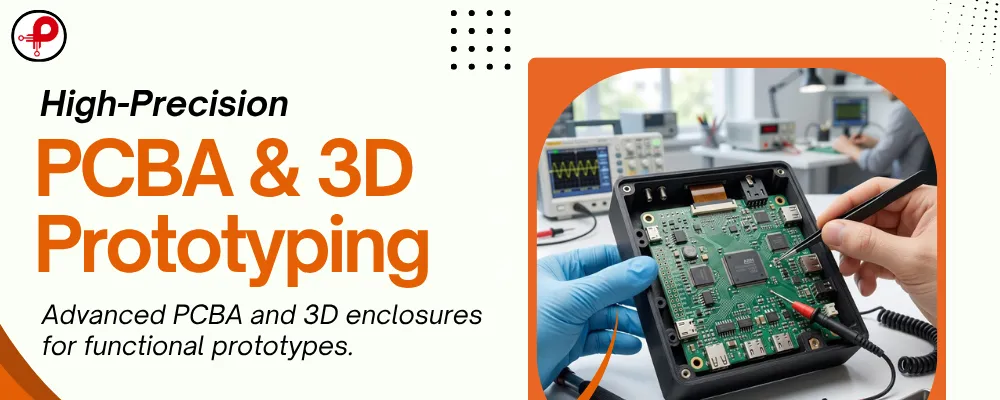
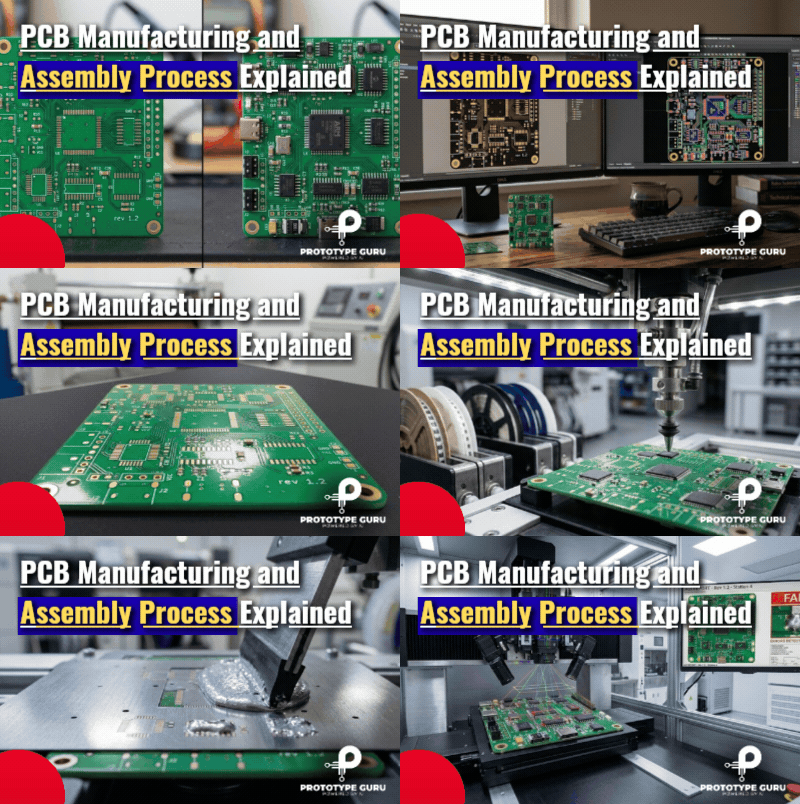
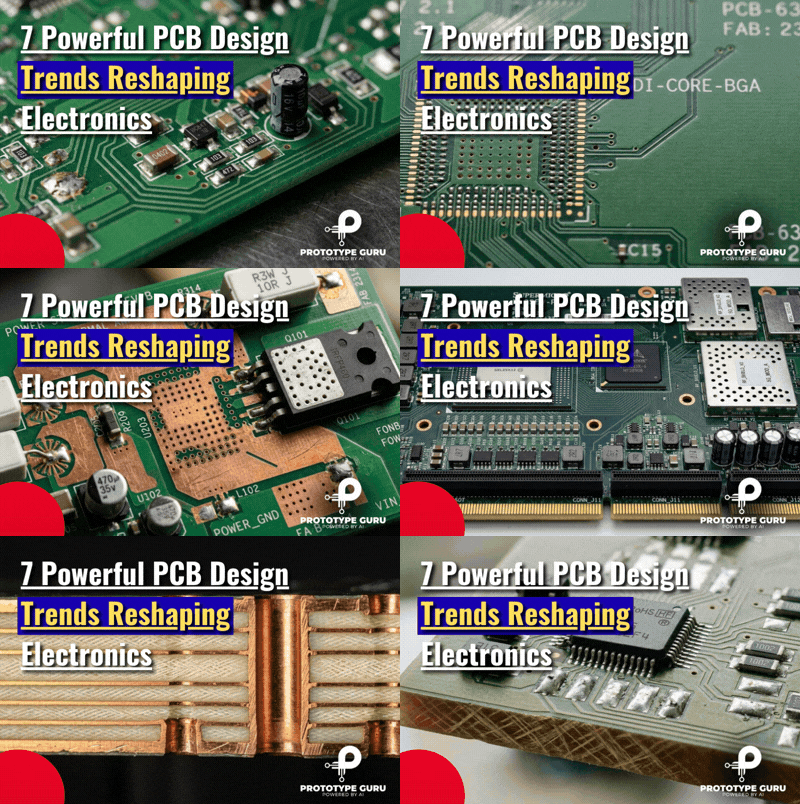
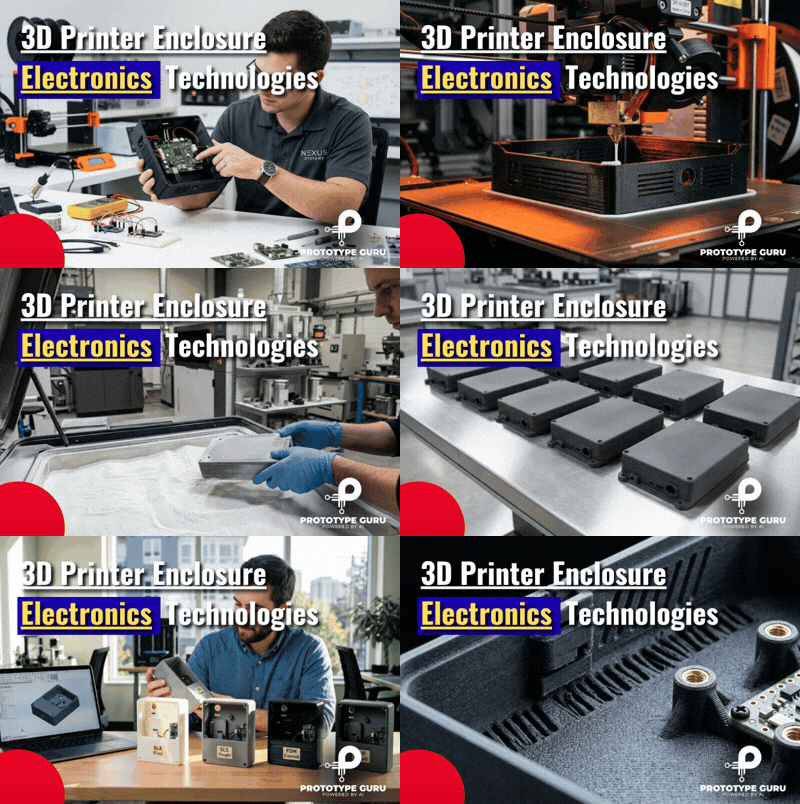
This is where the electronics take shape, first on paper, then on a physical board. The schematic captures all the electrical connections between components. The PCB layout then translates that schematic into a physical board design, accounting for signal integrity, thermal management, component placement, and manufacturing constraints.
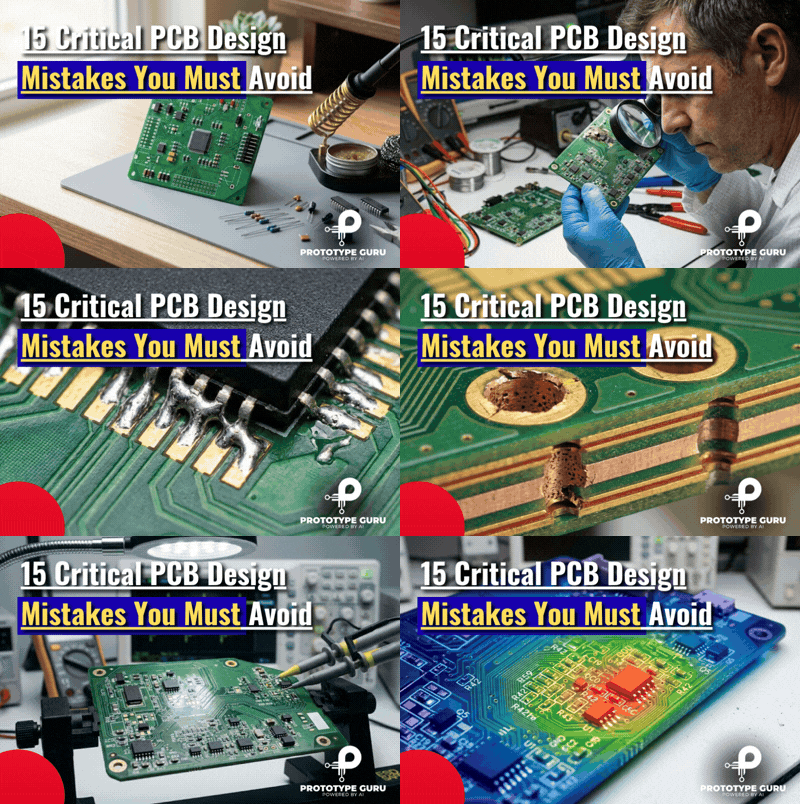
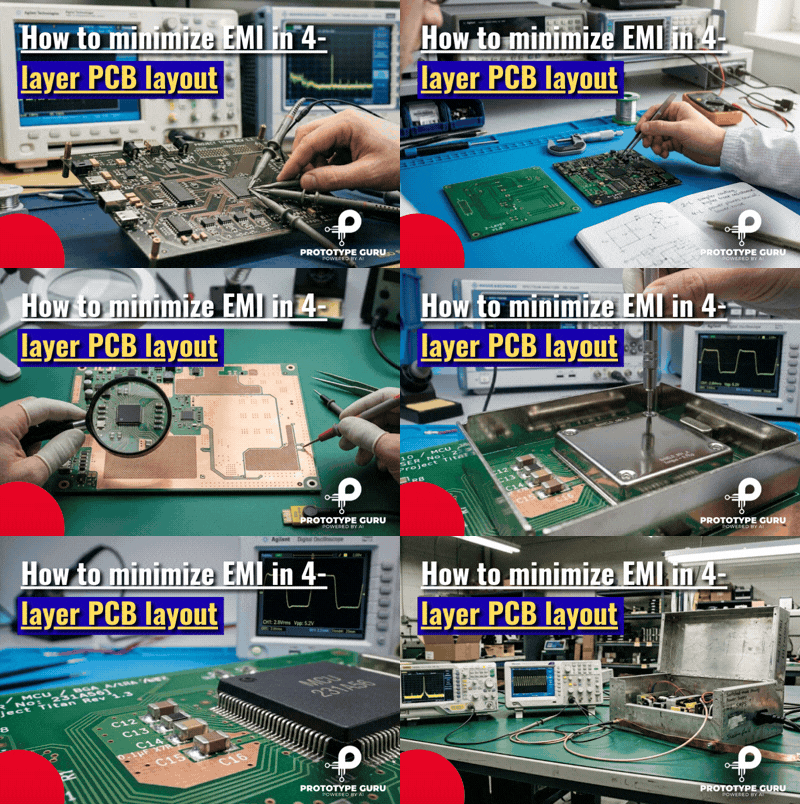
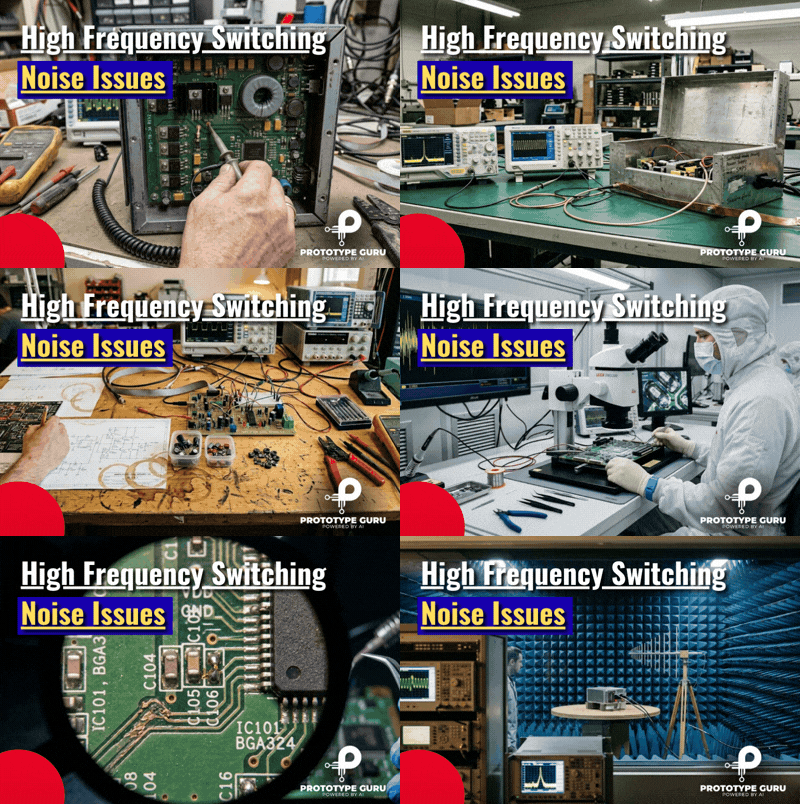
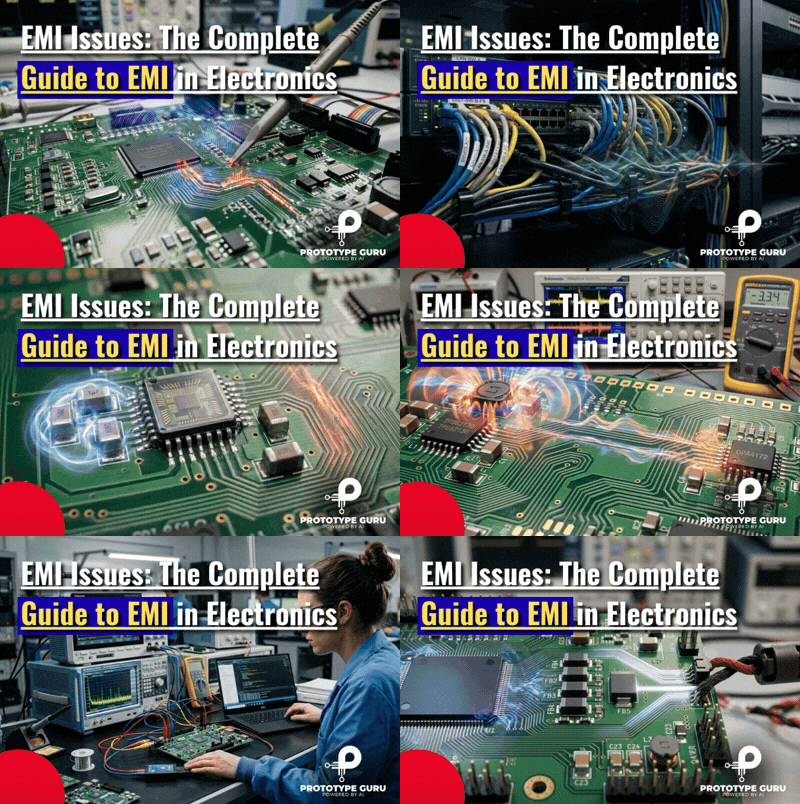
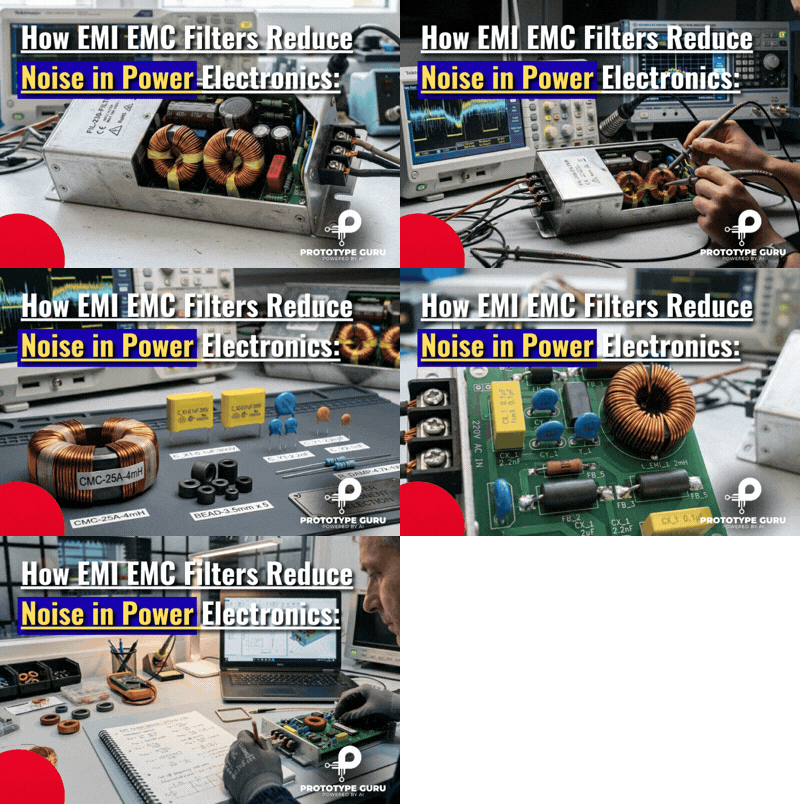
Mistakes at this stage are expensive because they do not show up until prototypes are built. A poorly routed PCB can cause EMI issues that fail compliance testing, requiring a full board redesign. It can also generate high frequency switching noise that corrupts sensor readings or causes unpredictable firmware behavior. These are exactly the kinds of issues that an experienced senior PCB engineer inside a qualified electronic product development company catches in design review, before they become expensive physical boards.
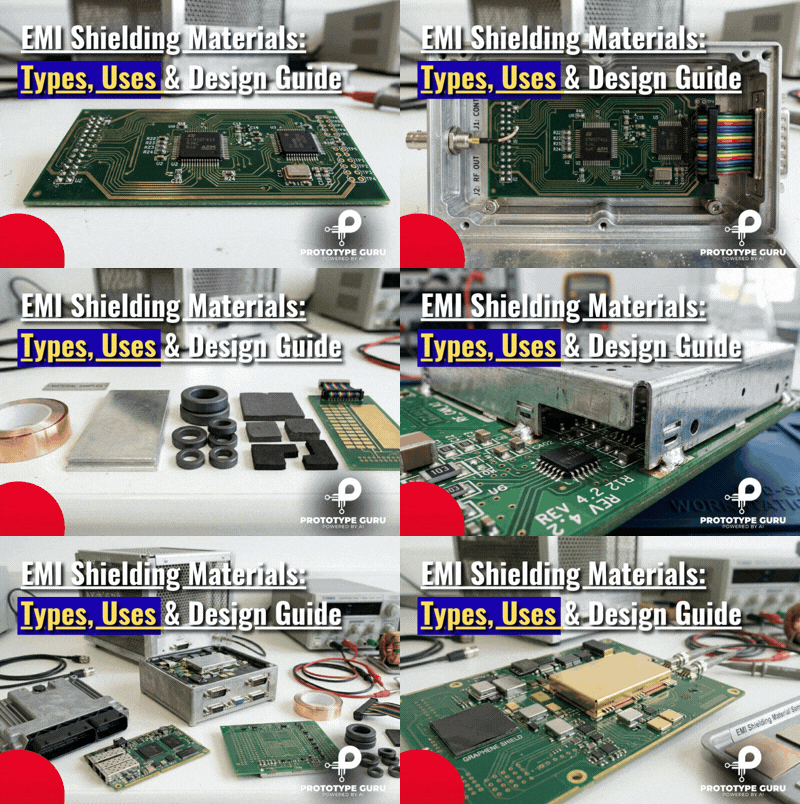
When working with power electronics in particular, a company with solid knowledge of EMI shielding materials and techniques is essential. Poor shielding decisions at the layout stage can completely undermine compliance testing later, adding months and thousands of dollars to the project.
Stage 4: Firmware and Embedded Software Development
For any product with a microcontroller, which is virtually all modern electronic devices, firmware development is a critical workstream that runs in parallel to hardware development. This includes writing low level hardware drivers, communication protocol stacks, power management routines, and application layer logic.
Good firmware is clean, well commented, and maintainable by engineers other than the ones who wrote it. Bad firmware is a black box that only the original developer can understand or modify. Always confirm upfront with your electronic product development company that you will receive full, commented source code with all dependencies documented and all third party library licenses clearly identified.
Stage 5: Prototyping
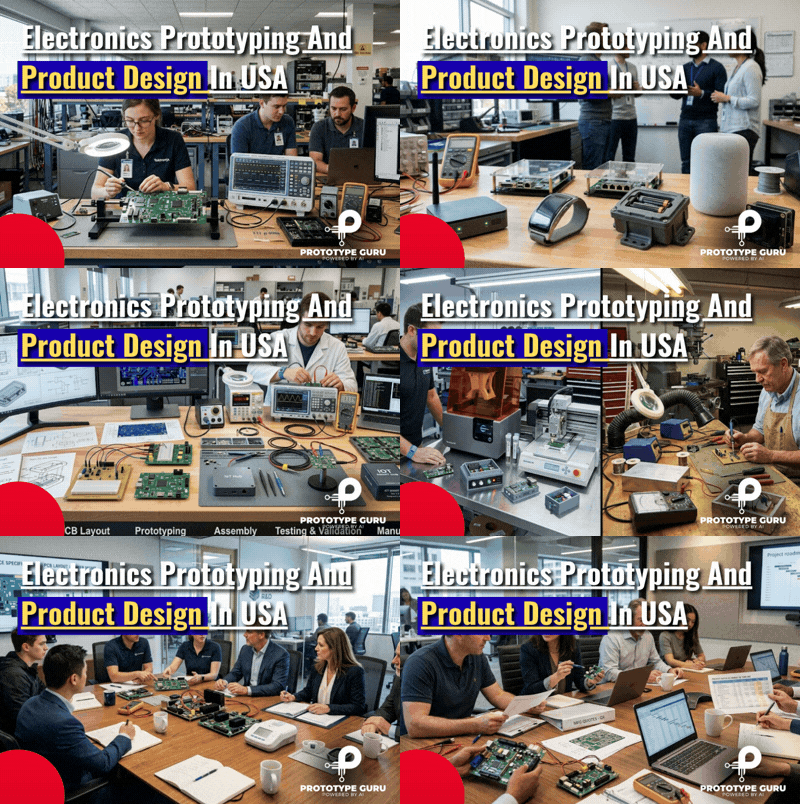
Prototyping is where the design becomes a physical object for the first time. The first prototype, often called EVT or Engineering Validation Test, verifies that the hardware actually performs what the schematics said it would. It is iterative by nature, and completely normal to go through two to three prototype revisions before moving toward production.
Good companies are transparent about this cycle. They set realistic expectations around prototype timelines and never promise a production ready product from the first build. If an electronic product development company implies your product will be right on the first prototype, treat that as a red flag. Either they are being dishonest, or they have not thought through the complexity of your product.
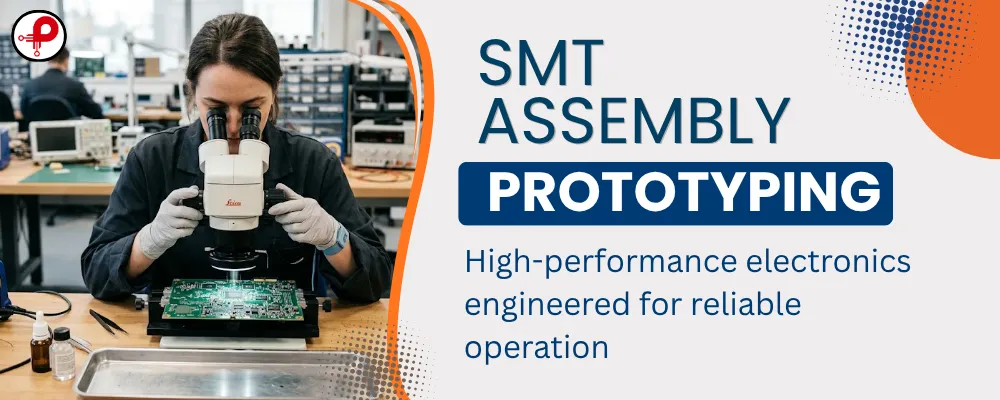
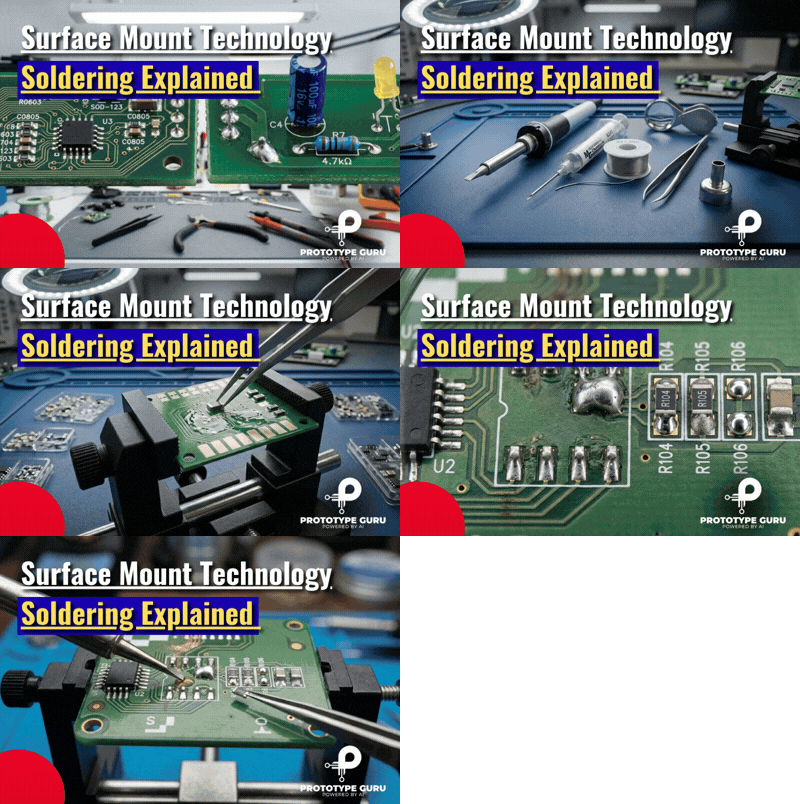
The quality of soldering and assembly at the prototype stage also matters more than most clients realize. Proper surface mount technology soldering practices directly affect the reliability of early prototypes and the accuracy of test results. A company using poor assembly practices will give you misleading prototype data that leads to poor engineering decisions downstream.
Stage 6: Testing and Validation
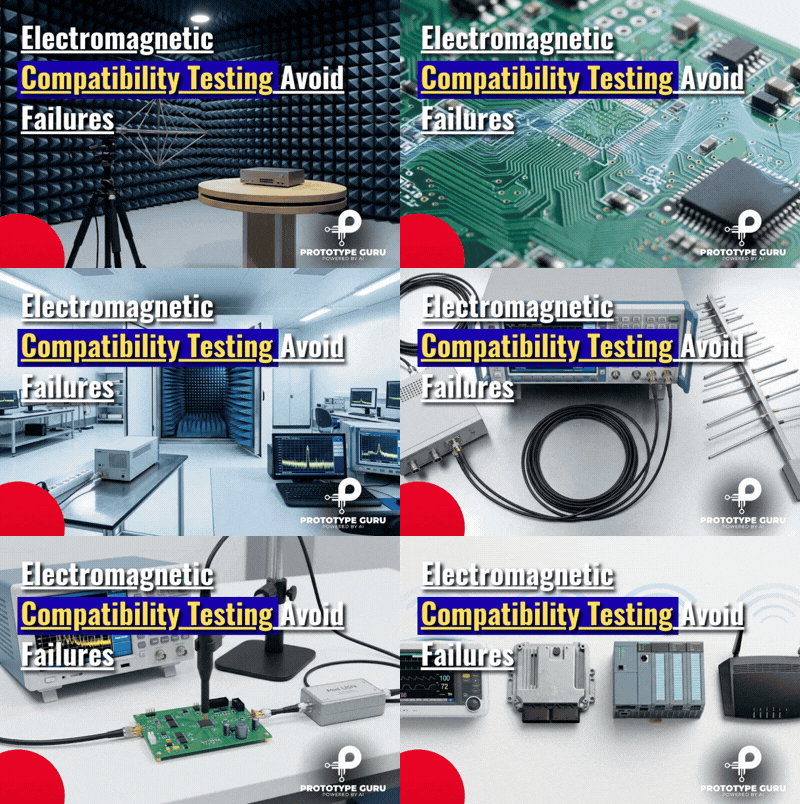
Testing covers both functional validation and compliance validation. Depending on your product category and target geography, this might include electromagnetic compatibility testing, FCC certification, CE marking, RoHS compliance, UN 38.3 for battery products, or medical device standards like IEC 60601.
This stage is consistently underestimated in both cost and timeline. An electronic product development company that glosses over compliance in their initial proposal is either inexperienced or deliberately hiding the real cost from you to win the contract. Either way, you end up paying for it later, usually at the worst possible moment in your launch timeline.
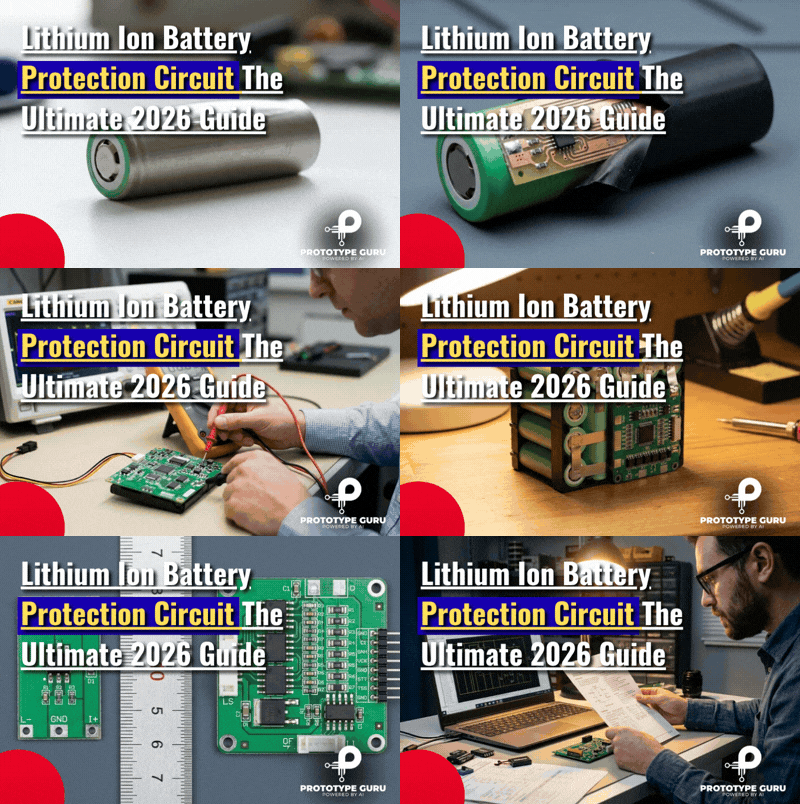
For any product that includes a battery, power management and safety design is particularly critical. A solid lithium ion battery protection circuit is non negotiable for safety, certification, and long term product reliability, and it needs to be designed in from the start, not bolted on as an afterthought by an underprepared electronic product development company.
Stage 7: Design for Manufacturing and Production Handoff
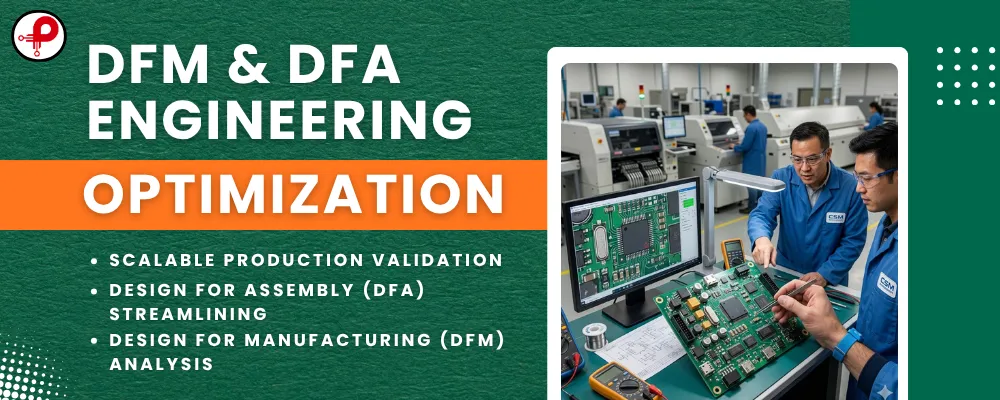
The final stage before production involves reviewing the design specifically for manufacturability. This covers component placement for automated assembly, solder mask and silkscreen requirements, test point accessibility, panelization, and packaging design.
A professional electronic product development company does not just hand you prototype files and disappear. They help you transition to a manufacturing partner with complete production documentation including approved vendor lists, manufacturing test procedures, quality control checkpoints, and a finalized Bill of Materials with alternates for critical components.
7 Key Services a Reliable Electronic Product Development Company Must Offer

Not all electronics development firms offer the same scope of services. When evaluating candidates, confirm they provide all of the following before you commit to a working relationship.
1. End-to-End Hardware Design
From concept through PCB design and component selection, a full-service partner manages the complete hardware stack to eliminate communication gaps, diluted accountability, and integration failures.
2. Embedded Firmware and Software Development
Ensure your partner employs experienced embedded engineers who write clean, documented code and handle hardware-software integration from day one, rather than treating firmware as an afterthought.
3. Electronic Prototyping Services
Look for in-house or trusted assembly partners that utilize proven SMT soldering practices. Clarify budget, prototype cycles, testing protocols, and issue-tracking methods used between revisions.
4. PCB Design and Layout Services
Expertise in signal integrity, power distribution, and thermal management is critical. Ask prospective partners about their specific design review process and EMC management strategies at the layout stage.
5. Compliance and Regulatory Testing Support
Whether for FCC, CE, UL, or medical standards, your partner should perform pre-compliance testing or have established relationships with accredited labs to prevent expensive certification surprises.
6. IoT and Wireless Development Capabilities
Demand genuine IoT experience, including RF design, antenna integration, protocol selection (BLE, LoRa, cellular, etc.), and secure over-the-air firmware update infrastructure.
7. Manufacturing and Supply Chain Support
A true end-to-end partner guides you through production, including finalizing the production BOM, qualifying suppliers, managing pilot runs, and establishing long-term quality assurance procedures.
5 Critical Factors to Evaluate Before You Hire

1. Relevant Industry Experience
Domain experience matters for regulatory knowledge, supply chain connections, and technical intuition. Ask for examples of products they have built in your exact industry and request to speak directly with those clients.
2. In-House Engineering Depth
Avoid project management “shells” that outsource to freelancers. Ask for the number of in-house engineers, their specializations, and whether the same core team will remain on your project from start to finish.
3. IP Ownership Policy
Non-negotiable: You must own all design files, including schematics, PCB layout files, component libraries, firmware source code, and technical documentation, in their native editable formats.
4. Communication and Project Management
Look for structured frameworks like weekly standups, shared project management tools, a dedicated project manager, and written documentation of all key technical decisions.
5. Transparent and Detailed Pricing
Beware of low initial quotes that bloat with scope creep. Trustworthy firms provide detailed breakdowns of what is included, what is out of scope, and what specific triggers will add cost.
Red Flags That Should Make You Walk Away

These are the warning signs that should give you immediate pause, regardless of how impressive a company website looks or how confidently they present themselves in a sales call.
They agree to everything immediately. A good electronic product development company pushes back on unclear requirements, unrealistic timelines, and underspecified budgets. If a company says yes to everything in the first conversation, they have not actually thought through your project or they are telling you what you want to hear to win the contract.
Vague portfolio with no technical substance. Reputable firms show you real project breakdowns covering the specific challenges they faced, the engineering decisions they made, and the concrete outcomes achieved. Generic before and after product photos with a one line description are not a portfolio, and they tell you nothing about actual electronic product development capability.
They cannot clearly explain their development process. If you ask how they would approach your project and receive a generic answer about teamwork and client satisfaction, leave. Experienced engineers speak in specifics: tools they use, how they handle EMC, how many prototype iterations they typically budget, how they structure handoffs to manufacturing.
No in house compliance or EMC experience. Problems like high frequency switching noise and electromagnetic interference are among the most common causes of certification failures and expensive redesigns. If the electronic product development company you are evaluating has never managed electromagnetic compatibility testing internally, they will figure it out on your project, at your expense and on your timeline.
No IP assignment language in their standard contract. A professional electronic product development company has clear, standard IP assignment clauses ready. Any reluctance to put IP ownership explicitly in writing is one of the most serious red flags in the industry, and it should end the conversation immediately.
The quote is dramatically lower than all other bids. Low quotes typically mean junior engineers, work subcontracted to freelancers, or a deliberate underestimate that will expand aggressively through change orders. The cheapest electronic product development company at contract signing is rarely the cheapest partner by project close.
They cannot connect you with past clients. Real agencies have real clients who will talk to you. If a company deflects every reference request with claims that all clients prefer confidentiality, ask yourself why every single client of this electronic product development company would need that level of secrecy.
No internal process for handling design failures. Engineering involves failures and iterations. A company that presents a perfectly linear development path with no mention of how they manage unexpected technical challenges has not built enough products to know better.
10 Questions You Must Ask Any Electronic Product Development Company

Use these questions in every discovery call. The quality of the answers reveals far more than any case study or testimonial ever could.
Question 1. Can you walk me through a recent project from concept to production, specifically including the problems you ran into and how you resolved them?
Question 2. Who exactly will be working on my project, and what are their individual backgrounds and areas of specialization within electronic product development?
Question 3. Does your contract explicitly include full IP assignment to us upon final payment? Can I see the standard language before we proceed?
Question 4. What does your development process look like milestone by milestone, and how many prototype iterations do you typically plan for?
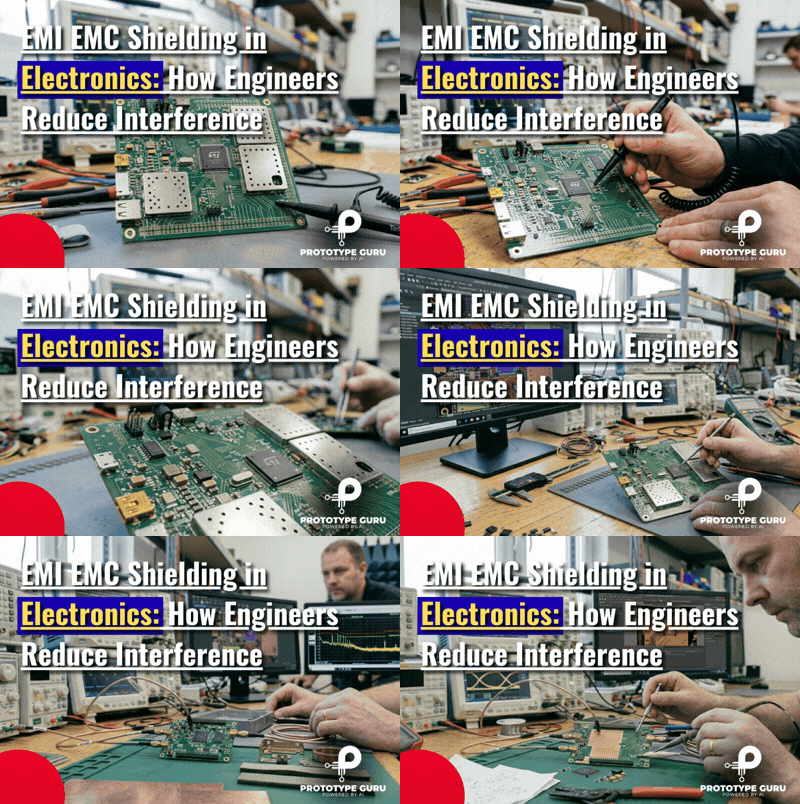
Question 5. How do you handle EMC and compliance testing? Do you conduct pre compliance testing in house, and at which stage of the electronic product development process does that begin? Understanding electromagnetic compatibility testing methodology early is a good signal of engineering maturity.
Question 6. What happens if you discover mid project that the original design needs significant changes? How is that handled commercially and technically?
Question 7. What specific file formats and documentation do you deliver at the end of the engagement, and are all deliverables listed explicitly in the contract?
Question 8. How do you communicate project progress throughout the electronic product development engagement? What does a typical week of project updates look like?
Question 9. Do you support the transition to manufacturing, and do you have established relationships with contract manufacturers in our target region?
Question 10. Can I speak directly with two or three past clients whose projects were similar in complexity and industry to mine?
How to Protect Your IP When Outsourcing Hardware Development
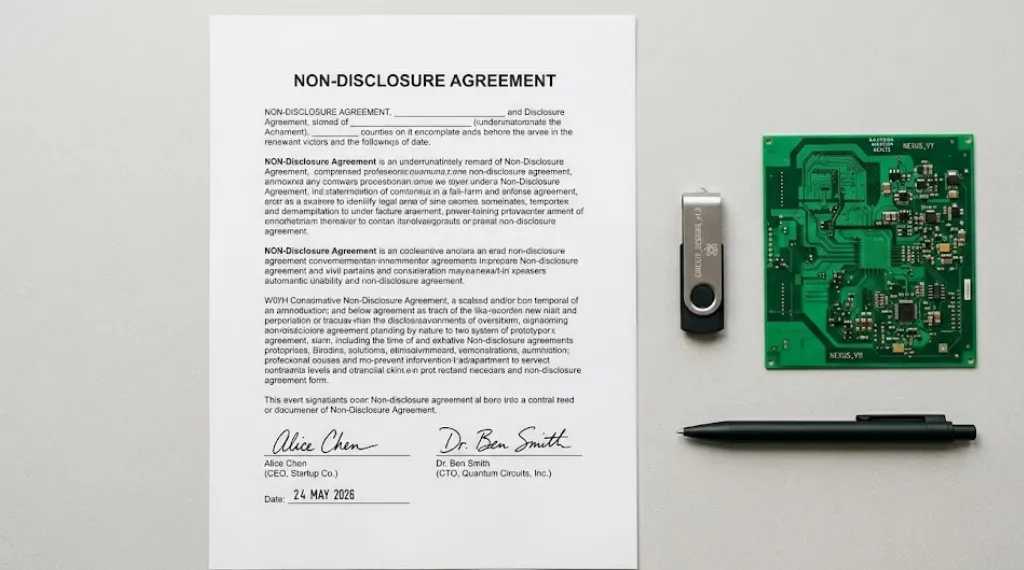
IP protection is one of the most overlooked aspects of working with an electronic product development company, and one of the most consequential when it goes wrong.
Before you start: Sign a mutual NDA before sharing any product concepts, market research, or technical requirements. Ensure the NDA explicitly covers all employees, contractors, and subcontractors the electronic product development company uses. Do not share anything meaningful until this is in place.
During development: Insist on milestone based file delivery. At each major deliverable including schematic completion, PCB layout approval, firmware alpha, and prototype validation, you should receive a copy of all project files in their native editable format, not just compiled outputs or PDFs.
At project completion: Confirm you have received every one of the following in full from your electronic product development company:
Complete schematic files in their native format such as KiCad, Altium, or OrCAD. PCB layout files including all layer data and design rule settings. Full component library with complete part specifications and vendor part numbers. Firmware source code with comprehensive documentation and inline comments. Bill of Materials in an editable spreadsheet format with alternates listed. All test reports, compliance documentation, and certification correspondence. Manufacturing files including Gerbers, drill files, assembly drawings, BOM, and pick and place data.
Without these files, if you ever separate from your electronic product development company, a new engineering team will have to rebuild everything from scratch. That can cost tens of thousands of dollars and take months to complete. Some development firms are fully aware of this dynamic and use it as leverage, which is exactly why you address it contractually before work begins, not after problems arise.
Cost of Electronic Product Development, What to Realistically Expect

This is the question every client asks and too few companies answer honestly. The reality is that electronic product development costs vary enormously based on product complexity, certification burden, prototype iterations required, and the depth of the engineering team you engage.
Here are realistic ballpark ranges to calibrate your expectations as you evaluate different electronic product development company options:
| Project Type | Typical Development Cost |
|---|---|
| Simple single board microcontroller product with basic firmware | $15,000 to $50,000 |
| Mid complexity IoT device with Wi-Fi and Bluetooth and mobile app integration | $50,000 to $150,000 |
| Advanced consumer electronic product with regulatory certification | $100,000 to $300,000 and above |
| Industrial or automotive grade electronic product | $150,000 to $500,000 and above |
| FDA regulated medical electronic device | $300,000 to $1,000,000 and above |
These figures cover electronic product development only and do not include manufacturing tooling, component inventory, ongoing production costs, or post launch support.
A few cost principles worth internalizing before you start working with any electronic product development company:
The cheapest quote almost never produces the cheapest outcome. Low cost providers often produce designs that require expensive redesigns, fail compliance testing, or create manufacturing headaches that cost far more to fix than the initial savings delivered. This is one of the most reliably observed patterns across the hardware startup ecosystem.
Timeline and cost are directly connected. Unrealistic timelines create engineering pressure that produces shortcuts. Give your electronic product development partner adequate time to do the job properly. Rushing hardware development is one of the most reliable ways to waste money.
Consider a paid discovery phase first. Many reputable electronic product development companies offer a structured paid feasibility study before committing to a full development contract. This is a positive sign. It means the company wants to genuinely understand your project before they price it, rather than selling you a fixed price contract and discovering problems later.
Budget for iteration. Hardware development is inherently iterative. A budget that has no room for a third prototype revision or a compliance pre test is a budget that will cause panic when those costs inevitably arise. Build contingency in from the start, regardless of how optimistic your initial electronic product development company quote appears.
Industries That Benefit Most from Electronic Product Development Services
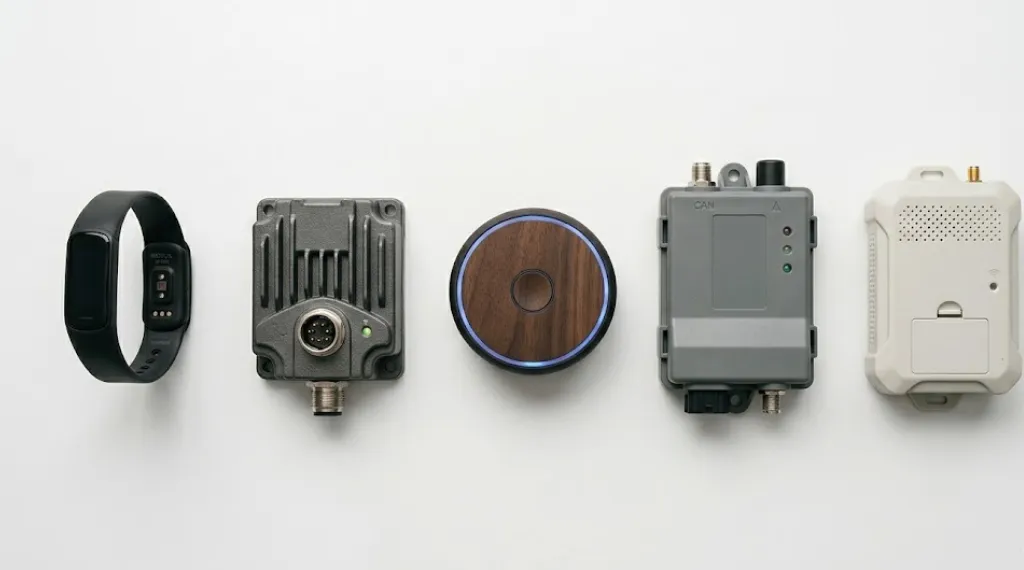
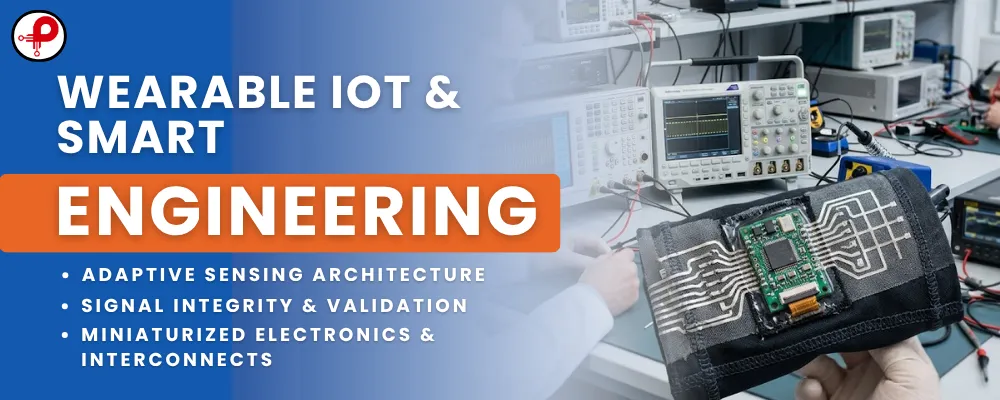
Wearables, smart home devices, audio, and personal care. Requires deep expertise in industrial design, cost-sensitive high-volume production, and fast iteration cycles.
Sensors, PLCs, motor controllers, and automation. Requires a heavy focus on long product lifecycles, extreme ruggedness, wide temperature ranges, and industrial protocols.
Diagnostic tools, patient monitoring, and wearable medical devices. Requires strict adherence to FDA/ISO regulatory standards, safety-critical design, and high-reliability components.
Smart infrastructure and remote monitoring. Requires expertise in RF design, antenna integration, secure cloud architecture, and over-the-air firmware update infrastructure.
Medical Devices: Diagnostic equipment, patient monitoring devices, wearable health tech, telehealth hardware. This category carries an extremely high regulatory burden including FDA 510(k), CE Class II and III, IEC 60601, formal design control requirements, and risk management documentation under ISO 14971. Only engage an electronic product development company with verified, documented medical device experience here.
IoT and Smart Infrastructure: Connected devices, smart meters, building automation hardware, remote monitoring systems. Strong emphasis on wireless protocol selection, power efficiency for battery operated devices, and OTA update infrastructure. Your electronic product development company must have genuine IoT depth, not just marketing language around connectivity.
Automotive Electronics: In vehicle infotainment, EV charging equipment, fleet telemetry hardware, ADAS components. AEC Q100 component qualification, ISO 26262 functional safety requirements, wide temperature range operation, and long qualification timelines define this space. This is among the most demanding electronic product development environments that exists.
Energy and Power Electronics: Solar inverters, battery management systems, energy storage hardware. Deep knowledge of power conversion topologies, switching noise management, thermal design, and grid compliance standards is essential. Expertise in areas like high frequency switching noise suppression and EMI shielding material selection is a baseline requirement for any electronic product development company operating in this space. Not every firm has it, so verify it explicitly.
How to Evaluate a Company Portfolio the Right Way

Most people look at an electronic product development company portfolio and ask whether the products look impressive. That is the wrong question entirely.
Here is how to evaluate a portfolio in a way that actually tells you something useful about the electronic product development capability behind it:
Look for specificity over aesthetics. Vague descriptions like “we built a connected consumer device for a global brand” tell you nothing about engineering capability. Look for case studies that describe the actual technical problem, the approach taken, the challenges encountered mid project, and the concrete outcomes achieved by the electronic product development company.
Look for relevance, not volume. A company that has built products across 20 completely different categories may have broad exposure but shallow domain expertise in any single area. A company that has built 8 to 10 products in your specific industry almost certainly brings insights that a generalist electronic product development company simply cannot match.
Look for post launch proof. Did the products actually reach market? Did they scale to production volumes? Did they achieve regulatory certification? Any electronic product development company can build a prototype. The harder and more valuable skill is designing something that manufactures reliably, passes compliance, and survives in the field over time.
Ask about a project that went wrong. This sounds counterintuitive, but an electronic product development company that cannot articulate a project that went wrong, and what they learned from it, is either very new or not being honest with you. Engineering is fundamentally iterative. Experienced teams fail, iterate, and improve. That history is valuable because it means they have already solved the hard problems your project will likely face.
Verify references with actual phone calls. Do not rely on website testimonials or LinkedIn recommendations. Ask for the direct contact information of two or three past clients with similar projects, and actually call them. Ask whether the project came in on time and budget, whether they received all their design files, and whether they would hire that electronic product development company again.
Final Checklist Before You Sign the Contract

Use this complete checklist before committing to any electronic product development company.
Technical Capability
The company has verifiable experience in your specific product category. They have a full in house engineering team covering hardware, firmware, and mechanical design. They have personally handled regulatory compliance and certification for similar products. They can explain their PCB design process, EMC management approach, and testing methodology in detail. They have demonstrated knowledge of relevant platform ecosystems and PCB design tools.
Process and Project Management
They have a clearly documented electronic product development process with milestone based deliverables. A dedicated project manager will serve as your single point of contact throughout. They use project management tools you can access and monitor. Their quoted timeline includes realistic ranges with documented assumptions. They have a formal change order process for scope modifications.
Commercial and Legal
The contract includes explicit, unconditional IP assignment to you upon final payment. All deliverable file formats are specifically listed in the contract scope of work. The change order and scope expansion process is defined in writing. A mutual NDA has been executed covering all employees, contractors, and subcontractors. Payment milestones are tied to verifiable deliverables, not arbitrary calendar dates.
References and Reputation
You have spoken directly with at least two past clients of this electronic product development company via phone or video. Their portfolio includes products that demonstrably reached mass production. No significant unresolved complaints or disputes surfaced in your due diligence. The engineers assigned to your project are identifiable and their backgrounds are verifiable.
Frequently Asked Questions
What does an electronic product development company actually do?
↑How long does electronic product development take?
↓Is it worth outsourcing electronic product development?
↓How do I protect my idea when outsourcing?
↓Difference between a development company and a contract manufacturer?
↓What makes a good development partner?
↓Can you build from scratch with no prior specifications?
↓Wrapping Up
Choosing the right electronic product development company is not simply a vendor selection decision. It is a strategic partnership that will define your product quality, your time to market, and your total development cost from first prototype through to production launch.
The best electronic product development companies combine deep technical capability with transparent processes, unambiguous IP policies, and an honest track record of products that actually shipped at scale. They challenge vague requirements. They surface compliance risks before they become expensive surprises. They hand you a complete, editable set of design files at project close, not a locked black box designed to keep you dependent on them indefinitely.
Take your time with the evaluation process. Ask the hard questions. Speak directly with past clients of every electronic product development company you consider seriously. Use the checklist in this guide before you sign anything. And remember that in hardware development, the partner you choose matters more than almost any other decision you will make on the entire journey.
Your product deserves a partner who takes it as seriously as you do.