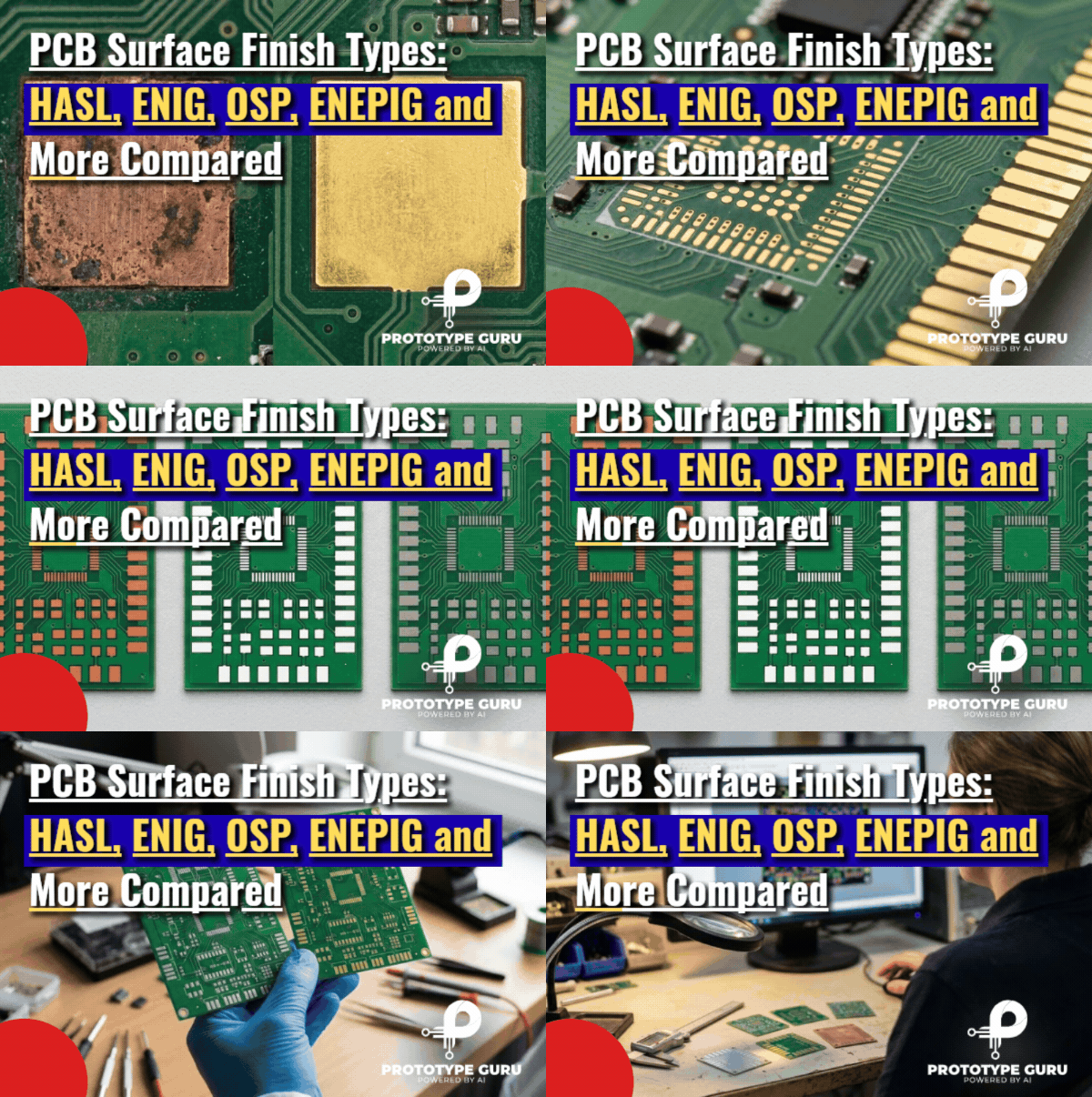
Quick answer: the main PCB surface finish types are HASL, lead free HASL, ENIG, ENEPIG, OSP, immersion silver, immersion tin and hard gold. HASL is the cheapest and most rugged, ENIG is the best flat all rounder for fine pitch parts, OSP is the cheapest flat finish for fast assembly, ENEPIG is the choice for wire bonding, and hard gold is used for edge connectors.
A PCB surface finish is the thin coating applied over exposed copper pads before assembly. It is not the same as machining roughness values such as Ra. Its job is to stop the copper from oxidizing and to give solder a clean, wettable surface.
Choosing between PCB surface finish types affects solder joint quality, shelf life, cost, flatness for small parts and even signal loss on RF boards. This guide explains each finish, compares them side by side, lists the IPC thickness requirements, and gives a clear checklist for choosing the right one.
What Is a PCB Surface Finish and Why It Matters
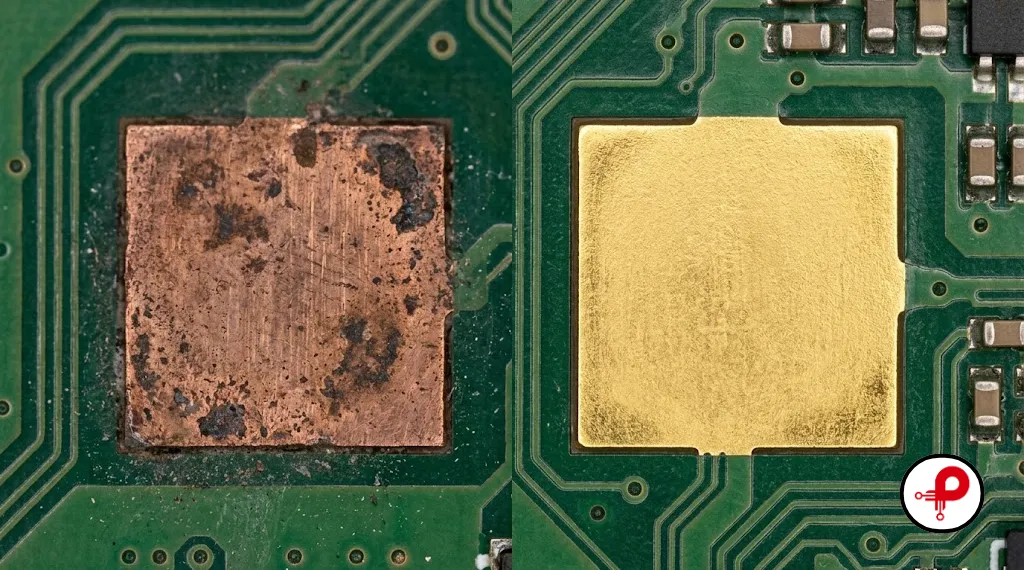
To understand PCB surface finish types, start with the problem they solve. Bare copper oxidizes quickly in air. Oxidized copper does not solder well, so boards would fail at assembly or end up with weak joints. A surface finish protects the copper between fabrication and soldering and becomes part of the final joint.
The right finish also controls three practical things:
- Flatness: fine pitch BGAs and QFNs need a flat pad so every ball and lead touches solder paste evenly.
- Shelf life: some PCB surface finish types stay solderable for a year, others only for a few months.
- Special functions: wire bonding, edge connectors and press fit pins each need specific finishes.
Surface Finish vs Solder Mask
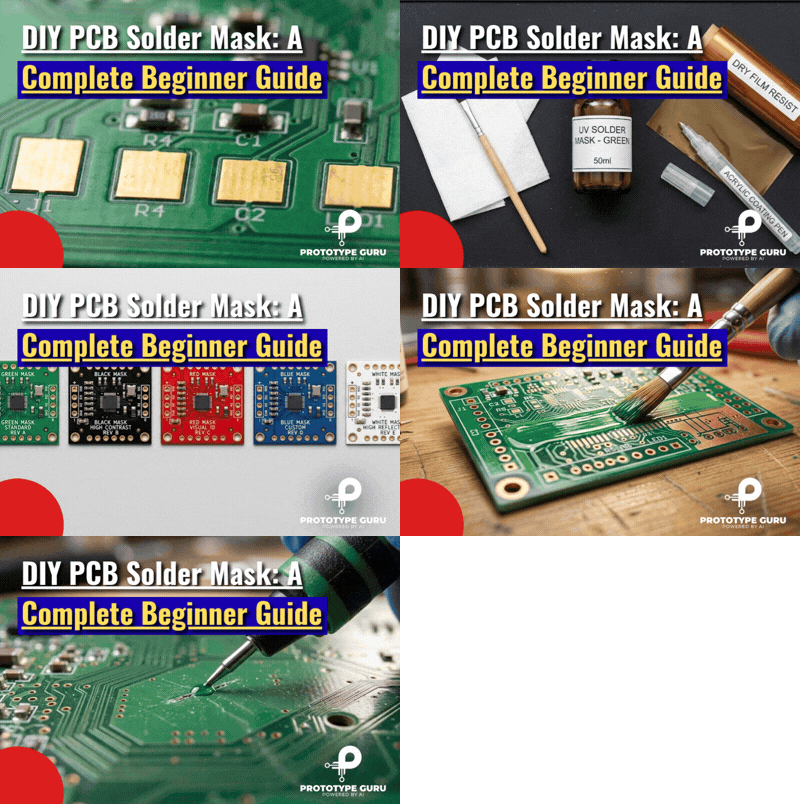
These two are often confused. Solder mask is the green (or other colour) coating that covers copper you do not want to solder. The surface finish covers only the exposed pads that will be soldered. Every board needs both. To learn more about the coating itself, see our guide to DIY PCB solder mask.
Metallic vs Organic PCB Surface Finish Types
All PCB surface finish types fall into two groups:
- Metallic finishes: HASL, lead free HASL, ENIG, ENEPIG, immersion silver, immersion tin and hard gold. A thin metal layer covers the copper.
- Organic finish: OSP, a very thin organic film that protects the copper until soldering and is consumed during reflow.
How PCB Surface Finish Types Affect Reliability
The finish becomes part of every solder joint, so it directly affects how long a product lasts in the field. Nickel based PCB surface finish types create a strong barrier between copper and solder, which slows the growth of brittle intermetallic layers during years of thermal cycling. Finishes that solder directly to copper, such as OSP and immersion silver, form a different joint structure that is perfectly reliable when the boards are assembled while fresh.
Reliability problems usually come from a mismatch between the finish and the job. Using HASL on a fine pitch BGA, storing OSP boards for a year, or sending immersion silver boards through a sulfur rich factory all cause trouble. Picking among PCB surface finish types with the real assembly process in mind avoids most of these issues.
How the PCB Surface Finish Process Works
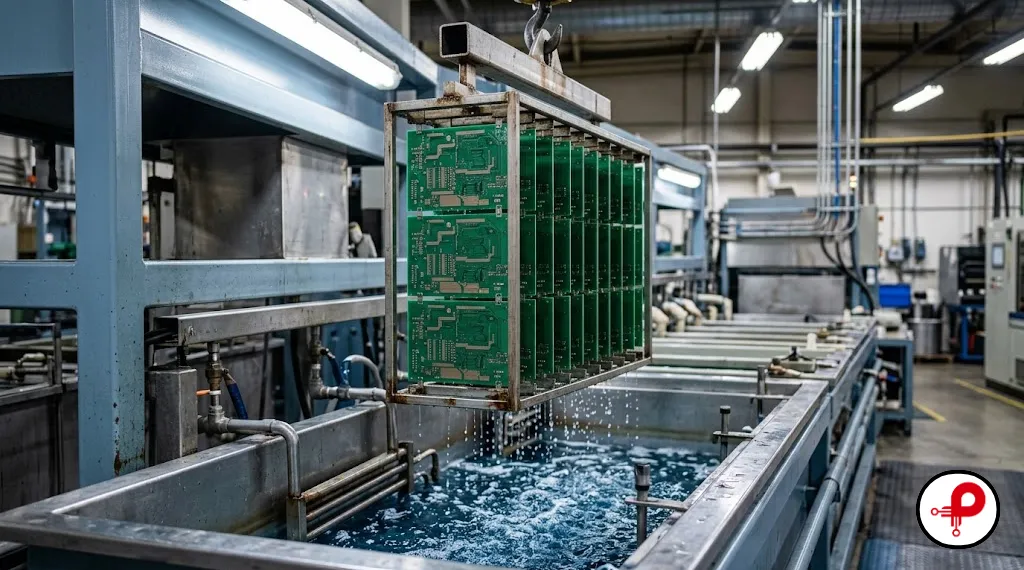
Most PCB surface finish types are applied near the end of board fabrication. It comes after etching, solder mask and silkscreen, and just before electrical test and final inspection.
A typical PCB surface finish process follows these steps:
Cleaning
The board is cleaned to remove oils, oxides and residues from the exposed copper.
Microetching
A light etch roughens the copper slightly so the finish bonds well.
Applying the finish
The board is dipped in molten solder (HASL), a series of chemical baths (ENIG, ENEPIG, immersion silver and tin), or a water based organic solution (OSP). Hard gold is electroplated with current.
Rinsing and drying
Chemical residues are removed to prevent corrosion later.
Inspection and measurement
Thickness is checked, usually with an XRF instrument, and the boards are inspected before shipping.
Different PCB surface finish types use different chemistry. Immersion and electroless finishes are chemical processes. Immersion finishes swap copper atoms on the surface for silver, tin or gold atoms, so they stay thin. Electroless nickel is built up by a chemical reaction that keeps depositing metal, so it can reach several microns.
For the full build sequence, see our overview of the PCB manufacturing process and the PCB manufacturing and assembly process.
HASL and Lead Free HASL
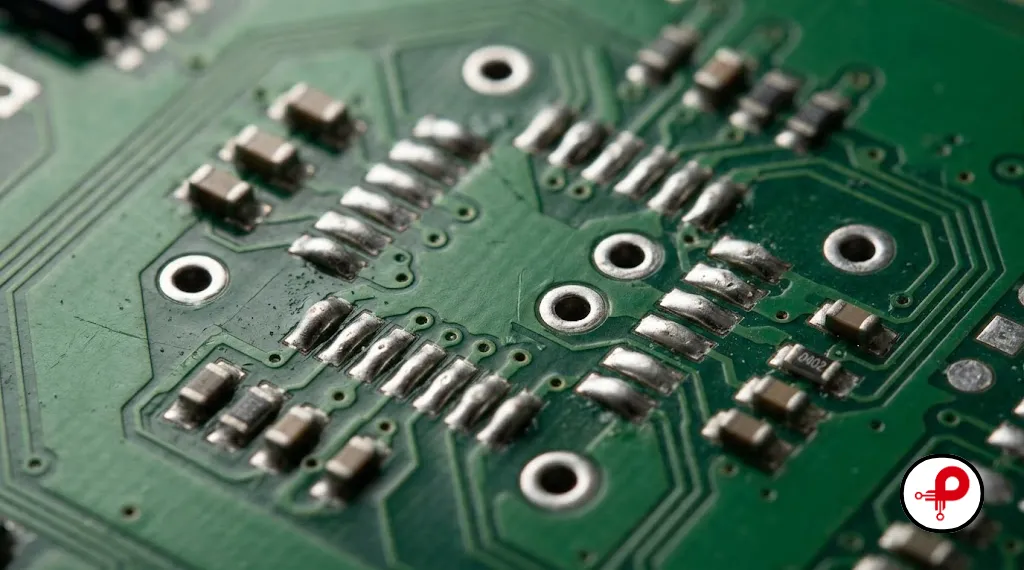
HASL, short for hot air solder leveling, is the oldest of the common PCB surface finish types. The board is dipped into molten solder, then hot air knives blow off the excess and leave a solder coating on every pad.
Leaded HASL uses tin lead solder. Lead free HASL uses alloys such as tin copper or tin silver copper to meet RoHS rules for products sold in many markets.
Pros, Cons and When to Use HASL
Advantages:
- Lowest cost of all metallic finishes
- Excellent solderability, because the pad already carries solder
- Long shelf life, often around 12 months in typical fabricator guidance
- Easy to rework and visually inspect
Disadvantages:
- Uneven surface: the solder forms domes of different heights, which is poor for fine pitch BGAs and small QFNs
- High thermal shock to the board during the dip, which can stress thin or multilayer boards
- Leaded HASL is not RoHS compliant
Best for: through hole boards, larger SMD parts, hobby and low cost products, and designs where pitch is 0.65 mm or larger. If you still hand solder with leaded wire, our soldering tips for beginners are a good companion.
Gold Based PCB Surface Finish Types: ENIG, ENEPIG and Hard Gold
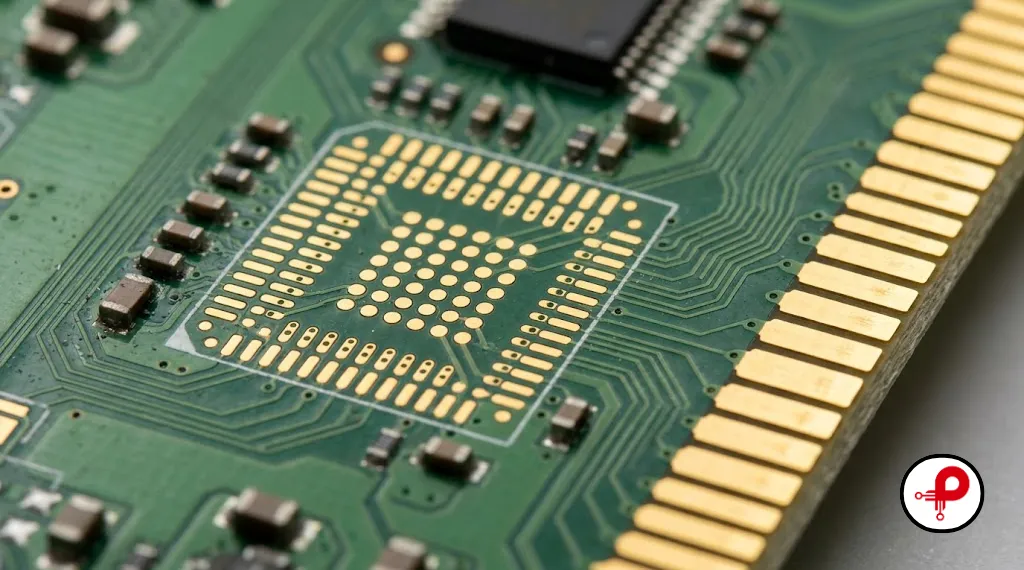
Gold based PCB surface finish types are the go to choice for flat pads, fine pitch parts and high reliability products.
ENIG (IPC 4552)
ENIG means electroless nickel immersion gold. A layer of nickel is deposited on the copper, then a very thin layer of gold protects the nickel from oxidation. During soldering, the gold dissolves into the solder and the joint actually forms on the nickel.
According to I Connect007’s summary of the IPC surface finish specifications, IPC 4552 sets the nickel at 3 to 6 µm. Revision A of the standard sets the gold at 0.04 to 0.10 µm (1.6 to 4.0 µin), and the upper limit must be strictly followed.
Why engineers like ENIG:
Pad Flatness
Oxidation Resistance
Dual Purpose
Environmental Safety
The main risk is “black pad”. If the nickel corrodes during the gold step, the joint can crack later. IPC 4552A and 4552B added a corrosion rating chart so buyers can specify acceptable levels. ENIG also costs more than HASL or OSP.
Is ENIG Better Than HASL?
It depends on the board. ENIG is better for fine pitch parts, flat BGA pads and long term reliability. HASL is cheaper, rugged and perfectly fine for larger parts. Many prototypes with modern ICs use ENIG simply because it removes flatness problems.
ENEPIG (IPC 4556) for Wire Bonding
ENEPIG adds a palladium layer between the nickel and the gold. The palladium blocks nickel corrosion and gives a surface that accepts both solder and wire bonds.
The IPC 4556 specification, as amended in 2015, sets nickel at 3 to 6 µm, palladium at 0.05 to 0.30 µm and gold at 0.030 to 0.07 µm, as summarized in the same I Connect007 article. If you need a PCB surface finish for wire bonding, ENEPIG is usually the first choice. It is common in medical, aerospace and chip on board designs, as covered in our guide to medical device development.
Hard Gold for Edge Connectors
Hard gold is electroplated gold with a small amount of cobalt or nickel added to make it wear resistant. It is much thicker than ENIG gold and is used where contacts slide in and out many times, such as card edge connectors and test fingers.
Hard gold is expensive and is usually applied only to the connector fingers, with another finish used for the rest of the board.
Flat Low Cost PCB Surface Finish Types: OSP, Immersion Silver and Immersion Tin
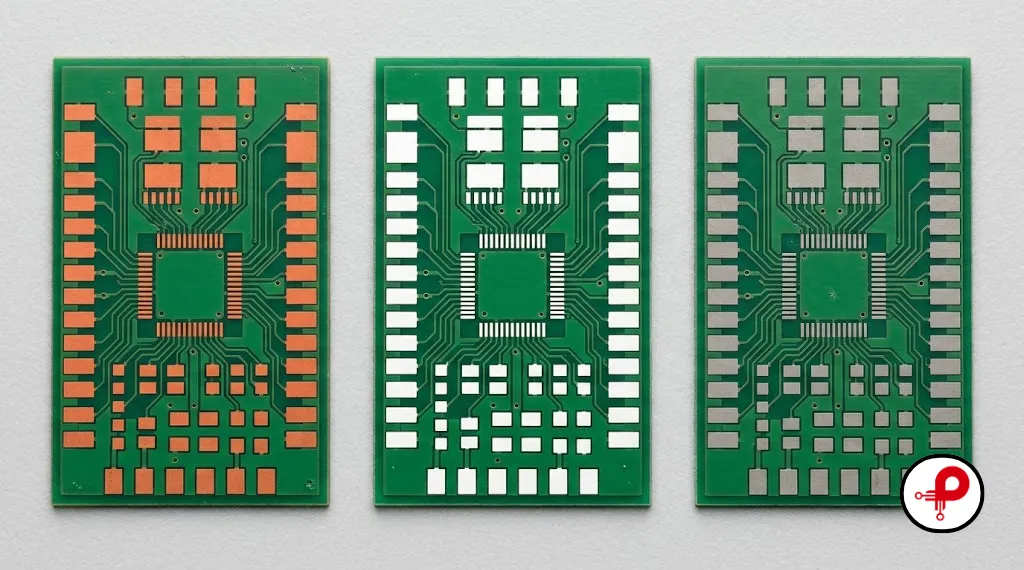
These three PCB surface finish types are flat, lead free and generally cheaper than gold finishes, which makes them popular for high volume products.
OSP (Organic Solderability Preservative)
OSP is a very thin, clear organic coating that bonds to copper and protects it from oxidation. During reflow, the flux removes the film and solder wets the copper directly.
Pros: very low cost, very flat, lead free and simple to apply. Cons: short shelf life (often about 6 months in typical fabricator guidance), sensitive to handling and fingerprints, harder to inspect visually, and less tolerant of many reflow cycles.
Interestingly, OSP has no IPC thickness standard. The I Connect007 article explains that IPC 4555 for OSP was attempted in 2008 but never agreed, because OSP products vary so much.
Immersion Silver (IPC 4553A)
Immersion silver deposits a thin silver layer on the copper. IPC 4553A sets its thickness at 0.12 µm minimum to 0.4 µm maximum, with typical values of 0.2 to 0.3 µm.
Pros: flat, good solderability, no nickel layer, which helps signal loss on high frequency boards. That makes it popular for RF designs, such as those in our 2.4 GHz PCB antenna design guide. Cons: silver tarnishes in sulfur rich air, so boards need sealed packaging and careful handling.
Immersion Tin (IPC 4554)
Immersion tin deposits a tin layer that solders very well and stays flat. IPC 4554 sets a minimum of 1.0 µm, typically 1.15 to 1.3 µm. This relatively thick layer is needed because tin slowly forms an intermetallic layer with the copper underneath, and enough free tin must remain for soldering after storage.
Pros: flat, good for press fit pins, lead free. Cons: limited shelf life, sensitive to multiple reflows, and a risk of tin whiskers over long periods.
Storage and Handling Tips for Flat Finishes
Flat PCB surface finish types such as OSP, immersion silver and immersion tin need more care than HASL or ENIG. Keep boards in their sealed, moisture barrier bags until assembly, and handle them by the edges with clean gloves. Avoid storing them near rubber, cardboard or paper products that release sulfur, which tarnishes silver.
Plan your assembly date before you order. If boards will be assembled within a few weeks, these finishes save money. If the date is uncertain, a longer lasting finish such as ENIG is the safer choice.
PCB Surface Finish Types Comparison Table
This comparison of PCB surface finish types brings the main options together in one place. Cost ratings are relative. Shelf life values are typical fabricator guidance, so always confirm storage terms with your supplier.
| Finish | Relative cost | Flatness | Typical shelf life | Wire bonding | Lead free | Best for |
|---|---|---|---|---|---|---|
| HASL (leaded) | Lowest | Poor | About 12 months | No | No | Low cost, large parts, through hole |
| Lead free HASL | Low | Poor | About 12 months | No | Yes | RoHS products with larger parts |
| OSP | Lowest | Excellent | About 6 months | No | Yes | High volume, fast assembly |
| Immersion silver | Medium | Excellent | About 6 to 12 months | Limited | Yes | RF and high speed boards |
| Immersion tin | Medium | Excellent | About 6 months | No | Yes | Press fit, flat pads |
| ENIG | High | Excellent | About 12 months | Limited | Yes | Fine pitch BGA, general high reliability |
| ENEPIG | Highest of common finishes | Excellent | About 12 months or more | Yes | Yes | Wire bonding, mixed assembly, medical |
| Hard gold | Highest | Good | Long | Yes | Yes | Edge connectors, sliding contacts |
Key Differences Between OSP and ENIG
OSP and ENIG are both flat and lead free, but they suit different projects. OSP is cheaper and leaves no nickel in the joint, but it has a shorter shelf life and handles fewer reflow cycles. ENIG costs more, lasts longer on the shelf, survives several reflows, and works well for both soldering and contact pads.
If your boards will be assembled within weeks in one or two reflow passes, OSP is a good low cost option. If boards may sit in storage, need several reflows, or carry fine pitch BGAs, ENIG is usually the safer choice.
PCB Surface Finish Types: Thickness and IPC Standards
IPC publishes specifications for most metallic PCB surface finish types. Specifying the standard on your fabrication drawing is the easiest way to control quality.
| Finish | IPC specification | Thickness requirement |
|---|---|---|
| ENIG | IPC 4552 (Rev A 2017, Rev B 2021) | Nickel 3 to 6 µm; gold 0.04 to 0.10 µm |
| ENEPIG | IPC 4556 (amended 2015) | Nickel 3 to 6 µm; palladium 0.05 to 0.30 µm; gold 0.030 to 0.07 µm |
| Immersion silver | IPC 4553A (2009) | 0.12 to 0.4 µm; typical 0.2 to 0.3 µm |
| Immersion tin | IPC 4554 (2007, amended 2011) | 1.0 µm minimum; typical 1.15 to 1.3 µm |
| OSP | No IPC thickness standard | Set by the chemical supplier |
All values come from the I Connect007 summary written by George Milad, a co chair of the IPC plating subcommittee. HASL thickness is not tightly specified in the same way, because the solder coating naturally varies across pads.
Measuring Finish Thickness
For all metallic PCB surface finish types, fabricators usually measure thickness with XRF (X ray fluorescence). It is fast, non destructive and accurate enough for thin gold, palladium and silver layers. For critical jobs you can ask for an XRF report with your boards. Our guides to PCB testing and inspection and automated optical inspection explain other quality checks.
Common Surface Finish Defects
- Black pad (ENIG): nickel corrosion that leads to brittle joints. Control it with good process control and the IPC 4552B corrosion rating.
- Tin whiskers (immersion tin): fine metal hairs that can grow over time and cause shorts.
- Silver tarnish (immersion silver): discoloration from sulfur in the air, which reduces solderability.
- Uneven pads (HASL): domed solder that causes tombstoning or poor contact on fine pitch parts.
- Oxidized pads (OSP): caused by old boards, damaged film or fingerprints.
How to Choose the Right PCB Surface Finish Types for Your Board
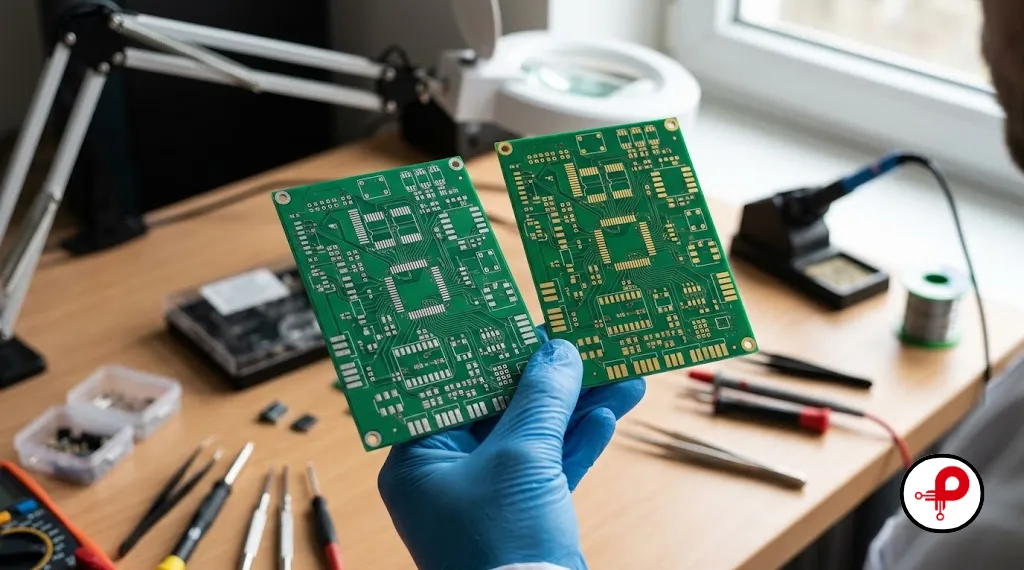
There is no single best finish among all PCB surface finish types. The right choice among PCB surface finish types depends on your parts, your assembly process and your product’s life. Use this checklist:
- Do you have fine pitch BGAs, QFNs or 0201 parts? Choose a flat finish: ENIG, OSP, immersion silver or immersion tin. Avoid HASL.
- Is cost the top priority with larger parts? Lead free HASL or OSP.
- Will boards sit in storage for months? ENIG, ENEPIG or HASL have the longest shelf life.
- Do you need wire bonding? ENEPIG, or hard gold in some cases.
- Do you have card edge connectors? Hard gold on the fingers, with another finish on the rest of the board.
- Is it an RF or very high speed board? Immersion silver or OSP avoid the nickel layer, which helps reduce loss. Learn more in our signal integrity PCB design guide.
- Does the product need RoHS compliance? Avoid leaded HASL.
- Will the board go through several reflow cycles? ENIG or ENEPIG handle repeated heat better than OSP or immersion tin.
Mixing PCB Surface Finish Types on One Board
Some boards use two finishes. A common example is hard gold on edge connector fingers with ENIG or HASL on the rest of the board. Another is selective ENIG on keypad contacts with OSP on the soldered pads. These combinations add process steps and cost, so use them only when one finish cannot meet every need.
What Is the Best Surface Finish for PCBs?
For most modern prototypes and small production runs, ENIG is the safest all round choice because it is flat, reliable and stores well. Lead free HASL is the best value for simple boards with larger parts, and OSP is popular for high volume consumer products assembled quickly.
Whichever of the PCB surface finish types you choose, state it clearly on your fabrication drawing along with the IPC specification. Also check your design against our DFM and DFA guidelines and the most common PCB design mistakes. For the soldering side, see our SMT soldering guide.
FAQ About PCB Surface Finish Types
1. What is PCB surface finish?
↑2. What is the best surface finish for PCBs?
↓3. Is ENIG better than HASL?
↓4. What are the key differences between OSP and ENIG PCB finishes?
↓5. What is OSP PCB surface finish?
↓6. What is ENIG material?
↓7. How long can PCBs last?
↓Conclusion
Understanding PCB surface finish types helps you avoid soldering problems, wasted boards and unnecessary cost. HASL remains the budget workhorse for larger parts. ENIG is the flat, reliable all rounder for fine pitch designs. OSP offers the lowest cost flat surface for quick assembly. Immersion silver suits RF boards, immersion tin suits press fit pins, ENEPIG handles wire bonding, and hard gold protects edge connectors.
When comparing PCB surface finish types, start from your parts and assembly process, check shelf life and reflow needs, and specify the finish together with its IPC standard on your fabrication drawing. With that approach, the surface finish becomes a reliable foundation for every solder joint on your board.